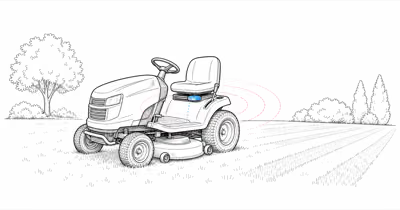
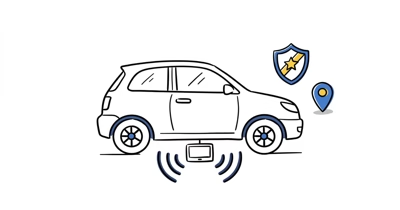
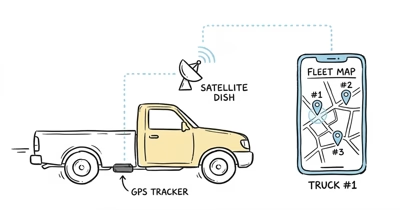
A GPS tracker is a different tool from an AirTag or a Find Hub tag. Instead of waiting for a stranger’s phone to walk past, it fixes its own position with satellites and sends it over a cellular network, so it works at any distance with no crowd required.
The trade-off is a SIM card, a monthly fee, and a battery measured in days or weeks instead of months. The US government’s official GPS program confirms that the civilian signal consumer receivers use delivers roughly 4 to 5 meter accuracy outdoors, which is precise enough to find the street a stolen car sits on. That precision, plus a connection that never depends on nearby phones, is the whole reason to pay for cellular tracking.
The trackers below cover vehicles, pets, and assets, ranked by what actually changes the experience: find accuracy, battery model, real-time update speed, and the recurring cost the marketing tends to hide.
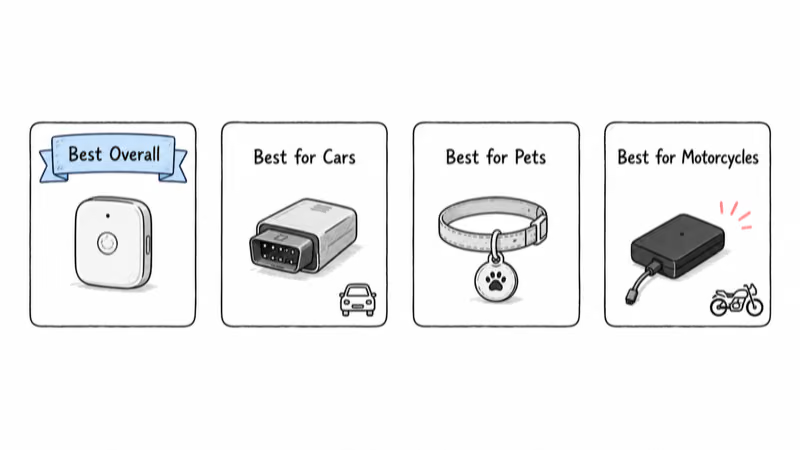
- Tracki Pro is the best overall — worldwide 4G coverage, a 10,000 mAh battery rated up to a year, and plans from $9.95/mo
- Bouncie ($9.65/mo) is the best for cars — it plugs into the OBD-II port, never needs charging, and covers unlimited vehicles on one account
- Tractive GPS DOG 6 ($5/mo) has the cheapest subscription and is the only pick built for pets, with heart-rate and bark monitoring
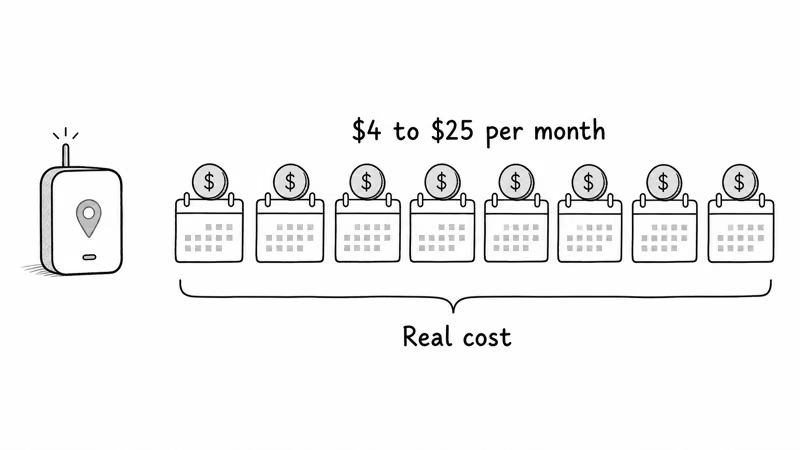
- Every real-time GPS tracker needs a data plan, typically $4 to $25/mo, so the running cost matters more than the hardware price
- GPS accuracy lands near 4 to 5 meters outdoors but degrades in garages and among tall buildings where the satellite signal is blocked
GPS Trackers Compared at a Glance
Every tracker below is a real-time cellular GPS unit unless noted. The first three are the all-purpose and category picks. The rest are specialists for anti-theft, value, and motorcycles, and the subscription column lists the lowest published recurring fee.
| Tracker | Best For | Subscription | Battery | Live Updates | Device |
|---|---|---|---|---|---|
| Tracki Pro | Best overall | From $9.95/mo | Up to 1 year | ~60 sec | $36 |
| Bouncie | Best for cars | $9.65/mo | Car-powered (OBD-II) | 5 sec | $90 |
| Tractive GPS DOG 6 | Best for pets | From $5/mo | ~5 days | Live | $50 |
| LandAirSea 54 | Best magnetic anti-theft | From $15/mo | ~2 weeks | Real-time | $30 |
| Vyncs | Best subscription value | ~$7/mo (annual) | Car-powered (OBD-II) | 60 sec | $90 |
| Monimoto 9 | Best hidden anti-theft | From $4/mo | ~12 months | On movement | $199 |
| SpyTec GL300 | Best real-time updates | From $25/mo | ~2.5 weeks | 5 sec | $40 |
The 7 Best GPS Trackers in 2026
Each pick below earns its spot on the strengths that matter day to day. We ranked them on real-world location accuracy, battery life, and the true monthly cost of the plan you’re forced to buy. For every pick we note who it suits, where it wins, where it falls short, and the subscription it requires, with links to deeper reviews and head-to-head comparisons.
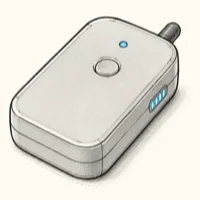
1. Tracki Pro — Best Overall
The Tracki Pro is our default pick because it does the widest range of jobs well. A 10,000 mAh battery rated up to a year on power-save mode lets you hide it on a car or RV and forget it, with worldwide 4G coverage.
In open-sky conditions it resolves a vehicle’s location to within a few meters and pushes movement alerts within about a minute, on par with other cellular trackers. The catch is the subscription: the SIM is locked to Tracki’s own plans starting around $9.95 a month on annual billing, so there’s no bring-your-own-SIM option. If you want the SIM-card landscape first, see our roundup of the best GPS trackers with a SIM card.
 Top Pick
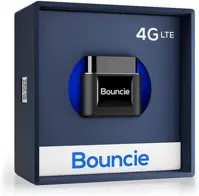
2. Bouncie — Best for Cars
For a car or truck you actually drive, the Bouncie is the easiest tracker to live with. It plugs into the OBD-II port, draws power from the vehicle, and never needs charging, so it can’t die mid-trip. It refreshes every 5 seconds, the fastest interval here.
Bouncie’s flat $9.65 a month plan covers unlimited vehicles on one account, which makes it the value pick for a multi-car household, and the app adds geofencing, trip history, and crash alerts. The obvious limit is that an OBD-II tracker sits in plain view and only fits vehicles with that port. For the wider field see our best OBD GPS tracker guide.
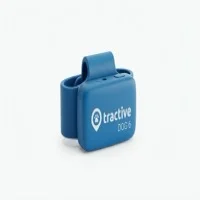
3. Tractive GPS DOG 6 — Best for Pets
If you’re tracking a dog rather than a car, the Tractive GPS DOG 6 is the category leader. It’s the only pick built for pets, with live 4G LTE-M tracking plus heart-rate and bark monitoring, and it runs about five days per charge.
Subscriptions start at $5 a month, the cheapest recurring fee in this guide, though the short battery makes weekly charging part of the routine. There’s a lighter cat-specific Tractive model if your animal is smaller. For the full picture, including how cellular pet trackers beat AirTags for dogs, see our best GPS trackers for pets roundup.
 Best Value
4. LandAirSea 54 — Best Magnetic Anti-Theft
The LandAirSea 54 is the classic magnetic tracker you slap under a bumper when concealment matters most. A strong magnet and weatherproof shell let you mount it inside a wheel well, with real-time 4G through the SilverCloud app.
Battery life is the trade-off: LandAirSea’s official 54 product page lists long standby modes, but active tracking drains any compact rechargeable tracker much faster than the Tracki Pro’s large battery. Plans start around $15 a month on annual billing. It’s the best pick for covert vehicle recovery or catching a suspicious second car. Our anti-theft car tracker guide covers concealment and recovery tactics in depth.
5. Vyncs — Best Subscription Value
The Vyncs is the cheapest tracker to own over time. Like Bouncie it plugs into the OBD-II port and runs on car power, but annual billing works out to roughly $7 a month, the lowest ongoing cost of any always-connected tracker here. You still get geofencing, trip logging, and 60-second location updates.
The trade-off versus Bouncie is a slower refresh and a less polished app. If avoiding fees entirely is the goal, weigh it against our guide to the cheapest ways to GPS-track a car.
6. Monimoto 9 — Best Hidden Anti-Theft
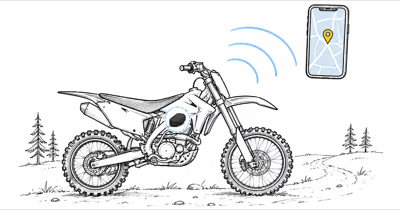
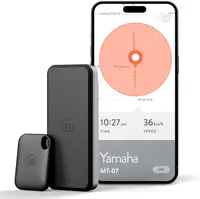
For a motorcycle, scooter, or e-bike, the Monimoto 9 is purpose-built theft protection, not a generic tracker. It arms automatically when your key fob moves away and stays silent, then alerts your phone the moment the bike moves without the fob.
A 12-month battery and IP68 waterproofing let it hide under a seat or fairing for a full season, and plans start at just $4 a month. At $199 it’s the most expensive pick here, but it’s the only one designed from the ground up to recover a stolen two-wheeler. Monimoto’s product documentation details the auto-arming key fob, and our best motorcycle GPS tracker guide compares it to the alternatives.
 Hot
Hot7. SpyTec GL300 — Best Real-Time Updates
The SpyTec GL300 is the pick when you need to watch movement second by second. It refreshes as fast as every 5 seconds, the quickest interval in this guide, and its small size tucks into a bag, glovebox, or magnetic case for short-term surveillance.
That speed costs battery and money: about two and a half weeks per charge and a plan that starts at $25 a month, the priciest subscription here. It’s the wrong tool for set-and-forget tracking but the right one for active monitoring over days, not months. See how it lines up against our top pick in SpyTec vs Tracki.
How Does GPS Tracking Actually Work?
A GPS tracker combines two radios. The first is a GPS receiver that listens to a constellation of satellites and calculates its own position; the Global Positioning System reference states that civilian receivers reach an accuracy near 4.9 meters under open sky. The second is a cellular modem that sends that position to a server you can view in an app, which is why these trackers need a SIM and a data plan.
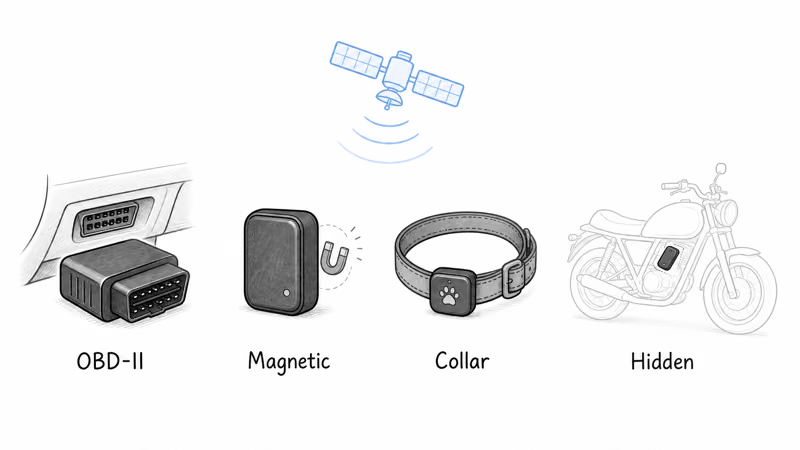
Most consumer trackers ride a low-power cellular standard. According to the LTE-M network documentation, it sips battery and reaches deep into buildings, which is how the Monimoto 9 waits silently for a year. In a dead zone the tracker reports its last fix once it reconnects.
That distinction is the whole reason to choose GPS over a tag. If your item never leaves a city and stays near people, a Bluetooth versus GPS comparison usually favors the cheaper tag, but if it can travel for miles or sit in an empty lot for days, only cellular GPS keeps reporting, a gap we break down in AirTag vs GPS tracker.
Do GPS Trackers Require a Subscription?
Almost always, yes. A real-time tracker needs a cellular connection to send its location, and that connection is a paid data plan running $4 to $25 per month. That recurring plan, not the sticker, is the real price.
A few designs dodge the recurring fee. Some trackers bundle several years of service into the purchase price, others let you bring a cheap third-party SIM, and a handful use direct radio instead of cellular. We collect the truly fee-free options in our guides to GPS trackers with no monthly fee and car trackers with no monthly fees, but no-fee usually means shorter range, manual SIM setup, or both.
How to Choose the Right GPS Tracker
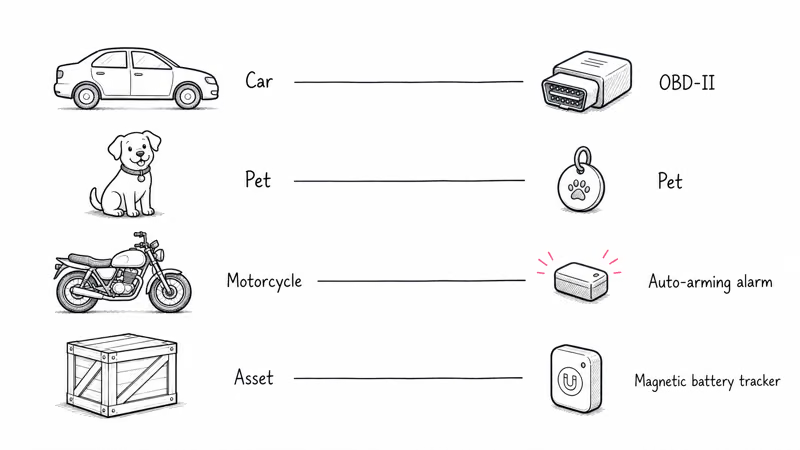
Start with what you’re tracking, because that decides almost everything. A car you drive wants an OBD-II tracker that never needs charging; a covert recovery job wants a magnetic battery tracker; a pet wants a collar tracker with health features; and a motorcycle wants a silent auto-arming alarm. Match the tool to the job before you compare specs.
Choose a cellular GPS tracker if…
- Your item can travel miles from you
- You need live, real-time location
- You’re tracking a car, pet, or motorcycle
- You can accept a monthly subscription
Choose a Bluetooth tag instead if…
- You’re finding keys, a wallet, or a bag
- The item stays in populated areas
- You want zero monthly fees
- You want a years-long battery
If that second box describes your item, a coin-cell tag is the smarter buy, and our guide to the top AirTag alternatives ranks the best Find My and Android-friendly options.
Then factor in who you’re tracking. For young or vulnerable people a purpose-built device beats a generic vehicle tag, so see our picks for the best teen-driver trackers and the best GPS trackers for kids.
Older relatives have their own needs around SOS buttons and discretion, which we cover in the best options for elderly relatives.
Form factor matters too. An e-bike and a boat each have different mounting and power realities, which is why we keep dedicated guides to the best e-bike trackers and the best boat trackers.
GPS Tracker Legality and Safety
Tracking your own car, your own pet, or property you own is legal and safe everywhere we’re aware of. The line you can’t cross is placing a tracker on a person or a vehicle you don’t own without consent, which is illegal in most jurisdictions and treated as stalking. The US Department of Justice confirms that its stalking resources outline the protections and the penalties, including statistics on the millions of victims affected each year.
Unlike Bluetooth tags, cellular GPS trackers don’t broadcast an unknown-tracker alert to nearby phones, so they’re harder to detect. Bluetooth tags now warn you under the cross-industry unwanted-tracking standard, but a hidden cellular tracker gives no such ping. If you suspect one, check the wheel wells, bumpers, and OBD-II port.
Bottom Line
GPS trackers solve the problem a Bluetooth tag can’t: keeping eyes on something that can travel for miles. For most people the Tracki Pro is the best all-round pick thanks to worldwide coverage and a year-long battery. If you’re tracking a daily-driver car the plug-in Bouncie is the easiest to live with, the Tractive GPS DOG 6 is the clear winner for pets, and the Monimoto 9 is the one to beat for motorcycle theft.
Whatever you choose, decide on the monthly plan before the hardware. A cheap tracker on an expensive subscription can cost far more over a few years than a pricier tag on a $4 plan. The running cost, not the sticker, is the real price of GPS tracking.
Frequently Asked Questions
What is the difference between GPS and Bluetooth trackers?
A GPS tracker pinpoints its own location using satellites and sends it over a cellular connection, so it works anywhere with signal and has no range limit. A Bluetooth tracker like an AirTag has no GPS chip and only reports its position when a nearby phone in a crowdsourced network detects it. GPS suits cars, pets, and assets that travel far, while Bluetooth tags suit keys, wallets, and bags that stay near people.
Do GPS trackers require a subscription?
Most do. Real-time GPS trackers use a cellular SIM to send location data, and that connection needs a paid data plan, typically $4 to $25 per month. A handful avoid the fee by including service in the purchase price, using a bring-your-own-SIM design, or relying on direct radio rather than cellular. Always factor the monthly cost into the total, since a cheap tracker can cost far more to run over a few years.
How long does the battery on a GPS tracker last?
It ranges from a few days to over a year. OBD-II trackers like Bouncie and Vyncs draw power from the vehicle and never need charging. Battery models vary widely: a Tractive pet tracker lasts about five days, the LandAirSea 54 about two weeks, and the Tracki Pro up to a year on a slow power-save reporting interval. Faster location updates always drain the battery quicker.
Can a GPS tracker work without cellular signal?
Most can’t. A standard cellular GPS tracker needs a mobile network to transmit its location, so it goes silent in a dead zone and reports the last known position once it reconnects. Some trackers add radio fallback for short-range finding off-grid, and a few premium units bridge to satellite for remote areas. For deep wilderness, a dedicated satellite communicator is more reliable than a consumer GPS tag.
Are GPS trackers safe from stalkers and unwanted tracking?
A GPS tracker you own and place on your own property is safe and legal to use. The risk is someone planting one on you without consent, which is illegal in most places. Unlike Bluetooth tags, cellular GPS trackers don’t broadcast an unknown-tracker alert to nearby phones, so they’re harder to detect. If you suspect one on your vehicle, check common hiding spots like wheel wells and the OBD-II port, or use an RF detector to sweep for it.
Which GPS tracker is best for hidden anti-theft use?
For covert vehicle recovery the magnetic LandAirSea 54 is the easiest to conceal, since a strong magnet lets you mount it inside a wheel well in seconds. For motorcycles and scooters the Monimoto 9 is the better choice because it arms automatically, stays silent, and hides under the seat with a 12-month battery. Both alert you the moment the vehicle moves without your key fob nearby.
Do GPS trackers work internationally?
Some do. Trackers with a global or multi-network SIM, such as the Tracki Pro and Monimoto 9, roam across many countries on local 4G networks. Others are locked to a single region or carrier and won’t connect abroad. If you travel or ship goods overseas, confirm the tracker advertises worldwide coverage and check whether international roaming costs extra on its plan.
How accurate is a GPS tracker location?
A modern consumer GPS tracker locates to within about 4 to 5 meters outdoors under open sky, which is enough to identify the parking spot or street a vehicle is on. Accuracy drops indoors, in parking garages, and among tall buildings where the satellite signal is blocked. Trackers that add Wi-Fi or cell-tower positioning fill some of those gaps but with lower precision than open-air GPS.