Teen drivers aged 16-19 have crash rates nearly four times higher than drivers aged 20 and older, according to IIHS teen crash statistics. A GPS tracker doesn’t make your teen a safer driver by itself. But teen driver tracking — whether you call it a GPS unit or a driving monitoring device — gives you real data, actual speeds, hard braking events, routes taken, and that data changes the conversation from “be careful” to “let’s talk about Tuesday night.”
This guide compares OBD-II plug-in trackers and magnetic GPS units on the factors that matter for a teen’s car: update frequency, app reliability, geofence accuracy, and how easily a teen can quietly unplug the device. Here is how the leading options stack up.
- OBD-II trackers (Bouncie, MOTOsafety, Vyncs) plug into any post-1996 car in under 60 seconds — no tools, no installation fee, and the vehicle’s power keeps the tracker running indefinitely
- MOTOsafety is the only tracker with a built-in teen driving education course and weekly A-F report card — designed specifically for new drivers in their first year behind the wheel
- 3-year cost ranges from $35 (AirTag 2 backup) to $925 (MOTOsafety monthly) — the subscription matters more than the device price on every tracker in this roundup
- Drivers aged 16-19 were involved in 2,611 fatal crashes in 2023, per NHTSA — the highest crash risk peaks in the first 6 months after getting a license
- A GPS tracker can qualify families for 5-40% auto insurance discounts through usage-based programs like Progressive Snapshot and State Farm Drive Safe and Save
The Best GPS Trackers for Teen Drivers at a Glance
| Tracker | Type | Teen Features | Subscription | 3-Year Cost |
|---|---|---|---|---|
| Bouncie | OBD-II | Speed alerts, geofence, tamper alert | $9.65/mo | about $437 |
| MOTOsafety | OBD-II | Driving course, report card, curfew alerts | $25/mo | about $925 |
| Vyncs Premium | OBD-II | Driver score, trip history, maintenance alerts | about $110/yr | about $330 |
| LandAirSea 54 | Magnetic | Location, speed history, covert mounting | $15/mo (annual) | about $570 |
| Family1st Portable | Magnetic | 4G LTE, moves between vehicles easily | $17-$22/mo | about $642-822 |
| SpaceHawk | Magnetic | 3-second updates, Google Maps app | $20/mo | about $770 |
| Apple AirTag 2 | Bluetooth | Location only, no driving data | None | about $35 |
OBD-II vs Magnetic vs AirTag: Which Type Does Your Family Need?
The hardware format determines what data you can see. Pick the wrong type and the best subscription in the world doesn’t help.
OBD-II plug-in trackers
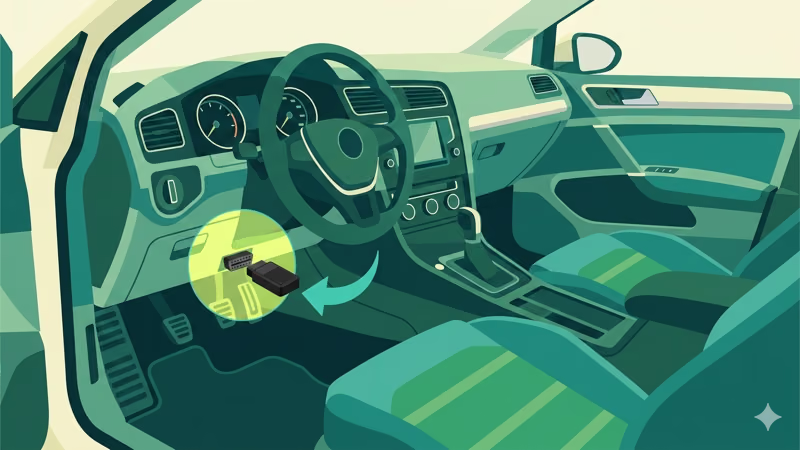
OBD-II trackers plug into the diagnostic port found on every car made after 1996, usually under the driver’s side dashboard. The vehicle powers the device, so battery life is effectively unlimited. Because the tracker draws power from the car, it also detects when the engine turns on and off — giving you exact trip start and end times.
The bigger advantage for teen monitoring: OBD-II trackers read engine data. Speed, harsh braking, rapid acceleration, and engine diagnostic codes all become visible in the parent app. That is data magnetic trackers physically can’t provide. Our Bouncie vs MOTOsafety comparison breaks down the full cost and coaching differences between these two OBD trackers.
OBD-II trackers are visible — your teen will see it. That is a feature, not a flaw. Research consistently shows that teens who know they’re being monitored drive more carefully than those who discover covert tracking after the fact.
Magnetic hidden trackers
Magnetic GPS trackers attach to the undercarriage or inside a wheel well with a strong magnet. They’re battery-powered, lasting roughly two weeks per charge. Location and speed are available; driving behavior scoring isn’t.
These work for families where the teen doesn’t know about the tracker, or where the vehicle has no functional OBD port. Our LandAirSea 54 review covers the covert installation process in detail.
AirTag as a backup layer
Apple AirTag 2 uses Bluetooth crowd-sourcing through Apple’s Find My network rather than cellular GPS. No subscription, no driving data, no speed alerts. At $29 one-time, it makes a useful theft-recovery backup hidden under a seat or in the spare tire compartment.
When a cellular tracker fails or is removed, the AirTag provides a location fallback. For a technical breakdown of how these two technologies differ, see our guide on AirTag vs GPS tracker differences.
Bouncie: Best Overall for Most Families
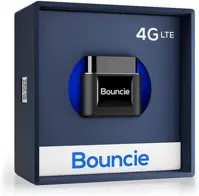
Bouncie combines the lowest subscription price in this roundup with the most important teen-specific feature: a tamper alert. The device costs about $89.99 and the plan is $9.65 per month with no contract. Bouncie reports location updates every 15 seconds while the vehicle is moving — fast enough to see whether a teen is on the highway or cutting through a neighborhood in near real time.
§ Review summary
Bouncie GPS Tracker
≡ Specs
- Network
- 4G LTE OBD-II
- Subscription
- $9.65/mo (no contract)
- Update interval
- 15 seconds
- Battery
- Vehicle-powered
- Teen-specific
- Tamper alert when unplugged
- 3-year cost
- About $437
✓ Pros
- +$9.65/mo is among the lowest monthly subscriptions in this roundup
- +15-second updates reveal actual route, not just start and end points
- +Tamper alert when unplugged from OBD-II power
- +Geofence alerts for home, school, and curfew zones
- +No contract, cancel any month without penalty
✗ Cons
- −No built-in driving course or educational component
- −Driver score reporting less structured than MOTOsafety's letter grade system
- −App interface is functional but not polished
§ Buy if
- ·Your teen has 6+ months of driving experience (past brand-new-driver phase)
- ·Tamper alerts matter (teen might try to unplug the tracker before late-night drives)
- ·15-second live updates beat 60-second after-the-fact reviewing for your scenario
- ·Month-to-month flexibility matters more than annual lock-in savings
The tamper alert is what separates Bouncie from most competitors. When the device is unplugged from the OBD port, the app sends a push notification after the tracker loses vehicle power. That means your teen can’t quietly pull the tracker before a late-night drive and reinsert it when they return home.
For the complete feature breakdown, read our Bouncie GPS Tracker review.
MOTOsafety: Best for Brand-New Drivers
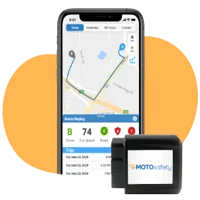
MOTOsafety is the only tracker built around driver education rather than just location monitoring. When a teen enrolls, they get access to a structured online driving course. The tracker grades each trip on speed compliance, hard braking, rapid acceleration, and time of day, then delivers a weekly A-F report card. That combination makes MOTOsafety a coaching platform, not just a surveillance device.
§ Review summary
MOTOsafety OBD GPS Tracker
≡ Specs
- Network
- 4G LTE OBD-II
- Subscription
- $25/mo
- Update interval
- 60 seconds
- Battery
- Vehicle-powered
- Teen-specific
- Driving course + A-F report card
- 3-year cost
- About $925
✓ Pros
- +Only tracker with a structured teen driving education course built in
- +Weekly A-F report card gives teens visible, objective performance feedback
- +Curfew alerts notify you if the car moves after a set hour
- +Inexpensive device price (about $25) lowers the upfront barrier
✗ Cons
- −$25/mo is the highest OBD subscription in this roundup
- −3-year total cost reaches about $925, most expensive option overall
- −Location update frequency slower than Bouncie's 15-second interval
§ Buy if
- ·Your teen is brand-new (first 6 months of licensure, highest crash risk window)
- ·Coaching matters more than location precision at this stage
- ·Weekly A-F report cards create accountability your teen will engage with
- ·$25/mo premium is acceptable for the education + scoring combo (switch to Bouncie later)
The NHTSA young driver safety data shows consistently that the highest-risk period for teen drivers is the first six months after licensure. That timing makes MOTOsafety worth the premium for families with a brand-new driver. Once your teen has six to twelve months of data showing safe patterns, switching to Bouncie at $9.65 per month maintains monitoring at a lower cost. Read our full MOTOsafety GPS Tracker review for a detailed look at the app and course content.
Vyncs Premium: Best No Monthly Fee Option
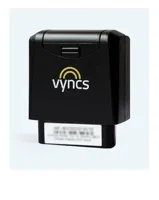
Vyncs Premium bills annually at roughly $110 per year, which works out to about $9.17 per month in practice — but because it bills upfront once a year, there is no recurring monthly charge. Over three years, Vyncs Premium costs around $330 total, making it the cheapest full-featured option in this roundup on a long-term basis. Parents who want that same annual-billing math for a younger child rather than a teen driver can compare a no-subscription GPS tracker for kids.
The IIHS’s crash statistics page reported that 16-year-old drivers have a fatal crash rate of 1.5 per 10 million miles driven, roughly 4 times the rate for drivers over 20.
§ Review summary
Vyncs Premium 4G GPS Tracker
≡ Specs
- Network
- 4G LTE OBD-II
- Subscription
- About $110/yr ($9.17/mo equiv.)
- Update interval
- 60 seconds
- Battery
- Vehicle-powered
- Device cost
- Free with plan
- 3-year cost
- About $330
✓ Pros
- +Annual billing means no monthly credit card charge to manage
- +Lowest 3-year total cost of any subscription tracker (about $330)
- +Driver Score tracks braking, speed, acceleration, and cornering
- +Maintenance alerts notify you when oil change or service is due
✗ Cons
- −60-second update interval feels slow when watching a live trip
- −No tamper alert, teen can unplug without triggering a notification
- −Annual billing means a full year's fee is non-refundable if plans change
§ Buy if
- ·You prefer paying once a year over recurring monthly charges
- ·Lowest 3-year total cost (~$330) is the deciding factor
- ·60-second updates are enough for after-trip review (not live monitoring)
- ·You trust your teen not to unplug the tracker (no tamper alerts at this tier)
The 60-second update interval is the meaningful limitation. For reviewing where your teen went after the fact, it works fine. But watching a live trip with 60-second pings is frustrating compared to Bouncie’s 15-second cadence.
If live monitoring matters to you, Bouncie’s 15-second cadence is worth the small monthly premium over Vyncs’s annual plan. Our full Vyncs GPS Tracker review covers the driver scoring methodology and app experience in detail.
LandAirSea 54: Best Covert Option
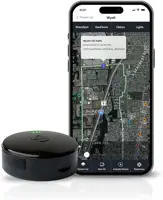
LandAirSea 54 is the standard recommendation for covert monitoring when parents want a tracker the teen doesn’t know about. The puck-shaped device attaches magnetically to the undercarriage, inside a wheel well, or under a bumper. At $30 for the device and $15 per month on the annual plan, it’s cost-effective for covert monitoring and works on any vehicle regardless of model year.
§ Review summary
LandAirSea 54 GPS Tracker
≡ Specs
- Network
- 4G LTE cellular
- Subscription
- $15/mo (annual plan)
- Battery
- About 2 weeks
- Mount
- Magnetic, hidden install
- Update interval
- 3 sec to 3 min by plan
- 3-year cost
- About $570
✓ Pros
- +Hidden magnetic mount, teen doesn't know it's there
- +Works on any vehicle, including cars older than 1996
- +Compact form factor fits nearly any concealed mounting location
- +$15/mo annual plan keeps 3-year total to about $570
✗ Cons
- −No driving behavior data, location and speed only
- −Battery needs recharging every 1-2 weeks without fail
- −Covert tracking can damage trust severely if discovered
§ Buy if
- ·You've already decided covert monitoring is necessary (high-risk scenario only)
- ·Teen drives a pre-1996 car that lacks OBD-II
- ·You can sustain a 1-2 week recharging routine without missing a cycle
- ·You've weighed the trust risk: discovery causes severe relational damage
Family1st Portable GPS: Best for Multi-Vehicle Families
Family1st is the easiest tracker to move between vehicles. The magnetic mount repositions without tools, so it works for families rotating between vehicles like a Civic and a RAV4.
If your teen drives two different cars — their own vehicle plus your car on weekends — Family1st travels with them without requiring a second subscription or device. For a direct feature and cost comparison between this portable tracker and the OBD-II Bouncie, see our Bouncie vs. Family1st breakdown.
Family1st at a glance: moves between vehicles in seconds on one subscription, runs 4G LTE with reliable update performance, and the magnet holds through car washes and highway driving. The trade-offs: $17-$22/mo is higher than Bouncie or Vyncs, driving-behavior data stops at speed, and the two-week battery means regular charging interruptions.
SpaceHawk: Best Real-Time Updates
SpaceHawk’s 3-second location update interval is the fastest in this roundup by a significant margin. At that frequency, watching a live trip feels close to real time. The SilverCloud app integrates directly with Google Maps, so the interface is immediately familiar. At $50 for the device and $20 per month, it sits mid-range on price while delivering top performance on update speed.
SpaceHawk at a glance: 3-second updates give the closest approximation of live tracking available, the waterproof build handles rain and car washes, and Google Maps integration makes the app instantly usable. Caveats: no driving-behavior data beyond location and speed, $20/mo adds up to roughly $770 over 3 years, and battery life varies with the update-frequency setting.
Apple AirTag 2: Best $29 Backup Layer
AirTag 2 belongs in your teen’s car, but not as a standalone tracking solution. Drop one in the glove box, under the seat, or tucked into the spare tire compartment. It costs $29, never needs a subscription, and provides a location fallback if the cellular tracker is removed or fails. When your teen’s car is stolen or parked somewhere unusual and you need a second data point, the AirTag delivers it for essentially nothing per month.
Apple AirTag 2 at a glance: $29 one-time with zero monthly fees, hidden in the car as a theft-recovery backup, CR2032 battery runs about 12 months, and it works silently alongside any OBD-II or magnetic tracker. Limits: Bluetooth crowd-sourcing means update frequency depends on nearby iPhones, there is no speed or braking data, the anti-stalking feature alerts your teen over time rather than instantly, and it can’t replace a dedicated GPS tracker for real driver monitoring.
One important note: Apple’s unwanted tracking alerts will notify your teen that an AirTag is traveling with them over time, not instantly. This is a privacy protection Apple built in deliberately.
If your teen has an iPhone, they will receive this alert. Have the conversation before you place the AirTag in the car. See our AirTag for car guide for placement options that maximize range while staying hidden.
What Is the 3-Year Total Cost for Each Tracker?
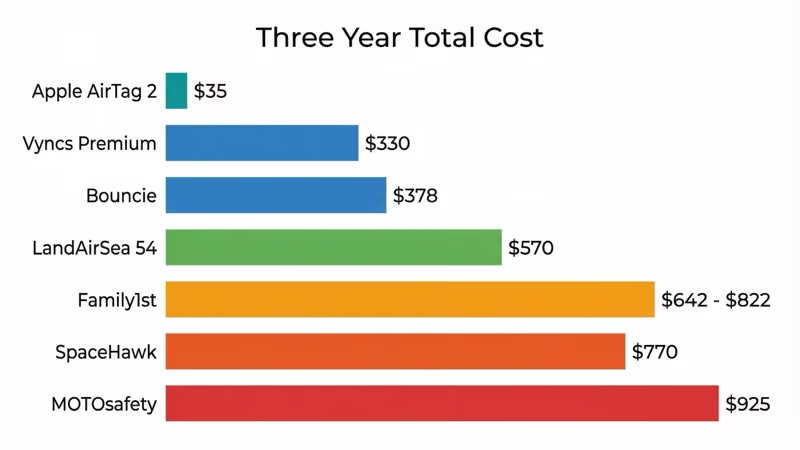
Most GPS tracker comparisons highlight the device price, which is almost irrelevant to the actual cost of ownership. The subscription drives the long-term number. Here is what three years actually costs with each device:
| Tracker | Device | Monthly Equivalent | 36-Month Sub | 3-Year Total |
|---|---|---|---|---|
| Vyncs Premium | included | about $9.17/mo (annual billing) | $330 | about $330 |
| Bouncie | $90 | $9.65/mo | $347 | about $437 |
| LandAirSea 54 | $30 | $15/mo (annual) | $540 | about $570 |
| Family1st | $30 | $17-$22/mo | $612-792 | about $642-822 |
| SpaceHawk | $50 | $20/mo | $720 | about $770 |
| MOTOsafety | $25 | $25/mo | $900 | about $925 |
| Apple AirTag 2 | $29 | $0 | about $6 (batteries) | about $35 |
Vyncs wins on total 3-year cost by a narrow margin over Bouncie. But Bouncie’s tamper alert and 15-second updates are worth the $48 per year difference for most families. If you want to understand the no-subscription angle more deeply, our GPS tracker no monthly fee guide covers BYOD SIM options and other approaches that eliminate the recurring charge entirely.
Privacy vs Safety: Having the Right Conversation

How you introduce a GPS tracker matters as much as which one you choose. The CDC teen driver risk factors research indicates that active parental involvement in monitoring — not covert surveillance — correlates with improved driving outcomes.
Why tracking without transparency backfires
When teens discover covert tracking, the reaction is consistent: anger at the deception rather than acknowledgment of the safety rationale. That damages the relationship and makes the teen less likely to come to you when something actually goes wrong. A visible OBD-II device introduced openly reframes monitoring as a graduated trust system rather than secret surveillance.
Setting up the tracking agreement
Frame the tracker as a coaching tool with a clear graduation plan. Agree on specific thresholds in advance: no speed alerts over 80 mph and no hard braking events for 12 months earns expanded freedom. Write it down. Let your teen see their own driving scores — teens who engage with their own data drive measurably better than those who know monitoring is happening but have no visibility into the results.
When covert tracking is the right call
There are situations where transparent monitoring isn’t realistic — suspected DUI behavior, street racing, or a teen who has already removed a visible tracker once. In those cases, the LandAirSea 54 or SpaceHawk hidden magnetically under the vehicle provides covert location data. Treat this as a temporary measure with a clear plan for the direct conversation when the behavior changes. On vehicle ownership: tracking a car you own is legal in every US state, regardless of who drives it.
Can a Teen Driver GPS Tracker Lower Your Insurance?
Several major insurers run usage-based programs that apply discounts based on telematics data. Progressive Snapshot, State Farm Drive Safe and Save, and Allstate Drivewise all offer 5-40% discounts on base premiums for safe driving behavior. Some programs accept third-party GPS data; others require their own hardware.
A Progressive teen driving survey found that teen drivers monitored by parents have measurably lower crash rates than unmonitored peers — the same correlation insurers use when pricing your premium. Even when your insurer requires their own telematics device, running a parallel tracker like Bouncie gives you independent data to understand exactly which driving events are affecting the insurer’s score.
Good student discounts (typically 5-25%) stack with usage-based discounts. A teen with a 3.0 GPA and a clean six-month Bouncie driving record can legitimately qualify for two separate discount categories at the same time. Our car GPS tracker no monthly fees guide covers the budget end of vehicle tracking if insurance discount optimization is the primary goal.
Why Teen Crash Risk Peaks in the First Six Months
New drivers handle the mechanical act of driving adequately after passing a test. The problem is cognitive load. Processing a four-way intersection, managing a passenger’s distraction, and merging onto a highway simultaneously overwhelms a brain that has only accumulated a few months of driving pattern recognition.
This isn’t attitude — it’s a function of experience and neural development. The prefrontal cortex, which governs risk assessment and impulse control, doesn’t fully develop until roughly age 25.
The numbers reflect this. The IIHS teen crash statistics put the fatal crash rate for 16-19 year olds at nearly four times the rate of drivers aged 20 and older. NHTSA data shows 2,611 people were killed in crashes involving teen drivers in 2023. Nighttime driving is particularly dangerous for this group: the fatal crash rate after dark is roughly four times the daytime rate for teen drivers.
A GPS tracker can’t fix any of those underlying factors. But a device that tells you your teen was doing 83 mph at 11:45 PM on a Tuesday gives you something concrete to discuss. That conversation — anchored in data rather than suspicion — is where behavior change actually happens. If you’re managing tracking across multiple children of different ages, our guide to the best GPS tracker for kids covers the full progression from toddlers through teen drivers.
Bottom Line
Bouncie is the right choice for most families: $9.65 per month, 15-second updates, tamper alerts, and no contract to worry about. If your teen just got their license and needs structured coaching through the high-risk first year, MOTOsafety’s report card system justifies the $25 per month. If you want the lowest total cost and can accept 60-second updates, Vyncs Premium at ~$110 per year is the most cost-effective full-featured option over three years.
Whatever you choose, add an Apple AirTag 2 to the spare tire compartment as a theft-recovery backup. It costs $29 once, never needs attention, and provides a location fallback if the cellular tracker is ever removed. The combination of an OBD-II tracker for driving behavior plus an AirTag for vehicle recovery covers both monitoring scenarios for under $120 in upfront hardware costs.
Have the conversation with your teen before you plug anything in. A tracker framed as a coaching tool with a clear graduation plan builds more lasting trust than one your teen discovers on their own.
FAQ
Can my teen disable or unplug an OBD-II GPS tracker?
Yes, physically — an OBD-II tracker can be unplugged by anyone with access to the port. Bouncie specifically addresses this with a tamper alert: when the device loses power from the OBD port, the parent app receives a push notification. Vyncs and MOTOsafety don’t send tamper alerts, so a determined teen could unplug those devices briefly without triggering a notification. If tamper resistance is your priority, Bouncie is the correct choice.
Do GPS trackers for teen drivers require a monthly subscription?
Most do. The cellular data that transmits location from the tracker to your phone requires network coverage that providers pass on as a subscription fee. Bouncie charges $9.65 per month with no contract. Vyncs Premium bills annually at roughly $110 per year — no monthly charge, but paid upfront. Apple AirTag 2 is the only option in this roundup with no subscription at all, but it uses Bluetooth crowd-sourcing rather than cellular GPS and provides location only, with no speed alerts, driving behavior data, or geofencing.
Is it legal to put a GPS tracker on your teenager’s car?
In the United States, it’s legal to track a vehicle you own. If you own the car your teenager drives, placing a GPS tracker on that car is generally legal nationwide, though the specifics vary by state. If your teen owns the vehicle in their own name, the legality becomes more complicated and varies by state. Vehicle ownership matters more than the driver’s age in determining legality. Most families with teen drivers own the family vehicle, which places tracking clearly within legal boundaries.
What is the best GPS tracker for a brand-new teen driver?
MOTOsafety is the best choice for a brand-new driver. It includes a structured teen driving education course, grades each trip on a weekly A-F report card, and provides curfew alerts for nighttime driving. The $25 per month cost is higher than Bouncie, but the built-in coaching component is unique in this category. After your teen has 6-12 months of driving experience with a clean record, switching to Bouncie at $9.65 per month maintains monitoring at a lower ongoing cost.
Can a GPS tracker lower my teen’s car insurance?
It can, depending on your insurer. Progressive Snapshot, State Farm Drive Safe and Save, and Allstate Drivewise are usage-based programs that discount premiums 5-40% based on driving behavior data. Some programs accept third-party GPS tracker data; others require their own telematics device. Even when the insurer uses their own hardware, a parallel tracker like Bouncie gives you independent visibility into the specific driving events driving the insurer’s score. Good student discounts stack with usage-based discounts, creating meaningful combined savings for responsible teen drivers.
Does an AirTag work as a teen driver tracker?
Not as a primary tracker. AirTag uses Bluetooth crowd-sourcing through Apple’s Find My network, not cellular GPS. It provides location but no speed data, no driving behavior scoring, no geofence alerts, and no tamper notifications. Update frequency depends on nearby Apple devices and can range from seconds in dense urban areas to hours in rural settings. AirTag works best as a $29 backup alongside a cellular GPS tracker — hidden in the spare tire compartment as theft-recovery insurance while a device like Bouncie handles actual driver monitoring.
How do driving behavior scores work on GPS trackers?
OBD-II trackers read vehicle data directly from the diagnostic port, which reports speed, rapid acceleration, and hard braking events in real time. The app translates these raw data points into a driving score. MOTOsafety uses an A-F letter grade based on trip-by-trip events. Vyncs generates a numeric Driver Score that weights braking, acceleration, speed, and cornering across each trip. Bouncie logs every hard braking and rapid acceleration event with timestamps and GPS coordinates but doesn’t produce a composite score, giving parents a direct event log rather than a summarized grade.