The Monimoto 9 is the best GPS tracker for a dirt bike at $199 plus $4/mo. It auto-arms from a key fob, survives off-road vibration with IP68 sealing, and calls your phone when the bike moves.
A dirt bike is harder to track than a street bike. It has no license plate to register, no OBD port to wire into, and it spends its life in a trailer, a shed, or out on a trail far from cell towers. These 5 hidden GPS trackers cover the main dirt-bike recovery scenarios: silent theft alerts, concealed mounting, live trail tracking, and unattended garage storage.
- Monimoto 9 is the top pick — 12-month battery, IP68 sealed, auto-arms from a key fob, $199 + $4/mo
- Family1st is the best value — live 4G tracking with an SOS button for about $30 up front and $22/mo
- Off-grid coverage is the real test — cellular trackers need LTE-M or strong 4G to reach a trail far from towers
- Hidden mounting beats magnetic — a thief checks the frame first, so concealed placement matters more on a plateless bike
- Two-year cost runs $295 to $730 — the subscription, not the device price, decides the total
What Makes a Dirt Bike Tracker Different?
A dirt bike tracker has one job a car tracker rarely faces: survive constant high-frequency vibration while staying hidden. The frame offers almost nowhere to conceal a device.
Theft is a real risk to plan around. According to the National Insurance Crime Bureau, there were 54,736 motorcycle theft reports in the U.S. in 2022, and the bureau reported that law enforcement recovers only a little over 40 percent of stolen bikes — far below the 85 percent recovery rate for cars. On a plateless off-road bike with no VIN check at resale, that recovery gap is even wider.
A tracker can also pay for itself. Consumer Reports states that anti-theft devices like GPS tracking earn up to a 15 percent discount on your insurance.
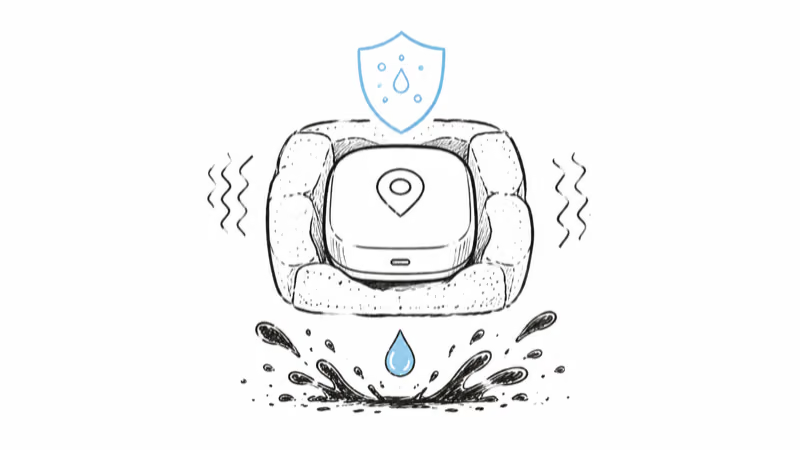
The trackers that earn their keep share three traits. They seal to at least IP67 so trail mud and pressure-washing won’t kill them, run on a cellular standard that holds a signal away from town — the FCC’s mobile LTE coverage map shows how patchy that gets off the highways — and mount somewhere a thief wouldn’t check first.
That last trait matters most. The FCC’s smart-device theft-protection guidance makes the same point: recovery tools work best when a thief can’t disable them fast.
At-a-Glance: The 5 Best Dirt Bike GPS Trackers
| Tracker | Best for | Price | Subscription | Battery |
|---|---|---|---|---|
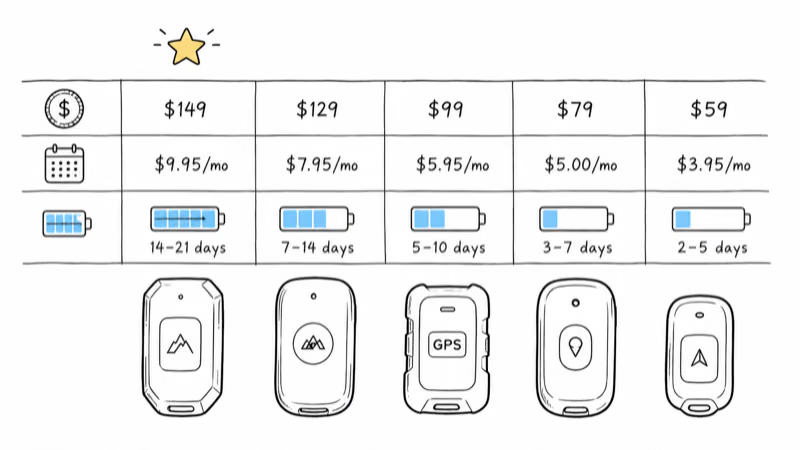
| Monimoto 9 | Overall theft recovery | $199 | $4/mo | 12 months |
| Sherlock GPS | Fully hidden mounting | $170 | $4/mo | Rechargeable |
| SpyTec GL300 | Live trail tracking | $40 | $25/mo | 2.5 weeks |
| Family1st | Budget live tracking | $30 | $22/mo | 2 weeks |
| Optimus 3.0 | Long battery + SOS | $27 | $19.95/mo | Up to 1 month |
Each pick below has its own strengths. Match the tracker to whether your priority is silent theft recovery, real-time trail location, or the lowest monthly cost.
Monimoto 9: Best Overall Dirt Bike Tracker
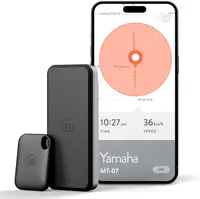
The Monimoto 9 is purpose-built for two-wheel theft recovery, and it’s the standout of this group. It ships with a key fob that auto-arms the tracker the moment you walk away. When the fob moves out of range, the unit goes live with nothing for you to remember.
If the bike then moves without the fob nearby, it calls your phone in under a minute and starts reporting location. That auto-arming design is exactly what an off-road bike needs, because you rarely “lock” a dirt bike the way you lock a car.
The waterproofing and coverage hold up too. Monimoto’s official product page confirms that the unit carries IP68 waterproof sealing, an LTE-M cellular radio, and a rechargeable battery rated up to 12 months between charges. LTE-M is the lowest-power cellular standard, which is why it reaches a trailhead where a standard 4G tracker drops out. Our full Monimoto 9 review covers the alert flow in depth.
Monimoto 9
Price is the trade-off. At $199 up front it costs more than every magnetic tracker here, and updates land roughly every five minutes while moving rather than every few seconds. For silent, hands-off recovery, that trade is worth it.
Sherlock GPS: Best Fully Hidden Tracker
The Sherlock GPS tracker takes the opposite approach to a magnetic box: it’s designed to disappear inside the bike itself. Built to slip into handlebar tubes, it leaves no external box for a thief to spot and rip off. On a dirt bike with exposed frame rails and no bodywork to hide behind, that concealment is its biggest advantage.
It pairs GPS positioning with GSM cellular reporting and fires a motion alert the instant the bike is disturbed, and the rechargeable battery means no wiring or CR2032 swaps. Because it mounts inside the bars, it suits the hiding-spot strategy in our best places to hide a GPS tracker on a motorcycle guide.
Sherlock GPS Bike Tracker
Two things to plan around. The internal mount is a slightly more involved install than a magnet, and like every cellular tracker it depends on GSM coverage. Confirm signal at your riding spots first.
SpyTec GL300: Best for Live Trail Tracking
When you want to watch a dot move in real time rather than wait for a theft alert, the SpyTec GL300 is the pick. It reports over 4G LTE with update intervals as tight as 5 seconds, the fastest refresh in this group, so you can follow a bike across a trail network as it happens.
That live feed earns its keep beyond theft. Tracking a buddy on a ride, confirming a borrowed bike made it home, or watching a recovery unfold all benefit from second-by-second updates. Battery life is the catch: its 2.5-week runtime is shorter than the Monimoto’s, so it suits a bike ridden and charged often rather than parked for a season. It’s the same engine we cover in our SpyTec GL300 review.
SpyTec GL300

The GL300 has no built-in mount, so you supply a weatherproof magnetic case or hide it inside a sealed compartment. Budget for the $25/mo plan — the live tracking that makes it shine is the part you’re paying for.
Family1st: Best Budget Live Tracker
The Family1st portable tracker delivers real-time 4G tracking for the lowest entry price here, about $30 for the device. It adds a built-in magnetic mount and an SOS panic button that matters on remote trails, where a crash can leave you out of cell-signal range of help.
For a rider who wants live location without the Monimoto’s $199 outlay, it’s the value play. See our Family1st GPS tracker review for the plans.
Family1st Portable GPS Tracker
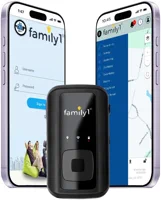
Subscription is the catch. At about $22/mo it costs more than the Monimoto’s $4/mo plan, so over two years the cheaper device becomes the pricier system. The 2-week battery also means frequent recharging if the bike sits.
Optimus 3.0: Best Battery Life with SOS
The Optimus 3.0 stretches the longest runtime of the live trackers here — up to a month on its default 1-minute reporting interval, which suits a dirt bike stored between rides. It tracks over 4G LTE, includes geofencing and speed alerts, and carries the same SOS button as the Family1st.
Geofencing is the real standout. Draw a boundary around your shed and the Optimus pings you the moment the bike crosses it, before a thief gets far — a feature worth more in storage than on the trail. Our Optimus GPS tracker review covers its longer-haul use, and the same logic carries over to tracking other parked gear.
Optimus 3.0 GPS Tracker
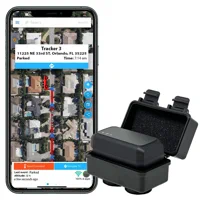
One caveat on battery. Its 1-month figure assumes the slow 1-minute interval; crank reporting up for live trail use and it drains far faster.
The $19.95/mo plan sits mid-range here, and it pairs well with the same logic in our best GPS tracker for a trailer guide.
How Do You Hide a GPS Tracker on a Dirt Bike?
A dirt bike gives you less to work with than a car, so concealment takes planning. The frame is the first place a thief checks. Skip the obvious magnetic mount on an exposed rail unless that tracker is a decoy.
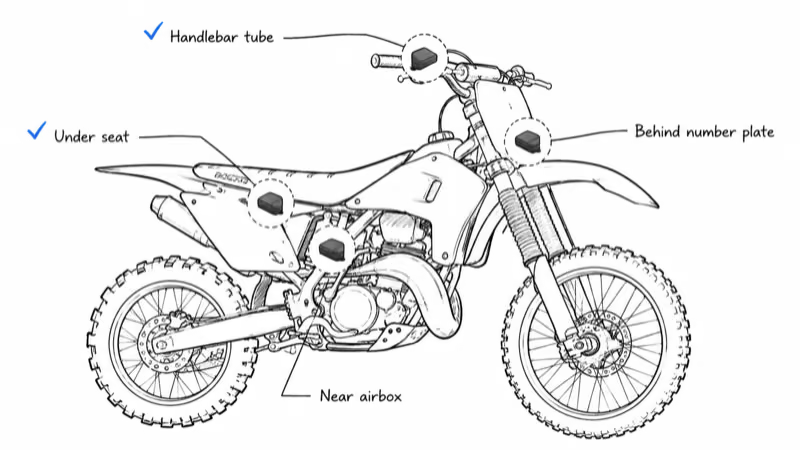
Better spots are inside the handlebar tube (where the Sherlock lives), tucked under the seat against the subframe, sealed near the airbox away from heat, or wrapped behind the number plate backing. Wherever you mount it, keep the antenna clear of solid metal — a tracker fully wrapped in the frame loses GPS and cellular signal. Leave the unit oriented so at least one face points outward through plastic or open air.
Does a Dirt Bike Tracker Work Off-Grid?
Partly, and this question decides which tracker you buy. Every device here reports over a cellular network, so it only works where it can reach a tower. On a remote trail with no bars, the tracker stores its last known fix and pushes it the moment it regains signal — usually as the bike is hauled back toward a road, which is exactly where a stolen bike goes.
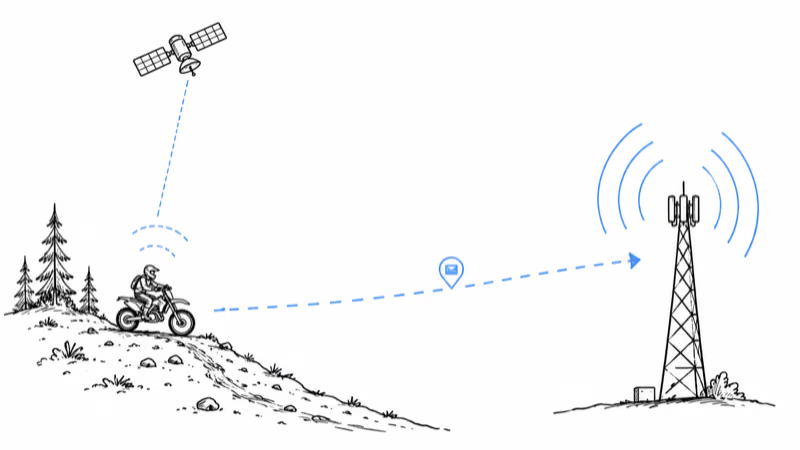
The radio standard matters here. LTE-M, used by the Monimoto 9, is a low-power standard designed for wide-area IoT coverage, while standard 4G trackers may refresh faster where coverage is strong; confirm carrier coverage at the spots you ride.
So match the radio to your riding: deep backcountry favors the LTE-M pick, while trails near roads are fine on 4G.
Either way, GPS itself works anywhere — it’s the cellular uplink, not the satellite fix, that needs a tower. So choosing the right radio standard for where you ride is the single decision that most affects whether you ever see your bike again. Compare the field in our best GPS tracker for a motorcycle roundup.
Bottom Line
For most dirt bike owners, the Monimoto 9 is the tracker to buy. Its auto-arming key fob, 12-month battery, IP68 sealing, and LTE-M reach match how an off-road bike actually lives — parked unlocked, hauled in a trailer, and ridden far from towers. At $199 plus $4/mo it’s also the cheapest to own over two years.
Choose the Family1st if you want live tracking on a tight budget and will accept the higher monthly fee, the Sherlock if total concealment is your priority, or the Optimus if long storage battery life and geofencing matter most. Whatever you pick, hide it well and confirm the cellular signal at the spots your bike sits, because the best tracker is the one a thief never finds and can never outrun the signal of.
FAQ
What is the best GPS tracker for a dirt bike?
The Monimoto 9 is the best overall dirt bike GPS tracker. It auto-arms from a key fob, survives off-road vibration with IP68 sealing, runs up to 12 months per charge, and uses LTE-M cellular to reach signal far from town. At $199 plus $4 a month it’s also the cheapest to own over two years. For a budget live-tracking option, the Family1st portable tracker costs about $30 up front.
Can you put a GPS tracker on a dirt bike?
Yes. A dirt bike has no OBD port and no license plate, but you can still mount a self-powered GPS tracker. Hidden cellular trackers like the Monimoto 9 or the Sherlock unit run on internal batteries and report over cellular, so no wiring is needed. The challenge is concealment: with no bodywork, tuck the tracker inside the handlebar tube, under the seat, or behind the number plate rather than on an exposed frame rail.
Do dirt bike GPS trackers work without cell service?
The GPS fix works anywhere, but the cellular uplink that sends that fix to your phone needs a tower. On a remote trail with no signal, a tracker stores its last position and pushes it the moment it regains coverage, which usually happens as a stolen bike is moved toward a road. LTE-M trackers like the Monimoto 9 reach furthest off-grid; standard 4G trackers refresh faster but drop sooner away from town.
How much does a dirt bike GPS tracker cost?
Device prices run from about $27 for the Optimus 3.0 to $199 for the Monimoto 9. The bigger number is the subscription. Over two years, total cost ranges from roughly $295 for the Monimoto at $4 a month to about $730 for a tracker on a $25 monthly plan. The cheaper device with a pricier plan often costs more in the long run, so weigh the monthly fee as heavily as the upfront price.
Will a tracker survive dirt bike vibration?
The trackers in this guide are sealed to at least IP67, and the Monimoto 9 carries IP68 dust and water resistance, so trail mud and pressure washing don’t kill them. Constant high-frequency vibration is the harder test. Mount the unit with foam padding or inside a cushioned cavity rather than rigidly against metal, which reduces the shock that can loosen connections or batteries over time.
Where should you hide a GPS tracker on a dirt bike?
The best spots are inside the handlebar tube, under the seat against the subframe, near the airbox away from engine heat, or behind the number plate backing. Avoid an exposed magnetic mount on the frame, since that is the first place a thief checks. Keep the antenna clear of solid metal so the GPS and cellular signal stay strong, and orient at least one face of the tracker toward open air or plastic.
Is a subscription required for a dirt bike tracker?
Most cellular trackers need a monthly or annual plan to keep the SIM active, ranging from $4 a month for the Monimoto 9 to about $25 a month for live 4G trackers. The exception is the Invoxia cellular tracker, which includes three years of service in the purchase price with no monthly fee. After those three years a renewal applies, but it lets you avoid a recurring bill up front.