Trak-4 targets trailers, equipment and vehicles that need cellular location updates without an OBD-II connection. The current rechargeable tracker page states that it combines GPS, Wi-Fi and cellular positioning with a mobile app, web dashboard, text alerts and email alerts.
- Battery claims depend on cadence — the 12–18 month rating uses daily reporting, not one-minute tracking.
- Three current plan tiers — in-motion reports are hourly, every 10 minutes or every minute.
- App and web access — the old no-app limitation no longer matches Trak-4’s current product page.
- USA-focused service — verify coverage for the exact asset location before buying or mounting the tracker.
- Authorized assets only — use GPS tracking only on vehicles and equipment you own or have permission to monitor.
This is an editorial, source-based review rather than a hands-on road test. It corrects old pricing, app and plan claims, then keeps accuracy and runtime in Verification pending until they can be measured independently.
What Is the Trak-4 Rechargeable Tracker Best For?
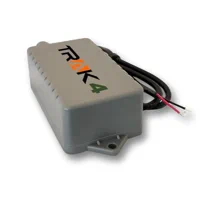
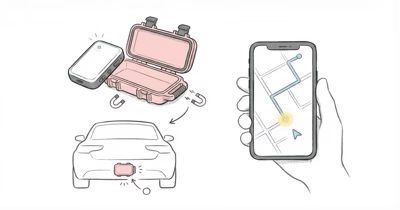
The portable model fits assets that may sit still for long periods: trailers, construction equipment, farm machinery and vehicles without a convenient power connection. It has an internal rechargeable battery, so installation doesn’t require tapping into the vehicle’s electrical system.
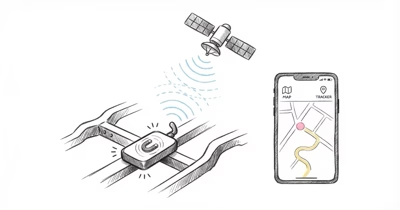
Trak-4 states that setup includes account activation, selecting a reporting plan and placing the unit where it can receive useful location signals. The service provides movement, geofence and low-battery alerts by text or email, alongside route history in the app or browser dashboard.
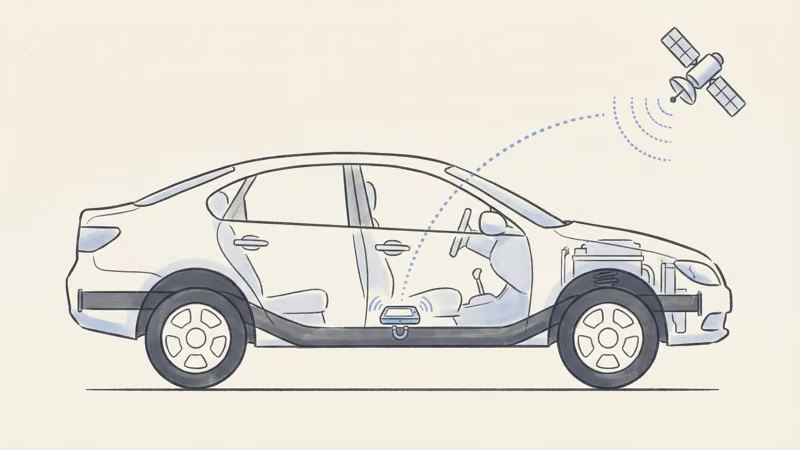
Don’t hide a tracker on someone else’s vehicle or use it to monitor a person without permission. For theft recovery, document the device and asset, use authorized placement, and share location data with law enforcement rather than attempting recovery yourself.
Battery Life Depends on Reporting Frequency
The headline 12–18 month battery rating applies to daily reporting. Trak-4’s current buying guide confirms that reducing update frequency is the main way to extend runtime on a battery-powered GPS tracker.
When the asset moves, the selected plan changes how often it reports: once per hour, every 10 minutes or every minute. Faster reporting wakes the GPS and cellular radios more often, so it can’t deliver the same runtime as a tracker checking in once daily.
Signal conditions also matter. Searching for GPS or cellular service consumes power, and indoor or shielded placement can reduce both accuracy and battery life. Treat 12–18 months as a low-frequency manufacturer rating, not a guarantee for an actively driven vehicle.
Current Subscription Plans and Cost
Trak-4 requires an active cellular plan. As checked on July 20, 2026, the product page states that annual billing starts at $6.99 per month, while month-to-month billing costs more.
| Plan | Annual-billing rate | Monthly-billing rate | In-motion reports |
|---|---|---|---|
| Basic | $6.99/mo | $15.99/mo | Every hour |
| Premium | $9.99/mo | $18.98/mo | Every 10 minutes |
| Elite | $14.99/mo | $22.95/mo | Every minute |
All three tiers include a daily stationary check according to the current plan table. Hardware promotions and service prices can change, so confirm the checkout total rather than relying on an old review or marketplace screenshot.
For alternatives with different power and fee models, compare our GPS tracker shortlist and car tracker fee guide. A true cellular tracker normally needs service to transmit its position.
Mobile App, Web Dashboard and Alerts
The old claim that Trak-4 has no app is no longer current. Trak-4’s vehicle tracking page states that location, route history and alerts are available through its mobile app and desktop dashboard.
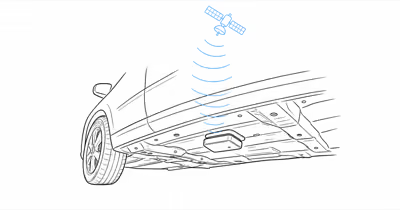
The platform includes movement alerts, geofences, location history and low-battery notifications. The tracker uses GPS outdoors, with Wi-Fi and cellular geolocation as fallback methods when satellite positioning is blocked. GPS.gov’s accuracy guidance explains why sky blockage and surroundings affect a satellite fix.
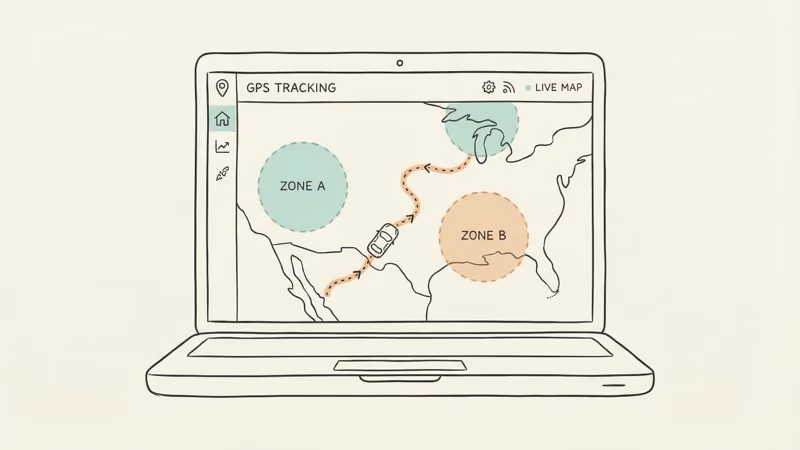
Fallback positioning is useful for continuity, but it isn’t proof of equal precision. HotAirTag hasn’t measured the app’s alert delay or map accuracy in open sky, garages and rural coverage, so those performance questions remain pending.
Weatherproofing, Placement and Power Options
The rechargeable product page calls the enclosure weatherproof and suitable for indoor or outdoor use. Trak-4’s wider site currently uses conflicting IP67 and IP68 language, so this review doesn’t assign a specific ingress rating without a model-specific certification record.
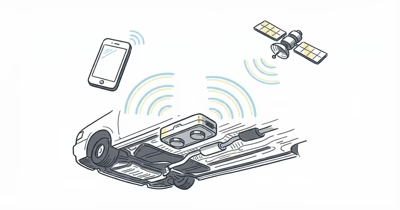
Placement should balance security with signal access. Metal enclosures, deep interior cavities and dense structures can block GPS and cellular service. Test the installed tracker on your own asset before depending on it for a theft or geofence alert.
The rechargeable model isn’t the same as the separate Trak-4 12V unit. If you want permanent vehicle power, choose the dedicated wired model rather than modifying the portable tracker. Our construction equipment tracker guide explains where battery, wired and solar designs fit.
Who Should Buy the Trak-4?
Choose Trak-4 if you need USA-focused tracking for a trailer, vehicle or equipment asset, can accept a cellular subscription, and value long low-frequency runtime more than second-by-second driving telemetry.
Skip it if you need confirmed international roaming, a published model-specific submersion rating, or independently tested one-minute runtime. An OBD-II tracker may suit a daily-driven car better, while a solar model can reduce charging on equipment stored outdoors.
The plan structure is the real decision. Basic makes sense for an asset that rarely moves; Premium provides a middle cadence; Elite offers the fastest published updates. Select the interval that answers your actual monitoring question instead of paying for more location points than you use.
Bottom Line
Trak-4 is best understood as a low-maintenance, subscription GPS tracker for authorized US assets. Its current platform includes an app and web dashboard, and its annual plans range from hourly to one-minute in-motion reports. The 12–18 month battery claim belongs to daily reporting, so buyers who need frequent updates should expect a shorter charging interval. Accuracy, runtime and ingress protection remain Verification pending.
FAQ
How long does the Trak-4 battery last?
Trak-4 rates the rechargeable model for 12-18 months with daily reporting. Hourly, 10-minute or one-minute in-motion reports use more power, so active vehicles should expect a shorter interval between charges.
Does the Trak-4 work outside the United States?
The current product page describes the rechargeable model as optimized for USA coverage. Verify service for the exact country and asset location before buying; this review doesn’t claim confirmed international roaming.
Is there a Trak-4 mobile app?
Yes. Trak-4’s current pages describe a mobile app and web dashboard for location, route history, settings and alerts. That replaces the older no-app limitation.
How accurate is the Trak-4 GPS tracking?
The tracker uses GPS first, with Wi-Fi and cellular geolocation when satellite positioning is blocked. HotAirTag hasn’t independently measured accuracy, so expect the result to vary with sky view, buildings, placement and network coverage.
Can the rechargeable Trak-4 be hardwired?
Trak-4 sells a separate 12V wired model for permanent vehicle power. Choose that product instead of modifying the portable rechargeable tracker.
What do Trak-4 plans cost?
On July 20, 2026, annual-billing rates were $6.99 per month for hourly reports, $9.99 for 10-minute reports and $14.99 for one-minute reports. Monthly billing was higher, and current checkout pricing can change.
Is the Trak-4 waterproof?
The model-specific product page calls it weatherproof for indoor and outdoor use. Because Trak-4’s public pages currently use inconsistent IP ratings, this review doesn’t assign a specific submersion rating.