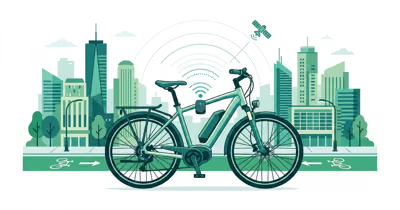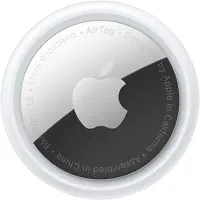
For urban bikes under $1,000, an AirTag 2 ($29, no subscription) hidden inside the handlebar tube or seat tube is the best cost-effective option. For road and e-bikes worth $1,500+, the Sherlock GPS Tracker ($99 + ~$5/month) is the gold standard: it hides completely inside the handlebar, has no external antenna, and provides live GPS anywhere with cell coverage. Use both on high-value bikes: AirTag as a free silent backup, Sherlock as the primary live tracker.
- AirTag 2 ($29, no subscription) hidden in the handlebar tube is the best budget bike tracker — ideal for urban bikes under $1,000
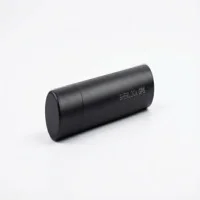
- Sherlock GPS Tracker ($99 + ~$5/month) hides completely inside the handlebar with no external antenna — the gold standard for bikes worth $1,500+
- AirTag relies on nearby iPhones and has no theft alert — updates can take minutes to hours, making it a passive recovery tool
- Dedicated GPS trackers provide live location updates every 5-30 seconds — with instant movement alerts when the bike is disturbed
- Using both AirTag and a GPS tracker on high-value bikes provides the best protection — AirTag as a free silent backup, GPS as the primary live tracker
GPS Bike Tracking vs AirTag: The Core Trade-off Explained
Bluetooth trackers like AirTag and Samsung SmartTag 2 cost nothing to run and last a year on a coin battery. Dedicated GPS trackers provide live location anywhere with cell coverage but cost $5-20 per month indefinitely.
The FBI’s property crime prevention guide states that recovery rates rise sharply when stolen property carries a serial number and a tracking signal that police can verify. The right choice depends on two things: your bike’s value and where you typically park it. The U.S. DOJ’s bicycle-theft problem guide treats bike theft as an aggregate urban problem, which is exactly why tracker budget should follow parking risk.
| Factor | AirTag 2 / BT Tracker | Dedicated GPS Tracker |
|---|---|---|
| Tracking method | Crowd-sourced Bluetooth (passive) | Live cellular GPS (active) |
| Urban coverage | ✅ Good — frequent iPhone/Android relays | ✅ Excellent — continuous updates |
| Rural / trail coverage | ❌ Poor without nearby phones | ✅ Anywhere with cell signal |
| Real-time updates | ❌ Passive — minutes to hours | ✅ Every 5–30 seconds |
| Battery life | ✅ 1 year (CR2032) | ⚠️ Days to weeks (requires charging) |
| Monthly fee | ✅ $0 | ❌ $5–20/month |
| Theft alert | ❌ No motion sensor | ✅ Instant movement alert |
| iPhone required | AirTag: yes / SmartTag: Android | Any smartphone (iOS + Android) |
| Best for | City bikes, budget riders, secondary layer | $1,000+ bikes, primary recovery tool |
For a deeper comparison of AirTag vs GPS across all use cases, see our guide to AirTag vs GPS trackers. For GPS options with no ongoing subscription, see our roundup of GPS trackers with no monthly fee.
Best GPS and Bluetooth Bike Trackers for 2026
⇄ Head-to-head
AirTag 2 vs Sherlock vs Invoxia vs SmartTag 2 for Bike Tracking
- +$29 one-time, no subscription, best cost-effective bike tracker
- +Hides cleanly inside handlebar tube or seat tube
- +UWB Precision Finding at extended range for recovery
- +Apple Find My (1B+ devices) for crowd-sourced location
- +CR2032 lasts about 1 year, replaceable for $3
- +Hides completely inside 22.2mm handlebar tube: no external antenna
- +Live GPS + GSM cellular tracking anywhere with cell coverage
- +Instant movement alerts when the bike is disturbed
- +2-3 week battery, recharged via removable cap on the bar end
- +Gold standard for bikes worth $1,500+ where active tracking matters
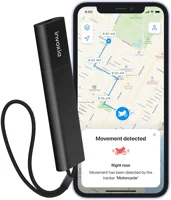
- +2-3 month battery life, longest in this comparison
- +GPS + Bluetooth + LTE-M multi-signal for redundant location
- +IP67 waterproof: outdoor bike storage safe
- +Geofencing alerts when bike leaves a defined zone
- +Annual subscription option (~$99/yr) cheaper than monthly Sherlock
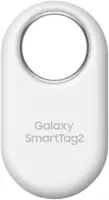
- +$30 once, no subscription, Android counterpart to AirTag
- +SmartThings Find network, biggest Android tracker network
- +CR2032 up to 700 days battery, longest of any tracker here
- +IP67 waterproof
- +UWB compass view on supported Samsung Galaxy phones
- −No live GPS tracking: depends on iPhones passing within Bluetooth range
- −No instant theft alerts (a thief notices movement before you do)
- −iPhone-only setup, no Android pairing
- −Anti-stalking beep may start chirping after long separations
- −Best for urban bikes under $1,000, not high-value e-bikes
- −~$5/month subscription required for cellular service
- −$99 device upfront, more than 3x AirTag's price
- −Recharging every 2-3 weeks vs AirTag's once-a-year
- −Requires compatible 22.2mm handlebar diameter for hidden install
- −Limited Amazon presence: often direct-from-manufacturer purchase
- −Larger form factor than Sherlock, harder to conceal on a bike
- −Subscription required, no plan = no live tracking
- −$99-120 device price
- −Not handlebar-internal like Sherlock
- −Bluetooth Precision Finding less accurate than AirTag's UWB
- −Samsung Galaxy phones only: Pixel and other Android won't pair
- −Passive tracking only, no live GPS
- −No theft alerts: same passive limitation as AirTag
- −33g, the heaviest tracker here
- −Smaller network than Apple Find My in iPhone-heavy regions
Your bike is under $1,000, you mostly park in dense urban areas with iPhone foot traffic, and you'd rather avoid a monthly subscription.
You ride a $1,500+ road bike or e-bike, you need live GPS and instant theft alerts, and a $5/month subscription is acceptable insurance.
You need longest battery between charges (2-3 months), the bike will sit outside in weather, and a larger form factor is acceptable.
You use a Samsung Galaxy phone, want the longest battery life, and need an Android equivalent to AirTag for a budget bike.
Setting Up a Bike Tracker for the First Time
AirTag setup is the standard Find My flow: pull the battery tab, hold it near your iPhone, and assign it a name. Dedicated GPS units like the Sherlock require downloading a separate app, inserting a SIM card or activating an eSIM, and configuring geofence zones before the first ride. Most cellular trackers also need an outdoor GPS fix after activation.
Where Should You Hide a GPS Bike Tracker on Your Bicycle?
Placement determines whether a tracker survives a theft long enough to be useful. According to the FBI’s UCR program, only 1 in 4 bike thefts is ever reported, and the 2024 crime statistics confirm bicycle theft remains one of the most underreported property crimes.
An AirTag hidden inside an aluminum handlebar tube still transmits its Bluetooth signal clearly, since aluminum doesn’t fully block the 2.4GHz band the way a solid steel enclosure would. A professional ring targeting high-value bicycles will check under the seat, inside saddlebags, and along the frame before transporting the bike, so the least obvious cavity is usually the safest spot.
Best hiding spots for AirTag (BT tracker):
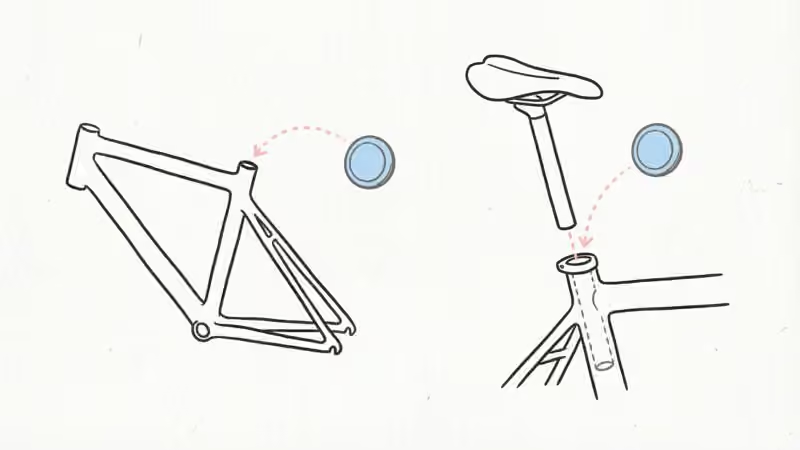
Inside the handlebar tube is the top choice for most road and mountain bikes. Standard handlebars are 22.2mm inner diameter: an AirTag fits inside with foam wrapping to stop rattling. Seal with a bar-end plug or grip.
This is the same location Sherlock GPS uses by design, and it requires full bar-end removal to access, making it unlikely during a quick theft-site search. For step-by-step technique, see our guide on AirTag hiding spots for motorcycles, which covers the same tube-insertion method. For a powered two-wheeler you’d rather track with a dedicated cellular unit, compare the best GPS trackers for motorcycles.
Inside the seat tube (the vertical tube the seat post slides into) offers a deep cavity on most bikes. On bikes with removable seat posts, tape the AirTag near the bottom of the tube above the seat post; it won’t interfere with adjustment. Bluetooth signal penetrates carbon and aluminum without meaningful degradation. The National Insurance Crime Bureau publishes the vehicle theft data that motivates bike GPS tracking.
Inside the top tube on hollow carbon frames provides a very secure location. Access requires a hole or grommet port. Not recommended unless you’re comfortable with your frame’s internal cable routing ports.
Under a bottle cage is ideal for GPS trackers like Invoxia that have a purpose-built cage mount bracket; it looks like a normal bottle cage bolt and is essentially invisible from a distance.
Avoid: frame-rail magnetic mounts (visible and easy to remove), external saddle bag pockets (first thing checked), and under-seat clip mounts that hang visibly below the saddle.
Subscription Costs Compared: 2-Year Total
| Tracker | Hardware Cost | Monthly Sub | 2-Year Total | Coverage Type |
|---|---|---|---|---|
| AirTag 2 | $29 | $0 | $29 | Crowd-sourced BT (iPhone) |
| Samsung SmartTag 2 | $29 | $0 | $29 | Crowd-sourced BT (Android) |
| Sherlock GPS | about $99 | about $5 | about $219 | Live GPS (iOS + Android) |
| Invoxia Bike Tracker | about $100 | about $10 | about $340 | Live GPS + BT + LTE-M |
The cost gap between BT trackers and GPS is significant over time. A Sherlock subscription runs ~$60/year, manageable for a $3,000 road bike, less justifiable for a $500 commuter.
The sweet spot for most riders: AirTag 2 inside the handlebar on any bike (zero-cost, always on), and add a Sherlock or Invoxia only for bikes worth $1,500 or more where live recovery matters. E-bike riders have additional options that integrate directly with the motor housing — our best GPS trackers for e-bikes guide covers those specialized picks. For scooters and other powered two-wheelers, our electric scooter tracker picks guide covers theft-recovery choices.
For GPS options with minimal or no subscription costs, see our roundup of no-fee GPS trackers. For a complete comparison of the best Bluetooth trackers across all categories, see the best item trackers of 2026.
What Should You Do If Your Bike Is Stolen?
Act immediately — stolen bikes move fast. Here is the recommended sequence for both GPS and BT tracker owners:
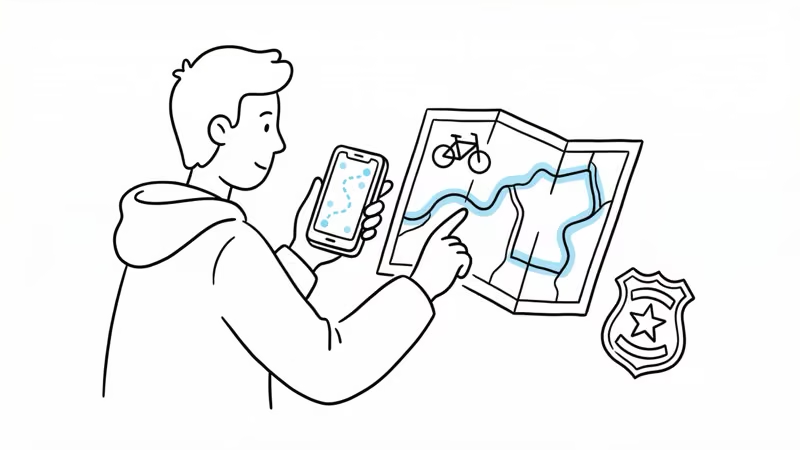
GPS tracker owners: Open your tracker’s app immediately; you should have a live location. Share that location with police and update them as it moves. Don’t attempt to retrieve the bike yourself. Law enforcement can act on a live address with more authority and safety than you can.
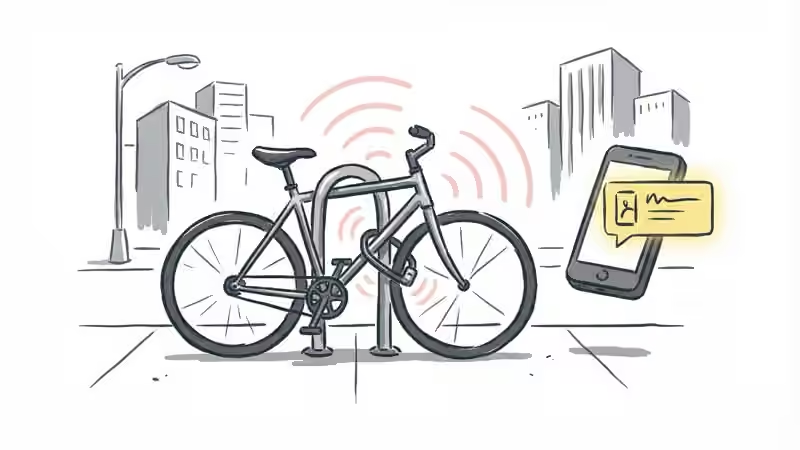
AirTag / BT tracker owners: Open Find My (or SmartThings) and enable Lost Mode immediately. Apple’s guide to a lost AirTag confirms that Lost Mode shows a finder your contact info. Screenshot the last known location; even if it doesn’t update again, this data shows the theft route and possible destination. In a busy downtown area, an AirTag on a moving bike can refresh several times an hour as passing iPhones relay each ping.
Both: File a claim with your renters or bike insurance; tracker location data supports theft claims. Contact local bike shops in the area shown by your last location. Stolen bikes, especially high-value ones, often appear in local secondhand markets within days. Post on local Facebook Marketplace, Craigslist, and bike theft community groups with your bike’s serial number.
For more on how AirTag location history is stored and how long data is retained, see our overview of AirTag location history. For how AirTag performs in theft scenarios specifically, see our guide on can AirTags be stolen.
Bottom Line
For most bikes, an AirTag 2 hidden inside the handlebar or seat tube is the cheapest and most practical theft-recovery tool at $29 with no subscription. For high-value road and e-bikes, pair the AirTag with a dedicated GPS tracker like the Sherlock for live location updates. Neither option guarantees recovery, but together they give you the best odds.
Frequently Asked Questions
Is AirTag good enough for bike theft protection?
In urban areas, AirTag provides meaningful recovery assistance at zero ongoing cost; it’s a strong supplement for any bike. As a standalone tool for high-value bikes ($1,500+), it has real gaps: it provides no live tracking, no movement alerts, and no coverage in areas without nearby iPhones. For expensive bikes, pair it with a dedicated GPS tracker. For city commuter bikes, AirTag alone is a reasonable and cost-effective choice.
Where do I hide an AirTag on my bike?
The best hiding spot is inside the handlebar tube: insert the AirTag with foam padding to prevent rattling and seal with a bar-end plug. The seat tube and top tube (on hollow-frame bikes) are also excellent. Avoid external magnetic mounts, under-seat clip hooks, and saddlebag external pockets, which are the first places a thief searches. Full placement technique is covered in the hiding section above.
What is the best GPS tracker for bicycles in 2026?
The Sherlock GPS Tracker is the best choice for road bikes and most commuters: it hides completely inside the handlebar tube, provides live GPS anywhere with cell coverage, and costs ~$5/month. For e-bikes and cargo bikes where charging is easier, the Invoxia Bike Tracker’s 2–3 month battery and IP67 waterproofing make it the stronger pick. Both provide instant movement alerts the moment your bike is touched.
Can I use a motorcycle AirTag setup on a bicycle?
Yes — the handlebar-tube insertion technique works identically on bicycles and motorcycles (both typically use 22.2mm inner diameter bars). The key difference is that bicycle handlebars vibrate less than motorcycle bars, so foam padding requirements are lighter. See our motorcycle theft guide for the full tube-insertion technique.
Do bike GPS trackers require a monthly subscription?
Most dedicated cellular GPS trackers require a subscription of $5–20/month to maintain cellular network access. AirTag and SmartTag 2 have no subscription; they use crowd-sourced networks at no cost. Some GPS trackers offer lifetime or one-time data plans, though these are increasingly rare. Our guide to GPS trackers with no monthly fee covers the current no-subscription options in detail.
Will a thief find my AirTag on my bike?
An opportunistic thief grabbing a bike quickly will almost certainly not find a well-hidden AirTag inside a handlebar tube. Professional thieves targeting specific bikes are more systematic; they may sweep for Bluetooth signals with scanner apps or do a physical search before loading the bike. For high-value bikes, placement depth (inside tubes, not surface-mounted) is the only reliable counter. Pairing AirTag with a GPS tracker that has no detectable Bluetooth broadcast provides the strongest dual-layer protection.
For the full review of AirTag 2 and its capabilities, see our AirTag 2 review. For best Bluetooth trackers across all uses beyond bikes, see our best Bluetooth tracker roundup.