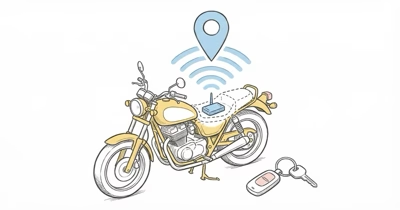
A motorcycle tracker can add a location lead after a theft. It doesn’t prevent theft or guarantee recovery.
This guide doesn’t rank hidden cavities or explain how to defeat discovery. It replaces the old concealment map with a safer setup boundary: authorization, exact documentation, rider notice, mounting safety, bounded testing, and offboarding.
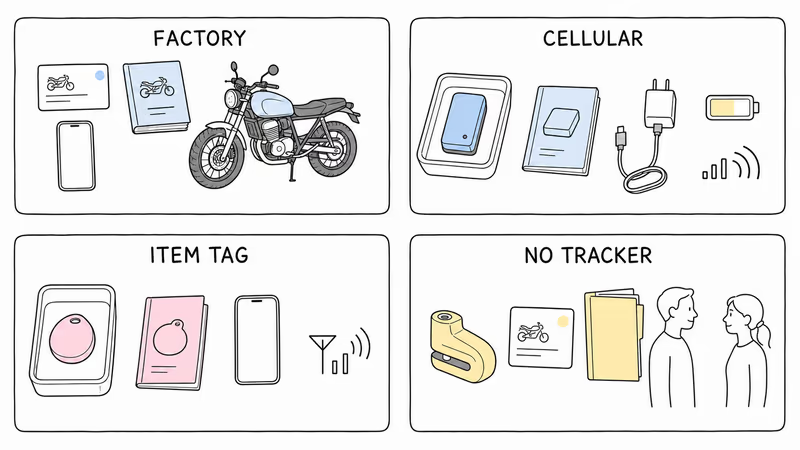
Choose the tracking path before choosing any location. A cellular GPS alarm, a Bluetooth item tag, and a factory connected service behave differently when the bike is underground, out of cellular coverage, separated from nearby phones, or running on a low battery.
- Confirm authority and regular riders. Motorcycle ownership doesn’t answer every workplace, rental, lending, relationship, or data-use question.
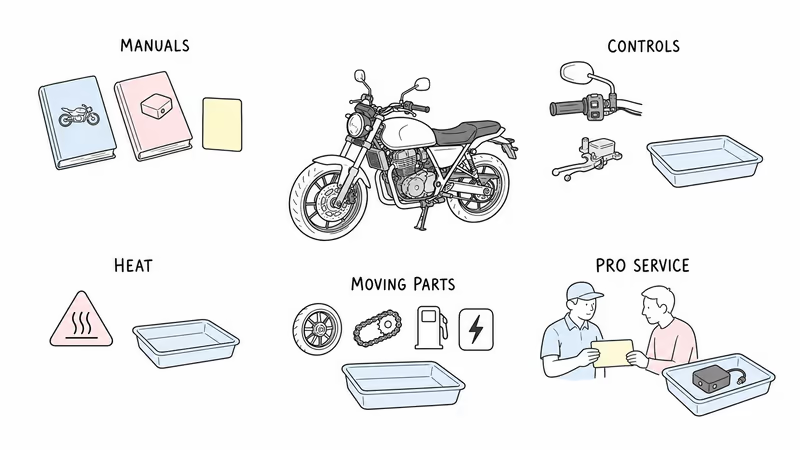
- Match both manuals. The tracker manual defines device limits; the motorcycle manual defines controls, safety systems, service areas, and prohibited modifications.
- Don’t build around concealment. Avoid bodywork removal, frame cavities, handlebar internals, wiring looms, heat, moving parts, steering, brakes, fuel, and safety equipment.
- Test the whole chain. Check the correct account, intended phone, alert path, location type, subscription, battery state, and a documented end of use.
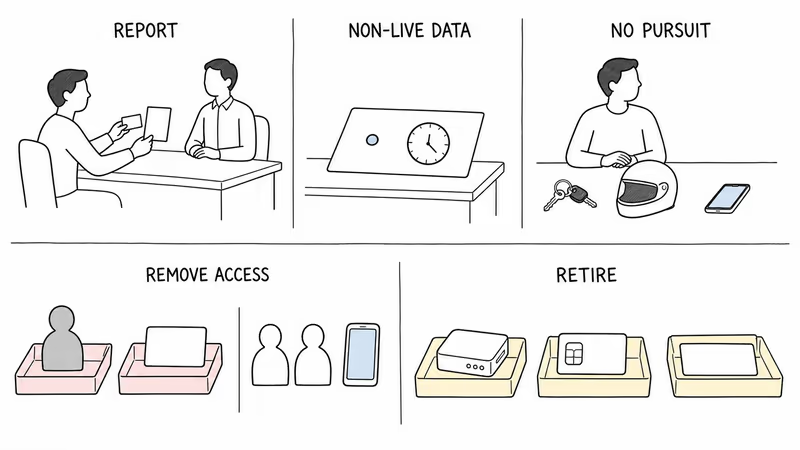
- Keep theft response separate from pursuit. Share available information with law enforcement or an insurer; don’t follow or confront someone from a map point.
Start With Authorization and Rider Notice
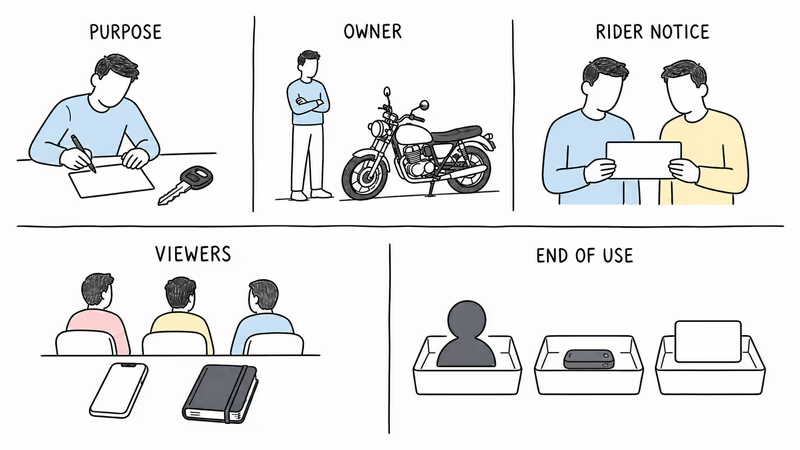
Write down why the tracker exists. Theft recovery, a disclosed fleet program, a temporary transport, and maintenance logistics don’t need the same viewers or retention period.
For a motorcycle with regular riders, explain:
- which motorcycle and tracker account are involved;
- whether the service records location, movement, alarm, battery, or trip data;
- who can view notifications and location history;
- what a Bluetooth unknown-tracker alert may mean;
- when access will be reviewed or removed; and
- what happens when the motorcycle is sold, lent, returned, or reassigned.
Don’t treat a tracker as a substitute for person-to-person location sharing. The people-tracking consent boundary separates item recovery from monitoring a rider.
Google states that unknown-tracker alerts are available on Android 6 and later. That protective feature doesn’t replace direct notice to someone who regularly rides or borrows the motorcycle.
If ownership, workplace authority, a rental agreement, a family dispute, or local law makes authorization unclear, pause and get qualified advice. A technical setup guide can’t resolve that boundary.
Which Tracking Path Fits the Job?
Start with behavior, not product size.
| Path | What it can add | What can interrupt it |
|---|---|---|
| Factory or dealer service | Vehicle-linked account, alerts, or location features supported for that motorcycle | Model eligibility, subscription, account transfer, network retirement, or service availability |
| Cellular GPS alarm | Device-originated movement alert and provider location data | Battery, SIM, subscription, cellular coverage, satellite reception, app, or provider outage |
| Bluetooth item tag | Last-observed item location through a participating finder network | Nearby-device availability, radio conditions, account state, and anti-misuse alerts |
| No electronic tracker | No location-data account or device maintenance | Relies on physical security, records, insurance, and reporting after theft |
An AirTag isn’t a cellular GPS tracker. Apple’s current Find My guidance describes a crowdsourced network that reports an item’s approximate location through participating Apple devices. It doesn’t promise a continuous live route.
The AirTag versus GPS tracker guide explains the network, power, subscription, and alert differences without turning them into a two-device concealment strategy.
Match the Exact Tracker and Motorcycle Manuals
Record the tracker model, hardware revision, radio region, app, subscription, charger or battery type, and support channel. Reseller names and similar enclosures don’t prove that two devices share an antenna, battery, waterproofing, or setup process.
The current Monimoto 9 user manual separates getting started, installation, alarm testing, charging, firmware, and technical specifications. That structure is a useful boundary: installation isn’t complete until the exact device is tested and remains maintainable.
Read the motorcycle owner’s manual too. Stop before any step that could affect:
- steering movement or handlebar controls;
- brake, clutch, throttle, suspension, or wheel operation;
- fuel, exhaust, battery, charging, or high-current wiring;
- cooling airflow, hot surfaces, or drainage;
- rider contact points, luggage release, seat locks, or emergency access; or
- factory harnesses, sensors, diagnostics, warranty, or scheduled service.
If the tracker documentation and motorcycle documentation conflict, don’t improvise. Ask the tracker maker, motorcycle dealer, or a qualified motorcycle technician to resolve compatibility.
Where Can a Tracker Go Without a Hiding Map?
Use only a manufacturer-documented, owner-authorized, serviceable area. The tracker should remain identifiable to regular riders and technicians without dismantling the motorcycle or probing a concealed cavity.
A suitable area must keep the device:
- outside steering, control, braking, suspension, wheel, chain, belt, and rider-movement envelopes;
- away from fuel, exhaust, engine heat, sharp edges, water paths, and high-current electrical parts;
- secured by the approved method so it can’t become loose or change vehicle operation;
- accessible for inspection, charging, battery replacement, removal, and emergency service; and
- consistent with the tracker antenna, orientation, environmental, and maintenance instructions.
This article doesn’t provide locations inside a tail section, fairing, handlebar tube, frame tube, airbox, seat foam, wiring opening, or body cavity. Those details can become a concealment playbook and may also create control, heat, detachment, service, or warranty risks.
Don’t cut foam, drill bodywork, open sealed tracker cases, alter antennas, suppress speakers, add shielding, route unofficial wiring, or use a decoy device. If the exact manual doesn’t identify a safe path for your motorcycle, use the manufacturer’s support channel or a qualified installer.
The authorized vehicle tracker installation guide uses the same principle for larger vehicles: factory account, visible compatible accessory, serviceable portable unit, or professional work rather than a concealment ranking.
Test Alerts and Location Without Creating a Pursuit Plan
Complete account setup while the motorcycle is parked in a safe open place. Confirm that the app shows the intended device and that former owners, seller accounts, shared phones, and unnecessary administrators don’t retain access.
Test only with an informed rider.
Use the exact manufacturer’s procedure and keep the route ordinary and short. Verify whether the service reports a precise satellite location, an approximate network location, a finder-network observation, or no current point; those states aren’t interchangeable. The Monimoto 9 manual tests the alarm path and distinguishes precise GPS, wireless-location, and approximate cellular-tower states. Use the current instructions for the exact model rather than copying distance, timing, antenna, or app-state recipes from an unrelated article.
Record only what the authorized purpose needs:
- device and account identity;
- test date and informed rider;
- alert channel and recipient;
- the location state the provider displayed;
- battery or service warning; and
- the next review or removal date.
One successful test isn’t a recovery guarantee. Coverage, battery, subscription, satellite view, nearby phones, provider availability, and physical damage can change later.
Use Layered Theft Prevention and a Safe Response
NHTSA recommends that vehicle owners take preventive steps, keep identifying information, and contact police and insurers promptly after a theft. Treat tracking as one layer beside physical security, parking choices, records, and coverage.
If the motorcycle is missing:
- move to a safe place and confirm that an authorized person didn’t move it;
- contact local law enforcement and the insurer or recovery service as appropriate;
- preserve the vehicle identifier, tracker account details, timestamps, and screenshots without publishing a live map;
- tell responders that a location may be delayed, approximate, or provider-dependent; and
- don’t follow, confront, trespass, or enter a recovery location yourself.
A map point doesn’t identify a thief and may reflect a last observation rather than the motorcycle’s current position. Let trained responders decide how to use it.
Respect Unknown-Tracker Alerts
Bluetooth item networks include anti-misuse protections. Don’t disable a speaker, obstruct alerts, or use deeper concealment to make a regular rider’s alert harder to resolve.
Apple explains that AirTag and compatible accessories shouldn’t track people or property that doesn’t belong to the owner, and that supported devices can alert someone when an item separated from its owner moves with them over time.
Google states that Android’s unknown-tracker alerts can identify supported tags moving with a person and provide device-specific next steps. An alert can also arise from a borrowed item, so treat it as a safety signal and context check, not proof of malicious intent.
Tell riders in advance which device is present and how to contact the motorcycle owner. Where a finder network supports item sharing, use the official sharing feature for an authorized borrower rather than asking them to ignore repeated warnings.
The unwanted-tracker response guide covers the protective path for someone who receives an alert. It intentionally doesn’t help an owner defeat those protections.
Plan Maintenance, Transfer, and Removal
Set a review date based on the exact device instructions and authorized purpose, not a generic battery-life claim. Temperature, movement, reporting frequency, cellular conditions, nearby-device density, battery age, and provider behavior can change service life.
During a parked inspection, confirm that the unit remains secure, undamaged, serviceable, and clear of controls or hazards. Stop using a swollen, leaking, cracked, unusually hot, water-damaged, or unreliable device and follow the manufacturer’s battery and recycling guidance.
When the purpose ends:
- remove regular riders, employees, contractors, former owners, and unused phones from the account;
- export only the records the authorized purpose requires;
- request deletion where appropriate and note what the provider retains;
- cancel or transfer the subscription and SIM at the correct point;
- remove the tracker using its documented process; and
- reset or transfer the motorcycle, app, and factory accounts before sale or return.
If you find a device you didn’t authorize, don’t automatically open, charge, shield, move, or destroy it. Prioritize immediate safety and use qualified support for the device, motorcycle, and local situation.
Bottom Line
A motorcycle tracker setup should be transparent to authorized riders, matched to exact manuals, serviceable, and physically separate from controls and hazards.
Don’t turn theft recovery into a hiding competition. Use layered prevention, test with consent, treat every location as fallible, keep account access narrow, and plan removal before the first ride.
FAQ
Where should I hide a GPS tracker on a motorcycle?
This guide doesn’t provide a hiding map. Use only a manufacturer-documented, owner-authorized, serviceable area that stays clear of controls, heat, moving parts, fuel, wiring, and safety systems. Ask the manufacturer or a qualified motorcycle technician if the manuals don’t resolve placement.
Can I put a tracker inside a motorcycle frame or handlebar?
Don’t use an internal cavity unless the exact tracker and motorcycle manufacturers explicitly document it. Frame and handlebar work can affect signal, steering, wiring, service, retention, and safety, and detailed cavity instructions can enable covert tracking.
Is an AirTag the same as a motorcycle GPS tracker?
No. AirTag reports item locations through Apple’s Find My network when participating devices observe it. A cellular GPS tracker uses its own power, satellite reception, cellular service, provider account, and subscription. Neither guarantees continuous recovery data.
Should regular riders know that a tracker is installed?
Yes. Explain the purpose, data, viewers, alerts, retention, and removal process before normal use. Ownership doesn’t remove every consent, employment, rental, lending, relationship, or local-law consideration.
How should I test a motorcycle tracker?
Use the exact manufacturer’s test procedure on an authorized motorcycle with an informed rider. Confirm the correct account, alert recipient, displayed location type, battery or service state, and offboarding date without creating a surveillance route.
Will a tracker guarantee that a stolen motorcycle is recovered?
No. Power, coverage, satellite view, nearby phones, subscriptions, provider availability, physical damage, and response conditions can interrupt location data. Use a tracker as one layer with physical security, records, insurance, and prompt reporting.
What should I do if the motorcycle location changes after a theft?
Share the available device, vehicle, timestamp, and account information with law enforcement or the insurer. Don’t follow or confront someone based on a map point; it may be delayed, approximate, or a last observation rather than a current location.