A golf cart is one of the easiest vehicles to steal. Most have no immobilizer, no alarm, and a universal key a thief can buy for a few dollars. A cellular GPS tracker won’t stop the theft, but it turns a parked cart into a recoverable asset. According to NHTSA’s vehicle theft prevention guidance, which lists vehicle recovery systems among the layered defenses it recommends, live GPS units reveal a stolen vehicle’s location to law enforcement.
That is the recovery job a tracker does on a cart, and the five units below do it best.
- Best overall: Tracki Pro at $36 hardware plus from $20/mo, with a 10,000 mAh battery and a body small enough to hide under the seat
- Best hidden magnetic backup: LandAirSea 54 at $30 plus from $15/mo, with a removable magnetic mount for steel frame members
- Best reliable mid-tier: Spytec GL300 free with a plan from $34.95/mo, with 5-second updates during an active recovery
- Best budget pick: Family1st at $30 plus from $22/mo, magnetic mount plus an SOS button
- An AirTag updates only when a stranger’s iPhone passes within about 30 feet and carries no live cellular signal, so it can’t track a cart driven onto a trailer and hauled away
How Do You Choose a GPS Tracker for a Golf Cart?
The choice comes down to how your cart gets stolen and where you can hide the tracker. A cart taken from a driveway by a thief with a trailer is a different problem from a cart driven off a course path. The single factor that separates a recovered cart from a lost one is whether the tracker keeps reporting after the cart leaves the property. Only a cellular unit does that.
The same trailer-theft pattern hits other property machinery, which is why our mower theft recovery guide reaches the same cellular conclusion.
Three questions narrow the field fast.
Does it run on live cellular? A real GPS tracker uses a 4G LTE SIM to report location anywhere there is cell service. The technical overview of GPS tracking units explains that the cellular modem is what sends a vehicle’s coordinates to a server during a theft, with no dependence on nearby phones. Every pick below is cellular.
Where will it hide? Golf carts have limited bodywork, so the realistic spots are the battery bay, under the seat, inside the dash cowl, or magnetically against a frame rail. A small body and an optional magnet matter more here than on a car, where deep cavities are easy to find.
What is the running cost? Cellular trackers need a subscription. The five picks range from $9.65/mo to $34.95/mo, and over three years that gap dwarfs the hardware price.
The FBI reported that its Motor Vehicle Theft, 2019-2023 special report, released in 2024, drew on data from more than 14,000 reporting agencies and documents how fast stolen vehicles change hands. That speed is why both update rate and hidden placement feed directly into recovery odds.
At a Glance: The 5 Golf Cart Trackers Compared
The table below summarizes the five picks. All five require an active cellular subscription; pricing reflects current US listings on annual plans where offered.
| Tracker | Hardware | Subscription | Battery | Mount style |
|---|---|---|---|---|
| Tracki Pro | $36 | From $20/mo | Up to 1 year power-save | Hidden cavity or pouch |
| LandAirSea 54 | $30 | From $15/mo | 2 weeks | Built-in magnet (steel) |
| Spytec GL300 | Free w/ plan | From $34.95/mo | 2.5 weeks | Adhesive or magnetic case |
| Family1st | $30 | From $22/mo | 2 weeks | Built-in magnet (steel) |
| Bouncie | $89.99 | $9.65/mo | Wired (no battery) | 12V hardwire |
None of these trackers need a professional install. Four are grab-and-hide portables; the Bouncie wires into a switched 12V line on a street-legal cart.
The Best Golf Cart GPS Trackers in 2026
Each unit is evaluated on hidden-mount fit, update speed, battery life off the cart’s own power, and three-year cost. Our Tracki Pro review covers the full bench methodology; this roundup focuses on the cart-specific trade-offs.
Tracki Pro: Best Overall Golf Cart Tracker
Tracki Pro is the default pick. It pairs the largest battery here with live 4G LTE and a body small enough to bury in a cart. The 10,000 mAh battery lets you hide the unit in a sealed battery-bay cavity for weeks without wiring it in, which is the scenario most cart owners actually face. The global SIM also works across the US, Canada, and Mexico, useful for snowbird communities that move carts across the border.
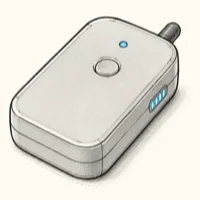
On battery alone in power-save mode, a Tracki Pro tucked under the seat can report periodic location pings for weeks before needing a charge. Switched to live mode, it sends updates at 60-second intervals.
The trade-off is the $20/month subscription floor. That is more than the connected Bouncie option, but it buys a hide-anywhere portable unit rather than a plug-in dongle. Live mode also drains the battery faster, falling from the months-long power-save figure to roughly two to three weeks of continuous fast reporting. For a parked cart that is fine, since the unit sits in power-save until it moves.
LandAirSea 54: Best Hidden Magnetic Backup
LandAirSea 54 is the right pick when you want a tracker a thief won’t find. The built-in magnet sticks to any steel frame rail, so you can clamp it to the underside of the cart frame or inside a steel battery tray. At $30 it’s the cheapest entry point here, and the $15/month annual plan is the lowest live-tracking subscription among the portable units. Our LandAirSea 54 review covers the mount and plan trade-offs.
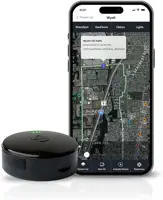
A LandAirSea 54 mounts magnetically against a steel frame rail under the rear seat and holds position through cart-path vibration and curb bumps without shifting.
The catch is the 2-week battery, which means a recharge cycle twice a month during active use, and the magnet only grips steel, so aluminum-frame carts need the adhesive backup. It pairs naturally with a Tracki Pro: the Tracki hides deep as the primary, while the LandAirSea 54 acts as a second hidden unit a thief has to find separately, defeat, and only then realize a third signal is still live.
Spytec GL300: Best Reliable Mid-Tier
Spytec GL300 is the pick for owners who want the fastest updates during an active theft. The 5-second update interval is the quickest on this list, and the SpyTec app shows a clean live recovery route. That matters when a cart is being driven away in real time rather than trailered. The 2.5-week battery is the longest of the budget-tier portables, and our Spytec GL300 review details the update-rate tiers.

At its 5-second update interval, the GL300 sends about a dozen location pings a minute during a recovery, against one or two from slower-reporting units. That resolution is the difference between handing police a moving dot and handing them a stale address.
The downside is cost. The $34.95/month subscription is the highest here, and the base unit is not magnetic, so a cart install needs the separate magnetic case.
For buyers who value app polish and update speed over the lowest monthly bill, the GL300 is the steady mid-tier choice. The magnetic case clamps it to a frame rail or hides it under the seat.
Family1st: Best Budget Pick
Family1st is the budget pick that still covers the essentials: live 4G LTE, a built-in magnetic mount, and a physical SOS button, all at $30 hardware. The magnet plus the $22/month plan makes it a grab-and-mount unit for a single cart, and the SOS button is a small bonus for owners who drive a cart on quiet rural roads or large properties. Our Family1st GPS tracker review covers the app and alert options.
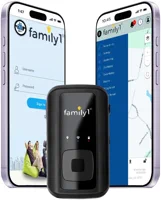
The Family1st magnet holds to a steel cart frame as securely as the LandAirSea 54, and geofence alerts reach the phone shortly after the cart leaves a set boundary. The 2-week battery matches the budget tier, so plan on a twice-monthly recharge during the season.
It’s not the unit for a multi-cart fleet. For one personal cart, it delivers the core recovery features without the premium subscription of the Spytec.
Bouncie: Best Connected Option
Bouncie is the pick for street-legal carts that have a usable 12V accessory circuit, because it’s the cheapest live plan on this list at $9.65/month with no annual lock-in. The hardware reports 5-second GPS updates and keeps a full trip history, and a single account covers unlimited vehicles. That suits an owner who also tracks a truck or a side-by-side. Our Bouncie GPS tracker review covers the connected-vehicle features.
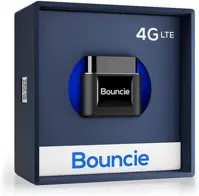
The form factor is the catch. Bouncie is built as an OBD-II dongle, so on a cart you wire it to a switched 12V line.
That makes it a permanent install rather than a hide-and-recharge unit, but it also means no battery to top up and the lowest running cost of any pick here. For a street-legal cart driven daily that already has accessory wiring, the $9.65/month plan is hard to beat over any multi-year horizon.
Where to Hide a GPS Tracker on a Golf Cart
Hidden placement is the single biggest factor in a successful recovery. A tracker a thief spots in the first minute gets pulled and tossed, while a well-hidden unit keeps reporting all the way to wherever the cart ends up, whether that is a back lot two towns over, a chop-shop garage, or the bed of a pickup already on the interstate before you have noticed the cart is gone. Placement, not brand, decides the outcome.
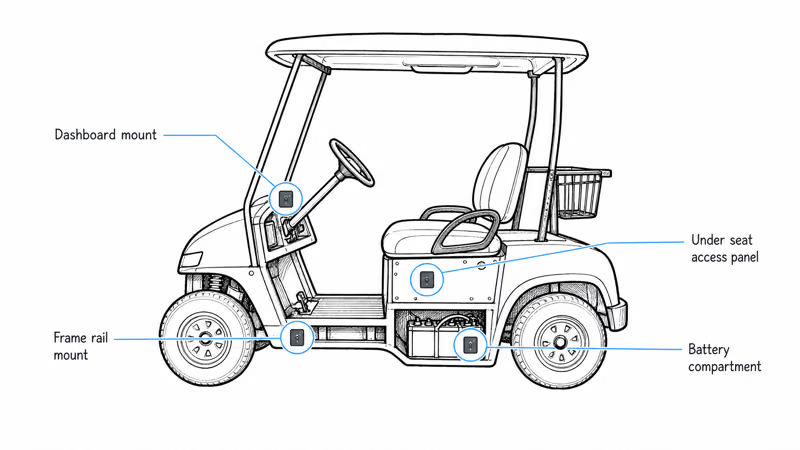
Four spots work best.
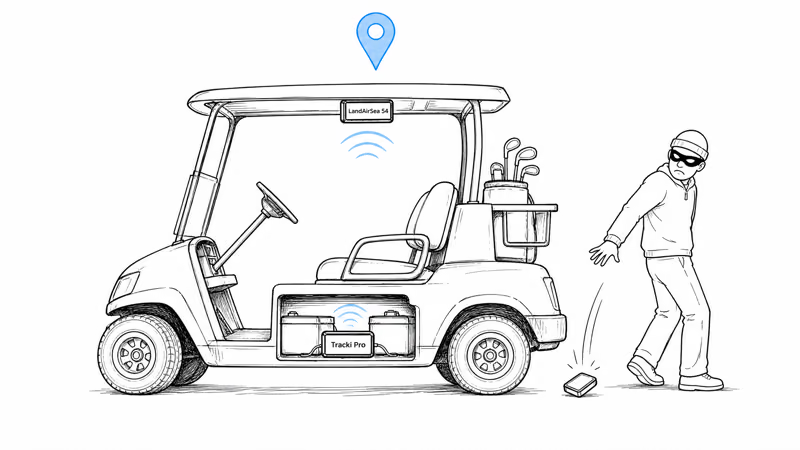
Inside the battery bay. The space around the battery pack on most carts has room for a Tracki Pro or a pouched LandAirSea 54. It’s sealed and vibration-damped, and a thief rushing to move the cart rarely opens it. Keep the unit clear of terminals and route it so cellular signal escapes the metal tray.
Under the seat. Lifting the seat exposes a cavity on nearly every cart. A magnetic LandAirSea 54 or Family1st clamps to the steel seat frame, while a portable Tracki Pro sits in a Velcro pouch. This is the fastest install and still beats a dash-top mount that a thief sees immediately.
Inside the dash or cowl. Street-legal carts with a molded dash have void space behind the panel, and the plastic passes signal better than a steel tray.
Against a hidden frame rail. A magnetic unit clamped to the underside of a frame rail is hard to spot without crawling under the cart. Use a foam wrap to stop rattle, and confirm the rail is steel before relying on the magnet.
The strongest pattern is a two-tracker setup: a deeply hidden primary plus a second magnetic unit. Our anti-theft GPS tracker guide for cars explains the decoy-and-deep-hide tactic.
A thief who finds and ditches the first unit assumes the cart is clean and keeps driving, while the second keeps reporting from a spot he never checked. That second signal is where most recoveries actually come from, and the extra unit costs about $30 of hardware plus a few dollars a month.
Is an AirTag Enough for Golf Cart Theft Recovery?
An AirTag is cheap, and it’s better than nothing, but it’s not a substitute for a cellular GPS tracker on a cart you actually want to recover. The reason is the network. An AirTag has no GPS chip and no cellular radio of its own, so it reports location only by piggybacking on nearby Apple devices through the Find My network.
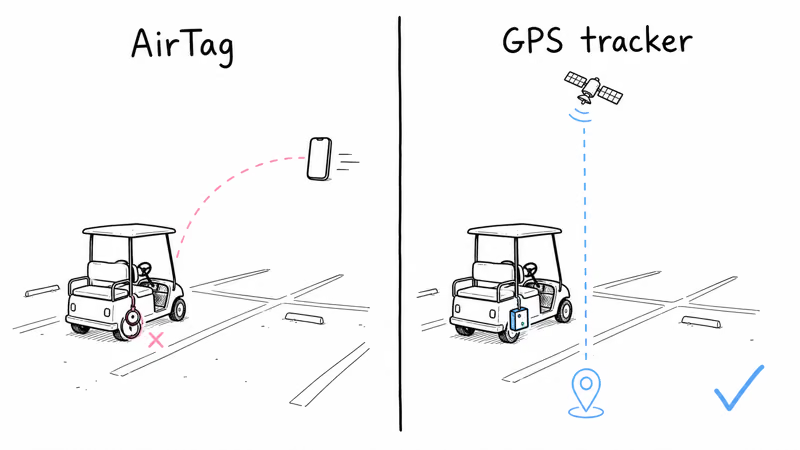
That makes it silent any time no compatible iPhone happens to be near the cart, and the difference shows up the moment a cart leaves a crowd.
Apple states that an AirTag separated from its owner makes a sound to alert anyone nearby, and that Android phones can surface a foreign AirTag traveling with them after about 10 minutes. Those anti-stalking features are good for personal safety, but on a stolen cart they work against recovery: a thief gets an audible warning the tag is present and a simple path to disable it.
The coverage gap is the bigger issue. An AirTag updates only when a stranger’s iPhone passes within Bluetooth range of the cart. In a dense neighborhood that may happen often, so the tag looks like it works.
On a rural property, a back lot, or a cart loaded into an enclosed trailer, the same tag can go dark until another Apple device passes nearby, which is exactly the scenario a stolen cart ends up in.
A 4G LTE tracker keeps reporting on its own the entire time. Apple’s broader personal-safety guidance for Find My accessories confirms that these devices are designed to discourage covert tracking, which is the opposite of what a recovery tool needs to do. We break the networks down fully in our AirTag vs GPS tracker comparison.
The honest verdict: an AirTag is a fine low-cost locator for a cart that never leaves a busy community, and it can serve as a third, silent backup. For real theft recovery, the cellular trackers above are the tools that actually bring a cart back.
Golf Cart Tracker Cost Over 3 Years
Hardware is the small number. The subscription dominates the three-year total, and the spread between the cheapest and most expensive pick here is wide.
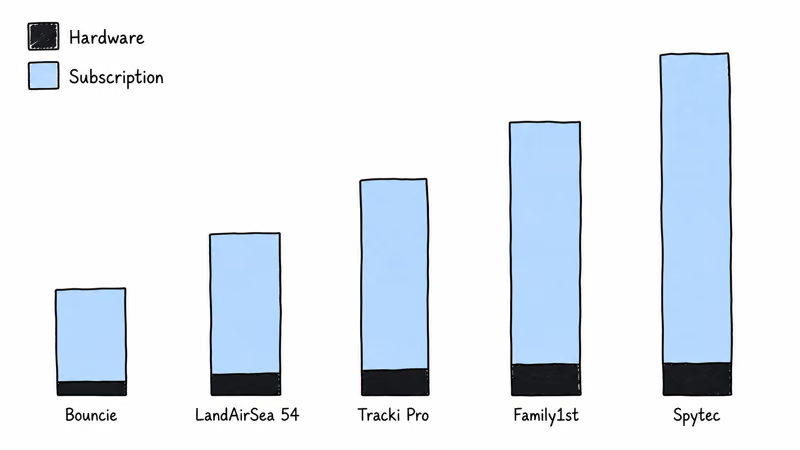
| Tracker | Hardware | Subscription | 3-year total |
|---|---|---|---|
| Bouncie | $89.99 | $9.65/mo | About $437 |
| LandAirSea 54 | $30 | $15/mo (annual) | About $570 |
| Tracki Pro | $36 | $20/mo | About $756 |
| Family1st | $30 | $22/mo | About $822 |
| Spytec GL300 | Free w/ plan | $34.95/mo | About $1,258 |
The cheapest live-tracking path is Bouncie at about $437 over three years, driven by its $9.65/month plan, but that assumes a street-legal cart with accessory wiring to support the dongle. For a hide-and-recharge portable, LandAirSea 54 at about $570 is the value leader. Tracki Pro at $756 buys the longest battery and a worldwide SIM, while the premium Spytec sits highest at about $1,258 in exchange for the fastest updates.
Match the tier to the risk. A cart parked in a gated community garage benefits less from premium 5-second updates than one left at a public course rack or stored outdoors.
Owners cross-shopping other vehicles will find overlapping picks in our best GPS tracker for ATV roundup and the best GPS tracker for truck guide, where the same units trade off differently against enclosed bodywork and on-board power.
Bottom Line
The right golf cart GPS tracker is the one that matches where you park and how you can hide it. Tracki Pro at $36 plus from $20/mo is the default for its long battery and small hide-anywhere body, with a LandAirSea 54 added as a second hidden magnetic unit on a high-value cart. Budget buyers get the core recovery features from Family1st, and street-legal carts with accessory wiring get the lowest running cost from Bouncie at $9.65/mo.
Whatever you choose, make it cellular. An AirTag is a useful silent backup but can’t track a cart hauled away on a trailer; only a live 4G LTE tracker keeps reporting the whole way and turns a stolen cart into a recoverable one.
FAQ
What is the best GPS tracker for a golf cart?
Tracki Pro is the best overall pick because it combines a 10,000 mAh battery, live 4G LTE tracking, and a body small enough to hide in a battery bay or under the seat. For a cheaper running cost on a street-legal cart with accessory wiring, the Bouncie connected tracker drops the monthly bill to $9.65. For a pure hidden backup, the magnetic LandAirSea 54 is the value pick at $30 hardware and $15 a month.
Can you use an AirTag to track a golf cart?
You can, but it isn’t reliable for theft recovery. An AirTag has no GPS or cellular radio and only updates when a stranger’s iPhone passes within Bluetooth range of the cart. It also makes a sound when separated from its owner and can be detected by Android phones, so a thief gets a warning and an easy way to disable it. Use an AirTag only as a silent low-cost backup, not as your primary tracker.
Where should I hide a GPS tracker on a golf cart?
The four best spots are inside the battery bay, under the seat, behind the dash cowl on street-legal carts, and magnetically clamped to a hidden steel frame rail. Avoid the dash top or any visible surface a thief checks first. The strongest setup is a two-tracker approach: one unit hidden deep as the primary and a second hidden magnetic unit so that finding one does not defeat the system.
Do golf cart GPS trackers need a subscription?
Every live cellular tracker needs a subscription because it uses a 4G LTE SIM to report location. Monthly costs in this guide range from $9.65 for Bouncie to $34.95 for Spytec GL300. Over three years the subscription is a larger expense than the hardware, so factor it in. An AirTag has no subscription, but it also has no live cellular tracking, which is why it can’t replace a cellular unit for recovery.
How long does a golf cart tracker battery last?
It depends on the tracker and how often it reports. Tracki Pro’s large battery lasts longest in power-save mode and drains faster under continuous live tracking. Smaller portable trackers need more regular charging. The Bouncie connected unit wires into the cart’s 12V circuit, so it has no battery to recharge as long as the cart is powered.
Will a GPS tracker survive rain and washing on a golf cart?
Yes, when correctly rated and placed. Tracki Pro carries an IP67 rating that survives heavy rain and brief shallow submersion, while the LandAirSea 54, Family1st, and Spytec GL300 handle rain and spray at IP65-class ratings but not full submersion. Mounting the unit inside the battery bay or behind the dash keeps it out of direct hose spray during a wash. For an exposed under-frame mount, a sealed pouch adds cheap insurance.
Is it legal to put a GPS tracker on my own golf cart?
Yes, in every US state, because the tracker is on property you own. The legal restriction on GPS trackers applies to placing one on a vehicle that belongs to someone else without their consent. Tracking your own golf cart, car, or any personal vehicle is unambiguously legal and requires no disclosure to family members who borrow it. If you rent the cart out commercially, disclosure to renters may be required by local law or platform terms.