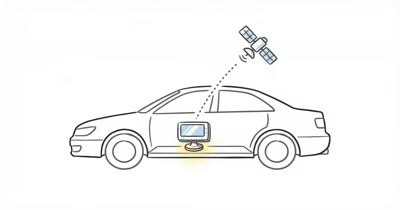
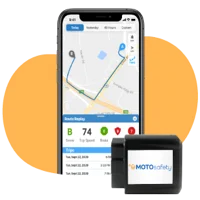
MOTOsafety sits between a basic vehicle locator and a fleet telematics system. It reports vehicle location while also surfacing speed, braking, rapid acceleration, geofence, and curfew events for a parent or guardian to discuss with a teen driver.
The current plug-in model occupies the car’s OBD-II port. It isn’t a hidden or infallible safety system, and it shouldn’t replace direct driving instruction, household rules, or emergency services.
- The current official page lists one-minute location transmission and a daily emailed driver report card.
- The plug-in tracker uses an OBD-II port and is not listed as compatible with electric vehicles.
- Current official pricing is $69.99 for the vehicle tracker plus $25 per month, with no stated contract or activation fee.
- GPS and cellular conditions can create delayed or missing trip data, even when the device remains installed.
- The product fits transparent driver coaching better than covert monitoring or trip-by-trip certainty.
How Does the Plug-In Tracker Set Up?
MOTOsafety’s current plug-in product page states that installation has three physical steps: locate the OBD-II port, plug in the tracker, and confirm it’s secure.
The manufacturer lists the plug-in model for vehicles made after 1996. Its feature page also says the OBD-II model isn’t compatible with electric vehicles, so confirm the exact car and port before ordering.
Activation still takes longer than the physical install. MOTOsafety’s tracking support page states that the first cellular signal and GPS fix can require up to 60 minutes in an open area.
Install the tracker only in a vehicle you own or are authorized to monitor. Obtain consent where required by law, and tell the driver what’s recorded, why it’s used, who can see it, and when the arrangement will end.
MOTOsafety Complete Review Summary
§ Review summary
MOTOsafety Plug-In Tracker at a Glance
≡ Specs
- Primary role
- Authorized teen-driver location and coaching
- Installation
- OBD-II plug-in; manufacturer lists post-1996 vehicles
- EV support
- Not compatible with electric vehicles
- Location cadence
- Manufacturer states every minute while driving
- Driver report
- Daily email covering unsafe activity and progress
- Alerts
- Speed, braking, acceleration, tamper, geofence, idling, and curfew
- Access
- Web dashboard plus iOS and Android apps
- Operating range
- Manufacturer states -22°F to 158°F (-30°C to 70°C)
- Current official price
- $69.99 device plus $25/month; volatile
✓ Pros
- +Reports vehicle location on a manufacturer-stated one-minute cadence
- +Daily report card covers speeding, harsh braking, and rapid acceleration
- +Geofence, curfew, tamper, idling, and driving alerts are configurable
- +Draws power from the vehicle instead of needing routine recharging
- +Web dashboard plus native iOS and Android apps
- +Mileage-based maintenance reminders are included
✗ Cons
- −Requires a $25 monthly service after the device purchase
- −Plug-in model occupies the OBD-II port and excludes electric vehicles
- −The device is visible and can be unplugged
- −Cellular, GPS, voltage, and installation issues can create trip gaps
- −No independent location, alert, app, or cancellation audit is complete here
- −Current price, seller, stock, and Amazon availability can change
§ Buy if
- ·Choose it when transparent teen-driver coaching matters more than a hidden installation
- ·Confirm vehicle compatibility, current service terms, and account access before buying
- ·Choose another system when you need EV support, no monthly fee, or stronger tamper resistance
What Does the One-Minute Tracking Cadence Mean?
MOTOsafety’s current feature page states that the plug-in device transmits location every minute. That cadence supports routine trip review and arrival awareness, not second-by-second emergency pursuit.
GPS.gov states that signal blockage, atmospheric conditions, and receiver design affect GPS accuracy. A portal map point isn’t guaranteed to show an exact or current position.
| Condition | Expected effect | Owner check |
|---|---|---|
| Open road with cellular service | Best chance of regular one-minute transmissions | Confirm timestamps in the dashboard |
| Garage, metal building, or weak coverage | Delayed or stored trip data | Wait for reconnection before judging the trip |
| Incorrect OBD voltage or installation | Missing trips or an offline state | Follow the official troubleshooting flow |
| Tracker unplugged | Device-tamper or offline signal may appear | Discuss the event; don’t assume intent from one alert |
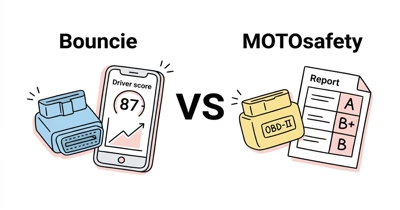
For another OBD-II approach, the Bouncie review covers a lower-cost service model. Our Bouncie vs MOTOsafety comparison focuses on driver coaching and account costs.
Driver Coaching Features
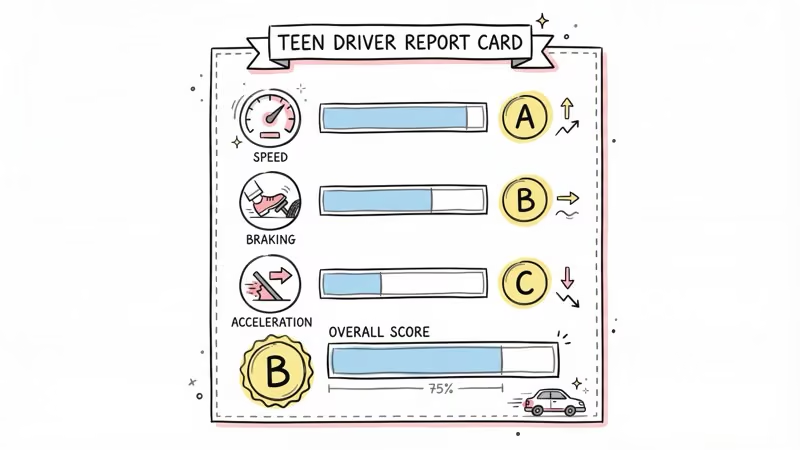
MOTOsafety’s strongest distinction is the daily driver report card. The official feature page says it summarizes speeding, harsh braking, rapid starts, and progress over time.
Geofences mark places such as home, school, or work. Entry and exit alerts can support an agreed check-in routine, but they don’t prove why a driver stopped or what happened at that location.
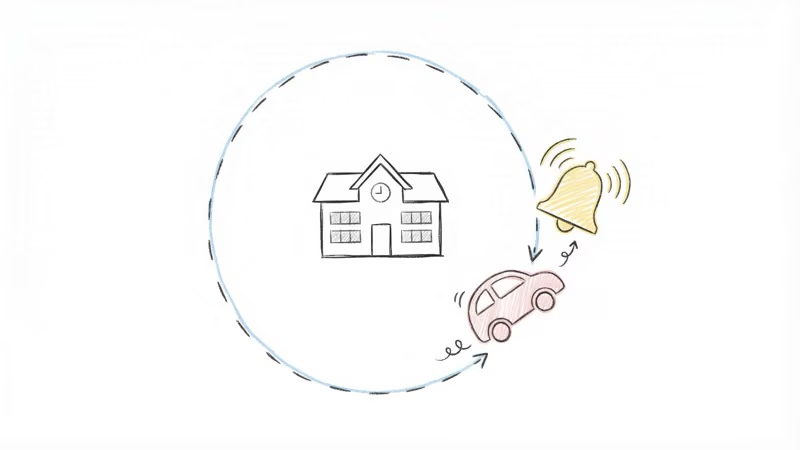
Curfew and speeding alerts surface agreed rule violations. A single flag still needs context: road conditions, passenger safety, bad GPS data, or an emergency can change what the event means.
NHTSA’s teen-driving guidance recommends clear family rules on seat belts, distraction, speeding, passengers, and alcohol. Tracker data can start a conversation, but it doesn’t replace those rules or supervised practice.
App and Web Portal Roles
The web dashboard provides the report card, map history, alert setup, geofences, and maintenance records. The mobile apps provide current location, trip history, and alert summaries away from a computer.
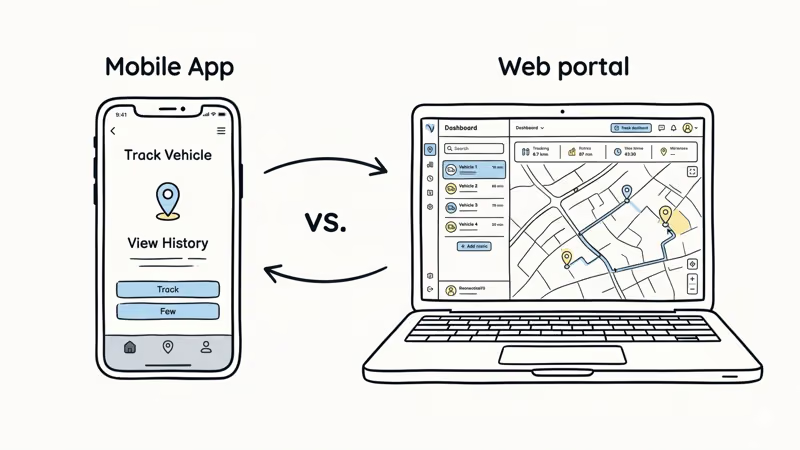
This page hasn’t independently tested current app navigation, push delivery, synchronization, accessibility, or account sharing. Treat those workflows as Verification pending until the later Evidence Audit runs on the live service.
Service and Ownership Costs
The official site currently lists the plug-in vehicle tracker at $69.99 and service at $25 per month, with no contract or activation fee stated. Those values can change by storefront, seller, promotion, and date.
Two years at the current base service rate would be $600 before the device, tax, shipping, or promotions. Use that as a planning illustration, not a guaranteed checkout total.
Read the current billing, cancellation, return, and reactivation terms before purchase. This page doesn’t repeat forum claims about cancellation because the service workflow hasn’t been independently audited.
The tracker subscription comparison explains how recurring service changes ownership cost. The no-monthly-fee guide covers different tradeoffs when a cellular plan is unacceptable.
Write down the monitoring purpose, review date, account owner, and conditions for ending the arrangement. A transparent agreement makes driver coaching safer and more useful than silent surveillance.
Bottom Line
MOTOsafety fits a family that wants vehicle location plus structured coaching signals and accepts a visible OBD-II tracker with a monthly service fee.
Choose another option for an EV, a port that must remain free, no recurring service, or stronger tamper resistance. The teen-driver tracker guide compares those roles.
FAQ
How does the MOTOsafety GPS tracker install?
Locate the vehicle’s OBD-II port, plug in the tracker, and confirm it’s secure. MOTOsafety lists the plug-in model for post-1996 vehicles but excludes electric vehicles, so check compatibility first.
Does MOTOsafety work in extreme temperatures?
MOTOsafety lists an operating range of -22°F to 158°F (-30°C to 70°C). That is a manufacturer specification; this page has not independently temperature-tested the current device.
How accurate is MOTOsafety’s location tracking?
The manufacturer states that the tracker transmits location every minute while driving. Accuracy and delivery still depend on installation, GPS view, cellular service, voltage, and the surrounding structure.
Can a driver disable the MOTOsafety tracker?
The plug-in device can be removed from the OBD-II port, and MOTOsafety lists device-tampering alerts. Use the tracker transparently with an agreed driver-coaching plan rather than relying on concealment.
What happens if the MOTOsafety subscription ends?
An active device and account are required for the connected tracking service. Confirm current cancellation, reactivation, data-retention, and return terms with MOTOsafety before changing service.
Is MOTOsafety better than an AirTag for teen-driver monitoring?
They serve different roles. MOTOsafety adds vehicle-powered cellular reporting and driver-coaching signals; AirTag is a crowd-network item finder without speeding, braking, geofence, or curfew reports.
Does MOTOsafety provide maintenance reminders?
Yes. MOTOsafety lists mileage-based reminders for oil changes, tire rotation, filters, license renewals, and custom maintenance. The reminder system doesn’t replace a mechanic or diagnostic inspection.