A wheelchair is expensive equipment that leaves your control the moment it goes down a jet bridge or sits parked at a hospital entrance. Apple’s guide to detecting unwanted trackers confirms that a tag separated from its owner sounds an alert after a period of time, which matters when you tag your own gear. This is an equipment-recovery guide, not a person-safety one: the goal is getting your chair back after a gate-check, a hospital stay, or a theft.
- Best for iPhone owners: AirTag 2 at $29, Find My crowd-find that pins your folded chair the moment it lands at the gate
- Best cross-platform: Tile Pro 2024 at $35, a loud 128-decibel ring that works on both iPhone and Android
- Best for theft recovery: Tracki Pro 4G GPS, reports live over LTE even after a stolen chair leaves Bluetooth range
- Best for Galaxy users: Samsung SmartTag 2 at $30, taps into the SmartThings Find network of millions of Galaxy phones
- Best small GPS option: Jiobit Gen 3 at $99 plus a subscription, a 0.6-ounce live tracker that hides under an armrest pad
At a Glance: Wheelchair Tracker Comparison
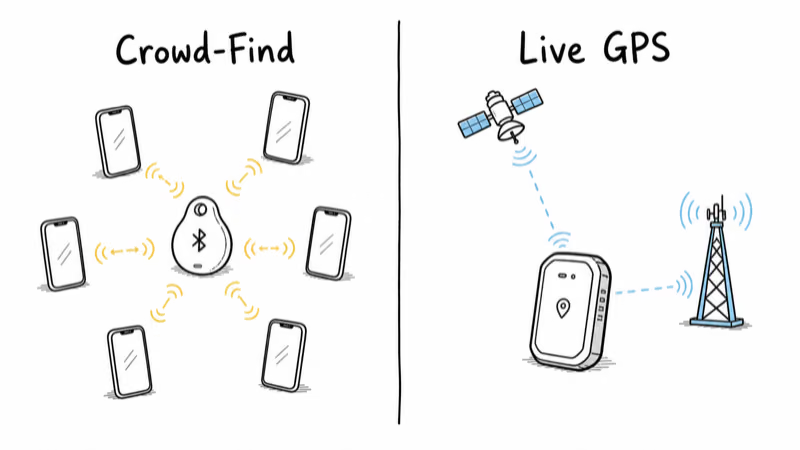
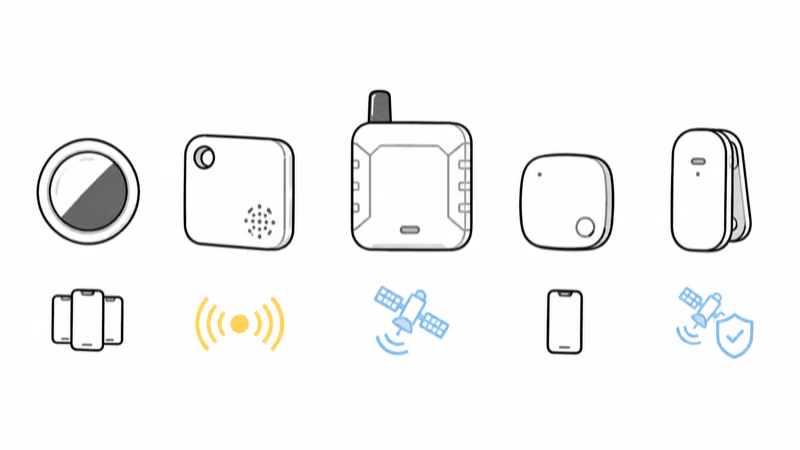
The split that matters is crowd-find versus live cellular GPS. Crowd-find trackers (AirTag, SmartTag, Tile) are cheap, subscription-free, and ideal for gate-check and hospital visibility. Live GPS trackers (Tracki, Jiobit) cost more and need a plan, but they keep reporting when a thief carries your chair miles away.
| Tracker | Type | Best Use | Subscription | Weight |
|---|---|---|---|---|
| AirTag 2 | Crowd-find (Find My) | Gate-check, hospital | None | 0.4 oz |
| Tile Pro 2024 | Crowd-find (cross-platform) | iPhone + Android homes | Optional | 0.4 oz |
| Tracki Pro | Live 4G GPS | Theft recovery | From $20/mo | 1.7 oz |
| SmartTag 2 | Crowd-find (SmartThings) | Galaxy users | None | 0.5 oz |
| Jiobit Gen 3 | Live GPS + cellular | Discreet live tracking | From $9/mo | 0.6 oz |
Crowd-find trackers usually pin a folded chair within minutes of it reaching a busy concourse, where the surrounding phones relay its location. A stolen chair carried out of a quiet lot, though, goes dark on Bluetooth, and only the cellular units keep a live position. That single difference decides which tracker you should buy.
How to Choose a Tracker for a Wheelchair
The right pick depends on what you are protecting against. Gate-checking and hospital visits are visibility problems. Theft is a recovery problem.
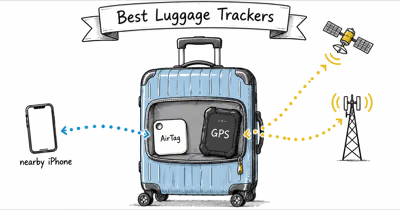
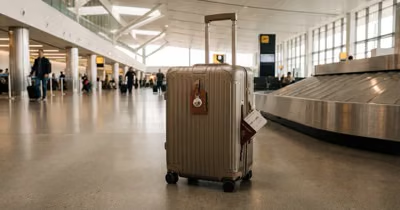
For travel and gate-check, a crowd-find tag is the smart, subscription-free choice. Airports are dense with phones, so a folded chair tagged with an AirTag or SmartTag usually reports within minutes of landing at the jet bridge. A tag also gives you proof of where the chair actually sits while you wait for it. This is where our best luggage trackers guide overlaps, since a gate-checked chair behaves a lot like checked baggage.
For theft, only live cellular GPS works. A thief who rolls your chair into a van leaves every Bluetooth tag silent once it’s out of Bluetooth range, while a 4G LTE tracker keeps pinging from anywhere with coverage. That gap is the whole argument behind our AirTag vs GPS tracker comparison.
For weight and placement, every pick here is light enough that it won’t shift your chair’s balance, with even the heaviest unit under two ounces. What matters far more than the weight is hiding the tracker where a thief won’t look during a fast grab, which is its own decision. We break down the best spots, from the seat-cushion cavity to a hollow frame tube, in the dedicated placement section further down this guide.
The Best Wheelchair Trackers in 2026
The picks below cover the three situations a wheelchair faces away from home: an airline gate-check, a hospital admission, and a parking-lot theft. They’re sorted by use case, not just price.
AirTag 2: Best for iPhone Users
For an iPhone owner, the AirTag 2 is the default pick for gate-check and hospital visibility. It taps Apple’s Find My network, the largest crowd-find system in the world, so a folded chair sent down a jet bridge usually reports its position within minutes of reaching a busy concourse. Apple’s Find My item locating guide states that an item shows its last known location even after it goes offline.
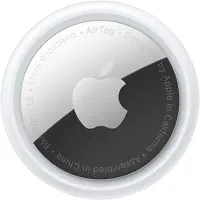
The AirTag 2 earns the top pick for travel because the crowd-find density at airports is unbeatable. A gate-checked chair tends to surface on the Find My map about the time it reaches the concourse below the jet bridge. Tucked under a seat cushion during a hospital stay, an AirTag lets you confirm from the waiting area that the chair has not left the room. That small reassurance beats walking back to check in person.
The honest limit is theft. An AirTag 2 has no cellular radio, so a stolen chair can sit silent for hours, and its alert warns any thief carrying an iPhone. It’s a visibility tool, not a recovery one.
Tile Pro 2024: Best Cross-Platform Tracker
The Tile Pro 2024 is the pick for a household that mixes iPhone and Android, or for a caregiver on Android tracking a family member’s chair. Unlike a crowd-find tag locked to one ecosystem, Tile works the same on both platforms, and its 128-decibel ring is the loudest on this list, which helps when a folded chair is buried in a closet or a hospital storage room.
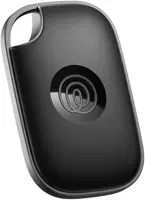
Its ring is the loudest tag here and can carry through a closed door, which makes finding a chair by ear easier than with any quieter tag. The replaceable battery helps too.
The trade-off is network reach. Tile’s crowd-find pool is smaller than Apple’s Find My or Samsung’s SmartThings Find, so out-of-range reports come slower in low-traffic areas. Like every Bluetooth tag, it also has no live tracking for theft.
Tracki Pro: Best for Theft Recovery
The Tracki Pro is the one tracker here that keeps working after your chair is stolen and carried out of Bluetooth range. It’s a 4G LTE cellular GPS unit that reports a live position from anywhere with coverage. According to the maker’s 4G LTE tracking specs, the included worldwide SIM works across more than 190 countries with no setup. For a power chair worth thousands, that live position is the difference between a police report and a same-day recovery.
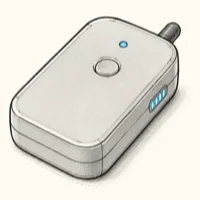
The Tracki Pro earns the theft-recovery pick because it has no Bluetooth blind spot. Because it reports over 4G LTE, the Tracki app keeps drawing a live route as a chair is carried away, while the AirTag and Tile both go dark as soon as they lose their Bluetooth link to nearby phones.
The cost is a subscription, which starts around $20 per month for the live cellular plan. It’s also the heaviest unit here at 1.7 ounces, still negligible on a wheelchair frame. For a thief-proof setup, hide it deep in the frame rather than under a quick-grab cushion, and you turn a “gone for good” theft into a same-day police recovery with a live map dot to hand over.
Samsung SmartTag 2: Best for Galaxy Users
If you carry a Galaxy phone, the Samsung SmartTag 2 is the natural crowd-find pick. It rides the SmartThings Find network of millions of Galaxy devices, with a battery rated for well over a year.
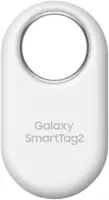
Once you are within range, the SmartTag 2’s Compass View points straight toward a folded chair across a wide hospital lobby. For Galaxy owners it does everything the AirTag 2 does for iPhone owners, including gate-check visibility and hospital confirmation. If you share a chair with a family member, Apple’s guide to sharing an item in Find My shows how the AirTag side handles up to 5 people on one tag.
The catch is the ecosystem lock. SmartTag 2 only works with Samsung Galaxy phones, so it’s useless to an iPhone household. And like every Bluetooth tag, it can’t track a stolen chair live once it leaves a populated area.
Jiobit Gen 3: Best Small GPS Option
The Jiobit Gen 3 splits the difference between a tiny tag and a cellular tracker. It weighs just 0.6 ounces yet packs GPS, cellular, and Wi-Fi for live location, with a 30-day battery that crushes most pocket-sized GPS units. The maker’s official Jiobit overview details the encrypted live tracking and SOS button. Its small body slips under an armrest pad or into a seat-side pouch where a bulkier Tracki would not fit.
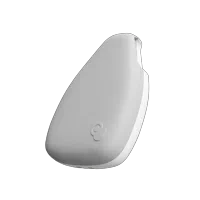
This product has been discontinued.
Tucked inside a seat cushion, the Jiobit still holds a live fix, and its long battery life means fewer mid-trip charges than most pocket-sized GPS units. For a caregiver who wants discreet live tracking without a brick-sized unit, it’s the most concealable cellular option on this list.
The downside is the same as any live tracker: it needs a paid plan, starting around $9 per month. The hardware cost is also higher than any Bluetooth tag here. You pay for live tracking and concealment, and for a high-value chair that trade is usually worth it.
Where Do You Put a Tracker on a Wheelchair?
Placement depends on the threat. Visibility tags just need to stay put. Theft trackers need to stay hidden.
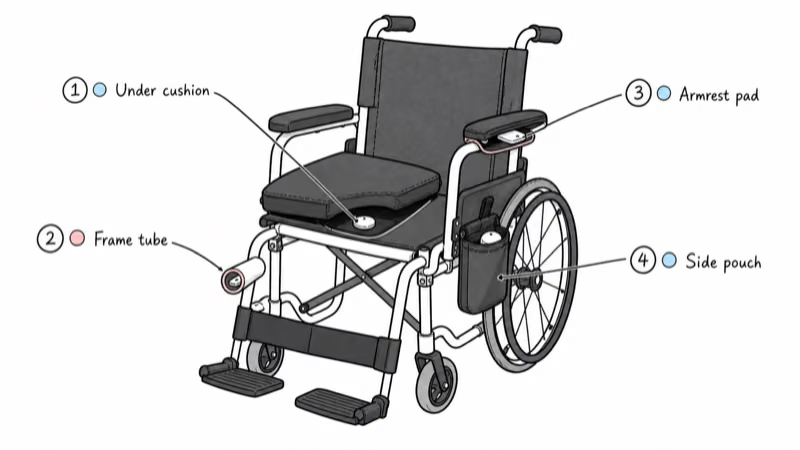
- Under the seat cushion. The cavity beneath a removable cushion is roomy and quick to access. Best for visibility tags like the AirTag 2 or SmartTag 2 that you want to retrieve easily.
- Inside a frame tube. Many chairs have hollow seat-frame or push-handle tubes capped with plastic end-plugs. A slim tag or a Tracki Pro hidden inside is nearly impossible for a thief to find without tools. This is the strongest spot for theft recovery.
- Behind the armrest pad. Armrest pads usually pop off, leaving a flat pocket underneath. A small unit like the Jiobit Gen 3 sits flush there and stays clear of the wheels.
- Inside a seat-side pouch or backpack. A caregiver’s go-bag that always stays with the chair is a fine spot for a Bluetooth tag, though a determined thief may grab the bag separately.
Avoid the wheel hubs and any spot near a power chair’s battery housing, where heat and vibration shorten a tracker’s life. Looser, exposed mounts also tend to lose signal sooner than a tag sealed inside a frame tube, which shields it from knocks and weather.
AirTag or GPS Tracker for a Wheelchair?
The answer depends entirely on whether you fear losing track of the chair or losing the chair to theft. They’re different problems with different hardware.
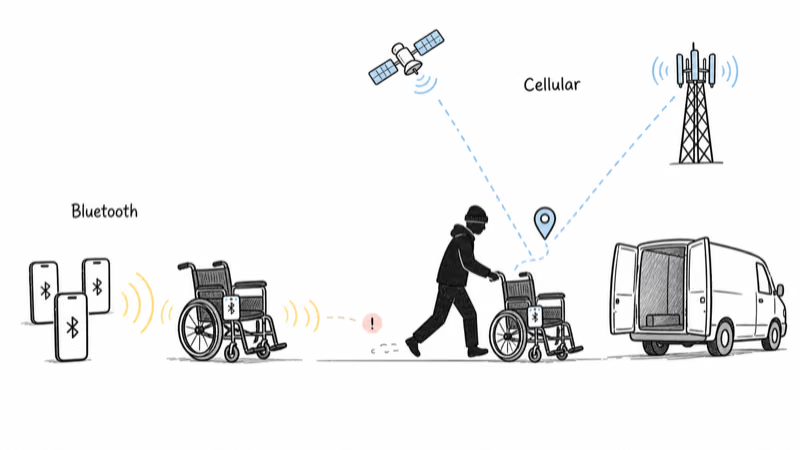
An AirTag 2 or other crowd-find tag has no cellular radio. It reports a location only when it passes within Bluetooth range of someone else’s phone, then borrows that phone’s connection. In a packed airport or hospital that works beautifully, which is why it’s our travel pick. The catch shows up when the chair is stolen: a tag traveling away from its owner warns a thief who carries a compatible phone, who can then throw it out.
A cellular GPS tracker like the Tracki Pro or Jiobit Gen 3 has no such giveaway. It keeps reporting over LTE from anywhere with coverage, which is exactly what a stolen chair needs. The cost is a monthly subscription and a slightly larger unit.
The honest verdict: buy a crowd-find tag if your worry is gate-check and hospital visibility, and buy a cellular GPS tracker if your worry is theft recovery. Many owners run one of each, a cheap AirTag for daily visibility plus a hidden Tracki for the worst case. For the full cellular-versus-Bluetooth math, our GPS tracker hub breaks it down across every use case.
Wheelchair Trackers vs Personal Safety Devices
This guide is about tracking the equipment, not the person in it. A GPS tracker for a child, an elderly relative, or someone with dementia is a person-safety device: it lives on the body, often carries an SOS button, and is built to alert a caregiver the moment a person wanders away from a safe zone. A wheelchair tracker has none of those goals, because it protects gear, not a wearer, and that single difference reshapes every buying decision below.
A wheelchair tracker stays with the chair. Its only job is recovery after a gate-check, a hospital mix-up, or a theft. The chair is the asset you are protecting.
That distinction changes what you buy. For equipment recovery you can hide a tag deep in the frame and ignore it for months, because no one needs to press a button or wear it comfortably. A power chair that costs as much as a used car deserves the same hidden cellular tracker you would put on a vehicle, paired with a cheap crowd-find tag for everyday peace of mind.
Bottom Line
For gate-checking a wheelchair or confirming it during a hospital stay, the AirTag 2 is the strongest pick for iPhone owners, with the SmartTag 2 doing the same job for Galaxy users and the Tile Pro 2024 covering mixed households.
If your real fear is theft, only a live cellular tracker works. The Tracki Pro keeps reporting after a stolen chair leaves Bluetooth range, and the Jiobit Gen 3 does the same in a smaller body you can hide under an armrest. The smart setup for a high-value chair is one of each: a cheap tag for daily visibility and a hidden GPS unit for recovery.
FAQ
What is the best tracker for a wheelchair?
It depends on the threat. For gate-checking at an airport or confirming the chair during a hospital stay, the AirTag 2 is the best pick for iPhone owners because Apple’s Find My crowd-find network is the largest in the world. For theft recovery, a 4G LTE cellular tracker like the Tracki Pro is the right tool, since it keeps reporting a live position after the chair leaves Bluetooth range. Many owners run both.
Can you put an AirTag on a wheelchair you gate-check?
Yes, and it’s one of the best uses for one. A folded chair tagged with an AirTag 2 usually surfaces on the Find My map within minutes of reaching a busy concourse, because airports are dense with iPhones. Hide it under the seat cushion or inside a frame tube. The limit is theft: an AirTag has no cellular radio, so it can’t track a chair carried into a quiet area in real time.
Will a tracker work if my wheelchair is stolen?
Only a cellular GPS tracker will. A Bluetooth tag like the AirTag, Tile, or SmartTag goes silent once it leaves crowd-find range, and it can trigger an unwanted-tracking alert that warns the thief. A 4G LTE unit like the Tracki Pro or the Jiobit Gen 3 keeps reporting over the cellular network from anywhere with coverage, which is what theft recovery actually needs.
Where should you hide a tracker on a wheelchair?
The best theft-proof spot is inside a hollow frame tube or push-handle tube, capped with the plastic end-plug, where a thief can’t reach it without tools. For visibility tags you want to retrieve easily, the cavity under a removable seat cushion or the pocket behind an armrest pad works well. Avoid the wheel hubs and any area near a power chair’s battery housing, where heat and vibration shorten the tracker’s life.
Do wheelchair trackers need a subscription?
The crowd-find tags don’t. The AirTag 2 and Samsung SmartTag 2 have no recurring fees, and Tile offers a free tier. Live cellular GPS trackers do need a plan because they use mobile data to report location: the Tracki Pro starts around $20 per month and the Jiobit Gen 3 around $9 per month. You pay the subscription only when you need live theft recovery rather than crowd-find visibility.
Is a tracker on a wheelchair the same as a personal safety device?
No. A wheelchair tracker protects the equipment and stays with the chair whether or not anyone is in it. A personal safety tracker is worn on the body, often has an SOS button, and is built to alert a caregiver when a person wanders. They’re different products: this guide is about recovering an expensive piece of mobility gear after a gate-check, hospital mix-up, or theft, not about monitoring a person.
Does a wheelchair tracker add noticeable weight?
No. Every tracker here is light enough to make no difference to a chair’s balance. The Bluetooth tags weigh about half an ounce, and even the heaviest cellular unit, the Tracki Pro, is only 1.7 ounces. Placement matters far more than weight: hide the tag deep in the frame for theft protection, or under a cushion for quick retrieval during travel.