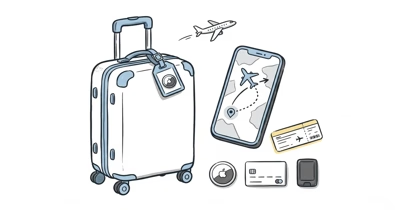
For most travelers, an Apple AirTag 2 is the best luggage tracker because Find My piggybacks on a billion-device network at every airport. If you need live, real-time location anywhere in the world, a cellular GPS tracker like the Invoxia or Tracki Pro is the better pick, at the cost of a subscription and a chunkier device.
Picking a luggage tracker comes down to one question most buyers skip: do you want to recover a delayed bag or follow it in real time? Those are two different jobs, and they point to two different devices. Apple’s Find My network of over a billion devices makes a Bluetooth AirTag shockingly good at the first job, while true GPS trackers own the second.
Quick Picks: Best Luggage Tracker by Trip Type
| Traveler need | Best pick | Why it fits | Buy |
|---|---|---|---|
| Normal airline trips through busy airports | Apple AirTag 2 | Cheapest, no subscription, and Find My updates well around gates and baggage halls. | Check AirTag 2 |
| True GPS without a monthly bill | Invoxia Cellular GPS | GPS + LTE-M with 3 years of service included and long standby battery life. | Check Invoxia |
| Live worldwide tracking | Tracki Pro | 4G global SIM, large battery, live tracking, and better water resistance than most GPS rivals. | Check Tracki Pro |
| Fastest refresh while a bag is moving | SpyTec GL300 | 5-second update intervals, geofencing, and speed alerts for theft-sensitive trips. | Check SpyTec |
- AirTag 2 is the top pick for airline bags — $29, ~12-month battery, and it borrows location from any nearby iPhone in the airport
- Invoxia is best for no-fee GPS — about $130 buys 3 years of cellular service with a 4-month battery for set-and-forget trips
- Tracki Pro is the best-value live tracker — $36 device with a 10,000mAh battery rated up to 1 year in power-save and worldwide 4G
- The airline rule that matters — spare lithium batteries and power banks must fly in your carry-on, never in checked baggage
- Find My only updates near other Apple devices — a true GPS tracker is the only thing that pings from an empty cargo hold or a remote road
How Should You Choose a Luggage Tracker?
Start with where your bag goes and what failure scares you. A delayed checked bag that resurfaces two days later is a very different problem from a stolen suitcase being driven across a city right now.
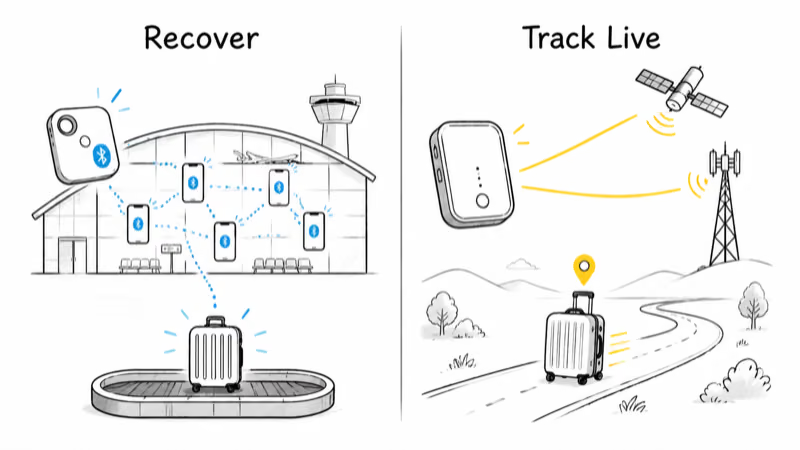
Bluetooth trackers like the AirTag have no GPS chip and no cellular radio. They send a secure Bluetooth signal that nearby Apple devices relay back to you anonymously. That works well inside airports and baggage halls, where iPhones are everywhere, but it goes dark the moment a bag sits alone in a remote cargo facility overnight.
True GPS trackers carry their own cellular modem, so they report a live position from anywhere with a signal, no friendly phones required. The tradeoff is real: they’re bigger, need recharging, and almost all of them charge a monthly fee. The practical split breaks down this way.
| Tracker | Network | Battery | Monthly Cost |
|---|---|---|---|
| AirTag 2 | Bluetooth (Find My) | ~12 months (CR2032) | $0 |
| Invoxia GPS | GPS + LTE-M | Up to 4 months | $0 (3 yrs prepaid) |
| Tracki Pro | 4G LTE worldwide | Up to 1 year (power-save) | From ~$20/mo |
| SpyTec GL300 | 4G LTE real-time | 2.5 weeks | From $25/mo |
Apple AirTag 2 — Best for Airline Bag Recovery
For the vast majority of flyers, the AirTag 2 is the tracker to buy. At $29 it’s the cheapest option here, and it solves the most common travel headache: a checked bag that misses your connection. Apple says the Find My network spans over a billion devices, and airports are about the densest concentration of iPhones on Earth.
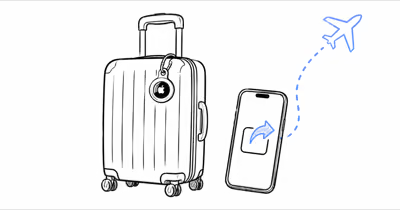
According to Apple’s Find My documentation, that crowdsourced network spans over 1 billion devices, all reporting locations anonymously and encrypted. An AirTag in a checked bag can update when nearby Apple devices detect it around gates, sorting belts, and baggage carousels, relaying its position back to you.
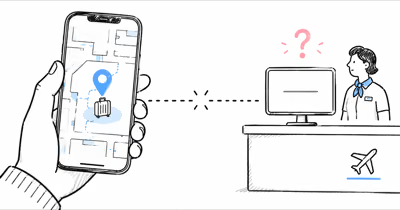
If a suitcase is misrouted, a Find My ping can give you a location clue before the airline’s own status updates catch up. That head start is the entire value of an AirTag for luggage.
The AirTag 2 also adds UWB Precision Finding with up to 50% longer range than the original, so once you’re in a baggage hall you get an arrow pointing straight at your bag. Its CR2032 battery runs about 12 months, so you set it and forget it.
The honest limit: with no nearby Apple devices, location simply won’t update, which is why it’s a recovery tool, not a live tracker. If you’re on Android, read our take on whether AirTags work with Android before buying.
Invoxia Cellular GPS — Best for No Monthly Fee
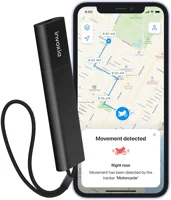
If the AirTag’s Bluetooth-only limit worries you and you hate subscriptions, the Invoxia Cellular GPS Tracker is the smart middle ground. The roughly $130 price includes 3 years of cellular service with no recurring bill, which pencils out to about $3.60 a month, far below any pay-monthly rival.
What makes it well suited to luggage is the battery. In low-power mode with periodic check-ins, it lasts up to 4 months per charge, so it survives a long trip without you babysitting a charging cable. Because it carries GPS plus LTE-M cellular, it reports a real position from a cargo hold, a hotel storeroom, or a stranger’s car, not just when an iPhone wanders by.
Anti-theft motion alerts ping your phone the instant the bag moves unexpectedly. The catches are the higher upfront cost and an IP33 splash rating, so it shrugs off a drizzle but isn’t a submersible. For a fuller breakdown, see our Invoxia GPS tracker review. It’s also the easiest true-GPS option to hand to a non-technical traveler.
Tracki Pro — Best Value for Live Worldwide Tracking
When you want real-time tracking on a budget, the Tracki Pro is the value leader. The device itself is about $36, and its standout spec is a 10,000mAh battery rated up to a year in power-save mode, which dwarfs almost every cellular rival and is a real advantage for long international itineraries.
Tracki runs on 4G LTE with a global SIM, so it follows a bag across borders without you swapping carriers. That global SIM is designed to hand off between supported networks, so it can keep reporting after a bag lands abroad wherever there’s coverage. The IP67 housing also means a coffee spill or rainy curbside won’t kill it, unlike the splash-only Invoxia.
The honest tradeoff is the subscription: live tracking needs a plan that starts around $20 a month, so the cheap device price is only half the story. For tracker-to-tracker context, compare it in our Tracki Pro review, or browse the wider field in our roundup of the best GPS trackers with a SIM card.

SpyTec GL300 — Best for Real-Time Update Speed
If you want the fastest possible refresh while a bag is in motion, the SpyTec GL300 earns its place. It pushes 5-second update intervals on 4G LTE, so a suitcase being driven away updates almost continuously rather than every few minutes. That speed is the difference between watching a theft unfold and finding out after the fact.
It’s compact enough to bury in a packed bag, and geofencing plus speed alerts mean you get a notification the moment your luggage leaves the carousel zone or the hotel. Its 5-second update option is the reason to choose it when refresh speed matters most.
The two limits are battery and price-over-time. At about 2.5 weeks per charge it needs more frequent topping-up than the Tracki or Invoxia, and the subscription starts at $25 a month, the priciest plan in this group. It’s the pick for travelers who prioritize update speed over standby life. We cover it head-to-head with the Tracki in our SpyTec GPS tracker review.

What Are the Airline Lithium-Battery Rules for Trackers?
This is where travelers get tripped up, so let’s be precise. Every tracker here runs on a lithium battery, and the rules differ for a device versus a loose battery. The FAA states that spare lithium-ion batteries are capped at 100 watt hours each in carry-on bags, a limit no tracker comes close to.
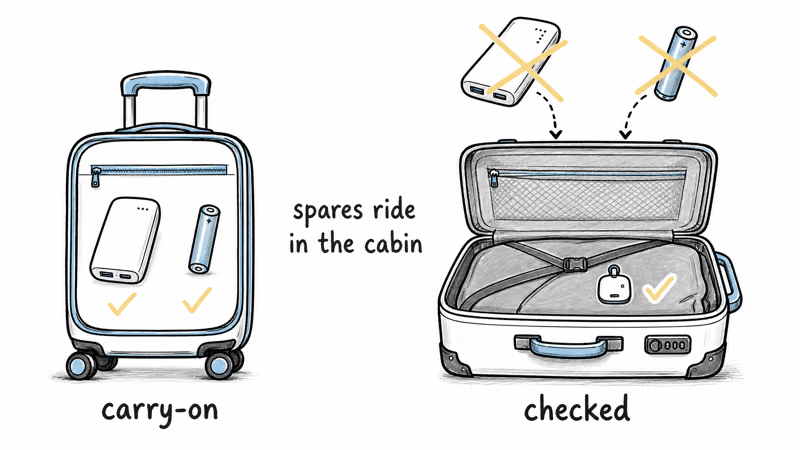
A tracker installed inside your bag is fine in checked luggage. Its small lithium cell is well under the limits. The FAA’s PackSafe lithium-battery guidance states that the restriction applies to spare, uninstalled batteries and power banks, not devices powered by an internal cell.
The hard rule is about spare batteries and power banks: those must travel in your carry-on, never in a checked bag. The TSA’s power-bank policy confirms that, and recommends that if your carry-on gets gate-checked, you pull the power bank out and keep it in the cabin with you.
Never pack a spare lithium battery or power bank in a checked bag. If you carry a charger for a GPS tracker, keep it and any loose batteries in your carry-on per FAA and TSA rules.
Tracker Coverage in International Cargo Holds
Coverage is the quiet reason your tracker type matters more on long-haul trips. An AirTag depends entirely on nearby Apple devices, so it goes dark whenever your bag sits alone, and a sealed international cargo hold at altitude is exactly that scenario.
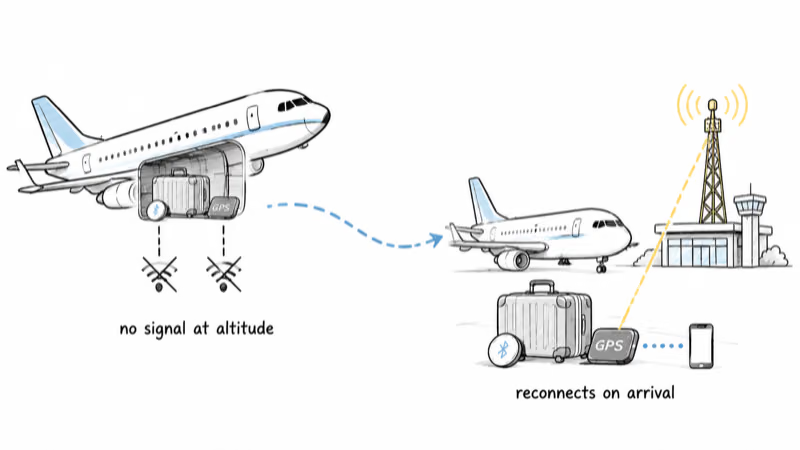
A cellular GPS tracker can’t transmit at 35,000 feet either, yet it catches up the instant the plane lands and the bag reaches a covered area. The Tracki Pro’s worldwide 4G and the Invoxia’s LTE-M both reconnect on arrival without a SIM swap, which is the practical thing that matters.
For most travelers the realistic pattern is simple: the bag goes quiet in the air, then reports again on the ground. If your route runs through remote regions with thin cellular coverage, lean toward the multi-network Invoxia. For everyday airline travel, an AirTag’s Find My recovery is enough, and you can read our deeper best Bluetooth tracker rundown for alternatives.
Where to Hide a Tracker in Your Bag
Placement changes how well any tracker performs. For a GPS unit, the antenna needs a path to the sky, so an outer pocket or the top of the packing stack beats burying it under dense clothing or near metal frames.
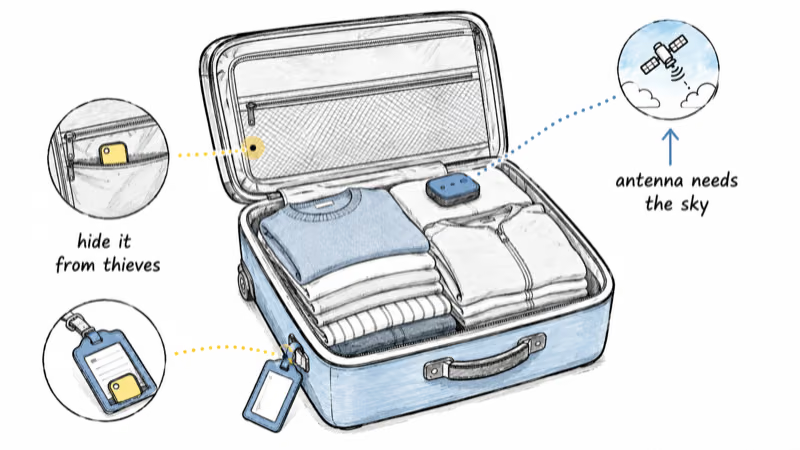
For an AirTag, concealment matters more than signal, since it only needs to be within Bluetooth range of a passing phone. Slip it into an inner lining pocket or a luggage tag so a thief who dumps your bag doesn’t spot and toss it. A cellular tracker holds a steadier GPS fix near the top of the bag than buried at the bottom, where dense clothing and metal frames block the antenna.
Whatever you choose, register the tracker before you fly and confirm a live location at home first. A tracker you haven’t set up is just dead weight in your suitcase. If you also want a tag for valuables inside the bag, our marine GPS tracker guide covers the same waterproofing logic for gear that gets wet.
How Do AirTag and GPS Trackers Compare for Luggage?
- You mostly fly airline routes through busy airports
- You want zero subscription and a 12-month battery
- You use an iPhone and value Precision Finding in the baggage hall
- Recovering a delayed bag matters more than live tracking
- You need real-time location anywhere, not just near iPhones
- Your bag travels through remote or low-density areas
- Theft, not just delay, is your main worry
- You’ll accept a monthly fee and periodic recharging
Plenty of frequent travelers carry both: an AirTag for cheap airport recovery and a cellular tracker like the LandAirSea 54 or Tracki Pro when real-time location is worth the fee. That’s not overkill; it’s covering two different failure modes with the right tool for each.
Bottom Line
Buy the AirTag 2 if you fly normal airline routes and just want to recover a delayed checked bag. It’s $29, the battery lasts a year, and Find My’s billion-device network does the heavy lifting at every airport.
Step up to the Invoxia or Tracki Pro when you need live, real-time tracking from anywhere, especially for theft protection or remote international routes. And whatever you pack, keep spare batteries and power banks in your carry-on, never the hold.
Want a wider shortlist? Our guide to the best luggage trackers ranks the Bluetooth-led field, and if you fly overseas, see our picks for luggage trackers for international travel.
FAQ
What is the best GPS tracker for a suitcase?
For most suitcases, the best first buy is an AirTag 2 because it’s cheap, has no subscription, and updates well around airports through Apple’s Find My network. If you specifically need true live GPS tracking, choose Invoxia for no monthly fee or Tracki Pro for worldwide 4G tracking.
Is an AirTag or a GPS tracker better for luggage?
It depends on the job. An AirTag is better and cheaper for recovering a delayed airline bag because Find My relays its location off nearby iPhones at busy airports. A cellular GPS tracker is better for live, real-time tracking anywhere, including remote areas with no Apple devices around, but it costs more and usually needs a monthly subscription.
Can I put a GPS tracker in checked luggage?
Yes. A GPS or Bluetooth tracker with an installed lithium battery is allowed in checked baggage under FAA rules. The restriction applies to spare, uninstalled lithium batteries and power banks, which must travel in your carry-on instead. The tracker’s own small internal cell is well within the limits, so packing it in a checked bag is fine.
Will an AirTag work in a plane cargo hold?
Not while the plane is in the air, because an AirTag needs a nearby Apple device to relay its location and a sealed cargo hold has none. It updates again once the bag lands and reaches an area with passing iPhones, such as the baggage hall. For continuous tracking, you need a cellular GPS tracker, though even those can’t transmit at altitude.
Do luggage GPS trackers need a subscription?
Most cellular GPS trackers do, because transmitting location over a mobile network has a carrier cost. The Tracki Pro starts around $20 a month and the SpyTec GL300 around $25. The main exception is the Invoxia, which bundles 3 years of service into its purchase price. Bluetooth trackers like the AirTag have no subscription but also have no cellular tracking.
Can I track international luggage with a GPS tracker?
Yes, if the tracker supports global cellular coverage. The Tracki Pro uses a worldwide 4G SIM and the Invoxia uses LTE-M, so both reconnect and report a position once your bag lands abroad without a SIM swap. Coverage can thin out in very remote regions, so a multi-network tracker is the safer choice for off-the-beaten-path routes.
How long do luggage tracker batteries last?
It varies widely by type. Bluetooth luggage trackers usually last the longest, while real-time cellular GPS trackers drain faster because constant updates use more power. Low-power GPS modes stretch runtime, but always charge a GPS tracker fully before a trip.
Where should I hide a tracker in my suitcase?
For a GPS tracker, place it near the top of the bag or in an outer pocket so the antenna has a clearer path to satellites and cell towers. For an AirTag, focus on concealment instead, tucking it into an inner lining pocket or luggage tag where a thief is less likely to find and remove it. Always confirm a live location before you travel.