Vyncs is the best GPS tracker for a small business fleet: an OBD-II plug-in at roughly $7 per month per vehicle on annual billing, with real-time location, trip history, and geofencing for 2 to 15 vehicles.
A small business fleet of 2 to 15 vehicles needs the same live tracking and driver oversight that enterprise telematics offers, but without a five-figure platform contract or a per-truck fee that erases the profit on every job. The IRS sets a standard mileage rate of 70 cents per business mile for 2025, which turns each tracker’s trip history into a defensible record for the deductions your accountant claims.
- Best overall: Vyncs at roughly $7/month per vehicle on annual billing, the lowest recurring cost here for an OBD-II plug-and-play fleet tracker
- Real-time leader: Bouncie pushes a 15-second location update and lets you put unlimited vehicles on one $9.65/month account dashboard
- The fleet tax rule: once you run five or more vehicles at once, the IRS bars the standard mileage rate, so per-vehicle mileage and fuel records become mandatory paperwork
- Per-vehicle subscription drives cost, not hardware: a 10-vehicle fleet pays $80 to $250 a month in fees against a one-time $27 to $90 device price
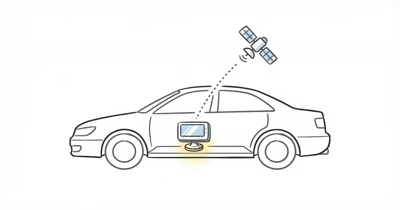
- OBD plug-ins win for owned vehicles: every car and light truck built after 1996 has an OBD-II port, so setup is tool-free for most light-duty fleets
The Fleet Tax Rule That Changes Your Tracker Math
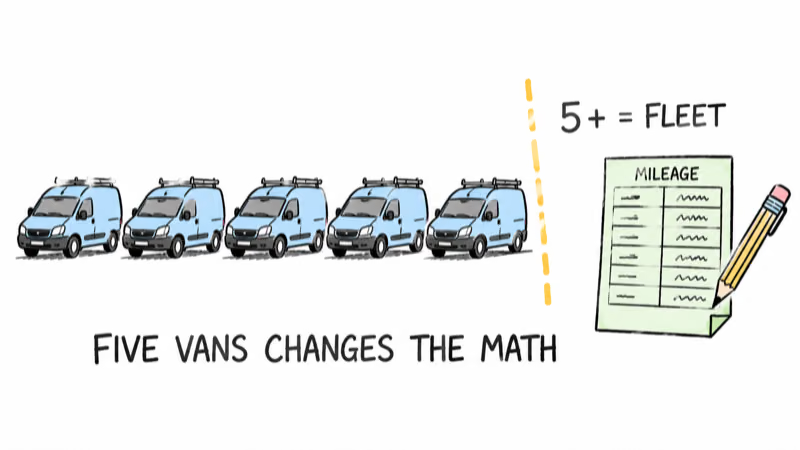
The single fact that reshapes tracking for a small business is the federal fleet threshold. The IRS Topic 510 guidance states that operating 5 or more cars at the same time counts as a fleet and bars you from the simple standard mileage rate.
So once a sixth van joins the lot, you switch to the actual-expense method and document mileage, fuel, and maintenance per vehicle. The tracker just became paperwork infrastructure.
That single rule is why a fleet tracker earns its keep. An OBD-II unit like the Vyncs logs every trip’s miles automatically across an entire fleet, producing the per-vehicle records the actual-expense method demands. The app exports a clean mileage total per vehicle that an accountant can drop straight into the calculation, no driver write-ups required.
A tracker pays for itself on routing and accountability too. The same trip history shows which driver idled for 40 minutes and which van took a 12-mile personal detour.
Independent reviewers weigh the same specs we do. In its hands-on GL300 testing, Tom’s Guide found that tight location accuracy is what makes a tracker trustworthy, the exact quality a dispatcher needs to verify a job-site arrival.
Gig couriers can also browse our delivery driver GPS tracker guide.
The 5 Best Small Business Fleet GPS Trackers in 2026
We sorted these picks the way a fleet owner buys: lowest recurring cost first, then real-time speed, portability, and driver coaching. Every one is a self-install consumer-grade tracker with app-based setup, not an enterprise platform that demands a sales call, a multi-year contract, and a per-truck fee on top.
Vyncs: Best Overall for Small Business Fleets
Vyncs is the default pick for an owner watching the per-vehicle line on the budget. It plugs into the OBD-II port and bills annually at a rate that works out to about $7 a month per vehicle, the lowest recurring cost on this entire list, and that gap is exactly the number that compounds once you multiply it across 10 trucks, then again over a two-year ownership window.
It draws power from the vehicle, so there’s no battery to recharge and no driver to nag about a dead unit. That design scales cleanly.
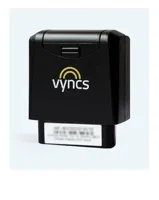
Vyncs earns the top spot because its annual billing keeps the per-vehicle fee lowest while still delivering real-time location, trip history, and geofencing. The 60-second update is slower than a premium live tracker, but for a fleet owner the savings outweigh the cadence. The catch: the annual prepay wants the full year up front.
Bouncie: Best Real-Time Fleet Dashboard
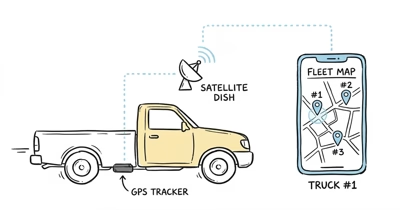
Bouncie is the choice when you want to watch the whole fleet move on one screen in near real time. The 15-second update interval is the fastest OBD plug-in here, and the account lets you add unlimited vehicles, so a growing fleet stays on a single $9.65/month-per-device dashboard instead of juggling logins. It plugs into the OBD-II port for a no-wiring install on every van.
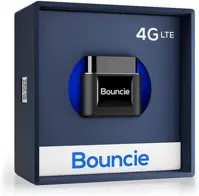
The flat $9.65/month per vehicle is simple math, and the unlimited-vehicle account scales cleanly as you add trucks. The catch: it’s low, but not the rock-bottom annual rate Vyncs offers.
Optimus 3.0: Best Battery Tracker for Mixed Fleets
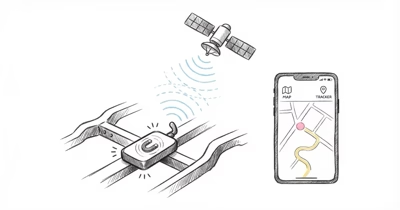
Optimus 3.0 is the pick when part of your fleet has no OBD port to spare, like a trailer, a rental, or a piece of towed equipment. At about $27 it’s the cheapest device here, and the rechargeable battery is rated up to a month on the one-minute reporting default, so a vehicle that sits between jobs stays on the map.
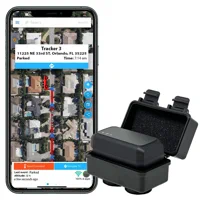
The IP67 magnetic case mounts on any steel surface, and the $19.95/month plan stores a year of trips, the same route record the actual-expense method wants. The trade-off is the recharge cycle that pins the Optimus to a fleet’s off-OBD corners.
SpyTec GL300: Best for Fast Live Recovery
SpyTec GL300 is the unit to add when one high-value vehicle in the fleet needs the fastest possible live trail during a theft. The 5-second update interval is the quickest on this list, and the app draws a stolen vehicle’s route minute by minute, which is what you and the police need to chase a missing box truck rather than waiting on a slower ping.

The compact battery unit hides anywhere and runs about 2.5 weeks per charge. At around $25/month it’s the steepest tier here, so reserve it for the one or two assets that earn it.
MOTOsafety: Best for Driver Behavior and Coaching
MOTOsafety is the pick for an owner whose biggest risk is how employees drive the company’s vehicles. It plugs into the OBD-II port and turns each driver’s habits into a weekly report card, flagging speeding, hard braking, and rapid acceleration, the exact behaviors that drive up insurance claims and fuel burn across a small fleet.
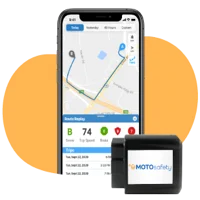
The $22/month plan adds geofencing zones so you get an alert when a van leaves its territory or reaches a job site. Because MOTOsafety is built around behavior scoring rather than the fastest live tracking, pair it with a quicker unit when minute-by-minute theft recovery also matters to your operation, since a report card won’t help you chase a stolen van in real time.
How to Choose a Small Business Fleet Tracker
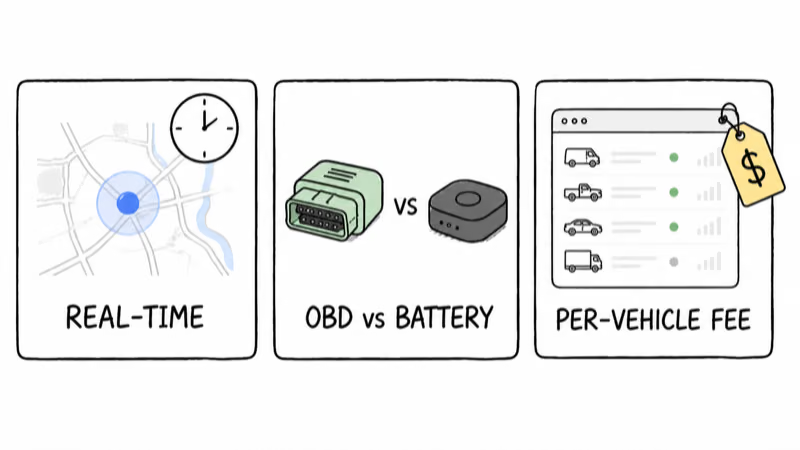
Buying for a fleet differs from buying one tracker for one car. You’re choosing a recurring cost that repeats across every vehicle, plus a dashboard that makes sense of all of them at once. Three factors decide the fit.
Real-time versus passive logging. A real-time tracker reports over 4G LTE every few seconds, so you watch the fleet live. A passive logger only stores the route.
Every pick here is real-time, because a dispatcher reassigning jobs needs to see the truck now, not tonight. Our OBD GPS tracker guide for cars breaks down the update-cadence trade-off, from five-second pursuit pings to one-minute fleet check-ins, in more depth.
OBD-II plug-in versus hardwired versus battery. An OBD-II plug-in like the Vyncs or Bouncie draws power from the diagnostic port and installs in under a minute on any post-1996 vehicle, which is why it’s the default for an owned fleet. A hardwired install hides the unit and resists tampering, but it needs a technician. A battery tracker like the Optimus suits trailers and equipment with no OBD port to feed it.
Per-vehicle subscription and the multi-vehicle dashboard. The recurring fee dominates a fleet budget: a $7-per-month difference looks trivial on one tracker and becomes $840 a year across a 10-truck fleet. Annual prepay (Vyncs) usually beats month-to-month, and a flat per-vehicle fee (Bouncie) keeps the math predictable as you grow.
Just as important, pick a single account that lists every vehicle and exports mileage in bulk. To skip fees, see our no-monthly-fee car tracker roundup.
IFTA, Mileage, and Compliance Records
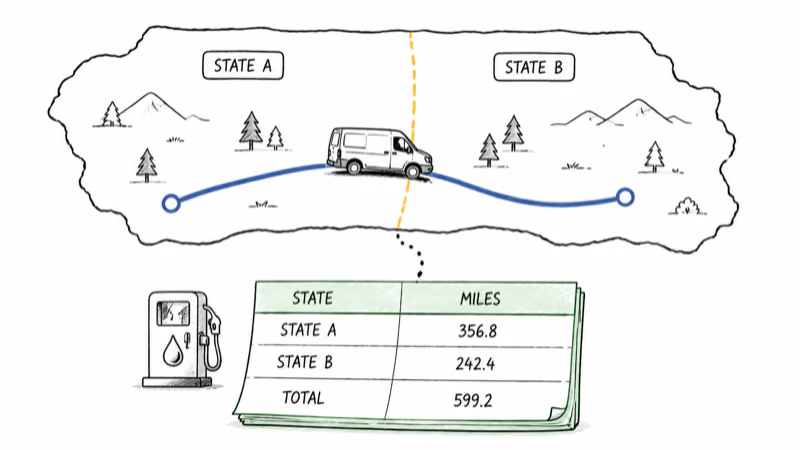
Once the hardware fits, the second buying lens is compliance, and it’s where a fleet diverges sharply from a single car. If your trucks cross state lines, fuel-tax reporting under the International Fuel Tax Agreement requires per-jurisdiction mileage, and a tracker’s trip log is the raw data behind that filing.
Heavier commercial trucks may also fall under the federal Electronic Logging Device rule. The FMCSA states that an ELD synchronizes with a vehicle engine to record driving time.
A consumer GPS tracker isn’t a certified ELD and won’t satisfy that mandate. But its mileage history still feeds your IFTA filing and the IRS actual-expense method, which is plenty for the small fleet of vans and light trucks that the ELD rule never covers in the first place, the trucks most owner-operated businesses actually run.
Do You Need Enterprise Telematics Instead?
For most fleets under about 15 vehicles, no. Enterprise platforms such as Verizon Connect, Samsara, and Azuga add fuel-card integration, ELD compliance, dashcams, and maintenance scheduling, but they come with per-vehicle pricing, multi-year contracts, and a sales process built for 50-truck operations.
A small business with a handful of vans gets the location, mileage, geofencing, and driver-behavior data it actually uses from the consumer-grade trackers above, at a fraction of the recurring cost and with no contract. The line to cross into enterprise telematics is usually a federal ELD mandate on heavy commercial trucks or a fleet large enough that a dedicated dispatcher needs maintenance and fuel-card tooling in one platform.
If your fleet is mostly pickups doing heavier work, our best GPS tracker for a truck guide compares the rugged options, and the full lineup with subscription breakdowns lives on our GPS tracker hub.
How Much Should a Small Fleet Budget Per Vehicle?
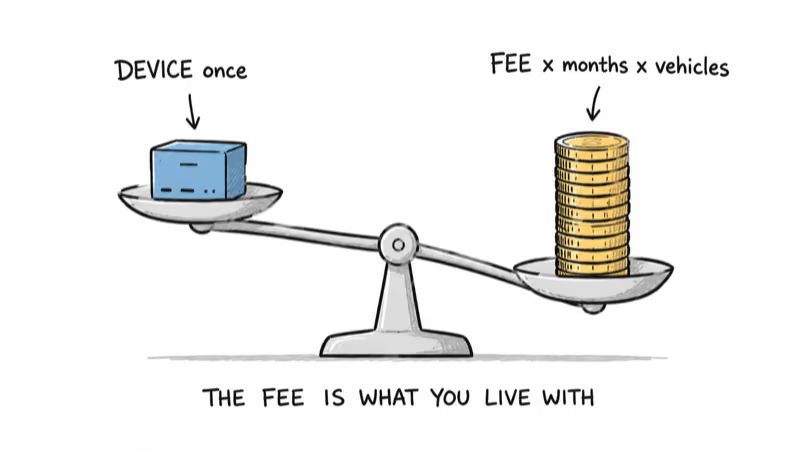
Plan around the monthly fee, not the device. Across these five picks the recurring cost runs from about $8.33 a month per vehicle on Vyncs’s annual plan up to $25 on the SpyTec GL300, with Bouncie at $9.65, Optimus at $19.95, and MOTOsafety at $22 sitting between. The hardware is a one-time $27 to $90 and barely moves the two-year total.
For a typical 8-vehicle fleet on Vyncs, that is roughly $672 a year in subscriptions plus a one-time hardware outlay, a fraction of an enterprise telematics contract. Run the per-vehicle fee across your actual vehicle count for two years before you choose, because that number, not the sticker price, is what you live with.
Bottom Line
For most small business fleets, Vyncs is the tracker to buy. It’s an OBD-II plug-in with the lowest per-vehicle recurring cost on annual billing, plus the real-time location, trip history, and mileage records the IRS actual-expense method demands once you run five or more vehicles.
From there, match the tracker to the job: Bouncie for the fastest OBD update and an unlimited-vehicle dashboard, Optimus 3.0 for trailers and equipment with no OBD port, SpyTec GL300 for the fastest live recovery on a high-value asset, and MOTOsafety when coaching driver behavior across employees is the priority.
FAQ
What is the best GPS tracker for a small business fleet?
Vyncs is the best all-around choice for a small business fleet because its annual billing works out to about $8.33 a month per vehicle, among the lowest recurring costs of the consumer-grade OBD trackers, while still delivering real-time location, trip history, and geofencing. For the fastest updates and a single dashboard that holds unlimited vehicles, Bouncie at $9.65 a month per device is the alternative, and MOTOsafety is the pick if coaching how employees drive is your main concern. The right choice depends on whether you optimize for the lowest per-vehicle fee, live tracking speed, or driver behavior reporting.
How much does it cost to track a fleet of vehicles?
Plan around the per-vehicle monthly subscription, which runs from about $8.33 to $25 across the trackers here, multiplied by your vehicle count. A 10-vehicle fleet on Vyncs’s annual plan costs roughly $1,000 a year in fees, while the same fleet on a $25-a-month unit would run about $3,000. The one-time hardware is a smaller $27 to $90 per device, so the recurring fee, not the sticker price, drives the two-year total. Annual prepay plans almost always beat month-to-month for a fleet.
Do fleet GPS trackers help with IRS mileage deductions?
Yes, and the records become mandatory once you run a fleet. The IRS bars the simple standard mileage rate for anyone operating five or more cars at the same time, so a fleet must use the actual-expense method and document mileage, fuel, and maintenance per vehicle. A tracker that logs every trip automatically produces the per-vehicle mileage records that method requires, without a driver writing anything down. At the 2025 rate of 70 cents per business mile, accurate records protect a meaningful deduction.
What is the difference between a fleet tracker and a consumer GPS tracker?
The hardware is often identical; the difference is the software account and the per-vehicle pricing. A fleet-ready tracker uses one dashboard that lists every vehicle, supports geofencing per job site, and exports trip and mileage data in bulk, where a single-vehicle consumer app shows one dot. Bouncie’s unlimited-vehicle account and Vyncs’s fleet view both handle a roster of 2 to 15 vehicles on one login, which a basic consumer tracker app does not. For under about 15 vehicles, these consumer-grade units cover the location, mileage, and behavior data a small fleet actually uses.
Do small business fleets need an ELD instead of a GPS tracker?
Only if your vehicles fall under the federal Electronic Logging Device mandate, which applies to most commercial drivers required to keep hours-of-service records of duty status, generally heavier interstate trucks. A consumer GPS tracker is not a certified ELD and won’t satisfy that rule. For a small fleet of vans and light trucks that are not subject to the ELD mandate, a GPS tracker covers location, mileage, and driver behavior at a fraction of the cost. Check whether your specific operation is required to keep records of duty status before assuming you need an ELD.
Can I track 10 vehicles on one account?
Yes. Bouncie’s account supports unlimited vehicles on a single login at $9.65 a month per device, and Vyncs offers a fleet view that puts your whole roster on one dashboard, both of which handle 10 vehicles easily. You pay the subscription per device but manage them together, with each vehicle’s live location, trip history, and geofence alerts in one place. That single-account view is the practical line between a true fleet tool and a consumer tracker that only shows one vehicle at a time.
Are OBD-II fleet trackers better than battery trackers?
For owned vehicles that run daily, yes. An OBD-II plug-in like the Vyncs or Bouncie draws power from the diagnostic port found on every car and light truck built after 1996, so it never needs a recharge and a non-technician installs it in under a minute. Battery trackers like the Optimus 3.0 are the better fit for trailers, rentals, or equipment with no OBD port to feed them, but they need periodic recharging. Most small fleets run OBD plug-ins on the daily vans and reserve battery units for the off-OBD assets.