Bouncie ($89.99 + $9.65/mo) is the best RV GPS tracker when your chassis has OBD-II. For Class A diesel pushers, Vyncs with a 12V hardwire and $99.99 annual plan is the cost winner.
An RV is one of the highest-value mobile assets most households buy, and it sits unattended in campgrounds, storage, or driveways for weeks at a time. A tracker that costs roughly a tank of diesel is the cheapest insurance-discount and peace-of-mind upgrade you can make. This guide covers the four trackers we recommend, the install choice, and the subscription math separating a $340 three-year bill from a $1,258 one.
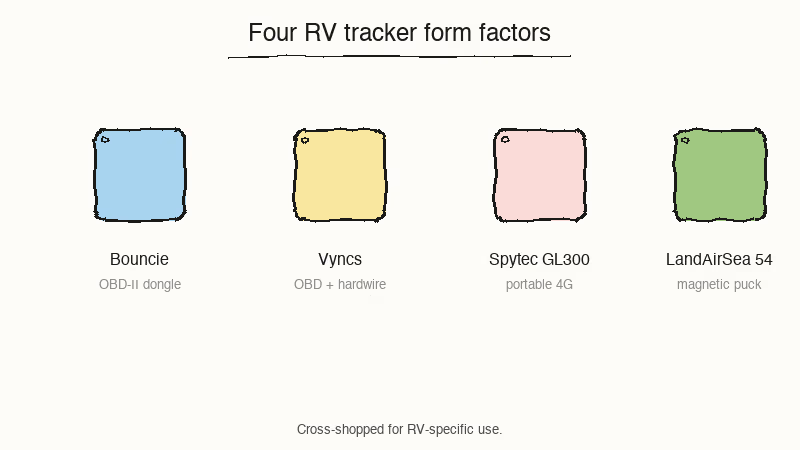
- Best overall for OBD-II RVs: Bouncie at $89.99 hardware plus $9.65/month, with 15-second location updates
- Best for annual billing: Vyncs at $99.99/year (device included) — three-year total roughly $340
- Best magnetic / hidden tracker: LandAirSea 54 at $30 plus $20/month for anti-theft scenarios
- OBD-II is not universal on RVs — Class A diesel pushers often lack a consumer-accessible port
- Insurance discounts of 5-15% are typical on RVs with an active GPS tracker
At a Glance: RV GPS Trackers Compared
The table below summarizes the four picks covered in detail later. All prices reflect current US listings; subscription costs assume the base plan sufficient for RV use.
| Tracker | Hardware | Subscription | Install type | Best for |
|---|---|---|---|---|
| Bouncie GPS | $89.99 | $9.65/mo | OBD-II plug | RVs with a working OBD-II port |
| Vyncs GPS | $0 (in plan) | $99.99/yr annual | OBD-II plug or 12V hardwire | Annual-billing buyers |
| Spytec GL300 | Free w/ plan | $34.95/mo | Portable, magnetic | Renters, frequent movers |
| LandAirSea 54 | $30 | $20/mo | Magnetic puck, hidden | Anti-theft, stealth install |
None of these trackers require a professional install. Both OBD-II and magnetic-mount options take under five minutes; only the 12V hardwire path on Class A diesel pushers needs basic 12V wiring skills.
How Do You Choose a GPS Tracker for an RV?
The first real decision isn’t brand. It’s install type, which is driven by your chassis.
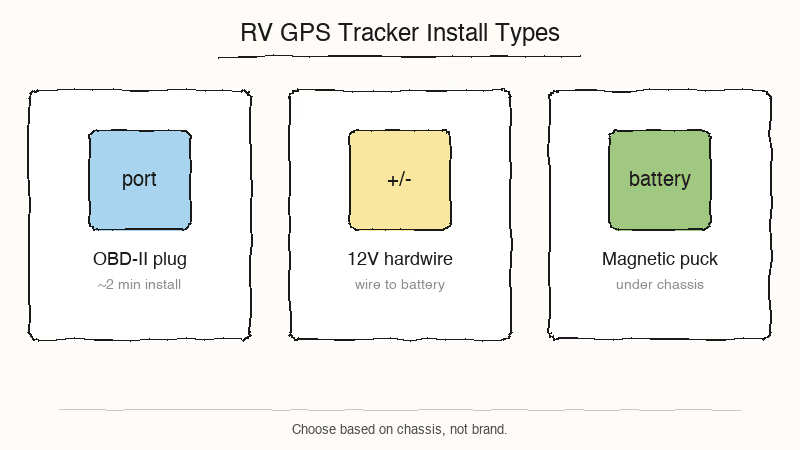
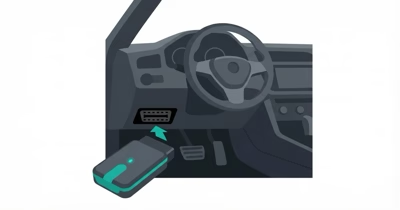
OBD-II plug-in. The cheapest and fastest option when it works. Most Class C motorhomes built on Ford E-series, Ford F-series, Ford Transit, or Mercedes Sprinter chassis have a driver-side OBD-II port that plugs-and-plays with Bouncie or Vyncs.
According to the EPA OBD-II regulations overview, every light-duty vehicle sold in the US since 1996 includes this port. The NICB reported that roughly 11,000 RVs are stolen each year across the US, which anchors the case for a tracker on any rig parked in public storage.
Skip OBD when your chassis doesn’t support it.
12V hardwired. Required on most Class A diesel pushers (Freightliner, Spartan) where OBD-II either isn’t accessible to consumers or uses a non-standard heavy-duty diagnostic connector. Vyncs sells a 12V hardwire kit; installation requires basic wire-nutting to a switched or always-on 12V line.
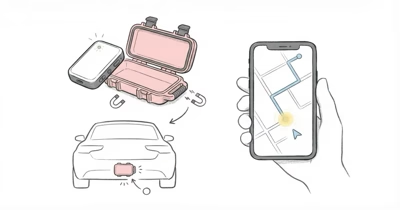
Magnetic / portable. A puck-style tracker with its own battery goes under the chassis, on a tow bar, or inside a storage bay. No wiring, fully removable. The trade-off is battery life: most magnetic trackers run 1-4 weeks before a recharge, which is fine for a covered-storage scenario but problematic for full-time RVers.
The second decision is subscription tolerance. Bouncie and Spytec require monthly plans; Vyncs offers an annual option that saves real money over three years; LandAirSea runs on a tiered cellular plan you can pause seasonally.
The Best GPS Trackers for RVs in 2026
We’ve evaluated each of these against the criteria above. Our Bouncie GPS tracker review covers the evaluation approach in detail; this roundup focuses specifically on RV-relevant trade-offs.
Bouncie GPS Tracker: Best Overall for OBD-II RVs
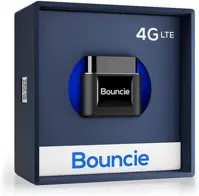
Bouncie is the default pick when your RV has a working OBD-II port. The $89.99 hardware cost and $9.65/month subscription land it below the three-year total of most portable alternatives, and its rated 15-second update interval is fast enough for live tracking during a highway theft scenario.
§ Review summary
Bouncie GPS Tracker — at a glance
≡ Specs
- Network
- 4G LTE OBD-II plug-in
- Subscription
- $9.65/mo
- Battery
- Vehicle-powered (no charge)
- Update interval
- 15 seconds
- Install time
- About 2 minutes
- 3-year cost
- About $437
✓ Pros
- +$89.99 hardware + $9.65/month, low cost with real-time features
- +OBD-II plug-and-play install in under 2 minutes
- +15-second location updates, fastest in this guide
- +Trip history, speed alerts, geofences in a polished app
- +Vehicle-powered (no battery to charge)
✗ Cons
- −Won't work on most Class A diesel pushers (J1939 instead of OBD-II)
- −$9.65/month subscription required
- −Plain-sight install (first thing thieves unplug)
§ Buy if
- ·Your RV has a working OBD-II port (Class B, Class C, older gas Class A)
- ·You want the best real-time tracking experience and don't mind $9.65/month
- ·You use the tracker actively (trips, speed alerts, geofences) not just for theft
- ·You're willing to switch to Vyncs annual if costs stack up over 5+ years
The OBD-II compatibility caveat is the most important caveat in this guide. On a typical Class B or Class C chassis with a standard 16-pin port, Bouncie plugs straight in and reports live location within a minute or two of setup. On many older or diesel Class A chassis, the port location and connector shape can make a direct plug-in impossible without an adapter. Before buying Bouncie, find your RV’s OBD-II port and confirm it’s the standard 16-pin consumer connector.
Vyncs GPS Tracker: Best No-Monthly-Fee Option
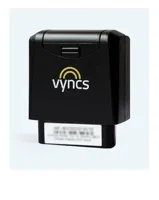
Vyncs is the cost-of-ownership winner over three years because the annual plan eliminates monthly fees. The math is clean: the $99.99 annual plan (device included) plus a one-time $39.99 activation lands at roughly $340 over three years, compared to $437 for Bouncie and about $1,258 for Spytec on the same horizon.
The gap compounds as you hold the tracker longer.
§ Review summary
Vyncs GPS Tracker — at a glance
≡ Specs
- Network
- 4G LTE OBD-II or 12V hardwire
- Subscription
- $99.99/yr annual plan
- Battery
- Vehicle-powered
- Update interval
- 3 minutes (base plan)
- Compatibility
- OBD-II Class B/C; 12V hardwire for Class A
- 3-year cost
- About $340
✓ Pros
- +Cheapest 3-year total cost at about $340 (annual plan wins)
- +Works on Class A diesel via optional 12V hardwire kit
- +OBD-II plug-and-play OR 12V hardwire (two install options)
- +Trip log, driver behavior alerts, geofences in app
✗ Cons
- −3-minute location updates on base plan (slower than Bouncie)
- −App experience less polished than Bouncie
- −Annual prepay commits you for 12 months upfront
§ Buy if
- ·You own a Class A diesel pusher with no consumer-accessible OBD-II (use 12V hardwire)
- ·You refuse monthly subscriptions as a matter of principle
- ·Three-minute location refresh is adequate for your use case
- ·You plan to keep the RV and the tracker for 3+ years
Year one tilts toward Bouncie on hardware cost; year two flips it.
For a Class A diesel owner who picks the 12V hardwire option, Vyncs is effectively the only major-brand choice that works on chassis where OBD-II isn’t accessible.
Spytec GL300: Best Portable Tracker
Spytec GL300 is the right pick when you rent RVs, swap between multiple vehicles, or want a tracker that moves with you rather than staying with the chassis. It’s one of the most reviewed portable trackers on the market, and our Spytec vs Tracki comparison covers why its app, plans, and signal profile fit portable RV use better than cheaper mini units.
§ Review summary
Spytec GL300 GPS Tracker — at a glance

≡ Specs
- Network
- 4G LTE (Verizon)
- Subscription
- $34.95/mo
- Battery
- 2 weeks default / 4 weeks slower reporting
- Install
- Portable, no wiring
- Accessory
- Magnetic case add-on
- 3-year cost
- About $1,258
✓ Pros
- +Portable, moves between RV, tow vehicle, rentals
- +2-week battery in default use; up to 4 weeks with lowered reporting
- +Magnetic case add-on available for hidden mounting
- +Strong portable-tracker signal profile for RV swaps and rentals
- +Verizon LTE in the US, real-time tracking
✗ Cons
- −$34.95/month subscription is highest in this guide ($1,258 over 3 years)
- −Battery needs swap or charge every 2-4 weeks
- −Visible to thieves if mounted obviously (use magnetic case)
§ Buy if
- ·You rent RVs or swap between vehicles and need a tracker that moves with you
- ·Signal reliability matters more than subscription cost
- ·2-4 week charging cadence fits your routine
- ·Real-time tracking on Verizon LTE is acceptable instead of OBD-II vehicle power
With the Spytec GL300 in its magnetic case, the rechargeable battery typically lasts around two to three weeks under default reporting, and owners report stretching that toward a month on a parked-storage deployment by lowering the reporting interval. The cellular radio uses Verizon LTE in the US.
Sub-$50 portable trackers rarely match this signal reliability.
LandAirSea 54: Best for Stealth Anti-Theft
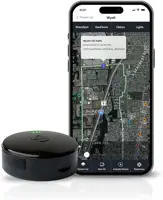
LandAirSea 54 is the tracker you buy when the goal is recovery after theft rather than remote monitoring. It costs $30, runs on a $20/month Silver plan, and mounts magnetically under the chassis or inside a wheel well where a thief is unlikely to look.
§ Review summary
LandAirSea 54 GPS Tracker — at a glance
≡ Specs
- Network
- 4G LTE cellular
- Subscription
- $20/mo Silver (pausable)
- Battery
- 2 weeks default reporting
- Water rating
- IPX7 waterproof
- Mount
- Magnetic, hidden install
- 3-year cost
- About $750
✓ Pros
- +$30 hardware, cheapest entry point in this guide
- +Magnetic mount allows hidden stealth install (under chassis, in wheel well)
- +IPX7 waterproof for under-chassis exposure
- +Dark mode hides the tracker from Bluetooth scanners
- +Silver plan can be paused seasonally during covered storage
✗ Cons
- −$20/month Silver plan adds up over time ($750 over 3 years)
- −2-week battery requires regular swap or charge
- −Best used as secondary tracker, not primary
§ Buy if
- ·Theft recovery matters more than active monitoring (high-value rig in urban storage)
- ·You want a backup tracker hidden from sophisticated thieves who unplug OBD
- ·Pairing it with Bouncie or Vyncs as primary fits your two-tracker setup
- ·Subscription pause during covered-storage seasons fits your usage pattern
The LandAirSea 54 is specifically useful as a second tracker alongside Bouncie or Vyncs. Thieves who know what they’re doing will unplug an OBD tracker first; a hidden magnetic backup tracker keeps reporting from underneath the chassis. The FCC equipment authorization database confirms that the LandAirSea 54 hardware is FCC-certified for cellular and GPS operation in the US.
Does Your RV Have an OBD-II Port?
OBD-II port availability is the single most common confusion for RV owners shopping trackers. The short answer: most Class B and Class C motorhomes yes, most Class A diesel pushers no.
Here’s how it breaks down by chassis type:
- Ford E-series, F-series, Transit (Class B and Class C base chassis): yes, standard 16-pin consumer OBD-II, usually under the driver-side dash
- Mercedes-Benz Sprinter (Class B and Class C): yes, same standard port
- Freightliner XC / MT45 / MT55 (Class A diesel pusher): no consumer-accessible OBD-II; uses J1939 heavy-duty diagnostic
- Spartan K2 / K3 (Class A luxury diesel pusher): same J1939 heavy-duty protocol, not compatible
- Workhorse / Ford W-series (older Class A gas pushers): mixed; some have OBD-II, some don’t
If you’re unsure, check the EPA’s vehicle emission OBD-II overview or spend two minutes searching “OBD-II port location [your RV model year]”. A quick visual check under the driver-side dash area usually resolves the question.
Installation: Hardwired vs Portable
The install choice is really about three trade-offs: permanence, theft-visibility, and battery independence.
Permanence. Hardwired and OBD-II trackers stay with the chassis and don’t require periodic charging. Portable magnetic trackers need a battery swap or recharge every 2-4 weeks.
Theft-visibility. An OBD tracker in plain sight in the driver footwell is the first thing a sophisticated thief unplugs. A magnetic puck under the chassis is far harder to find. If you’re worried about sophisticated theft, layer the two.
Battery independence. In long storage, an always-on 12V-powered tracker can slowly drain the RV’s house battery if not wired through a switched relay. A fully self-contained magnetic tracker with its own cell avoids this entirely.
Most RV owners only need one tracker. The case for two trackers is specifically higher-value rigs ($100K+) in high-theft urban storage lots.
Subscription Costs Over 3 Years
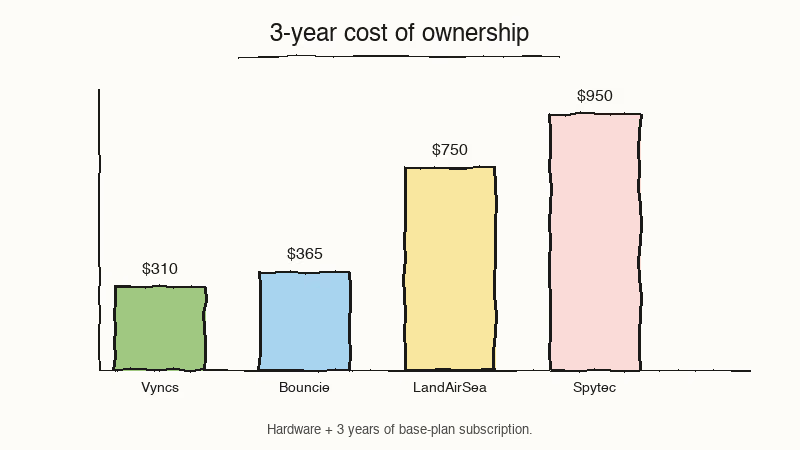
The sticker price of an RV tracker is misleading. The real cost over three years is dominated by subscriptions, and the gap between plans is dramatic.
| Tracker | Hardware | Subscription | 3-year total |
|---|---|---|---|
| Vyncs (annual plan) | $0 (in plan) | $99.99/yr × 3 | $340 |
| Bouncie | $89.99 | $9.65/mo × 36 | $437 |
| LandAirSea 54 (Silver) | $30 | $20/mo × 36 | $750 |
| Spytec GL300 | Free w/ plan | $34.95/mo × 36 | $1,258 |
Vyncs wins the cost race, Bouncie wins the feature-per-dollar race. Bouncie’s $55 premium over three years buys you 15-second update frequency (versus 3-minute) and a significantly more polished app experience. For most RV owners that’s worth paying. The CNET RV-tech coverage has consistently ranked Bouncie among the top OBD trackers for consumer vehicles, and the RV-chassis story is the same when the port is compatible.
The Three RV Buyer Profiles
After four trackers, the decision maps to three profiles that cover roughly 95% of RV owners. Each product’s “Buy if…” bullets above capture profiles one and two (Bouncie for active monitoring with OBD-II; Vyncs for cost-conscious Class A diesel owners).
The third profile is the anti-theft-first buyer: high-value rig in urban storage, sophisticated theft risk, value stealth over features. That profile should pair a LandAirSea 54 magnetic hidden tracker with either Bouncie or Vyncs as the primary. Spytec GL300 is the niche pick for renters or owners who swap rigs frequently and want the tracker to move with them.
Our anti-theft GPS tracker guide and trailer GPS tracker guide cover adjacent scenarios (boat, toy hauler, fifth wheel) that share some of the same reasoning.
Bottom Line
The right RV GPS tracker is the cheapest one compatible with your chassis that hits three-minute or better location refresh. For most readers that’s Bouncie at $89.99 plus $9.65/month; for Class A diesel owners it’s Vyncs with the 12V hardwire and the annual plan. Both slot into a five-minute install and pay themselves off against the first insurance-discount year. If theft is your primary concern rather than monitoring, add a LandAirSea 54 as a hidden second tracker.
Undecided on the chassis fit? Our Tracker Finder narrows it to a vehicle pick in under a minute.
FAQ
Does my RV have an OBD-II port?
Most Class B and Class C motorhomes do, because they’re built on Ford E-series, Ford Transit, or Mercedes-Benz Sprinter chassis that include the standard 16-pin consumer OBD-II port. Most Class A diesel pushers don’t, because they use heavy-duty J1939 diagnostic connectors that aren’t compatible with consumer trackers. Check under the driver-side dash; if you see a 16-pin trapezoidal connector, you’re set for OBD-II.
How long does a hardwired GPS tracker’s backup battery last?
Roughly 8-24 hours on most OBD and 12V-hardwire trackers, depending on model. The backup is for thief-cut scenarios where the primary power line is severed. Bouncie and Vyncs both include a small internal cell that continues reporting long enough for recovery. For long-term battery life during storage, a self-contained magnetic tracker is a better choice than the backup battery on a hardwired unit.
Can one GPS tracker cover both my RV and my tow vehicle?
Only if it’s portable. An OBD-II tracker plugs into one vehicle and stays there. A magnetic tracker like Spytec GL300 or LandAirSea 54 can move between RV and tow vehicle, but you’re only tracking one at a time. For full coverage of both, budget for two trackers, typically one OBD-II on each rig, or one OBD plus one magnetic.
Will the tracker keep reporting if my RV is stored with no cell signal?
No cellular coverage means no location updates, period. All four trackers in this guide use 4G LTE. If your storage lot is a genuine cellular dead zone, the tracker buffers location data until it regains signal, then reports. For remote storage where the RV moves in and out of coverage, expect position updates to cluster around the moments when the rig passes a tower.
Do RV insurance companies offer discounts for GPS trackers?
Most major RV insurers offer 5-15% discounts on theft-related coverage when you install an approved GPS tracker. Progressive, Good Sam, and National General have documented discount programs; the NICB reported that RV-specific theft prevention saves insurers enough to reward installed trackers. Call your insurer with the tracker model before you buy; the discount often pays for the subscription.
How do I pick between a monthly subscription and an annual plan?
If you’re keeping the tracker 3+ years, annual almost always wins on total cost. Vyncs at $99.99/year beats Bouncie at about $116/year in service by roughly $16, which compounds. If you want to pause coverage during a long storage season, monthly plans like Bouncie’s offer more flexibility because you can cancel and resume mid-year. LandAirSea’s Silver plan allows pausing too, useful if your RV hibernates November through March.
Can I legally track my own RV without disclosing it?
Yes in every US state, because the tracker is on property you own. The legal issue with GPS trackers applies when the tracker is installed on someone else’s vehicle without their consent. Tracking your own RV, tow vehicle, trailer, or any other personal property is unambiguously legal and doesn’t require disclosure to renters, family drivers, or mechanics. If you rent your RV out through a platform like RVshare, disclosure to renters is often required by the platform’s terms.