Tracki Pro is the best GPS tracker for delivery drivers: $36 plus $20/mo, 4G LTE live tracking, automatic mileage logs for taxes, and a discreet install with no OBD port.
A delivery vehicle is a workplace, a theft target, and a rolling tax deduction at once, so the right tracker has to recover the car, log the miles, and hide in a hatchback you might not even own. The IRS sets a standard mileage rate of 70 cents per mile for business driving, which turns a tracker’s route history into real money back at tax time.
- Best overall: Tracki Pro at $36 plus $20/month, with 4G LTE live tracking and a 10,000mAh battery that survives a full delivery week between charges
- Cheapest live tracking: Family1st at $30 hardware and roughly $22/month, the lowest monthly floor here for a working driver
- Mileage logging is the tax case: at 70 cents per business mile, a tracker’s route history substantiates the deduction the IRS requires you to document
- Skip the OBD port: gig drivers often use a leased or shared car, so a magnetic battery tracker avoids wiring and port access
- Subscriptions run $15 to $25/month: the monthly fee, not the $27 to $55 device price, drives the two-year cost
What Should a Delivery Driver Look For in a GPS Tracker?
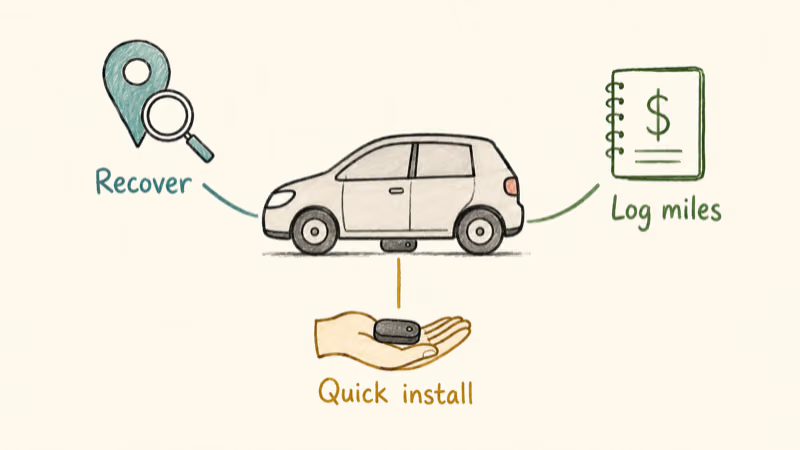
For a working vehicle, the tracker has to do three jobs a hobby tracker skips. The single most useful spec is a self-powered 4G LTE unit, because a gig driver’s car is often leased or borrowed and an OBD-II hardwired tracker assumes a port and a vehicle you control.
Carjacking is a documented risk for drivers who sit curbside at every stop. According to the Council on Criminal Justice, the carjacking rate across 10 large cities rose from 20.1 per 100,000 in 2018 to 37.9 in 2023. The only design that survives that exact scenario is a self-powered battery tracker that keeps reporting after the ignition is cut, when the car’s own power is no help at all.
The second job is taxes. The IRS Topic 510 guidance states that you must substantiate business car use with adequate records, and a tracker’s stored route history is the cleanest evidence of business miles a delivery driver can produce.
The 5 Best Delivery Driver GPS Trackers in 2026
These picks are sorted by use case, not just price, with an eye on what a gig or delivery driver actually lives with: live recovery, mileage history, a quick install, and a monthly fee that does not eat the route’s profit.
Tracki Pro: Best Overall for Delivery Drivers
Tracki Pro is the default pick for anyone whose car is their paycheck. The 10,000mAh battery is the headline: on power-save reporting it can run for weeks, so it outlasts a full week of dawn-to-dark deliveries without a recharge, and it keeps pinging over 4G LTE after a thief cuts the ignition. The unit is small enough to hide under a seat or in a door cavity, which matters when you can’t bolt anything to a leased car.

Tracki Pro earns the top spot because it pairs all-week battery life with a hidden, no-wiring install. A thief who grabs the car at a curbside stop is still carrying a live tracker, and the stored route history doubles as a mileage log. The trade-off is the $20/month subscription floor.
Family1st: Cheapest Live Tracking on a Budget
Family1st is the lowest-cost way onto live cellular tracking, which makes it the pick for a new gig driver watching every dollar of overhead. The magnetic mount grabs a steel frame without wiring, the built-in SOS button is a small safety bonus for someone working alone at night, and the roughly $22/month plan undercuts the premium tiers.
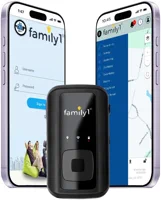
The catch is the two-week battery: you’ll recharge it twice a month, and the exposed magnetic mount is easy to spot. You trade long battery life for the lowest monthly cost.
SpyTec GL300: Best for Fast Live Recovery
SpyTec GL300 is the choice when your worry is following the car in real time during an active theft. The 5-second update interval is the fastest on this list, and the SpyTec app draws the recovery route live, so you and the police can chase a stolen delivery vehicle minute by minute rather than waiting on a once-a-minute ping. Tom’s Guide’s hands-on GL300 review singles out its tight location accuracy, which is exactly what a live pursuit needs.

The catch is the $25/month subscription, the steepest tier here. The GL300’s fast ping cadence is the difference between a live chase and a cold trail, but that premium fee adds up over a working year.
LandAirSea 54: Best Magnetic, OBD-Free Install
LandAirSea 54 is the pick for a driver who needs a tracker on and off the car in under a minute with no port and no wiring. The built-in magnet clamps to a steel wheel well or frame rail, the weatherproof body shrugs off rain and road spray, and the annual plan lands around $15/month, the cheapest live-tracking tier on this list.
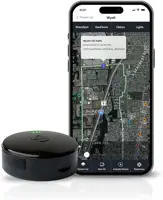
The two-week battery is the catch, and the exposed mount is easy to spot. Many drivers run it as a backup to a hidden unit, so if a thief tosses one the other keeps reporting.
Optimus 3.0: Best Battery Life Per Dollar
Optimus 3.0 is the value pick for a driver who hates battery management. At about $27 it’s the cheapest device here, yet its rechargeable battery is rated up to a month on the one-minute reporting default, far longer than the two-week magnetic units, so you charge it once a route cycle instead of twice a month. The IP67 magnetic case means a no-tools install on any steel surface.
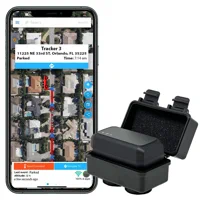
The subscription runs $19.95/month with no contract and up to a year of stored location history, the exact route record a delivery driver wants for mileage. The trade-off is a slower default update than the SpyTec GL300.
How These Picks Were Chosen for Gig Work
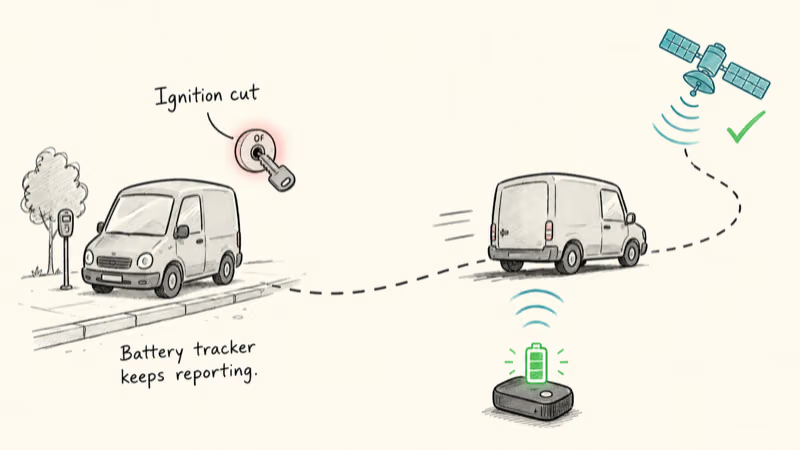
Each pick is evaluated on what a delivery driver actually needs: a self-powered unit that keeps reporting when the ignition is cut, battery life across a five-day route week, how fast its app rebuilds a day’s route for a mileage export, and how quick a no-wiring install is in a car you can’t modify.
A self-powered 4G LTE unit keeps reporting when a hardwired tracker would go dark, while update speed and battery life separate the rest.
Mileage Logging Turns Your Tracker Into a Tax Tool
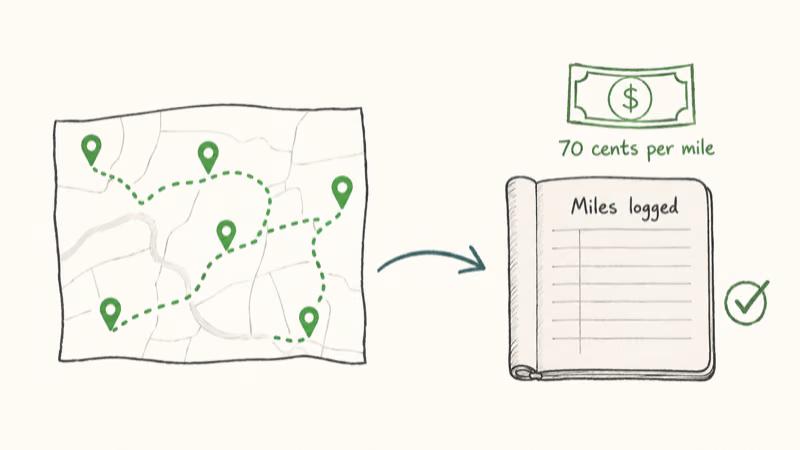
For a delivery driver, the route history is not a nice-to-have, it’s paperwork. At the IRS rate of 70 cents per business mile for 2025, even 15,000 business miles add up to thousands in deductions that all hinge on a defensible record.
The FTC’s guidance for gig and delivery drivers recommends drivers get a clear breakdown of their earnings, and the same discipline applies to expenses. A tracker like the Optimus 3.0 or Tracki Pro that keeps up to a year of stored trips lets you export the exact miles at tax time instead of reconstructing them from memory. That stored history is the “adequate records” the IRS asks for, produced automatically every time you drive.
Do Delivery Drivers Need a Subscription Tracker?
For a working vehicle, yes. Every live cellular tracker here charges a monthly fee because it sends its location over a 4G LTE data plan, the same way a phone needs a carrier. Plans run from $15 to $25 a month across the five picks.
A delivery driver gets two things for that fee that a hobbyist does not need: live recovery the moment the car is driven away, and the stored route history that backs up the mileage deduction. If you want a one-time purchase with no fee, a no-monthly-fee car GPS option exists, but it trades away the live cellular recovery a working driver should not skip.
Hiding a Tracker in a Leased or Shared Work Car
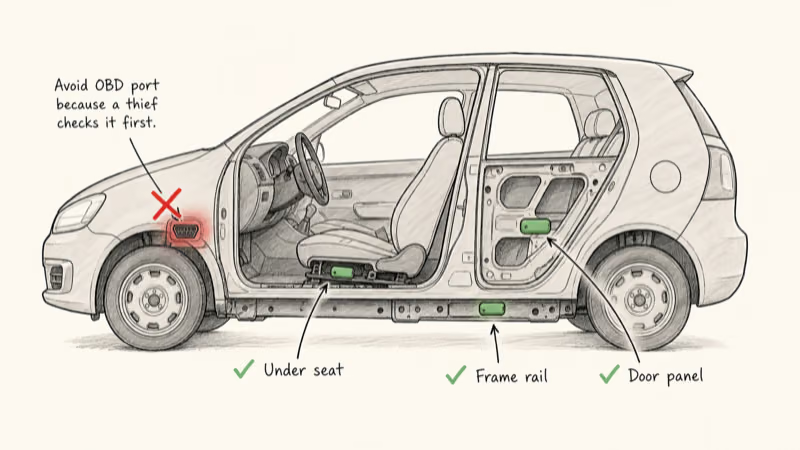
The best spots keep the tracker out of sight, off the obvious magnetic underside, and away from engine heat. A self-powered unit gives you far more freedom than an OBD plug, which is stuck at the dashboard port a thief checks first.
- Under a seat or in the seat-frame channel. A slim battery unit like the Tracki Pro or Optimus rides here out of sight and out of the rain, ideal for a leased or shared car you can’t drill into.
- Inside a door panel or trunk-trim cavity. These voids hide a sealed tracker well; keep the antenna clear of solid metal so the GPS and cellular signal stay strong.
- A high, shielded frame rail. For a magnetic unit like the LandAirSea 54, pick a flat steel spot up under the body, not the easy-to-spot bumper underside, and away from exhaust heat.
- Avoid the OBD-II port for concealment. A plug-in tracker is the first thing a thief or a curious renter looks for, and it advertises that the car is tracked.
If you also drive a pickup for larger runs, our best GPS tracker for a truck and anti-theft GPS tracker for a car guides cover heavier vehicles.
The SIM-card GPS tracker roundup digs into the cellular plans behind these monthly fees, and the full lineup lives on our GPS tracker hub.
Bottom Line
For most delivery and gig drivers, Tracki Pro is the tracker to buy: all-week battery, 4G LTE live recovery, a discreet no-wiring install, and a route history that doubles as your mileage log at 70 cents a business mile. Pick Family1st for the lowest monthly fee, SpyTec GL300 for the fastest live pursuit, LandAirSea 54 for an instant magnetic swap between cars, and Optimus 3.0 if you want the longest battery for the least money.
FAQ
What is the best GPS tracker for a delivery driver?
Tracki Pro is the best all-around choice for a delivery driver because it pairs a 10,000mAh battery that lasts a full delivery week with 4G LTE live tracking that keeps reporting after a thief cuts the ignition. At $36 plus $20 a month it also logs your route history, which doubles as a mileage record for taxes. For the lowest monthly fee, Family1st is the budget alternative at roughly $22 a month, and SpyTec GL300 is the pick if you want the fastest five-second updates for live theft recovery.
Can a GPS tracker help me log miles for taxes?
Yes. A live GPS tracker stores your full route history, and the IRS requires you to substantiate business car use with adequate records, so that saved trip log is clean evidence of business miles. At the 2025 standard mileage rate of 70 cents per business mile, an accurate record can mean a meaningful deduction for a full-time delivery driver. Trackers like Optimus 3.0 keep up to a year of location history, so you can export the miles at tax time rather than reconstructing them from memory.
Do I need an OBD-II port to install a delivery tracker?
No, and most gig drivers should skip the OBD port entirely. A battery-powered magnetic tracker like the LandAirSea 54 or Family1st installs without wiring, which matters when you drive a leased, rented, or shared vehicle you can’t modify. An OBD plug-in is also the first spot a thief checks, so it works against concealment. Self-powered 4G LTE trackers give you both a hidden install and tracking that survives the ignition being cut.
How much does a delivery driver tracker cost per month?
The monthly subscription runs from about $15 to $25 depending on the device. LandAirSea 54 is the cheapest at roughly $15 a month on the annual plan, Optimus 3.0 is $19.95, Tracki Pro is $20, Family1st is near $22, and SpyTec GL300 is the priciest at $25. That fee covers the cellular data the tracker uses to report its location, so there is no reliable live-tracking unit that works with no subscription. The monthly cost, not the $27 to $55 device price, is what drives the long-term total.
Will a GPS tracker keep working if my delivery car is stolen?
Only if it has its own battery. A self-powered unit like the Tracki Pro, Family1st, or SpyTec GL300 keeps reporting over 4G LTE even after a thief cuts the ignition, because it never depends on the car’s power. An OBD-II hardwired tracker can be unplugged quickly, and a Bluetooth tag has no cellular radio to call home. For real theft recovery on a working vehicle, a battery-powered cellular tracker is the only design that survives the moment the car is driven away.
Is an AirTag good enough to track a delivery vehicle?
No, not for a working car. An AirTag has no cellular radio and only updates when a stranger’s iPhone passes within Bluetooth range, which can leave long gaps in a moving vehicle. It also triggers an unwanted-tracking alert as it travels away from its owner, warning a thief who can then discard it. For a delivery vehicle you need a 4G LTE tracker with its own battery for live recovery, and you can reserve an AirTag for finding gear or a bag on your own property.
Where is the best place to hide a tracker in a work car?
For a battery-powered unit, under a seat or inside a door or trunk-trim cavity hides the tracker out of sight and out of the rain while keeping the antenna clear of solid metal. A magnetic tracker like the LandAirSea 54 should go on a high, shielded frame rail rather than the obvious bumper underside, and away from exhaust heat. Avoid the OBD-II port for concealment, since a plug-in tracker is the first thing a thief or a curious renter checks and it signals that the car is monitored.