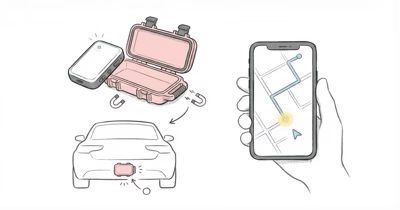
SpaceHawk is a portable cellular GPS tracker for vehicles, trailers, equipment, and other assets. It combines satellite positioning with a built-in SIM, app access, and a magnetic body.
The main trade-off is recurring service. Faster reporting costs more, battery runtime changes with use, and a portable tracker still needs access for charging.
This review covers authorized ownership and business uses only. It doesn’t provide concealment or detection-evasion guidance.
- Current plans differ from older pricing. SpaceHawk now lists six month-to-month intervals from three minutes to three seconds.
- The device needs cellular service. The built-in SIM sends GPS observations to the app and web portal.
- Battery life isn’t one fixed number. Motion, reporting frequency, signal quality, temperature, and charging habits all matter.
- Protection claims need caution. Current manufacturer pages use conflicting water-resistance descriptions.
- Authorization comes first. Track only vehicles and assets you own or have clear permission and legal authority to monitor.
SpaceHawk: Complete Buying Summary
SpaceHawk states that the current mini tracker measures 2.275 inches in diameter (product specification).
§ Review summary
SpaceHawk GPS Vehicle and Asset Tracker
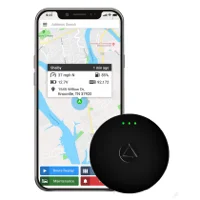
≡ Specs
- Positioning
- GNSS/GPS with cellular reporting
- Connectivity
- Built-in SIM; service plan required
- Update plans
- 3 min, 1 min, 30 sec, 10 sec, 5 sec, or 3 sec
- Access
- iOS app, Android app, and web portal
- Size
- 2.275 in diameter × 0.945 in high
- Power
- Rechargeable battery; optional hardwire support listed
- Mount
- Integrated magnetic body
- Alerts
- Geofence, speed, motion, and battery tools listed
- Water protection
- Manufacturer pages conflict; verify exact purchased model
- Subscription
- Required; current month-to-month plans listed
✓ Pros
- +Cellular GPS updates without depending on passing phones
- +Portable magnetic body for authorized vehicles and assets
- +iOS, Android, and web access
- +Geofence, speed, battery, and location-history tools listed
- +Month-to-month plans with several update intervals
✗ Cons
- −Active service plan required for cellular reporting
- −Fast update plans cost more and may use more battery
- −Portable body needs periodic retrieval and charging
- −Manufacturer pages conflict on the exact protection rating
- −HotAirTag hasn't independently tested current hardware or service
§ Buy if
- ·Buy if you need portable GPS reporting for a vehicle or asset you are authorized to monitor
- ·Buy if app and web access matter more than avoiding a recurring service plan
- ·Compare powered OBD-II or hardwired models if charging access is difficult
What Does SpaceHawk Do?
According to SpaceHawk’s current product page, the tracker combines GPS location, cellular transmission, a magnetic housing, alerts, and app access for vehicles and assets.
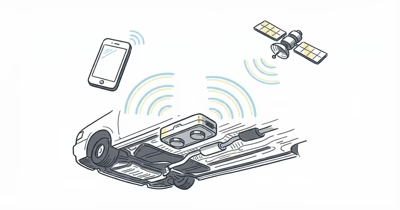
The tracker doesn’t depend on nearby iPhones or Android phones to report a location. Its built-in SIM sends observations through the service platform when GPS and cellular conditions allow.
Compare AirTag with GPS trackers before choosing a network.
SpaceHawk lists app and web access, location history, geofences, speed alerts, and battery status. Those are service features, not proof of uninterrupted delivery.
How Much Does Service Cost?
SpaceHawk’s current FAQ states that its standard plans are month-to-month, with no activation or termination fee listed.
The same page lists six reporting tiers: $19.95 for three-minute updates, $24.95 for one minute, $34.95 for 30 seconds, $39.95 for 10 seconds, $44.95 for five seconds, and $49.95 for three seconds.
Those figures are a dated July 24, 2026 snapshot, not a promise. Verify the checkout total, renewal cadence, taxes, coverage, pause terms, and cancellation process.
Don’t assume every listing includes a prepaid year.

App, Web Portal and Update Intervals
The SpaceHawk App Store listing confirms iPhone and iPad access, speed and battery status, historical playback, and plan-dependent updates.
Fast reporting can make a moving route easier to follow, but “real time” doesn’t mean continuous. Each observation still depends on satellite reception, cellular service, server delivery, and the selected plan.
The U.S. government states that smartphones are typically accurate within a 4.9 m radius under open sky (GPS accuracy reference). A specific tracker can perform differently near buildings, trees, garages, and tunnels.
Test the app and alerts on an authorized route during the return period.
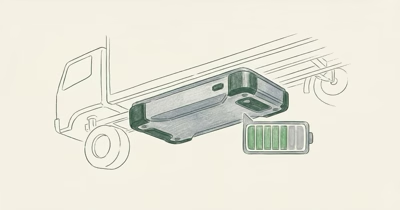
Battery, Charging and Mounting Trade-Offs
SpaceHawk doesn’t publish one dependable runtime for every plan and use pattern. Treat broad battery marketing as a range until independent testing covers the exact current model.
Faster updates generally increase battery activity.
A magnetic portable tracker avoids wiring but must remain accessible for charging. Inspect the contact surface, retention, enclosure, and charging schedule before each authorized trip.
The current product pages use “waterproof” language, while another current SpaceHawk page names IP65 and the old review claimed IP67. This page therefore records rating conflict, not a confirmed IP rating.
Safe and Authorized Uses
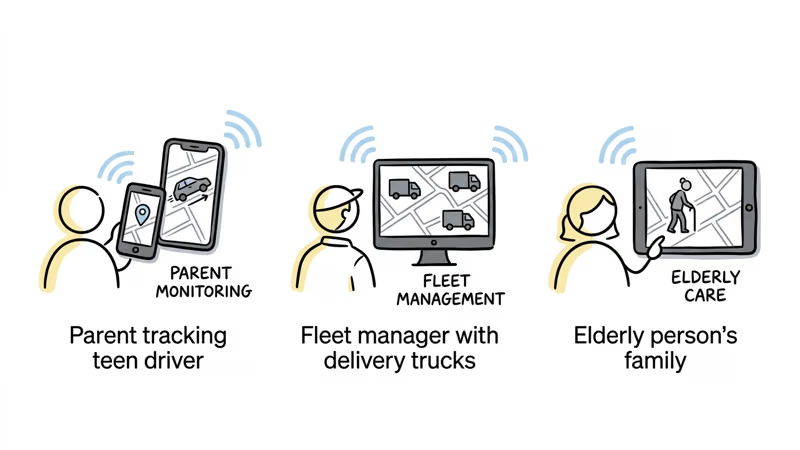
Use SpaceHawk only for vehicles and assets you are authorized to monitor.
The FTC warns that secret location monitoring can create serious privacy and safety risks. Laws also vary by ownership, relationship, workplace, and jurisdiction.
Don’t use a product’s marketing language as legal permission. Consult qualified local counsel when ownership or consent isn’t clear.
For theft recovery, share location evidence with law enforcement rather than confronting a suspected thief.
Best Fit and Alternatives
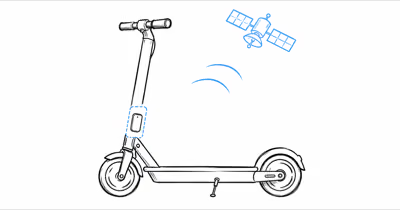
SpaceHawk fits an owner who needs a portable magnetic tracker, accepts monthly service, and can retrieve the unit for charging. It also suits equipment without an OBD-II port.
For continuous power, compare an OBD-II tracker.
Compare LandAirSea or Tracki when seller support, plan pricing, device size, coverage, or accessory options matter more than SpaceHawk’s current bundle.
Skip cellular GPS entirely when you only need nearby key finding. A Bluetooth item tracker is smaller and avoids a cellular plan, but it can’t provide independent remote reporting.
Bottom Line
SpaceHawk offers a useful mix of cellular GPS, portable magnetic mounting, app and web access, and selectable update intervals.
Recurring service, charging access, signal dependence, and protection claims remain weaknesses.
Buy only after verifying the exact listing, plan, coverage, return terms, and authorized use. Choose a powered tracker when charging maintenance would undermine the job.
FAQ
Does SpaceHawk require a subscription?
Yes. The standard portable tracker needs an active data plan to transmit locations. SpaceHawk currently lists month-to-month plans, while a separate product includes prepaid service for its first year.
How often can SpaceHawk update?
The current FAQ lists plan intervals from three minutes down to three seconds. Faster plans cost more, and delivery still depends on GPS reception, cellular coverage, and service availability.
How long does the SpaceHawk battery last?
There is no independently verified universal figure for the current model. Runtime changes with update frequency, movement, signal quality, temperature, app use, and charging condition.
Is SpaceHawk waterproof?
Current SpaceHawk pages conflict on the exact protection rating. Treat the enclosure as a model-specific claim and verify the purchased listing and documentation before exterior use.
Can SpaceHawk work without nearby phones?
Yes. It uses GPS and a built-in cellular connection rather than a passing-phone finder network. Reporting still requires satellite reception, supported cellular service, and an active plan.
Can I move SpaceHawk between vehicles?
The magnetic portable design supports moving it between compatible assets you are authorized to track. Check the mount, surface, account assignment, power, and reporting after every move.
Is it legal to use a GPS tracker on a vehicle?
Legality depends on ownership, consent, workplace rules, and jurisdiction. Use it only on assets you own or have clear authority to monitor, and seek local legal advice when the situation is uncertain.