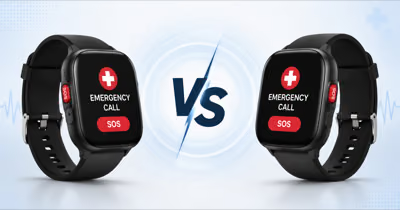
The Medical Guardian MGMove is a monitored medical-alert smartwatch for seniors. It pairs 24/7 professional emergency response with GPS location and two-way voice on AT&T’s 4G network, all without a phone. It costs $199.95 up front and from about $39.95 a month, with fall detection a $10 add-on. The trade-off is a 24-hour battery that needs daily charging.
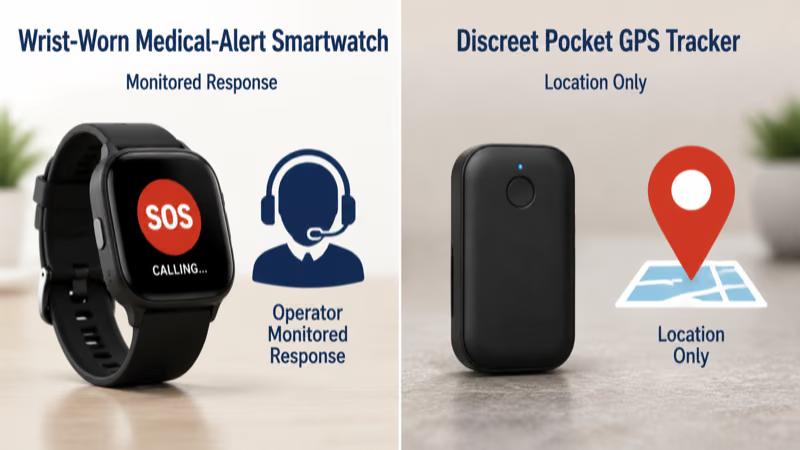
A standard GPS tracker tells you where your parent is. A monitored medical-alert watch like the MGMove does something different.
That distinction is the whole reason this category exists. According to the National Council on Aging, monitored medical-alert systems are a top safety recommendation for older adults living alone, because the response happens whether or not a family member is reachable.
- $199.95 device, from ~$39.95/mo — monitoring is a subscription, not a one-time buy
- 24/7 US-based monitoring — Medical Guardian’s centers are CSAA Five Diamond certified with about a 20-second response
- Fall detection is a $10/mo add-on — it’s not included in the base plan
- GPS + two-way voice on AT&T 4G — works standalone, no phone or landline needed
- 24-hour battery is the weak point — plan on charging it every single day
What the MGMove Actually Is
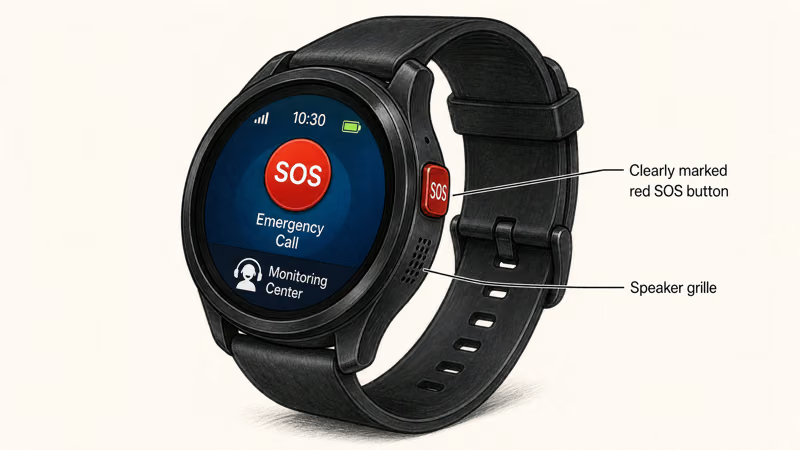
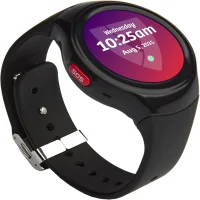
The MGMove is a wrist-worn medical-alert device that looks like an ordinary smartwatch, not a clunky pendant. It has a 1.25-inch color touchscreen, a dedicated side button for emergencies, and a speaker and microphone for talking to the monitoring center. Medical Guardian's official MGMove page confirms it runs on AT&T 4G LTE with Wi-Fi backup, so it works anywhere there is signal.
What it’s not is a tracker you quietly hide on someone. It’s worn openly and meant to be used by the wearer, which makes it a fit for an independent senior rather than someone with advanced dementia who might remove it.
 Top Pick
How Good Is the 24/7 Monitoring?
The monitoring is the part you’re actually paying for, and it’s Medical Guardian’s biggest strength. When the wearer holds the SOS button, the call routes to one of two US-based centers. The National Council on Aging’s hands-on review found that the centers respond in about 20 seconds and are CSAA Five Diamond certified, the industry’s top monitoring standard.
Consumer Reports’ medical-alert guide recommends choosing a system with a professionally monitored, US-based response center for exactly this reason.
That matters more than any watch feature. A self-tracking GPS unit relies on a family member seeing an alert and acting. A monitored watch instead reaches a trained dispatcher who can talk to your parent, judge the situation, and send help even if no one in the family answers their phone, which is the entire point of paying a monthly fee rather than buying a one-time tag.
The operator can also see the watch’s GPS location, so they can direct paramedics to a wearer who has wandered or fallen away from home. For comparison shopping across the category, our best GPS trackers for elderly guide ranks the self-tracking alternatives.
Fall Detection and the Real Monthly Cost
Here is where buyers get surprised. The advertised ~$39.95 monthly is the base plan. Fall detection costs an extra $10 a month, and the caregiver messaging features run another $5, so a fully loaded plan lands closer to $55 a month.
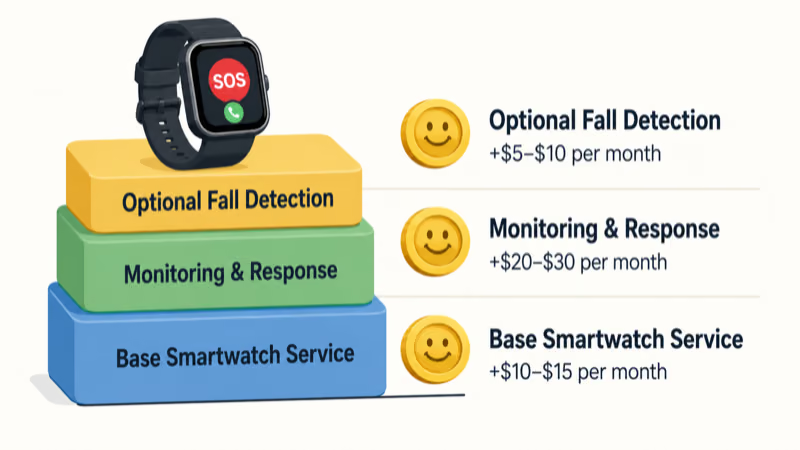
Fall detection is worth the $10 add-on for anyone with a history of falls. It auto-connects to the monitoring center even if the wearer is unconscious and can’t reach the button, which is precisely the scenario a manual SOS button can’t cover on its own. For a mobile, lower-risk senior who is steady on their feet, the base plan may be enough.
Across three years, the device plus a base plan runs roughly $1,640, and closer to $2,180 with fall detection. That is the honest number to weigh against a one-time GPS tracker.
The Battery Is the Catch
The MGMove’s biggest weakness is stamina. Medical Guardian rates it at about 24 hours per charge, the shortest in their lineup, so it has to come off and charge every day.
For a senior in a routine, charging overnight works, but it creates a nightly gap when the watch is on the charger and not on the wrist. Establish a habit of charging it during a fixed daily window, like morning coffee, so it’s never the moment a fall happens. A self-tracking tag like an AirTag lasts a year, but it has no SOS button at all, as we cover in our AirTags for elderly guide.
What Else the MGMove Tracks
Beyond the SOS button, the MGMove doubles as a light activity watch. It shows the time and weather, counts steps, and displays caregiver text messages through the optional Social Circle feature. Those reminders and messages are the part that costs an extra $5 a month.
For senior-focused wearables, these extras matter far less than buyers expect. What the wearer actually cares about is a readable screen and a button that works every time. The step count is a pleasant bonus, never a reason to choose one medical-alert watch over another, so weigh it accordingly when you compare the MGMove against cheaper options.
GPS support gives the monitoring center the latest available location. There is no published update interval, so treat the location feed as emergency routing context rather than a consumer live-tracking timeline.
Who Should Buy the MGMove?
The MGMove fits an independent senior who wants help one button away and will reliably wear and charge a watch. The monitored response is truly reassuring, and the smartwatch styling avoids the stigma of a pendant. If a worn pendant actually suits your parent better than a watch, our GPS tracker necklaces guide ranks the best monitored options, and our MGMove vs Apple Watch SE comparison weighs it against a full smartwatch.
Skip it if your main concern is a parent with dementia who wanders or removes devices. That scenario calls for a concealed or hard-to-remove GPS tracker, the kind covered in our guide to a GPS tracker for elderly who refuse to wear one and the Jiobit for dementia care. Those answer “where did they go,” while the MGMove answers “they need help now.”
Bottom Line
The Medical Guardian MGMove is a strong monitored medical-alert smartwatch for an independent senior, with fast US-based response, GPS, and a design people will actually wear. Budget for the real monthly cost once fall detection is added, and accept the daily charge.
If you want emergency response, it’s one of the best in its class. If you only need to know location, a one-time GPS tracker costs far less over time.
FAQ
Does the Medical Guardian MGMove need a phone?
No. The MGMove is fully standalone. It has its own AT&T 4G LTE connection with Wi-Fi backup, so it places SOS calls, sends GPS location, and supports two-way voice without being paired to a smartphone or a home landline.
How much does the MGMove cost per month?
The base monitoring plan starts around $39.95 a month on top of the $199.95 device. Fall detection adds $10 a month and the caregiver messaging features add about $5, so a fully loaded plan is closer to $55 a month. There is no separate activation fee.
Does the MGMove have fall detection?
Yes, but it's an optional $10-per-month add-on, not part of the base plan. When enabled, it automatically connects the watch to the monitoring center if it detects a hard fall, even if the wearer can't press the SOS button.
How long does the MGMove battery last?
About 24 hours per charge, the shortest battery in Medical Guardian's lineup. You need to charge it every day, ideally during a fixed daily routine so the watch is rarely off the wrist for long.
Is the MGMove good for someone with dementia?
Not really. It's worn openly and depends on the wearer pressing a button, so it suits an independent senior. For a person with dementia who wanders or removes devices, a concealed or hard-to-remove GPS tracker is a better fit than a button-based watch.
Is the MGMove waterproof?
It carries an IP67 rating, so it's water-resistant enough for handwashing and rain but is not meant for showering or submersion. Take it off before bathing, which also pairs well with the daily charging habit.
Who answers when you press the SOS button?
A trained operator at one of Medical Guardian's two US-based monitoring centers, which are CSAA Five Diamond certified. They can speak to the wearer through the watch, see its GPS location, and dispatch emergency services or contact family as needed.