Jiobit’s small attachment options may fit some agreed routines. They don’t answer who accepts the device, who sees the data, who responds, or what happens when it’s absent or wrong.
This is an editorial fit review based on current official material, not a hands-on, clinical, legal, or caregiver trial.
- Don’t hide it on an adult. A small clip is not permission to place a tracker in clothing, a wallet, shoes, bedding, or mobility equipment without an appropriate consent or authorization process.
- Treat Jiobit as one location layer. It can’t confirm continuous safety, prevent wandering, diagnose distress, or replace check-ins and supervision appropriate to the person.
- Trace the alert to a human. A geofence notification helps only when a named person receives it, interprets it cautiously, and follows an agreed response.
- Test the exact current service. Product, app, subscription, network, attachment, account-sharing, privacy, and cancellation terms can change.
- Make stopping easy. The adult’s objection, discomfort, failed response, or changed needs should trigger pause, review, and offboarding rather than forced wear.
What Role Can Jiobit Play?
Define one narrow job.
The Jiobit site currently states that its subscription location monitor uses GPS, cellular, Wi-Fi, and Bluetooth, with live location, location history, Trusted Place alerts, and sharing features. Those provider-published capabilities aren’t independent proof of performance for an older adult.
Current availability is unclear. On July 20, 2026, the Jiobit site’s Shop link redirected to a Life360 Pet GPS listing, not a clearly identified new Jiobit-for-adults purchase page. Confirm supported hardware, activation, subscription, app, warranty, and intended use directly before relying on an existing or offered unit.
A bounded role might be: “During an agreed daytime routine, the adult carries Jiobit, two named people can view it, and one person responds to a missed arrival.” Avoid “keep them safe” or “stop wandering.” No device can deliver those outcomes by itself.
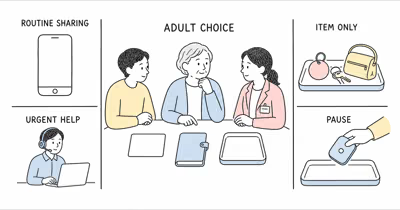
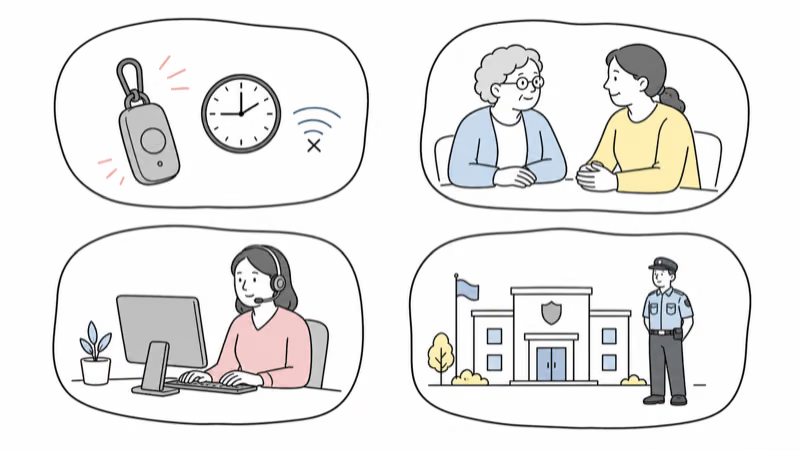
The older-adult location-support guide separates voluntary GPS location from personal-item finding, monitored urgent help, setting safeguards, and official missing-person response.
Start With Consent, Capacity, and Authority
The person being located participates.
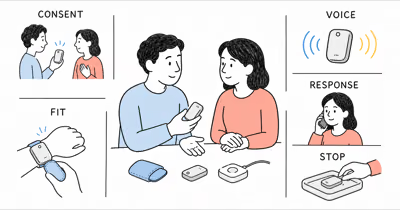
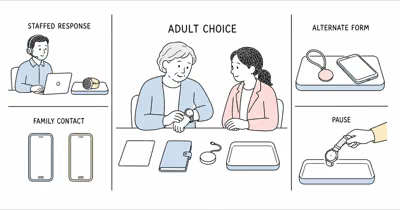
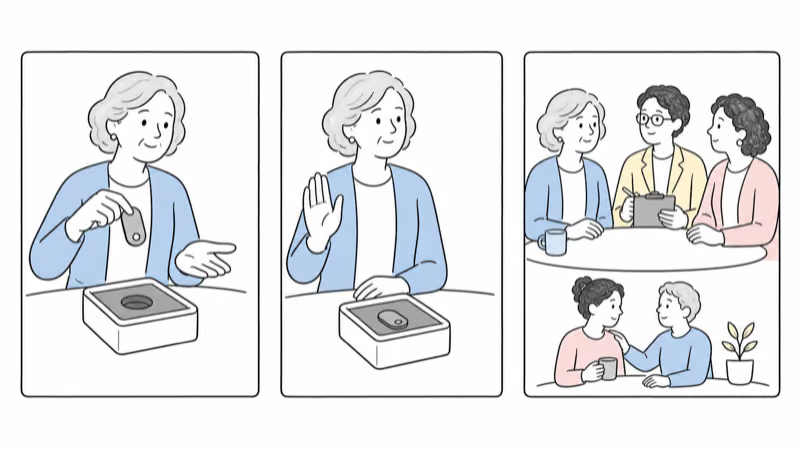
Explain the purpose, viewers, trial length, and stop process. Let the adult handle the device and choose how it’s carried.
The Alzheimer’s Association electronic-tracking statement notes ethical questions when a person may not have capacity to consent and treats electronic tracking as a possible part of a wider safety plan, not a universal answer.
Don’t infer authority from a diagnosis, family relationship, caregiver role, guardian label, or power-of-attorney title. Capacity and substitute decision-making are specific to the decision, document, time, jurisdiction, and setting. Use the appropriate qualified health, care, legal, safeguarding, advocacy, or resident-rights process.
Don't Turn a Small Clip Into Covert Tracking
Discretion is not the same as consent.
Don’t hide Jiobit in a wallet, shoe, coat lining, pocket, bedding, or mobility equipment to avoid the adult noticing it. Don’t use a locked pouch, removal-resistant attachment, secret account, or disguised placement as a workaround for refusal.
If the person objects, removes the device, or appears distressed, pause. Ask about weight, pressure, rubbing, heat, sound, stigma, charging, confusion, privacy, and the reason for the plan. A new change may need appropriate health or care review rather than a different attachment.
The tracker-refusal guide provides a safer path through comfort, consent, decision-making ability, authority, and non-tracking supports.
Assess Daily Fit Without Dementia-Stage Prescriptions
Choose by the person and routine, not a stage label.
Early, middle, moderate, severe, or a numbered stage does not determine a safe device. Two people with the same diagnosis may differ in preferences, skin, dexterity, sensory needs, mobility, communication, carrying habits, living setting, support, and decision-making ability.
Check whether the exact attachment is comfortable, removable, visible enough for the agreed plan, compatible with clothing and equipment, and unlikely to create pressure, snagging, choking, circulation, skin, or trip hazards. Follow the current manufacturer instructions and relevant clinical or setting guidance.
Also check whether anyone reliably charges, tests, updates, and notices a missing device. A tracker left at home reports the tracker, not the person.
Understand Location and Geofence Limits
A map point is an observation with uncertainty.
Jiobit’s provider site markets Trusted Place alerts and live tracking. Don’t convert marketing accuracy, update, or battery figures into guarantees. Real behavior can vary with the exact hardware, account, subscription, settings, network, satellite view, buildings, Wi-Fi, Bluetooth proximity, movement, charging, software, and service state.
The Alzheimer’s Association states that no location system is 100% accurate, some devices work poorly indoors, and location tracking is not the same as a 24-hour companion.
A Trusted Place alert can be late, early, missed, or triggered by an ordinary boundary crossing. Record the device timestamp, last human confirmation, uncertainty, and context before deciding what it means.
Build the Alert-to-Response Chain
An alert needs an owner.
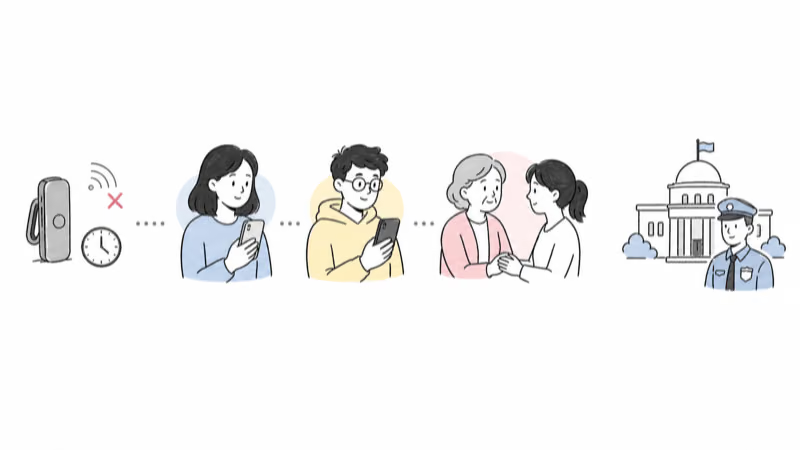
Name a primary responder, backup, expected first action, escalation point, and fallback for each alert.
Test the permitted non-emergency path in actual relevant locations. Include a flat battery, lost phone, signed-out viewer, disabled notification, service outage, false alert, missed alert, device left behind, and person unable to answer.
Don’t assume Jiobit is a monitored medical-alert service, two-way communication device, fall detector, or automatic emergency dispatch service. Verify the exact current product and plan rather than relying on a badge or comparison table.
Limit Viewers, Data, and Account Access
Precise location is sensitive data.
List everyone who can view location, receive alerts, change settings, recover the account, or access history.
The current Life360 privacy policy describes collection of precise location and movement data, disclosures controlled through account settings, and a Jiobit account-and-data deletion path. Read the current policy and in-app choices before activation; don’t rely on a summary written for an older version.
Don’t post a map point publicly, use location to confront or shame the adult, share a password broadly, or retain access without a current need. Record who will review permissions and complete deletion or transfer when the plan ends.
Use a Transparent, Reversible Trial
A trial must be easy to stop.
Record the trial’s purpose, participants, viewers, responders, fallback, review date, and stop conditions.
Track missed and false alerts, indoor gaps, delayed points, discomfort, removal, device separation, charging failures, app access, responder delays, and the adult’s experience. Review whether the device reduces a specific risk without creating greater privacy, distress, restraint, or care burden.
Pause when the adult objects, the attachment is unsafe, nobody responds, data access is unclear, the setting can’t support it, or the device doesn’t meet the defined job.
Keep a No-Device Safety Plan
Technology must not become the only plan.
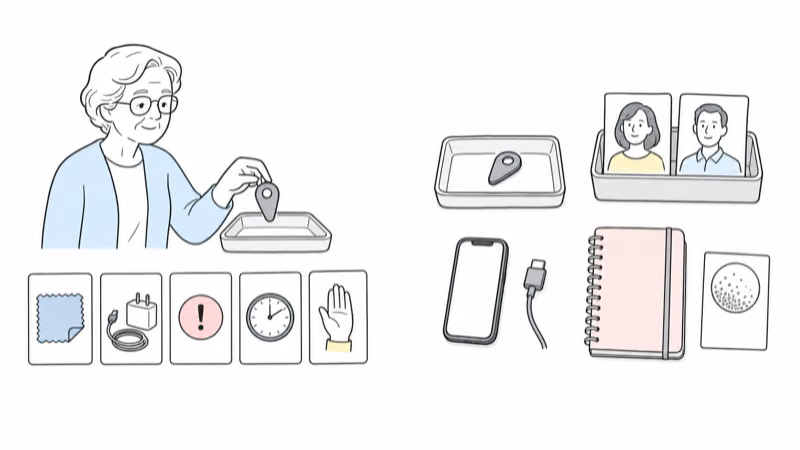
The National Institute on Aging recommends wider wandering safeguards, including current identification, a recent photo, trusted contacts, and coordination with local responders. GPS can be an addition, not a substitute for those layers.
Maintain familiar routines, appropriate companionship or supervision, setting safeguards, transport support, current health and communication information, likely destinations, and the applicable official missing-person process.
The consent-first aging-parent plan connects location tools with people, routines, privacy limits, and response. If the need is urgent medical help rather than location, compare the response models in the older-adult watch fit guide.
What If the Person Is Missing or in Danger?
Use the applicable official local response immediately.
Don’t wait for Jiobit to connect, update, or cross a boundary when a person may need urgent help. Contact police, emergency services, or the appropriate local authority through the applicable process. Give responders the last confirmed contact, current description and photo, relevant health or communication needs, likely destinations, and any device timestamp with its uncertainty.
Treat a point as one lead. The device may be delayed, indoors, charging, removed, damaged, left behind, or reporting a previous position.
Don’t enter private property, confront someone, or pursue a moving point. Let trained responders decide how to use device information.
End Access When the Plan Ends
Offboarding is part of safety.
Remove viewers, end sharing and service, delete data, and reset hardware through current instructions.
Repeat offboarding after a move, discharge, caregiver change, relationship change, account compromise, device replacement, or death. Don’t leave former staff, family members, or service providers with location access.
Bottom Line
Jiobit may fit a transparent location-support plan when the adult accepts it, the attachment is safe, the exact service works in real routines, named people respond, data access is limited, and stopping is simple.
It’s not a dementia-stage prescription, hidden monitoring tool, 24-hour companion, medical-alert guarantee, or replacement for a human and official response plan.
FAQ
Is Jiobit suitable for every person living with dementia?
No. Fit depends on the person's wishes, decision-making support, comfort, attachment safety, carrying habits, setting, coverage, charging, account access, responders, and wider safety plan. A different support or no tracker may be safer.
Can I hide Jiobit in an older adult's clothing or wallet?
Don't use hidden placement to defeat an adult's objection or bypass an appropriate consent or authorization process. Use a transparent plan, involve the adult, and seek qualified review when decision-making ability or authority is uncertain.
Does Jiobit prevent wandering?
No. A location device can't prevent wandering or confirm continuous safety. It may provide a fallible location observation or boundary alert and should sit alongside routines, identification, current records, human support, setting safeguards, and official response.
Is a Jiobit alert the same as an emergency-service response?
No. Verify the exact current product and subscription. A family app notification, monitored-service response, public emergency call, and two-way conversation are different paths with different people, connections, and failure modes.
How accurate is Jiobit indoors or near a geofence?
Don't rely on one fixed accuracy or timing number. Buildings, networks, satellite view, Wi-Fi, Bluetooth, settings, movement, battery, hardware, software, and service state can change the result. Treat every point and alert as uncertain until confirmed.
How should a family test Jiobit?
Use a transparent, reversible trial in ordinary routines. Test attachment, comfort, charging, coverage, alerts, viewers, responder handoff, missed and false alerts, device separation, privacy controls, fallback, and offboarding. Set a review date and stop conditions.
What should I do if the person is missing?
Use the applicable local emergency or missing-person process immediately. Share current information and any device timestamp with its uncertainty. Don't wait for a refresh, enter private property, confront someone, or pursue a point yourself.