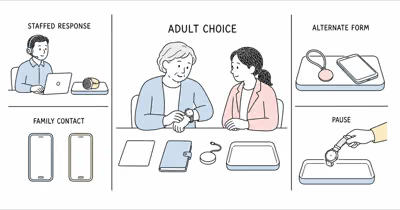
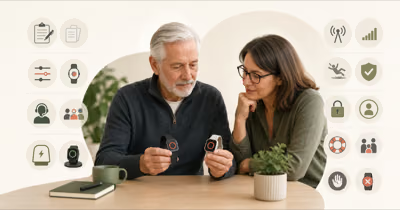
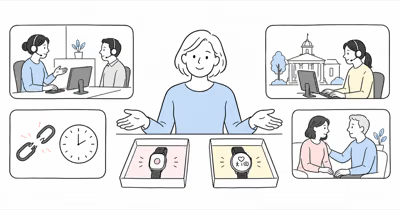
A watch and a pendant can look like two versions of the same product, but the shape changes how a person reaches the control, charges it, hears a responder, wears it through daily routines, and removes it in an emergency.
This is an editorial fit guide, not a product ranking or proof that either form factor prevents falls or guarantees help.
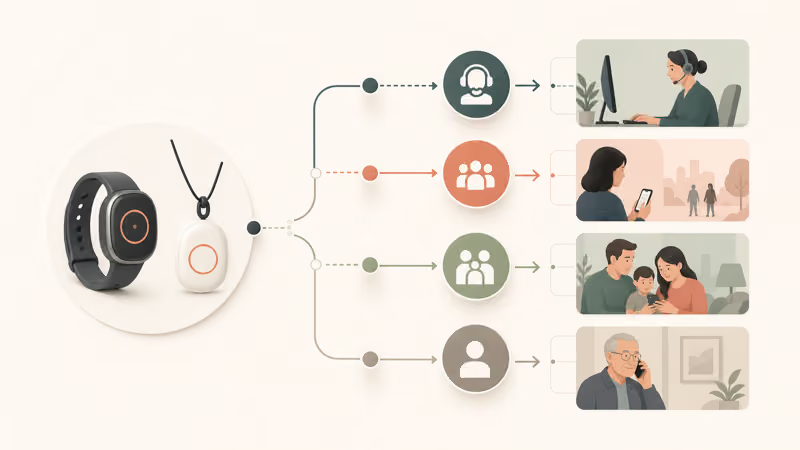
- Define who answers. A staffed monitoring center, public emergency call, family notification, and app alert are different paths.
- Test reach, not assumptions. A larger pendant button isn’t automatically reachable after every fall; a wrist control isn’t automatically easier.
- Fall detection is fallible. It may miss an event or trigger falsely and can’t replace prevention, clinical assessment, or human response.
- Wearability includes consent. Comfort, skin, dexterity, cognition, dignity, privacy, removal, and the right to stop matter.
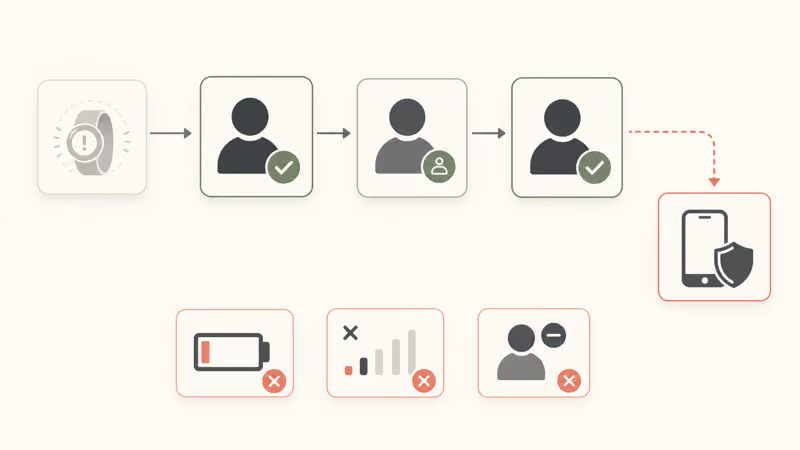
- Plan for failure. A flat battery, weak signal, blocked speaker, unavailable responder, device separation, or service outage needs a fallback.
What Response Job Must the Device Do?
Write the whole action, not a feature label.
Examples include “pressing the control connects to a staffed service that follows the current plan” or “a family contact receives an alert and calls the wearer, with a named backup if there is no answer.” Writing the handoff exposes whether the plan depends on a person, service, phone, network, or public responder that hasn’t been confirmed.
Avoid “keeps safe,” “automatically gets an ambulance,” or “always finds them.” An SOS label doesn’t reveal who answers, what connection is required, what information they receive, or whether they can contact public responders.
According to the National Institute on Aging, emergency alert systems must be set up correctly, worn, and kept powered. It also says they aren’t useful in every emergency and can’t replace regular check-ins.
Use the older-adult GPS watch fit guide when the response model itself is still unclear. The location-support category guide also separates medical alert, communication, item finding, and human support jobs. That distinction matters because a form factor can’t repair a mismatch between what the wearer needs and what the service actually does after an alert.
Start With the Wearer's Participation
The person wearing the device is part of the decision.
Let them handle both forms. Ask what feels acceptable, familiar, dignified, and easy to remove. Observe skin contact, pressure, cord or clip safety, weight, heat, swelling, snagging, sleep, dressing, bathing, toileting, mobility aids, and medical equipment. Repeat the observation across an ordinary routine because a control that works at a table may fail under a sleeve, in bed, during charging, or when one arm is painful.
Don’t assign a watch to an “active senior” or a pendant to a “frail parent” by label. Vision, hearing, sensation, dexterity, range of motion, communication, memory, daily routines, and personal preference vary widely.
If refusal or repeated removal is new, pause. Pain, illness, skin irritation, confusion, sensory load, a difficult clasp, fear, or an unwanted monitoring arrangement may need attention. The consent-first refusal guide explains why a hidden clip or shoe insole isn’t the next step.
How Do Watch and Pendant Fit Differ?
Compare tasks under the same conditions.
| Decision | Watch trial | Pendant trial |
|---|---|---|
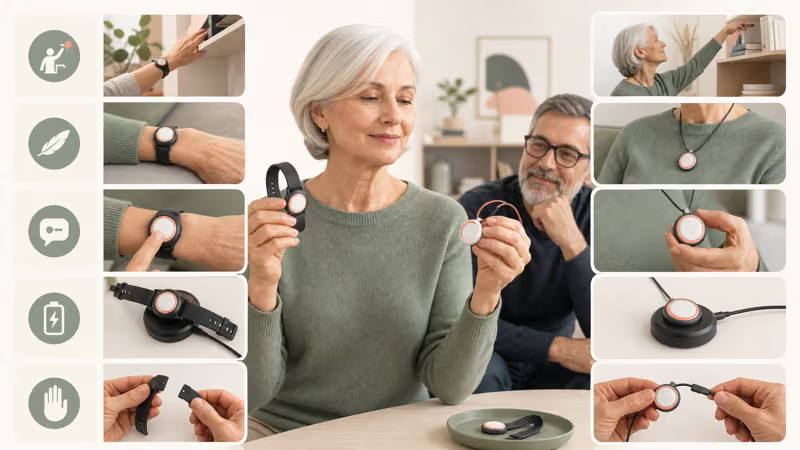
| Reach and activation | Can the wearer find and press the intended wrist control from bed, chair, floor, and outdoors? | Can the wearer locate and press the control without the pendant sliding behind clothing or out of reach? |
| Comfort and removal | Check strap pressure, swelling, skin, clasp, sleeve interference, and safe removal. | Check cord or clip length, snagging, skin, chest pressure, mobility aids, and safe removal. |
| Communication | Test speaker and microphone position, screen legibility, vibration, and controls. | Test speaker and microphone through ordinary clothing and in common body positions. |
| Power and routine | Test charger alignment, charging ownership, missed-charge alerts, and time off wrist. | Confirm whether the exact model charges or uses replaceable power and who checks it. |
| Water and setting | Follow the exact device instructions for bathing, swimming, heat, cleaning, medical equipment, and care-setting policy. | |
No row produces a universal winner. The result should come from observed use with the exact device and current service.
Test the Help Control in Real Positions
Button size alone doesn’t prove access.
A pendant may offer a large tactile surface, but it can move under clothing, swing away, or sit behind the body. A watch stays on the wrist, but one-handed activation, limited shoulder movement, tremor, swelling, a small control, or a touchscreen can create other barriers.
Following the provider’s safe test process, try ordinary positions: standing, seated, in bed, at a table, wearing a coat, and using a walker or wheelchair. Don’t stage a fall or put the wearer on the floor if that isn’t safe.
Confirm whether activation needs a long press, multiple presses, a screen confirmation, voice response, or cancellation step. Ask what the service does after silence and what information it uses.
What Can Fall Detection Actually Do?
Treat it as a fallible signal, not a diagnosis or dispatch guarantee.
The phrase “fall detection” doesn’t establish sensor accuracy, supported movements, wearing position, response path, or regional availability. Verify the exact model, settings, activation, connection, current instructions, and service terms.
A detected event may be something else, and a real fall may not trigger an alert. Even when an alert is sent, the next step may be a wearer prompt, app notification, family call, monitoring-center check-in, or another workflow. Don’t assume public emergency services are automatically contacted.
According to CDC, more than 1 in 4 people age 65 or older falls each year; see its current Facts About Falls. The National Institute on Aging advises reporting falls to a clinician because medication, vision, balance, and other health factors may need assessment.
A wearable can sit beside prevention, appropriate clinical care, home changes, mobility support, a charged phone, and human check-ins. It doesn’t replace them.
Trace the Alert From Device to Human
Name a primary responder and a backup.
For every supported alert, record who receives it, on which device, through which network, with what information, and what they must do. Distinguish provider monitoring from a family-only alert and from a direct public emergency call.
Test a permitted non-emergency workflow. Include a missed call, no speech, false activation, unavailable primary contact, signed-out app, silenced phone, weak indoor signal, flat wearable, power outage, and service interruption. Record who notices each failure, how long the backup waits, and which independent communication method remains available. Repeat the test after a software, phone, carrier, contact, or service-plan change instead of assuming the original result still applies.
Define when the backup takes over and when someone should use the applicable emergency process. If the wearer is injured or in immediate danger, contact local emergency services or the appropriate local authorities (911 in the United States); don’t wait for the device or monitoring service.
Plan Charging, Coverage, and Separation
Maintenance is part of the safety plan.
Verify the exact battery or charging instructions instead of relying on a category claim such as “pendants last longer.” Display, calls, GPS, signal strength, battery age, software, temperature, and service mode can change runtime.
Assign who checks power, what happens during charging, where the device stays, and how a missed charge is noticed. A wearable on a charger may leave a gap; a pendant in a pocket or a watch removed for comfort may no longer be reachable.
Test the places that matter without publishing an “always works” conclusion. Indoor rooms, elevators, garages, rural areas, travel, provider outages, paired-phone distance, and changing carrier support can affect the connection.
Set Privacy and Account Boundaries
Emergency access doesn’t justify unlimited monitoring.
List who can view location, receive alerts, call the device, change settings, recover the account, and see history. Use supported individual access rather than shared passwords, and remove viewers when their role ends.
If location is enabled, treat it as fallible device data rather than proof of the wearer’s route or safety. Don’t enable secret audio, hidden location sharing, or continuous family monitoring merely because the hardware permits it.
The Alzheimer’s Association states that electronic tracking can be one part of a wider safety plan and highlights consent, liberty, and surrogate-decision questions. It doesn’t supply a universal answer about who may authorize tracking. Use qualified local guidance when authority is uncertain, and use the consent-first location-support plan before enabling family viewing.
Compare the Current Contract, Not a Price Range
Prices and included services change.
For the exact watch or pendant, record hardware, activation, monitoring, cellular service, fall features, accessories, replacement, shipping, tax, trial, return, cancellation, renewal, and data terms. Confirm whether the quote is promotional and what happens after it ends.
Don’t assume the pendant is cheaper, fall detection is a fixed monthly add-on, or a monitored cellular device never needs a phone. Those are provider- and model-specific facts that require a current written source.
Cost belongs after safety and usability. A lower price doesn’t fix an unreachable control, unclear response path, unsafe cord, painful strap, inaccessible charger, or rejected monitoring plan. Keep a dated copy of the quote and cancellation terms, then confirm them again before the trial ends. If the service changes the response job or removes a necessary feature, reassess the fit rather than treating the original purchase as permanent.
Run a Reversible Trial and Offboarding Plan
Make stopping as clear as starting.
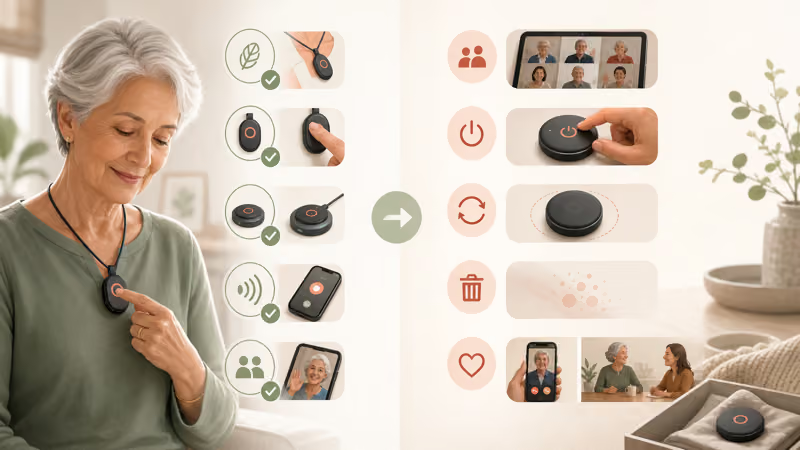
Record the job, wearer agreement or qualified authority basis, chosen form, settings, viewers, responders, charging owner, test results, review date, and stop conditions. Trial ordinary routines without manufacturing an emergency.
Pause for objection, distress, skin or circulation problems, unsafe snagging, repeated accidental alerts, inaccessible controls, failed communication, unclear viewers, or a response chain that doesn’t work. Choose a phone, human check-in, home change, care-setting safeguard, or no wearable when that fits better.
When the trial ends, remove viewers, disable sharing, cancel the service through current instructions, return or reset the device, and handle stored data according to the provider’s current process.
Bottom Line
A watch may fit when a wrist control, display, and charging routine work for the wearer. A pendant may fit when its control, wearing method, communication, and power routine work better. Neither form is automatically safer, easier, cheaper, or more reliable.
Choose the least intrusive option that the wearer accepts and can use, then verify the exact response chain and its failures. If neither form works, don’t conceal a tracker; choose another support.
FAQ
Is a medical alert watch or pendant better for an older adult?
Neither is universally better. Compare the exact device by button reach, comfort, skin and snagging safety, communication, charging, coverage, response path, privacy, and the wearer's wishes. A different support or no wearable may fit better.
Is a pendant button always easier to press?
No. A pendant may have a large tactile control, but it can move under clothing or behind the body. A watch stays on the wrist but may require one-handed activation or a smaller control. Test safe everyday positions with the exact device.
Does fall detection automatically call an ambulance?
Don't assume it does. A sensor event, wearer prompt, family notification, monitoring-center contact, public emergency call, and dispatch are different steps. Verify the exact model, settings, connection, provider workflow, and region.
Which costs less, a medical alert watch or pendant?
There is no reliable category-wide answer. Compare the current written total for hardware, activation, monitoring, cellular service, fall features, accessories, replacement, shipping, trial, cancellation, and renewal.
What if the older adult refuses both forms?
Pause rather than hiding a tracker. Ask about pain, irritation, accessibility, sensory load, privacy, fear, and the monitoring purpose. Consider human check-ins, a phone, home changes, care-setting support, or qualified clinical, legal, or rights guidance.
Do medical alert watches and pendants need a phone?
It depends on the exact device and service. Some use their own cellular path, some need a paired phone, and some work only within a home base system. Verify the connection and test the failure modes that matter.
Can a watch or pendant prevent falls?
No. An alert device may help start a response after a supported event, but it doesn't prevent every fall or replace fall-risk assessment, medication and vision review, home safety, mobility support, exercise advice, or human check-ins.