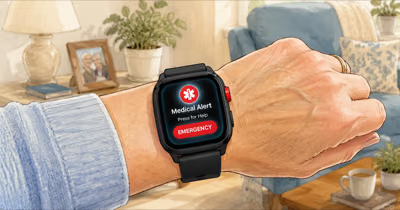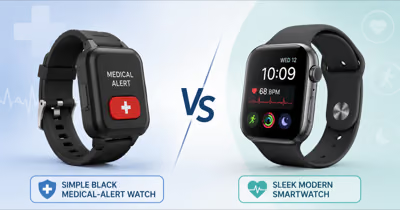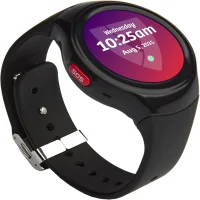
The Medical Guardian MGMove wins for most buyers, mainly because its 24-hour battery lasts much longer than the Bay Alarm SOS Smartwatch’s 6-to-8 hours, and it’s the only one of the two you can buy on Amazon. Choose the Bay Alarm instead if you need Verizon coverage or its reported response-speed edge, and you don’t mind buying direct and charging midday.
Both watches do the same core job. The differences are in the details that decide which one you can actually live with.
According to the National Council on Aging, battery life and reliable coverage are the two factors that most often determine whether a medical-alert device stays on the wrist, and those are exactly where these two split.
- MGMove battery lasts ~24 hours; Bay Alarm only 6-8 — the single biggest practical difference
- MGMove runs on AT&T; Bay Alarm on Verizon — pick whichever has coverage at home
- Both cost ~$199 + ~$40/mo, fall detection +$10/mo — pricing is nearly identical
- Only the MGMove is on Amazon — the Bay Alarm is sold direct, call-to-activate
- Bay Alarm has the reported response-speed edge — both are monitored medical-alert watches
⇄ Head-to-head
MGMove vs Bay Alarm SOS Smartwatch
- +~24-hour battery -- about 3x the Bay Alarm
- +Sold on Amazon, no call-to-activate
- +AT&T 4G LTE + Wi-Fi backup
- +CSAA Five Diamond monitoring, fast response
- +Sleek touchscreen, GPS, step counter
- +Reported response-speed edge
- +Verizon 4G LTE coverage
- +Highly rated US monitoring + customer service
- +No activation fee, no contract
- −Texting/reminders cost an extra $5/mo
- −Still needs a daily charge
- −Fall detection is a $10/mo add-on
- −Only 6-8 hour battery -- may need a midday charge
- −Not sold on Amazon (direct, call-to-activate)
- −Fall detection is a $10/mo add-on
- ·Best for most buyers who want longer battery
- ·Best when you prefer buying on Amazon
- ·Best on AT&T coverage
- ·Best when Verizon has the better signal
- ·Best for fastest response
- ·Best if you want no activation fee
MGMove vs Bay Alarm at a Glance
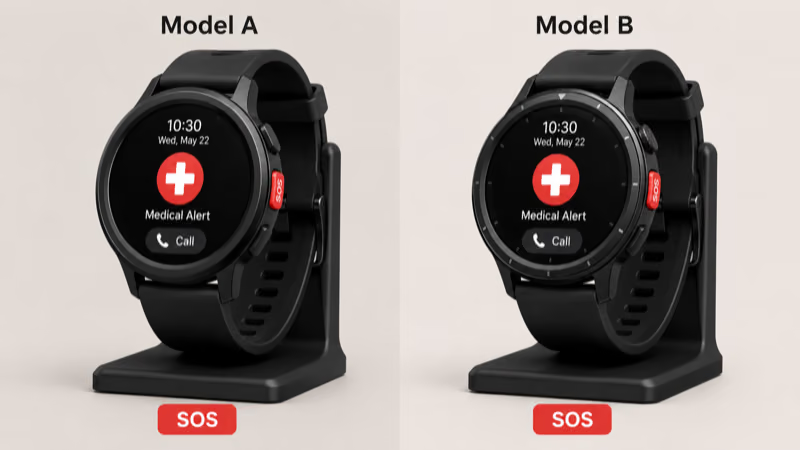
These two are closer than almost any other pair in the monitored-watch category. Both are standalone LTE watches with 24/7 US monitoring, an SOS button, two-way voice, GPS, and an optional fall-detection add-on at the same $10 a month.
The price is nearly a wash: both are about $199 plus ~$40 a month, so cost alone won’t pick a winner here.
Which One Has Better Battery Life?
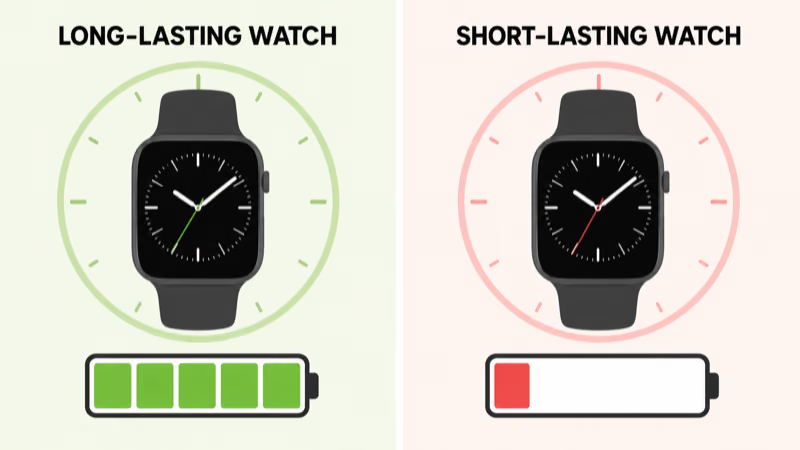
This is the decider for most people. The MGMove runs about 24 hours per charge, while the Bay Alarm SOS Smartwatch manages only 6 to 8 hours.
That gap is huge in daily use. A 24-hour watch charges once overnight or during a fixed daily routine. A 6-to-8-hour watch may need a midday charge, which creates a coverage gap exactly when an active senior is out and about.
For senior wearables, a watch that dies mid-afternoon is a watch that gets left on the charger, defeating the entire purpose. On battery alone, the MGMove is the safer bet.
Carrier and Coverage: AT&T vs Verizon
The MGMove runs on AT&T 4G LTE with Wi-Fi backup, while the Bay Alarm runs on Verizon 4G LTE. Neither network is universally better, so the choice here comes down entirely to your parent’s specific address and the daily places they travel between, which is something only you can check for the routes that actually matter to them.
Coverage at the wearer’s actual home address matters more than any spec on the box. Check which carrier has stronger signal where your parent lives and spends their day. A monitored watch is only as good as its connection, so the right answer is whichever network truly works at home, not whichever brand looks better on paper or happens to be on sale the week you shop.
Monitoring and Response Speed
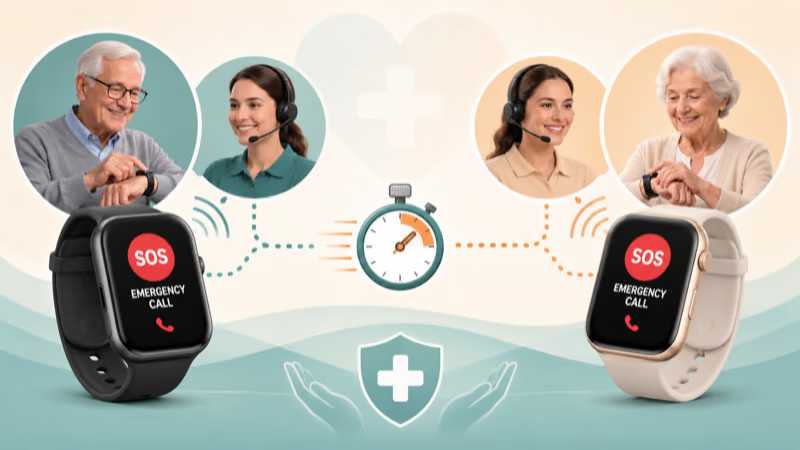
Both route to professional US-based monitoring centers, and both are well regarded. The National Council on Aging found that Medical Guardian’s centers respond in about 20 seconds and hold CSAA Five Diamond certification.
Bay Alarm earns strong marks for customer service and is often positioned around faster response. Consumer Reports’ medical-alert guide recommends focusing on monitoring quality over raw speed, and on that front both watches are truly strong, so the response-speed edge is unlikely to change an outcome by itself.
What Does Each One Really Cost?
On paper they’re identical. The hidden gap is the MGMove’s $5-a-month texting fee; Bay Alarm bundles that into its app for free.
There is also the buying experience. The MGMove is a standard Amazon purchase, while the Bay Alarm is sold direct with a call-to-activate process on Bay Alarm Medical’s site. For a full breakdown of the MGMove’s tiers, see our Medical Guardian MGMove review.
Choosing Between Them
For most buyers, the MGMove’s far longer battery and easy Amazon purchase make it the default pick. The Bay Alarm earns its place when Verizon is the stronger network or when fastest response matters most. Weighing a monitored watch against a full smartwatch, or a pendant instead of a watch? Our MGMove vs Apple Watch SE and medical alert watch or pendant guides cover both choices.
Choose the MGMove if…
- You want a watch that lasts a full day on one charge
- AT&T has solid coverage at home
- You prefer buying on Amazon
- You want a sleek touchscreen design
Choose the Bay Alarm if…
- Verizon is the stronger network where you live
- Fastest possible response is the priority
- You want no activation fee or contract
- You don’t mind buying direct and charging midday
If neither monitored watch fits and you only need location, our best GPS trackers for elderly guide and our AirTags for elderly explainer cover the self-tracking alternatives that cost far less per month.
Bottom Line
The Medical Guardian MGMove is the better monitored medical-alert watch for most seniors, thanks to a battery that lasts about three times longer and the convenience of an Amazon purchase. The Bay Alarm SOS Smartwatch is a close second that pulls ahead only on Verizon coverage or response speed.
Decide by checking carrier coverage first, then weigh whether a 6-to-8-hour battery fits your parent’s day.
FAQ
Is the MGMove or Bay Alarm better for most people?
The Medical Guardian MGMove is the better pick for most buyers. Its battery lasts about 24 hours versus the Bay Alarm’s 6 to 8, and it’s sold on Amazon rather than direct. The Bay Alarm wins only if Verizon has better coverage at your address or you want the fastest response.
Which has longer battery life?
The MGMove, by a wide margin. It runs about 24 hours per charge, while the Bay Alarm SOS Smartwatch lasts only 6 to 8 hours. That difference often means the MGMove charges once overnight while the Bay Alarm may need a midday top-up.
What networks do they use?
The MGMove uses AT&T 4G LTE with Wi-Fi backup, and the Bay Alarm SOS Smartwatch uses Verizon 4G LTE. Neither is universally better, so check which carrier has stronger coverage where the wearer lives before deciding.
Can you buy the Bay Alarm SOS Smartwatch on Amazon?
No. The Bay Alarm SOS Smartwatch is sold direct through Bay Alarm Medical with a call-to-activate process. Only the MGMove is available as a standard Amazon purchase, which is a point in its favor for buyers who prefer one-click ordering and easy returns.
Do both have fall detection?
Yes, but on both watches it’s an optional add-on that costs an extra $10 a month, not part of the base plan. If a senior has a history of falls, budget for that add-on on whichever watch you choose, since a manual button can’t help if the wearer is unconscious.
Which one responds faster in an emergency?
Bay Alarm has the reported response-speed edge, while the National Council on Aging reports about 20 seconds for Medical Guardian. Both are fast enough for an emergency, and both use professional US-based monitoring centers, so the difference is rarely decisive on its own.
Are these better than a GPS tracker for elderly care?
They serve a different need. A monitored watch puts a trained operator on the line, while a GPS tracker only shows location to family. If your main concern is wandering rather than emergencies, a self-tracking option from our elderly tracker guide may fit better and cost less.