Every tracker box prints two headline numbers: a Bluetooth range and a peak alarm volume. Both describe a best case you'll almost never reproduce. The Bluetooth SIG technology overview notes that quoted range assumes clear line of sight with no interference, which is why a 500 ft claim can halve the moment a wall gets in the way.
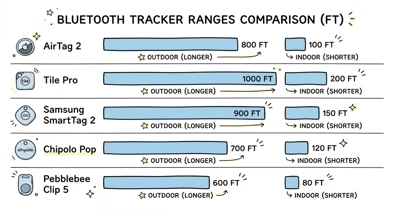
- Real-world range runs well under the marketing claim — independent reviews put the Tile Pro’s 500 ft closer to 120 to 250 ft in everyday use.
- Indoor range drops again — walls, furniture, and your own body all absorb the 2.4 GHz signal.
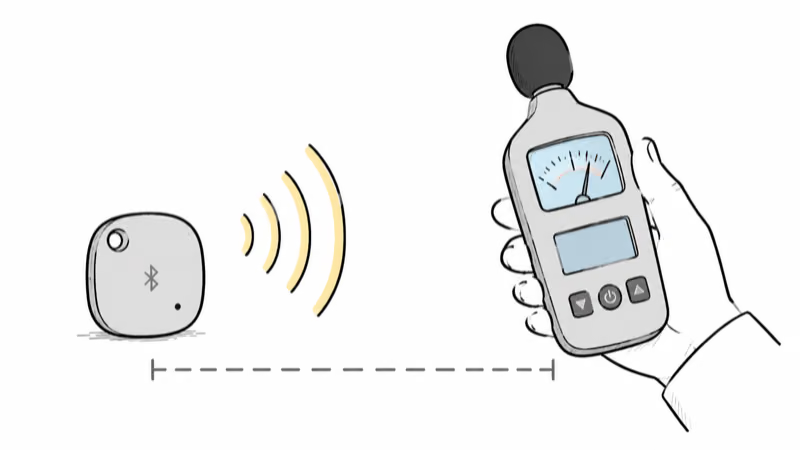
- Peak alarm volume is rated at the speaker, not where you stand — the same tag sounds far lower once distance gets involved.
- A decibel figure means nothing without a distance — readings taken at different distances can’t be ranked head to head.
- Sometimes reality beats the spec — ultra-wideband Precision Finding meets or exceeds its range, with the U2 chip rated 50 percent farther.
Why Real-World Numbers Fall Short of the Spec
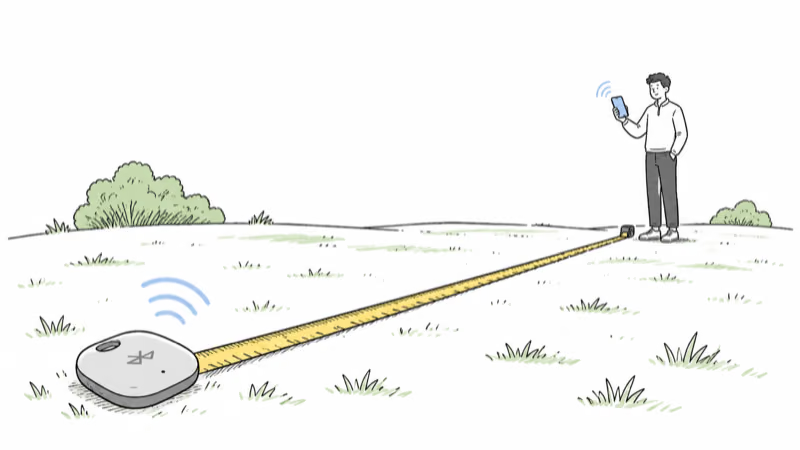
Published range and alarm figures describe best-case conditions you’ll almost never have: a clear open field with nothing in the path for range, and peak speaker output for volume. Bring the tracker into a house and the radio has to fight through walls, furniture, and your own body, while the alarm loses volume with every step you take back.
Independent testing shows the same gap. Tom’s Guide found that the Chipolo Pop’s indoor range landed near 10 to 11 m against a 90 m spec.
Published numbers scatter between outlets mostly because everyone measures at a different distance. The one rule that makes any of them comparable is simple: an alarm reading only means something next to another reading taken at the same distance.
How Far Do Bluetooth Trackers Really Reach?
Range is where the gap is widest. The table pairs each maker’s published open-space figure with a practical expectation for how that number behaves away from ideal conditions.
| Tracker | Maker claim | Practical expectation |
|---|---|---|
| Tile Pro (2024) | 500 ft | Strong open-space spec; much shorter when obstructed |
| Cube | 200 ft | Lower ceiling than Tile Pro, with the same obstruction penalty |
| Nomad Tracking Card Air | 150 ft | Card-format range, best treated as an open-space ceiling |
| Chipolo Loop | 120 m | Long published ceiling for a keyring tracker |
| Chipolo Card | 120 m | Long published ceiling, reduced by wallet placement and walls |
The Tile Pro’s 500 ft is the most-cited and most-overstated number in the category. Tom’s Guide reported that it held to about 120 ft in everyday use, while a clear, unobstructed line of sight can stretch much closer to the rated figure. Neither is a scandal: a maker advertising the best a radio can do in a parking lot isn’t lying.
By comparison, the Cube’s 200 ft holds up only a little better in relative terms.
The Chipolo keyrings and the Nomad card look strongest when the environment stays open and unobstructed. The published figure is still a ceiling, not a typical result.
What Happens to Range Indoors
Then walls happen. Indoor range falls again across the category, and that’s the reality that decides whether you can ring your keys from the kitchen.
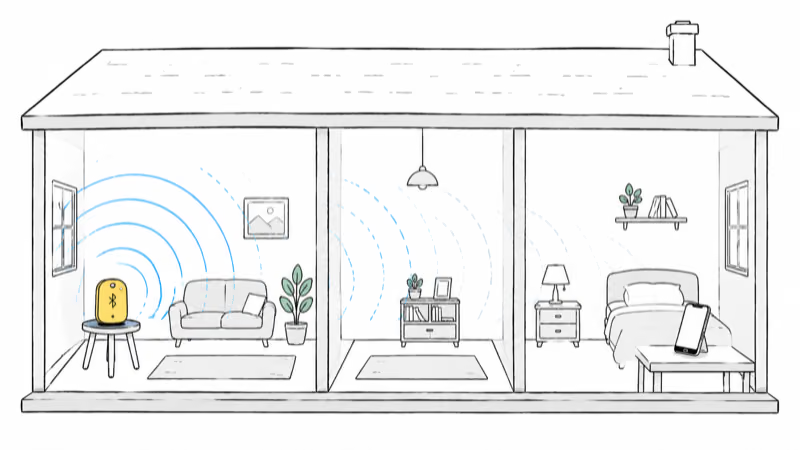
The same Tile Pro that stretches farthest outdoors still holds much less usable range indoors. Chipolo Pop shows the steepest drop of all: its 90 m open-space spec collapses indoors, a pattern our full range comparison breaks down room by room.
How Loud Are Tracker Alarms, Really?
Alarm volume carries a trap: a decibel figure means nothing without a distance. Makers quote peak SPL right at the speaker, but sound pressure falls off fast, so the figure at a normal arm’s length is far lower.
| Tracker | Maker claim | Practical expectation |
|---|---|---|
| Chipolo Loop | 125 dB | Loudest Chipolo keyring rating, lower away from the speaker |
| Chipolo Card | 110 dB | Strong wallet-card rating, reduced by wallet material |
| Chipolo in Secrid Miniwallet | ~110 dB | External grille helps preserve more perceived volume |
| Xiaomi Tag | unrated piezo | Quieter budget buzzer with no published peak to compare |
A 125 dB rating like the Chipolo Loop’s, the loudest in its lineup, will sound lower once you step away from the speaker. The 110 dB Card follows the same distance-loss pattern, especially inside a wallet. According to TechGearLab, the Tile Pro alarm measured 88 dB, well under its billing.
One quirk is worth noting. A Chipolo card inside a Secrid Miniwallet’s metal grille can sound louder than the same card in leather, because the aluminum frame channels the sound.
The Xiaomi Tag’s piezo buzzer is the quietest of the bunch and carries no rated figure to miss.
The Distance Trap in Alarm Specs
Two trackers belong in the loudness story but not in that table, because their published figures are quoted at different distances, and mixing them in would be exactly the error this page exists to prevent. The AirTag 2’s chime is a modest close-range figure. The Nutale Key Finder’s louder label uses a different distance convention.
Read at the same distance, they would rank differently than the raw numbers suggest. A spec that ranks alarms without stating the distance is comparing tests that were never the same.
Where the Marketing Numbers Come From
The honest answer is that most claims are real measurements taken under conditions you’ll never have. A range spec is a clear-line-of-sight figure with no walls and no bodies in the path. An alarm spec is peak SPL on the speaker’s loudest axis. The Bluetooth SIG’s overview is explicit that real environments degrade the theoretical figure.
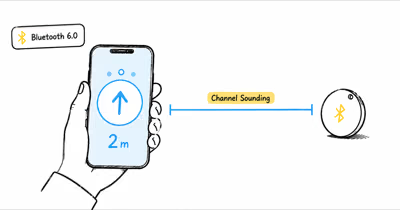
The fair counterweight is that reality occasionally beats the spec. AirTag 2’s ultra-wideband Precision Finding reaches a slightly longer activation range than its predecessor, and Apple states that the U2 chip reaches 50 percent farther. That’s the one place the marketing runs conservative.
So the rule isn’t that makers lie. A spec sheet describes the physics ceiling, and your house describes the floor. The useful number lives between them.
What This Means When You Buy
Read the box as a relative ranking, not a promise. A tracker claiming 500 ft will almost always outreach one claiming 200 ft, even though neither hits its number in your hallway. The 125 dB Loop really is louder than the 110 dB Card at any fixed distance, just not by the 15 dB the labels imply.
For a truly lost item, raw Bluetooth range matters far less than people think. Once an item is more than a room away, the crowd-sourced finding network takes over from direct Bluetooth entirely. A tracker on Apple Find My or Google Find Hub recovers a lost bag through other people’s phones, where the exact Bluetooth range is irrelevant.
Range and volume decide how well a tracker finds something in your own home. The network decides how well it finds something across town.
Bottom Line
Bluetooth tracker spec sheets are accurate descriptions of best-case lab conditions and poor predictors of your living room. Real-world range runs well under the claim, and peak alarm volume drops sharply once you step back from the speaker.
The numbers are real ceilings, not fabrications, and the honest exception is ultra-wideband, which tends to meet or beat its spec. Treat published figures as a way to rank trackers against each other, and set your real expectation a good deal lower.
FAQ
Why is the real Bluetooth range so much lower than advertised?
Advertised range is a clear-line-of-sight figure measured outdoors with nothing between the tracker and the phone. Walls, furniture, your own body, and competing 2.4 GHz signals all absorb the radio, which is why real-world range runs well below the claim and drops again indoors. The spec is a real ceiling, not a typical result.
Does the Tile Pro really reach 500 feet?
Rarely in everyday use. Independent reviews put its real-world range well below the 500 foot claim, while a clear, unobstructed line of sight can stretch much closer. Indoors it holds a few hundred feet at best. It's still one of the longest-range Bluetooth trackers, but the 500 foot figure assumes ideal open space you rarely have.
Why do alarm decibel numbers need a distance?
Sound pressure level falls off with distance, so a decibel reading only means something when you state how far the meter was from the speaker. Makers quote peak SPL close to the speaker; farther away the same alarm is much quieter. Comparing readings taken at different distances isn't a valid ranking.
Which Bluetooth tracker alarm is loudest?
By published peak ratings, the Chipolo Loop is loudest, ahead of the Chipolo Card. Both sound lower once distance, fabric, or wallet material sits between the speaker and your ear. The Xiaomi Tag is the quietest of the group, which is its main weakness as a budget tag.
Do any trackers beat their advertised specs?
Yes. AirTag 2's ultra-wideband Precision Finding matches the 50 percent improvement Apple credits to the U2 chip, and UWB guidance is the one spec category where the published number tends to run conservative.
Should I ignore the spec sheet entirely?
No. Use it as a relative ranking. A tracker claiming 500 feet will almost always outreach one claiming 200 feet, and a 125 dB alarm really is louder than a 110 dB alarm at the same distance, just not by the margin the labels suggest. Sort your options with the marketing figures, then set your real expectation well below them.
Does Bluetooth range matter for finding a lost item?
Less than most buyers assume. Once an item is more than a room away, direct Bluetooth stops mattering and the crowd-sourced network, Apple Find My or Google Find Hub, takes over by locating the tracker through other people's phones. Range and alarm volume decide how well a tracker finds something inside your own home; network size decides how well it finds something across town.