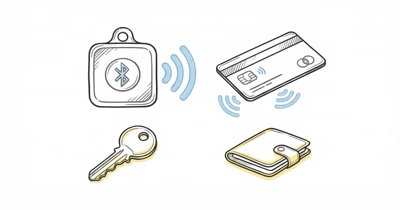
A Bluetooth Channel Sounding tracker is a tag built on Bluetooth 6.0 that measures how far away it sits, not just whether it’s somewhere close. The Bluetooth SIG describes Channel Sounding as a secure, fine-ranging feature that, in its own words, brings true distance awareness to a plain Bluetooth connection.
- Bluetooth 6.0 feature — Channel Sounding shipped in Bluetooth Core 6.0, the first version to add native distance measurement between two devices
- Centimeter-class ranging — phase-based ranging targets centimeter-level accuracy over the kind of distances you cover indoors
- Needs both ends — the tag and the phone must both run Bluetooth 6.0, so a 2025-era phone won’t unlock it
- Android 16 gate today — on the first shipping tracker, Channel Sounding requires a phone on Bluetooth 6.0 and Android 16
- Not the same as UWB — it reuses the existing Bluetooth radio rather than a separate ultra-wideband chip, trading some precision for lower cost
How Bluetooth Channel Sounding Measures Distance
Channel Sounding lets two Bluetooth devices calculate the real distance between them instead of guessing from signal strength. Android Central’s primer on Bluetooth 6 reported that supporting devices can “find each other across a wider area and within a centimeter of accuracy.” On a supported phone, that lets a tracker app show a concrete distance readout, like “2 meters away,” instead of the vague nearby bar older tags settle for.
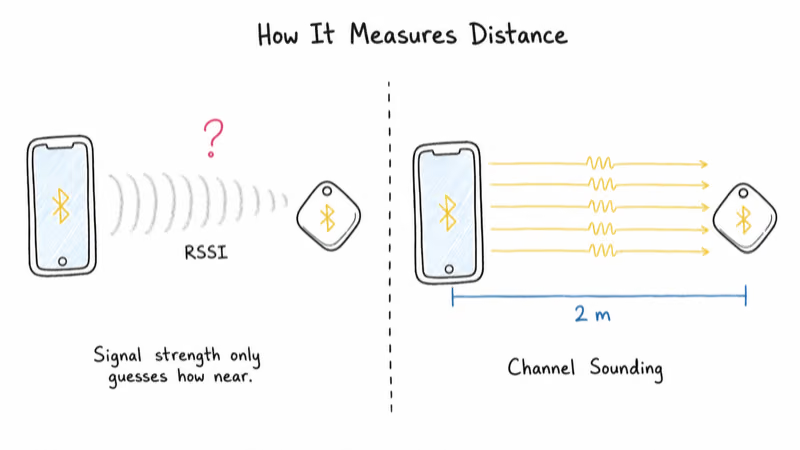
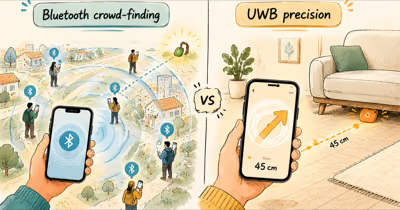
The old way Bluetooth trackers estimated closeness was RSSI, or received signal strength. A tag broadcast, your phone listened, and the app guessed distance from how loud the signal arrived. Walls, pockets, and bodies all weaken that signal, so RSSI distance was a rough hint at best.
Channel Sounding works differently. The phone and the tag trade signals across many frequencies and measure how the signal phase shifts between them. Because phase tracks distance far more reliably than loudness, the technique lands in the centimeter range instead of the somewhere-in-this-room range that signal-strength guessing always produced.
The payoff lands in the last 10 feet. Most trackers get you to the room; Channel Sounding walks you to the cushion.
How Is Channel Sounding Different From UWB?
Channel Sounding and ultra-wideband (UWB) both solve close-range finding, but they use different radios. UWB needs a dedicated ultra-wideband chip in both the tag and the phone. Channel Sounding rides the Bluetooth radio that is already in the device, so it adds precision finding without a second antenna system or the extra cost that comes with it.
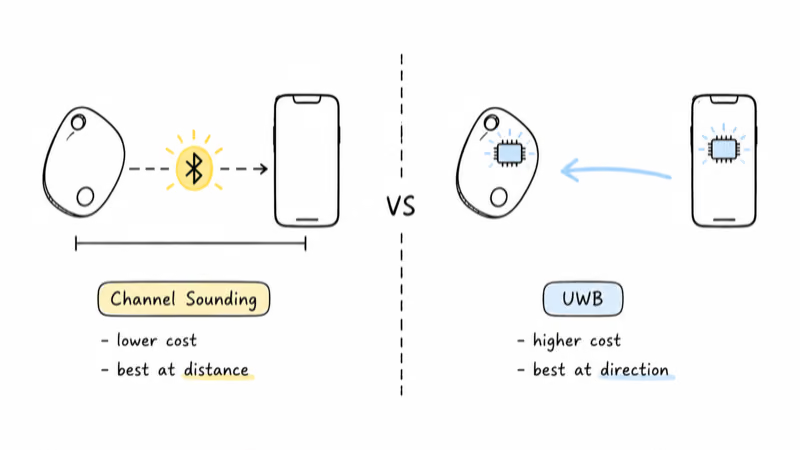
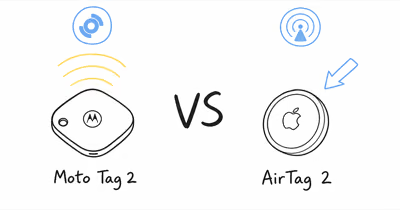
That difference shapes both price and behavior. UWB is the gold standard for direction: an Apple AirTag with UWB can point a literal arrow at your keys, a trick we cover in our AirTag 2 review. Channel Sounding, in its first generation, is stronger at distance than at exact heading, so it tends to count down feet rather than draw an arrow.
Here is the short version of how the two stack up:
| Feature | Bluetooth Channel Sounding | UWB |
|---|---|---|
| Radio used | Existing Bluetooth 6.0 radio | Separate ultra-wideband chip |
| Best at | Distance ranging | Distance and direction |
| Hardware cost | Lower (no extra chip) | Higher (dedicated antenna) |
| Phone support | Bluetooth 6.0 phones only | UWB-equipped phones only |
Some trackers ship both methods at once. The first retail Channel Sounding tag pairs Bluetooth 6.0 ranging with a UWB radio, so the phone can use whichever it supports. For the deeper Apple-versus-Motorola breakdown, our Moto Tag 2 vs AirTag 2 comparison puts Channel Sounding and Apple’s U2 UWB chip side by side.
One honest limit: neither method helps once a tag leaves Bluetooth range, the same wall every precision finding feature hits at distance.
Which Trackers Have Bluetooth Channel Sounding?
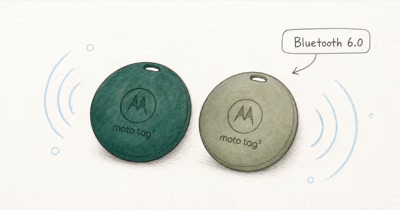
The Motorola Moto Tag 2 is the first retail tracker to ship Bluetooth Channel Sounding. Motorola’s current US Moto Tag 2 page confirms that the tag carries Channel Sounding alongside UWB and a CR2032 rated for more than 600 days.
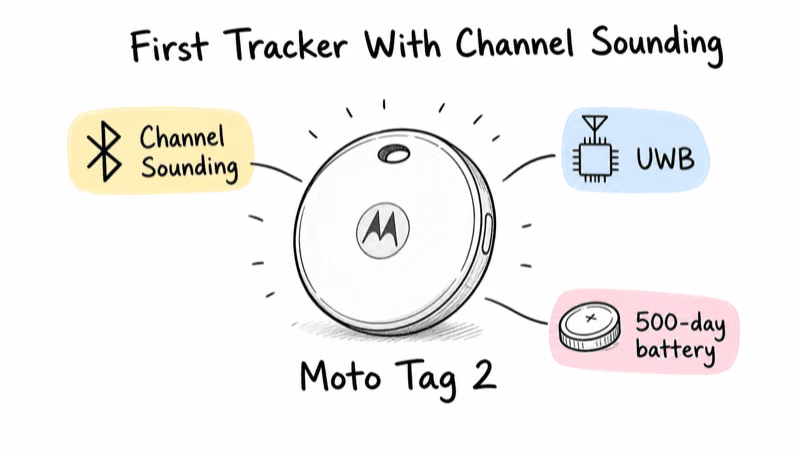
Channel Sounding is brand new, so the supported-tracker list is short. Expect it to grow as more Bluetooth 6.0 silicon reaches market through 2026 and 2027.
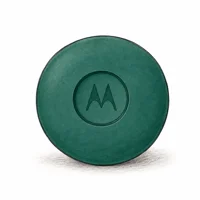
The gating is on the phone, not the tag. On an older phone the Moto Tag 2 behaves like a standard Find Hub tracker, and it switches on Channel Sounding ranging only once it’s paired with a current-generation Bluetooth 6.0 handset. The feature is real, but your phone unlocks it, not the tag you buy.
For a full account of how the tag handles range, battery, and the Find Hub network, see our Motorola Moto Tag 2 review. The broader Google tracker ecosystem lives in our Find Hub hub.
The Phone Requirements You Should Not Overlook
Channel Sounding only works when your phone also speaks Bluetooth 6.0, and right now that is a small club. On the first shipping tracker, 9to5Google’s CES coverage reported that the feature is only available on smartphones with Bluetooth 6.0 and Android 16, which in early 2026 narrows the field to a recent Pixel or a top-tier Snapdragon flagship.
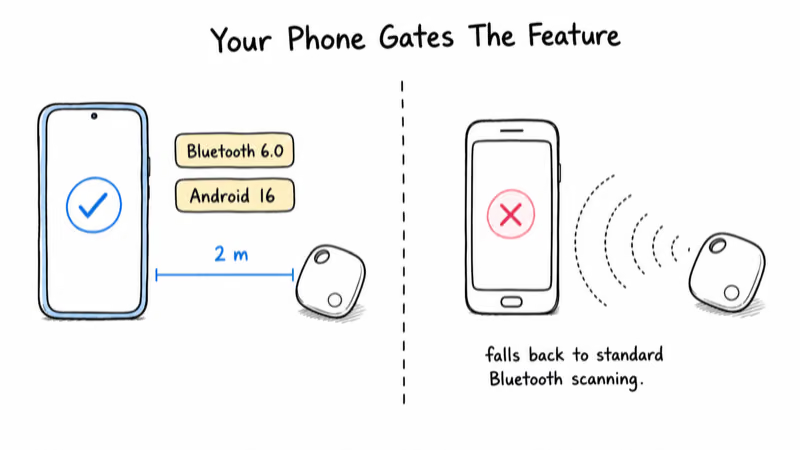
Pair a Channel Sounding tag with an older Android phone and it falls back to standard Bluetooth scanning. You keep the tag’s full range, battery, and crowd-finding, just without the close-range distance readout, exactly as the original model behaved on the same hardware.
iPhones don’t support Channel Sounding at all. The first Channel Sounding tracker rides Google Find Hub, an Android-only network, so an iPhone can only flag a stranger’s tag for safety.
The takeaway is simple. Channel Sounding is a buy-for-your-phone decision, and the feature only earns its keep when the phone in your pocket runs Bluetooth 6.0 and the right OS. Confirm your handset before you pay extra for a tag that lists it.
Why Channel Sounding Matters for Close-Range Finding
For a buyer staring at a spec sheet, the value of Channel Sounding is narrow but real: it fixes the last 10 feet that crowd-finding networks were never designed to handle. A Find My or Find Hub network can place your tag on a map, yet a map does not tell you whether your keys are under the seat or in the door pocket.
Tom’s Guide, in its rundown of the Bluetooth 6.0 upgrades, frames Channel Sounding as the change that lets phones and accessories gauge precise distance, which is exactly what turns a rough map pin into a turn-by-turn hunt for a small object.
The trade-off is honest. Channel Sounding does not extend how far a tag can be found, it sharpens the final approach. So if you mostly lose things out in the world, a strong crowd-finding network still matters more.
That is the lens to buy through: match the radio to where you actually lose things.
What Channel Sounding Does Not Replace
Channel Sounding is a close-range tool, not a long-range one. It sharpens the final approach, but it does nothing for a tag that has already left Bluetooth range, and that distinction matters when you choose a tracker.
Here is the part the spec sheet glosses over. When your keys are three blocks away in a parked car, no amount of on-device ranging will find them, because the tag sits far outside the few-meter radio link your phone can hold.
At that distance, recovery depends entirely on a crowd-finding network relaying the tag’s position back through other people’s phones. That network is a completely separate system from Channel Sounding, and its size still decides most lost-and-found outcomes. Channel Sounding only takes over once the network has already pointed you to the right area, then it carries you the rest of the way to the exact spot.
So treat it as a finishing move. The network gets you to the block; Channel Sounding gets you to the cushion.
Bottom Line
A Bluetooth Channel Sounding tracker uses Bluetooth 6.0 to measure exact distance to your phone, closing the gap between the right room and the right cushion without a separate UWB chip. It’s the first time plain Bluetooth can range, not just detect.
The catch is hardware on both ends. The tag and the phone must run Bluetooth 6.0, and on the first shipping tracker that also means Android 16. If your phone qualifies, Channel Sounding adds genuine close-range finding; if it does not, the same tag still works as an ordinary Bluetooth tracker.
FAQ
What is a Bluetooth Channel Sounding tracker?
It’s a tag built on Bluetooth 6.0 that can measure the actual distance to your phone, not just whether it’s nearby. Channel Sounding uses phase-based ranging across many frequencies to reach centimeter-class accuracy, so the app can count down distance as you close in on a lost item.
Is Channel Sounding the same as Bluetooth 6.0?
Not exactly. Channel Sounding is one of the headline features added in the Bluetooth Core 6.0 specification. A device can be Bluetooth 6.0 capable, but Channel Sounding is the specific ranging feature that lets two Bluetooth 6.0 devices measure the distance between them.
How accurate is Bluetooth Channel Sounding?
The Bluetooth SIG targets centimeter-level accuracy using phase-based ranging. In real use that means the close-range portion of a search is far more precise than the old signal-strength estimates, which could only tell you roughly how near a tag was. Exact results depend on the phone, the tag, and the environment.
Is Channel Sounding better than UWB?
It depends on what you need. UWB uses a dedicated chip and is stronger at giving you a direction arrow, while Channel Sounding reuses the Bluetooth radio and is strong at distance ranging at lower cost. Some trackers, like the Moto Tag 2, include both so the phone can use whichever it supports.
Which trackers support Bluetooth Channel Sounding?
The Motorola Moto Tag 2 is the first retail tracker to ship Channel Sounding, paired with UWB and a battery rated for more than 600 days. The feature is new, so the list is short for now and is expected to grow as more Bluetooth 6.0 hardware reaches the market.
What phone do I need for Channel Sounding?
You need a phone that also runs Bluetooth 6.0. On the first shipping tracker, the feature requires Bluetooth 6.0 and Android 16, which in early 2026 means a recent Pixel or a high-end Snapdragon flagship. Older phones fall back to standard Bluetooth scanning.
Does Channel Sounding work on an iPhone?
No, not today. The first Channel Sounding tracker is built for Google Find Hub, an Android-only network, so an iPhone can’t pair it or use its ranging. An iPhone can still detect an unknown tracker traveling with you as an anti-stalking safety measure.