Most wallet trackers force you into one ecosystem. The KeySmart SmartCard (Gen 3) pairs with both Apple Find My and Google Find Hub, which is why Tom’s Guide reported that its hands-on test made it a reason to skip the AirTag 2. This review covers what that dual-network claim actually means.
- Dual-network — pairs with both Apple Find My and Google Find Hub, but only one at a time; switching requires a factory reset.
- 1.8mm thin — about the thickness of two credit cards, slim enough to sit in a standard card slot.
- Up to 11-month battery — the Atlas Gen 3 chip is rated 30% more power-efficient than the previous card.
- Qi rechargeable — recharges in roughly 4 hours on a standard Qi pad, with an LED charge indicator on the front.
- $44.99 with IPX8 — one-time price, no subscription, rated for full submersion under the IPX8 standard.
What Makes the KeySmart SmartCard Gen 3 Different?
The headline feature is cross-platform support. Most Bluetooth cards lock you into one finding network. This one connects to both Apple Find My and Google Find Hub, and Android Police’s hands-on review confirmed that pairing works on either network with no separate app required. The reviewer called that broad compatibility “a huge benefit” over single-network rivals like Tile, a card that ties you to one ecosystem and one finding app for the life of the product.
The second differentiator is power. KeySmart states that the new Atlas Gen 3 chip is rated 30% more power-efficient than its previous card, which is what pushes the battery to roughly 11 months per charge. Per the manufacturer spec, that chip also processes location data faster and holds a more reliable connection than the prior generation. The same 11-month figure appears consistently across the manufacturer page and the published hands-on reviews.
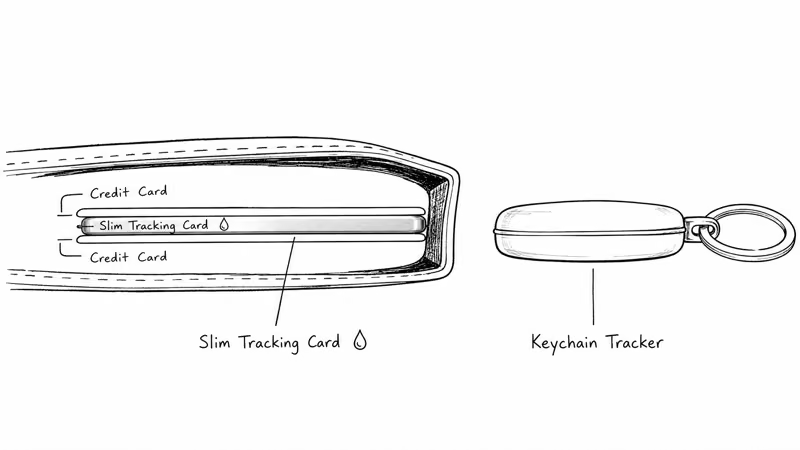
At 1.8mm thick, the card is about the depth of two stacked credit cards. That measurement lines up with two standard cards, so it should sit in a slot without jamming the stack or blocking contactless payment terminals.
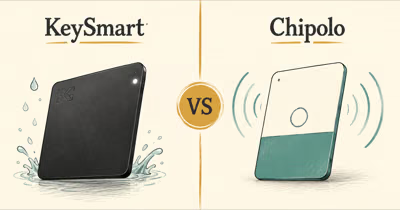
KeySmart rates it IPX8 for full submersion. A soaked wallet, or a card left in a rained-on jacket, should survive a dunk that would kill many splash-rated trackers, since the sealed body has no battery door or port for water to creep through over months of daily wallet use.
KeySmart SmartCard Gen 3: Complete Buying Summary
§ Review summary
KeySmart SmartCard Gen 3
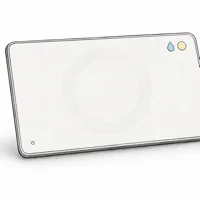
≡ Specs
- Network
- Apple Find My or Google Find Hub; one at a time
- Thickness
- 1.8mm
- Battery
- Qi rechargeable; up to 11 months
- Water resistance
- IPX8
- Precision Finding
- No
- Subscription
- None
✓ Pros
- +Pairs with Apple Find My or Google Find Hub after a reset
- +1.8mm profile fits a standard wallet card slot
- +Qi rechargeable with an advertised 11-month runtime
- +IPX8 sealed body has no exposed charging port
- +No subscription or proprietary tracking app required
✗ Cons
- −Can't stay paired to both finding networks at the same time
- −No UWB Precision Finding or directional arrow
- −Independent tests disagree on separation-alert reliability
- −A Qi charging pad is not included
- −Costs more than several single-network wallet cards
§ Buy if
- ·Buy if you may move between iPhone and Android without replacing the card
- ·Buy if a thin rechargeable wallet tracker matters more than UWB guidance
- ·Skip if simultaneous cross-platform sharing is required
- ·Skip if a proven left-behind alert is a non-negotiable feature
Does It Really Work With Both Find My and Find Hub at the Same Time?
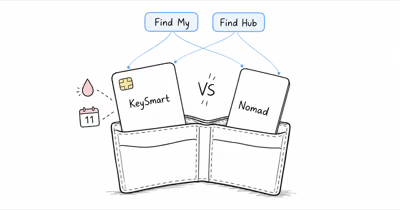
This is the most misunderstood part of the product. The card supports both networks, but not simultaneously. You pick Apple Find My or Google Find Hub at setup.
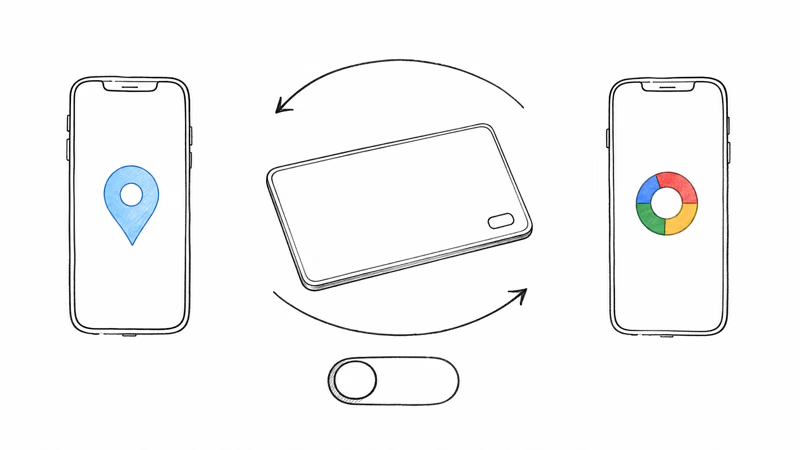
To move to the other network, you factory-reset the card and re-pair. KeySmart’s setup guide and Android Police’s hands-on notes point to the same answer: switching to Apple’s Find My requires a reset if the card had previously been on Find Hub. There is no true dual-pairing.
Some marketing copy implies an iPhone user and an Android user can both see the same card live at once. The manufacturer spec and independent testing point to one network at a time.
That changes who benefits. The dual-network design is about flexibility, not sharing. If you switch from iPhone to a Pixel next year, you reset the card and keep using it instead of buying a new tracker. If you want two people on two platforms tracking the same card at once, this card can’t do that today. For a deeper look at where this card lands against rivals, see our roundup of the best dual-network trackers.
Thinness and Durability in a Real Wallet
The 1.8mm profile is the reason to choose a card over a fob-style tracker. A typical keychain tracker is roughly 8mm tall and bulks up a wallet pocket. This card disappears into the stack.
In Tom’s Guide’s hands-on use, the reviewer slid the card into a backpack and a glove compartment as a “where did I park” aid without it being noticeable. That same review flagged the main trade-off honestly: there’s no Precision Finding. On an iPhone you see the card’s general location on the map and can play a sound. You don’t get the AirTag 2’s directional arrow up close, the biggest functional gap against Apple’s own tracker.
The IPX8 rating is the durability backbone, covering continuous submersion beyond one meter. That is stronger than the IP67 splash-and-dunk rating on many trackers. Card-format rivals include the Nomad Tracking Card Air at 1.7mm.
Battery Life and Wireless Recharging
KeySmart rates the card at up to 11 months per charge, driven by the Atlas Gen 3 chip’s efficiency gain. That’s a meaningful jump for a card this thin, because there’s no room for a replaceable coin cell. A replaceable-battery tracker swaps a cell once or twice a year; this one asks for a single recharge instead.
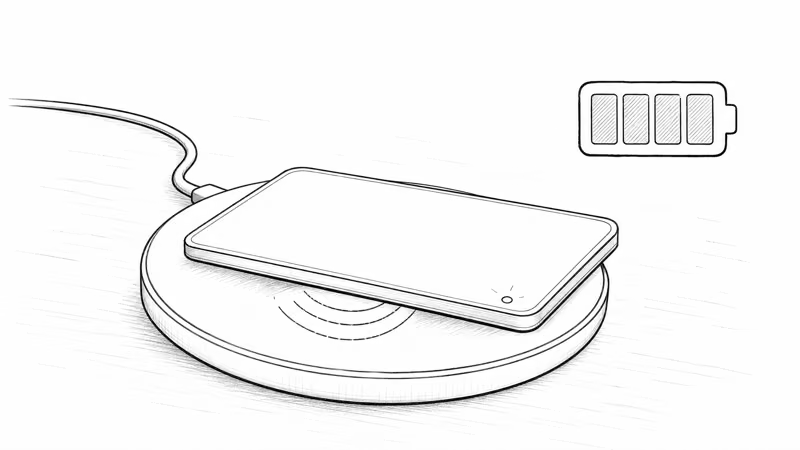
Recharging is wireless. Android Police reported Qi-pad charging with a front LED showing charge status. Tom’s Guide noted it also sits on a MagSafe charger.
There’s one honest caveat on charging hardware. Android Police found that compatibility is broad but flagged that a very old wireless charger, or a brand-new non-Apple Qi2 MagSafe pad, could occasionally cause trouble. A standard Qi charging pad is the safe choice, and one isn’t included in the box.
On the finding sound, both Tom’s Guide and Android Police confirmed the card plays an audible series of beeps. It stayed loud enough to hear through a wallet inside a bag while sitting beside it.
Drawbacks Worth Knowing Before You Buy
Two limitations deserve a clear callout. First, the separation alert did not work in Android Police’s testing. The feature should warn you when the card is left behind, but Android Police reported that its reviewer could not trigger it on either network across distances from 30 meters to roughly a mile. A separate hands-on review from CNN Underscored tested it positively over months, so treat the left-behind alert as unproven rather than guaranteed.
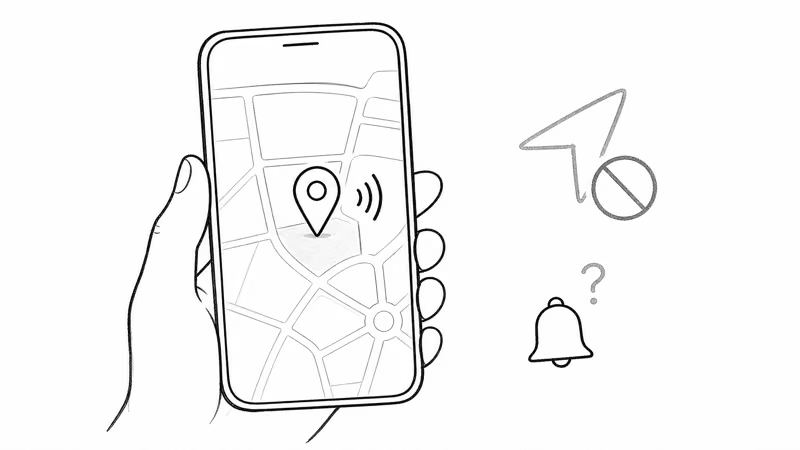
Second, there’s no Precision Finding on iPhone. You get map location and a sound, not the close-range directional arrow. For a wallet that rarely strays far, that’s acceptable. For pinpointing a card buried in a cluttered room, it’s a real gap that a UWB tracker would close.
Shoppers torn between this dual-network card and the most popular sealed Find My card should read our head-to-head against the Chipolo CARD, which weighs the move-between-ecosystems flexibility against a louder ringer and a no-recharge two-year battery.
Price is the last consideration. At $44.99 for one or a discounted four-pack, the card sits above budget cards but undercuts the cost of buying separate trackers for separate ecosystems. If you compare Bluetooth-card behavior across brands, our eufy vs Chipolo breakdown covers how network coverage and finding range differ between competing systems on the Apple Find My network.
The SmartCard Pro: A Premium Step-Up
KeySmart’s SmartCard Pro (May 2026) sits a tier above the Gen 3: the same dual-network Qi card, but with an aluminum-and-transparent build, an IPX8 rating, and a louder speaker.
The headline difference is battery. The Pro is engineered for about 24 months per charge versus the Gen 3’s 11, so you recharge it half as often. It runs $49.99, five dollars over the Gen 3, and for now it sells direct from KeySmart rather than Amazon.
One catch: the Gen 3 is thinner (1.8mm vs 2.4mm). Choose the Pro for battery and build, the Gen 3 for slimness and a ready Amazon listing.
Who Should Buy the KeySmart SmartCard Gen 3
This card fits a specific buyer. You want a wallet tracker thinner than a fob, you don’t need close-range arrow guidance, and you value being able to move between Apple and Android without rebuying. The rechargeable battery removes the coin-cell hassle.
It’s a weaker fit if you need two people on two platforms tracking the same card live, if you rely on a working separation alert as a core feature, or if Precision Finding is non-negotiable. In those cases a single-network tracker with UWB, or a card with a verified left-behind alert, is the safer pick. For broader shopping context, our guide to the best wallet tracker cards ranks the slim rechargeable field.
Bottom Line
The KeySmart SmartCard (Gen 3) is a thin, rechargeable wallet card with a feature competitors lack: it works with both Apple Find My and Google Find Hub. The catch is that it runs one network at a time, and the separation alert was unreliable in independent testing. If you want a slim $44.99 card you can move between ecosystems and never swap a battery on, it earns the spot. If you need simultaneous dual tracking or Precision Finding, look elsewhere.
FAQ
Can the KeySmart SmartCard Gen 3 use Find My and Find Hub at the same time?
No. It supports both networks, but only one at a time. You choose Apple Find My or Google Find Hub during setup, and switching to the other network requires a factory reset and re-pairing. There is no simultaneous dual-pairing.
How thin is the SmartCard Gen 3?
It’s 1.8mm thick, roughly the depth of two stacked credit cards. That lets it sit in a standard wallet card slot without jamming the stack or blocking contactless payments.
How long does the battery last?
KeySmart rates it at up to 11 months per charge. The Atlas Gen 3 chip is rated about 30 percent more power-efficient than the previous card, which is what extends the runtime.
How do you recharge the card?
You place it on a standard Qi wireless charging pad, including a MagSafe pad. The front LED shows charge status, and a charger is not included.
Is the SmartCard Gen 3 waterproof?
Yes, it carries an IPX8 rating, which covers continuous submersion beyond one meter. The sealed card has no battery door or charging port, which helps the rating hold up to spills and rain.
Does it have a separation alert for when you leave it behind?
The card advertises a separation alert, but one hands-on reviewer could not get it to work on either Find My or Find Hub. Another reviewer reported it working through Find My. Treat the alert as inconsistent rather than guaranteed.
Does it support Precision Finding like an AirTag?
No. On iPhone you see the card’s general location on the map and can play a sound, but you don’t get the directional arrow-style close-range guidance that Apple’s newest tracker offers.