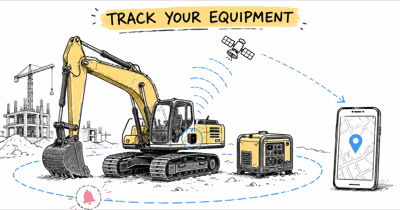
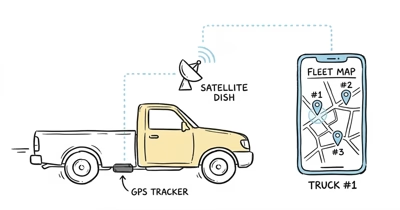
Tools are a frequent theft target on active job sites. A 2024 NICB report attributed roughly $1 billion in annual losses to construction tool and equipment theft across the US, and most stolen items never make it back to the original owner. This guide covers four current trackers by crew type, mounting location, and the cellular-versus-Bluetooth math.
- Best overall for mixed crews: Tile Pro 2024 at $34.99 with 500ft range, a 110dB ring and IP68 water resistance
- Best for iPhone-based crews: AirTag 2 at $29 with UWB Precision Finding and the 1B+ device Find My network
- Best for Milwaukee inventory: ONE-KEY 48-21-2301 with 300ft location updates, a 50ft ring range and a built-in 3-year battery; Milwaukee publishes no price
- Best for trailers and large equipment: Tracki Pro at $28.99 plus $19.95/month for 1-minute updates
- Legacy coverage only: Milwaukee’s TICK manual lists IP67, IK08 and a replaceable CR2032; it’s not a current buying pick
At a Glance: Construction Tool Trackers Compared
The table below summarizes the four current picks covered in detail later. Prices come from current US manufacturer pages; Milwaukee does not publish a retail price for 48-21-2301, while Tracki Pro requires a cellular plan.
| Tracker | Hardware | Subscription | Network | Best for |
|---|---|---|---|---|
| Tile Pro 2024 | $34.99 | None (Premium optional) | Bluetooth + Life360 | Mixed iOS/Android crews, loud ring |
| AirTag 2 | $29 | None | Apple Find My (UWB) | iPhone-based crews and solo tradespeople |
| Milwaukee ONE-KEY 48-21-2301 | Not published | None | Bluetooth + ONE-KEY | Milwaukee inventory workflows |
| Tracki Pro | $28.99 | $19.95/mo | 4G LTE GPS | Trailers, generators, large equipment |
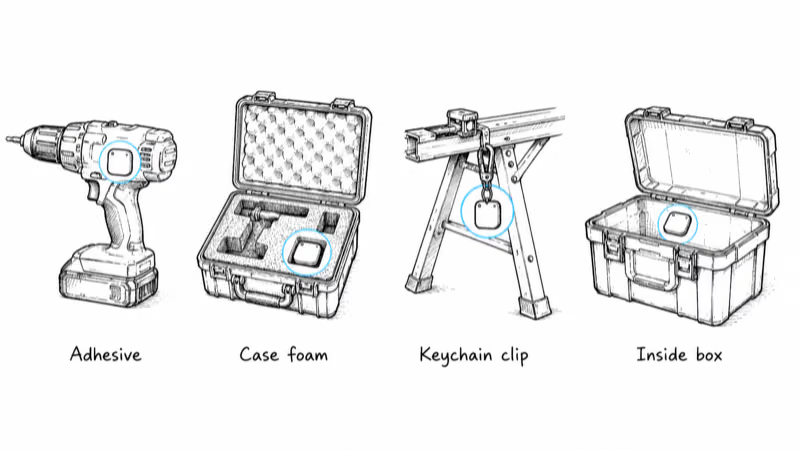
No professional install needed. Bluetooth units use VHB, screws, or a hidden cavity.
How Do You Choose a Tracker for Tools and Job-Site Equipment?
Start with what you actually lose: hand tools, power tools, or vehicles.
Small hand tools and instruments. Impact drivers, multimeters, laser levels. These walk off in pockets and tool belts, and Bluetooth proximity in the truck or job-site office is enough to recover them.
Mid-size power tools. Table saws, miter saws, compressors, generators worth $500-$2,000. These are the bulk of tool theft because they’re easy to wheel out yet expensive to replace. A Bluetooth tracker on the tool chest plus an AirTag 2 or Tile Pro inside the saw stand handles this tier well, especially when the saw stays at the same site for multi-week framing jobs. Choose your tracker based on whose phone is closest to the saw most of the workday.
Trailers, large equipment, vehicles. A $20,000 work truck or a $3,000 enclosed trailer with $40K of tools inside is the catastrophic loss event. A Bluetooth tracker doesn’t help here because the thief drives 5 miles away before anyone notices. Tracki Pro’s 4G LTE live tracking is the only realistic answer.
According to the FBI’s 2024 Uniform Crime Report on construction theft, roughly 78% of stolen tools and equipment that get recovered are found within the first 24 hours, and most of those involve some form of tracking technology. That ratio collapses dramatically after 48 hours when the gear hits resale channels.
The second decision is your team’s phone platform, which constrains which Bluetooth network is actually dense at your job sites. A pure iPhone crew gets best results from AirTag 2 on the Find My network with its 1B+ devices. A mixed crew can use Tile Pro 2024 across iOS and Android. Milwaukee fleets should compare the current ONE-KEY Bluetooth Tracking Tag, which keeps inventory data in the same app.
The Best Construction Tool Trackers in 2026
Our Milwaukee TICK review now treats that older tag as legacy coverage; this roundup ranks current products by crew.
Tile Pro 2024: Best Overall for Mixed Crews
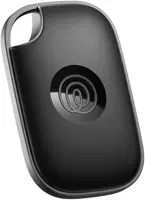
Tile Pro 2024 is the best all-around Bluetooth pick for crews that mix iOS and Android. Life360’s 2024 model table lists 500ft range, a 110dB ring, a replaceable one-year battery and IP68 water resistance. Life360 launched it at $34.99, giving this ranking a current manufacturer price instead of a third-party estimate.
§ Review summary
Tile Pro (2024)
≡ Specs
- Network
- Bluetooth + Life360
- Range
- Up to 500 ft
- Battery
- CR2032; one year, replaceable
- Ring
- 110 dB
- Water rating
- IP68
- 3-year planning
- $34.99 hardware + replacement cells
✓ Pros
- +500ft Bluetooth range is the longest in this guide
- +110dB ring helps locate a tag inside a chest or van
- +Works with both iOS and Android through Life360
- +IP68 water resistance and a replaceable CR2032 battery
- +No subscription is required for core finding features
✗ Cons
- −Crowd recovery depends on nearby Life360 or Tile users
- −No tool inventory or crew-assignment workflow
- −Battery replacement is due about once a year
- −Mount it inside a case or chest to limit impact exposure
§ Buy if
- ·Your crew mixes iOS and Android phones
- ·A loud ring matters inside tool chests and vans
- ·Bluetooth coverage is enough for tools that stay with the crew
- ·You want a published price without a required monthly fee
Tile Pro wins this broad crew profile because it works across both phone platforms. The official 500ft and 110dB figures also give it more local-finding margin than the older 100ft TICK. Crowd recovery still depends on a nearby Life360 or Tile user, so it does not replace cellular GPS for trailers.
The biggest caveat is mounting. Tile Pro has a built-in keyring hole, but a hidden mount inside a tool chest or case gives it better protection than an exposed attachment on a saw stand.
AirTag 2: Best for iPhone-Based Crews
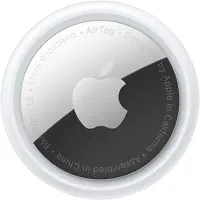
AirTag 2 is the right pick for solo tradesmen and crews where everyone runs iPhones. The Find My network covers over a billion Apple devices, so a stolen tool that ends up in any public area near an iPhone usually surfaces within hours. Our AirTag vs Milwaukee TICK comparison breaks down the network-coverage advantage in detail.
§ Review summary
Apple AirTag 2
≡ Specs
- Network
- Apple Find My (1B+ devices)
- Range
- UWB Precision Finding 5 ft
- Battery
- CR2032 user-replaceable, ~12 months
- Water rating
- IP67
- Weight
- 11g
- 3-year cost
- $32 (with battery swaps)
✓ Pros
- +Apple Find My network with 1B+ devices for crowdsourced location
- +UWB Precision Finding gives close-range directional guidance
- +User-replaceable CR2032 battery; about $1 to swap every 12 months
- +IP67 waterproof, survives rain and the occasional jobsite spill
- +Privacy-by-default architecture, no subscription
✗ Cons
- −iPhone-only ecosystem (Android crews can detect but not own)
- −No native ruggedized case; needs a 3M-mounted holder for tool use
- −Network density drops in rural job sites with few iPhones around
§ Buy if
- ·Everyone on your crew runs iPhones
- ·You want crowdsourced recovery range, not just Bluetooth proximity
- ·User-replaceable battery is a feature, not a chore
- ·You'll pair AirTag 2 with a holder rated for jobsite mounting
Inside a foam-lined Milwaukee Packout case with a magnet-friendly holder mounted to the lid, AirTag 2’s UWB Precision Finding can guide you back to the tag at close range. The Find My crowdsourced network performs best in urban job sites; on a remote site with few iPhones around, updates come far less often.
Apple’s Find My network documentation states that location updates rely on the density of nearby Apple devices, which matters when crews work in remote areas.
Milwaukee ONE-KEY 48-21-2301: Best for Milwaukee Fleets
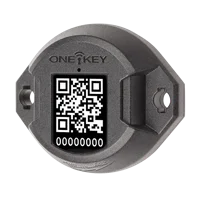
Milwaukee fleets should use the current ONE-KEY Bluetooth Tracking Tag, part 48-21-2301. Milwaukee’s product page states that it reports location within 300ft of a phone running ONE-KEY, can ring within 50ft, uses a built-in 3-year battery and carries no subscription fee. The page does not publish a price, so this guide does not assign one.
§ Review summary
Milwaukee ONE-KEY Bluetooth Tracking Tag
≡ Specs
- Network
- Bluetooth + Milwaukee ONE-KEY
- Location updates
- Within 300 ft stated
- Ring
- Within 50 ft stated
- Battery
- Built-in; three years stated
- Durability
- Weather, dust and impact resistant
- Official price
- Not published
✓ Pros
- +Location updates within 300ft of a ONE-KEY phone
- +Built-in speaker can ring the tag within 50ft
- +Built-in battery is rated for three years
- +Glue, screw, rivet and zip-tie mounting options
- +No subscription fee for the ONE-KEY workflow
✗ Cons
- −Milwaukee does not publish a retail price on the product page
- −No GPS or cellular connection for independent updates
- −Recovery depends on nearby devices running ONE-KEY
- −Built-in battery is not user-replaceable
§ Buy if
- ·Your crew already manages inventory in ONE-KEY
- ·A speaker and multiple permanent mounts matter on site
- ·Bluetooth last-seen tracking is enough for individual tools
- ·You can get a current quote before planning a fleet rollout
Milwaukee’s own ONE-KEY material calls 48-21-2301 the successor to the TICK. That makes the TICK a legacy reference, not a current buying recommendation.
The distinction also fixes a safety-relevant spec error. Milwaukee’s TICK operator manual lists IP67 ingress protection and IK08 impact protection, not IP68. It also lists a replaceable CR2032 battery rated for one year. Existing TICKs can remain in service, but new buyers should price the current 48-21-2301 through Milwaukee’s Where To Buy path.
Tracki Pro: Best for Trailers and Large Equipment
Tracki Pro is the cellular-GPS layer for the things you can’t replace with a same-day Amazon order: enclosed trailers, generators, work trucks, tool chests over $5,000 in contents, and any GPS tracker for power tools scenario where the kit leaves the yard. Tracki currently lists the hardware at $28.99, and its official help page lists the 1-minute monthly plan at $19.95.
§ Review summary
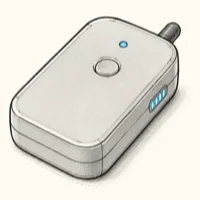
Tracki Pro 4G GPS Tracker
≡ Specs
- Network
- 4G LTE worldwide
- Subscription
- $19.95/mo for 1-minute updates
- Battery
- 10,000 mAh up to 1 year power-save
- Water claim
- Waterproof stated; no IP code published
- Cellular
- 4G with 3G/2G fallback
- 3-year cost
- $747.19 at current monthly pricing
✓ Pros
- +4G LTE live tracking, no phone-in-range requirement
- +10,000 mAh battery, up to 1 year in power-save mode
- +Manufacturer describes the enclosure as waterproof
- +4G connectivity includes 3G and 2G fallback
- +Cellular fallback is the only reliable option when thieves drive 5+ miles
✗ Cons
- −$19.95 monthly plan is required for 1-minute updates
- −Overkill for individual hand tools (use Bluetooth for those)
- −60-second updates on base plan; live mode drains battery faster
§ Buy if
- ·You own a trailer or work truck worth $10K+ in tools
- ·Bluetooth proximity recovery isn't enough for theft from active job site
- ·You're willing to pay $19.95/month for 1-minute cellular updates
- ·You'll mount it inside the trailer hitch box or tool chest cavity
On the $19.95 plan, Tracki Pro can report every 60 seconds when cellular service is available. Thirty-six months cost $718.20, plus $28.99 hardware.
Where Should You Mount a Tracker on Power Tools?
Mounting location decides whether the tracker survives long enough to recover the tool. Visible mounts get stripped first; hidden mounts keep reporting.
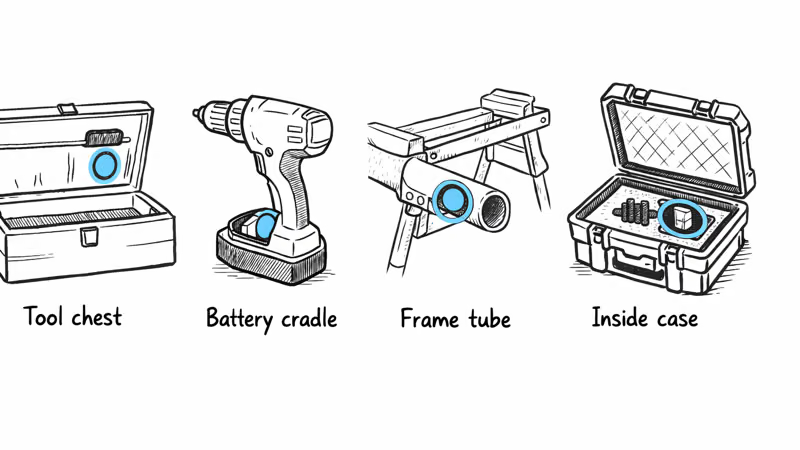
Inside the tool chest. This mount keeps the tag hidden and shields it from direct impact. A ONE-KEY 48-21-2301 glued or screwed inside the lid follows every tool stored in the chest and reports when a nearby phone running ONE-KEY comes back within range.
Inside drill or impact battery cradles. Some power tools have empty cavity space near the battery latch. AirTag 2 in a thin holder fits inside DeWalt 20V Max and Milwaukee M18 grip cavities.
Saw stand frame tubes. Miter saw stands and table saw frames are built from hollow square steel tubing capped at both ends. Drop a Tile Pro inside the tube, replace the cap, and the tracker stays invisible from outside while the steel weakens some of the signal. Leave one cap removable so you can swap the CR2032 without cutting the frame open.
Trailer hitch box. The lockable hitch tongue box is the right spot for a Tracki Pro on enclosed trailers. Steel-walled but cellular signal still gets through the gaps.
The OSHA tool inventory recommendation for construction sites recommends documented tool tracking as part of theft-prevention programs. Insurance carriers like Progressive Commercial and Hartford have programs that recommend trackers as a discount-qualifying upgrade.
Bluetooth vs Cellular Tracker Networks for Job Sites
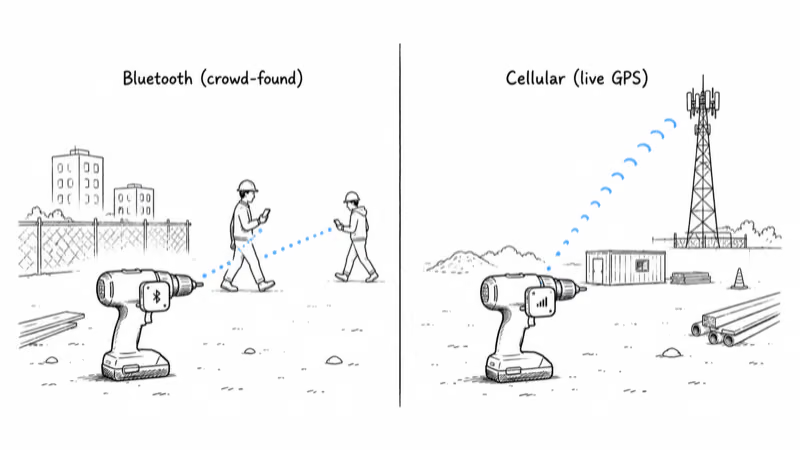
The split is sharper than for personal trackers. For tools, the question is whether you’ll be in range when something goes missing.
Bluetooth wins for tools that travel with the crew. A tool that goes home in the truck every night is usually near someone’s phone. Tile Pro 2024, AirTag 2 and ONE-KEY 48-21-2301 all cover this case without a required monthly fee, though crowd updates still depend on nearby participating devices.
Cellular wins for unattended assets. Tracki Pro keeps reporting after a trailer leaves Bluetooth range, provided cellular and satellite signals are available.
The hybrid play is the right move for most contractors. Put no-fee Bluetooth tags on individual tools and one cellular GPS unit on the trailer or truck. Tracki’s current 1-minute monthly plan is $19.95. That layered setup covers both local finding inside the chest and remote location updates after the trailer leaves Bluetooth range.
Cost Over 3 Years
The total cost of ownership depends on how many trackers you buy and which categories. The math below assumes a small framing crew with one trailer and 10 tracked tools.
| Setup | Hardware | Subscription | 3-year total |
|---|---|---|---|
| 10x Tile Pro 2024 | $349.90 (10 × $34.99) | None | At least $349.90; replacement CR2032 cells extra |
| 10x AirTag 2 | $256 (2 four-packs + 2 singles) | None | At least $256; replacement cells and cases extra |
| 10x ONE-KEY 48-21-2301 | Milwaukee quote required | None | Not calculable from a published Milwaukee price |
| 1x Tracki Pro on trailer | $28.99 | $718.20 (36 × $19.95) | $747.19 |
| Hybrid: 10 Tile Pro + 1 Tracki Pro | $378.89 | $718.20 | At least $1,097.09; Tile batteries extra |
These totals use current manufacturer figures: Life360’s $34.99 Tile Pro launch price, Apple’s $29 single and $99 four-pack, Tracki’s $28.99 hardware page and its $19.95 monthly plan. Milwaukee publishes no 48-21-2301 price, so a ten-tag ONE-KEY total needs an authorized-dealer quote. The Hartford’s contractors-equipment theft guidance recommends tracking as one layer in a documented theft-prevention program.
The Three Construction Tracker Buyer Profiles
After four trackers, the decision maps to three profiles covering most crews. Profile one is the Milwaukee-shop crew: ONE-KEY 48-21-2301 on selected tools and chests, with inventory in the same app. Profile two is the iPhone-based crew: AirTag 2 on individual tools, plus a Tracki Pro on the trailer if they have one. Profile three is the mixed-platform crew: Tile Pro 2024 across tools because it bridges iOS and Android, plus the same Tracki Pro layer for the trailer.
Some crews layer all three current Bluetooth options: ONE-KEY on Milwaukee inventory, AirTag inside Packout cases and Tile Pro on mixed-platform tools.
Our anti-theft GPS tracker guide for cars covers the work-truck side of this question, and the GPS tracker for trailers roundup goes deeper on enclosed-trailer scenarios with similar logic.
Crews that stage freight or store gear inside steel boxes between hauls should also read our container-tracking buyer’s guide, which extends the same cellular reasoning to yard assets that leave Bluetooth range overnight, sit unattended for days at a time, and travel between sites on flatbeds where no crew phone is ever nearby to log a Bluetooth ping.
Bottom Line
The right construction tool tracker is the one that matches your crew’s phones and the asset’s value. Tile Pro 2024 is the best overall pick for mixed crews, AirTag 2 fits iPhone crews, and ONE-KEY 48-21-2301 fits Milwaukee inventory workflows. Add Tracki Pro when a trailer or large asset needs its own cellular connection. Treat the older TICK as legacy coverage, not a current purchase.
FAQ
Will a Bluetooth tracker survive job-site abuse?
Check the exact model before exposing a tracker to water or impact. Milwaukee’s legacy TICK manual lists IP67 ingress protection and IK08 impact protection, not IP68. Tile Pro 2024 is IP68, AirTag 2 is IP67, and Milwaukee’s current 48-21-2301 page describes weather, dust and impact resistance without showing an IP code.
Can I track tools off-grid where there’s no cellular service?
Only when a participating phone comes within range of the Bluetooth tag. AirTag 2, Tile Pro 2024 and ONE-KEY 48-21-2301 all depend on nearby network devices to relay a location. Tracki Pro can report through cellular service without another phone beside the asset, but it can’t update where its carrier has no coverage.
How long do tracker batteries last on construction tools?
Tile Pro 2024 and Milwaukee’s legacy TICK use replaceable CR2032 cells rated for about one year. AirTag 2 also uses a replaceable CR2032 rated for more than a year. The current ONE-KEY 48-21-2301 has a built-in 3-year battery, while Tracki rates the 10,000mAh Tracki Pro for 2 to 12 months per charge depending on mode and cellular conditions.
Will a tracker on my tools survive a Bobcat or skid steer running over it?
No tracker in this guide carries a crush-proof claim. The legacy TICK manual lists IK08 impact protection, but that does not mean it can survive a skid steer. Mount a current tag inside a tool chest, case or hitch box so the enclosure takes the load instead of the tracker.
Do contractors get insurance discounts for tracked tools?
Many commercial insurers offer 5-15% discounts on tool-and-equipment coverage when contractors install approved tracking systems. Progressive Commercial, Hartford, Liberty Mutual, and Hiscox all have documented discount programs. The discount math is simple: on a $5,000/year tool-coverage policy, 10% off pays for the entire tracker fleet in the first year. Call your insurer with the tracker model before you buy.
What’s the difference between Milwaukee One-Key and a generic Bluetooth tracker?
Milwaukee One-Key adds an inventory layer on top of Bluetooth tracking. The app logs which tools belong to which crew member, tracks last-known location across the whole Milwaukee ecosystem, and integrates with Milwaukee’s tool authorization (you can disable a stolen M18 battery). Generic Bluetooth trackers only report location when a paired phone is nearby. For crews already on Milwaukee tools, One-Key is the multiplier; for non-Milwaukee crews, a generic tracker like Tile Pro is the same product without the ecosystem.
Is it legal to track tools that I lend to crew members?
Yes. The tracker is on property you own, not on another person’s vehicle. The legal issue with GPS trackers applies when the tracker is installed on someone else’s vehicle without their consent. Tracking tools you’ve handed to a crew member or subcontractor for a project is unambiguously legal and doesn’t require disclosure. If you lease equipment to other contractors, the lease agreement should disclose the tracking, which is standard practice.