The TKSTAR TK905B is the best tracker for a shipping container: its 10000mAh battery is rated for up to 80 days of standby, and magnets clamp it to the steel near a door or vent so the signal escapes.
A shipping container is a worst-case enclosure for a tracker: a sealed steel box that sits idle for weeks, then crosses borders where it changes carriers and cell networks. U.S. Customs and Border Protection reported that 11 million maritime containers arrive at U.S. seaports each year, per its cargo security overview, and a stolen one is easy to lose in that volume.
That combination rules out most vehicle and equipment trackers. The five units below handle it best.
For a single parcel moving through USPS, UPS, or FedEx rather than freight, the calculus flips — no steel walls, dense iPhone coverage — and a $29 tag inside the box is usually enough; see our guide to putting an AirTag inside a parcel.
- Best overall: TKSTAR TK905B with a 10000mAh battery rated for up to 80 days of standby and five magnets that mount it to steel near a door
- Best global 4G with geofence: Tracki Pro at $36, with a 10,000 mAh battery rated up to a year in power-save and a worldwide SIM for cross-border transit
- Best motion-alarm anti-theft: Monimoto 9 auto-arms by key fob, runs about 12 months per battery, and uses LTE-M plus eSIM for weak-signal ports
- Best magnetic steel mount: LandAirSea 54 at $30 sticks to a container wall in under 30 seconds, ideal as a hidden second unit
- A Bluetooth tag is useless on a sealed container, because it has no cellular signal and the steel walls block the short-range relay it depends on
Will GPS Work Inside a Steel Container?
A bare GPS receiver buried deep inside a closed steel container will struggle, and the reason is physics. The reference on Faraday shielding states that an external electrical field will cause the electric charges within the cage’s conducting material to be distributed in a way that cancels out the field’s effect inside the cage. A corrugated container is exactly that: its conductive walls reflect and attenuate the faint satellite signal a tracker needs to fix its position.
A tracker laid flat on the container floor quickly loses its fix, while the same unit mounted high near a ventilation grille can hold a fix and push a location every cycle — the placement difference that decides whether a container tracker works at all.
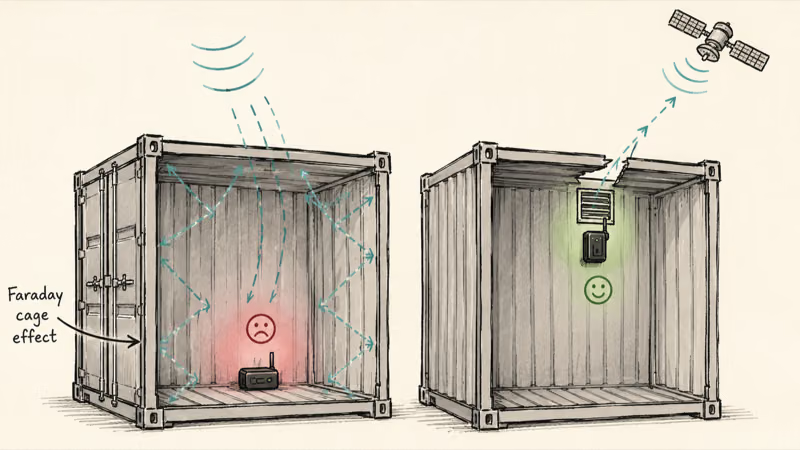
The fix is placement plus the right hardware. The technical reference on GPS tracking units confirms that the location data is transmitted to an Internet-connected device or a central server using an embedded cellular modem, so both the GPS reception and the cellular uplink have to escape the metal.
Mounting near a door seam, a vent, or the roof gap gives both signals a path out. That is why the magnetic, near-the-edge picks below beat a unit dropped in the middle of the load.
At a Glance: The 5 Container Trackers Compared
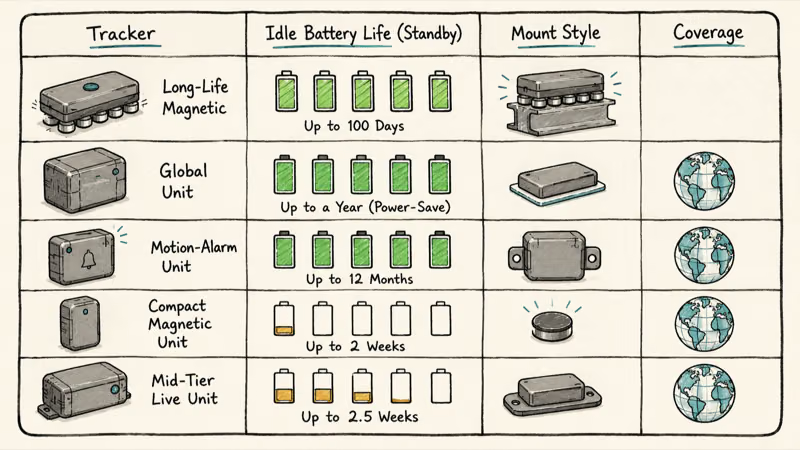
The table summarizes the five picks. Idle battery is the standby figure that matters most for a container that can sit sealed for weeks between port calls.
| Tracker | Idle battery | Mount style | Coverage | Best for |
|---|---|---|---|---|
| TKSTAR TK905B | up to 80-day standby | 5 magnets (steel) | BYO 4G micro-SIM | Long sealed standby |
| Tracki Pro | Up to 1 year power-save | Hidden or pouch | Worldwide 4G SIM | Cross-border transit |
| Monimoto 9 | ~12 months | Hidden, key-fob arm | LTE-M + global eSIM | Motion-alarm alerts |
| LandAirSea 54 | 2 weeks | Built-in magnet (steel) | 4G LTE | Magnetic backup unit |
| SpyTec GL300 | ~2.5 weeks | Pouch or case | 4G LTE | Reliable live mid-tier |
None of these need a professional install. They’re grab-and-mount portables, and the magnetic units simply clamp to the container’s own steel.
TKSTAR TK905B: Best Overall Container Tracker
The TKSTAR TK905B is the default pick because it answers the container’s hardest problem: an asset that sits sealed and untouched for weeks. The 10000mAh battery is rated for up to 80 days of standby, so it suits container routes where the box may sit idle between scans. Five strong magnets clamp it to the steel wall without tools, and the bring-your-own micro-SIM lets you pick a carrier with the coverage your route needs.

Mounted high on the inside wall beside a vent, the TK905B’s up-to-80-day standby covers a long sealed leg with margin. Mounted near the edge rather than deep in the load, it keeps a fix a floor-level unit would lose, and a 60-second interval streams live updates once the container moves. Because it uses a bring-your-own micro-SIM rather than a bundled platform plan, you can match the carrier to whatever coverage the box’s route actually needs.
The trade-off is that it relies on GPS plus AGPS rather than the fastest live mode, and the IP65 rating handles rain, not submersion. That long idle life still suits a sealed box, the same logic behind our farm equipment GPS guide.
AGPS earns its keep here. The Assisted GNSS reference notes it cuts the time-to-first-fix by feeding the receiver orbital data, so each scheduled ping reacquires a fix fast after a sealed container blocks the sky.
Tracki Pro: Best Global 4G With Geofencing
The Tracki Pro is the pick when a container crosses borders and you want live 4G updates plus a geofence alert the instant the box leaves a yard or port. Its 10,000 mAh battery is rated up to a year in power-save mode, and the worldwide SIM hands off between networks across countries. That handoff is the exact failure point where a single-region tracker goes dark. Our Tracki Pro review covers the bench methodology.

Set a geofence around a staging yard and the alert reaches the phone within seconds of the box crossing the line, with live mode reporting at 60-second intervals afterward. The IP67 rating also handles a direct hose-down, useful for a unit exposed at a container door seam.
The catch is the subscription floor, higher than the SIM-only TKSTAR, and live mode shortens the year-long power-save figure to a few weeks of continuous reporting. For a box that sits in power-save until it moves, that drain rarely matters.
Monimoto 9: Best Motion-Alarm Anti-Theft
The Monimoto 9 takes a different approach: it auto-arms when your key fob walks away and fires a phone alert the moment the container is touched or moved. For a box parked in a yard, that motion-triggered warning tells you about a break-in attempt before the freight is gone. It runs about 12 months per battery and pairs LTE-M with a global eSIM, the combination that latches onto a weak signal at a congested port.
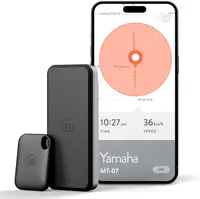
With the fob away, a bump to the mounting wall triggers the Monimoto 9’s wake-and-locate alert, and it then begins tracking. Its IP68 fully waterproof rating is the toughest here, which matters for a tracker riding outdoors on a container deck.
The trade-off is that it’s built around the alarm-then-track model rather than constant live mapping, and it carries a monthly subscription. For an owner who wants early warning on a parked container more than minute-by-minute mapping, that design is the right one.
LandAirSea 54: Best Magnetic Steel Mount
The LandAirSea 54 is the right second unit when you want a tracker a thief won’t find after pulling the first one. The built-in magnet sticks to the container’s steel wall without tools, so you can clamp it inside a door channel or behind a corner casting. At $30 it’s the cheapest entry here, and it makes a natural hidden backup to a deep-mounted primary. Our LandAirSea 54 review covers the magnetic mounting trade-offs.
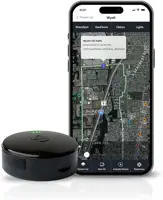
Mounted against an interior steel rib, a LandAirSea 54 holds position through yard moves and road vibration without shifting. It pairs naturally with the TKSTAR as a deep-hidden primary plus a magnetic decoy-buster near the doors.
The catch is the 2-week battery, so it needs a recharge twice a month and suits a container in active rotation rather than one sealed for a season. The magnet grips steel only, which the weathering steel of a standard ISO intermodal container provides everywhere.
SpyTec GL300: Best Reliable Mid-Tier
The SpyTec GL300 is the pick when you want a proven live 4G tracker with tight 5-second update intervals and a managed app rather than a bring-your-own-SIM setup. It’s compact enough to tuck into a door pouch or a corner cavity, and its US carrier reliability makes it a safe domestic-route choice for a container moving by rail or truck. Our SpyTec GL300 review covers the app and alert setup.

On a tight 5-second interval, the GL300 prioritizes frequent position updates after short signal gaps. Geofence and speed alerts still depend on cellular coverage and the interval you choose.
The downside is the 2.5-week battery and a monthly subscription, so it suits a container in transit rather than long sealed storage. For a domestic shipper who values a polished app and dense, frequent reporting over the longest possible standby, it’s the dependable middle option here, sitting between the months-long TKSTAR and the alarm-first Monimoto, much like the on-road pick our best GPS tracker for a truck roundup favors for vehicles in daily use.
Where Do You Mount a Tracker on a Container?
Placement decides whether a container tracker works at all, because the wrong spot turns the steel box into a signal trap. Get the unit close to a gap in the metal, yet hidden from anyone opening the doors.
The strongest spots are high on an interior wall next to a ventilation grille, just inside the top of a door frame, or in the roof gap behind the corrugation. Those locations sit near a break in the Faraday shell, so both the GPS reception and the cellular uplink have a path out. A magnetic unit like the TKSTAR or LandAirSea clamps directly to the steel there in seconds.
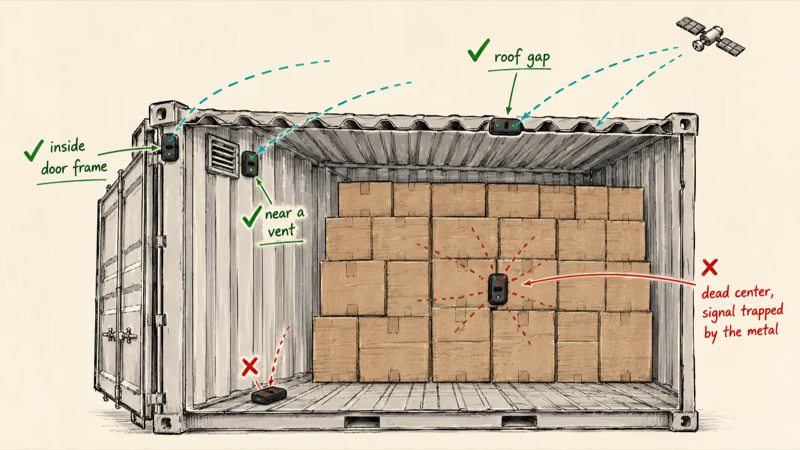
Avoid the container floor and the dead center of the load, where the surrounding metal and cargo block the signal hardest. If the freight itself is metallic, mount even higher and closer to a vent. For a container that also rides on a chassis, the placement logic overlaps with a trailer mount, which our best GPS tracker for a trailer guide details, and the broader options live on our GPS tracker hub.
How Long Should the Battery Last on a Sealed Container?
Standby battery is the spec that separates a recoverable container from a dead tracker, because a sealed box can sit untouched between port calls for weeks. A tracker reporting once or twice a day during that window needs deep standby, not the few days a daily-driver unit offers.
The TKSTAR TK905B is rated for up to 80 days at a low ping rate, while the Tracki Pro and Monimoto 9 stretch to about a year in their low-power modes.
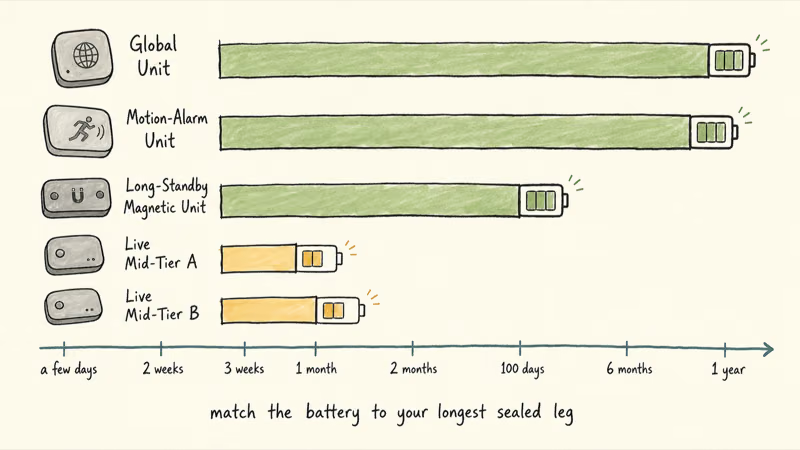
Match the figure to your route. A single ocean leg can run a month or more before the box is opened, so the long-standby TKSTAR and Tracki carry a comfortable margin. The 2-week and 2.5-week units fit active transit where you recharge on a schedule, and they shine as live companions once a container is moving rather than sitting.
Bottom Line
For most owners, the TKSTAR TK905B is the best choice for a shipping container: its rated up-to-80-day standby covers a long sealed leg, and its magnets mount it to the steel near a door or vent where the signal can still escape. Add a Tracki Pro when the container crosses borders and you want global 4G with a geofence, or a Monimoto 9 when motion alerts on a parked box matter most.
Whatever you pick, mount it high and near a gap in the metal, and confirm the standby figure clears your longest unopened leg.
FAQ
Can a GPS tracker work inside a closed shipping container?
Yes, but placement matters. A steel container acts like a Faraday cage and blocks much of the satellite and cellular signal, so a tracker dropped on the floor or in the center of the load often loses its fix. Mounted high on an interior wall next to a vent, a door seam, or the roof gap, a cellular tracker keeps a usable fix and reports normally.
Which tracker lasts longest on a container that sits for weeks?
The TKSTAR TK905B leads on standby among BYO-SIM units, with a 10000mAh battery rated for up to 80 days at a low ping rate. The Tracki Pro and Monimoto 9 reach roughly a year in their low-power modes. Those long-standby units are the safe choice for an ocean leg or storage where the box stays sealed for a month or more.
How do you mount a GPS tracker on a steel container?
Use a magnetic unit and clamp it to the container’s own steel, high on an interior wall, inside a door channel, or behind a corner casting near a vent. The TKSTAR TK905B and LandAirSea 54 both have built-in magnets for tool-free steel mounting. Keep it hidden from anyone opening the doors and close to a gap in the metal.
Will a tracker keep working when a container crosses borders?
Only if it has multi-network or global cellular coverage. A single-region tracker can go dark when a container changes carriers between countries. The Tracki Pro uses a worldwide SIM and the Monimoto 9 uses a global eSIM, so both keep reporting across international routes where a domestic-only unit would lose service.
Can you use an AirTag to track a shipping container?
Not reliably. An AirTag has no cellular signal and updates only when a nearby iPhone relays its position, and a sealed steel container blocks that short-range Bluetooth link. On a port, a ship, or a remote yard with few passing phones, an AirTag goes dark. A cellular GPS tracker is the correct tool for container tracking.
Do shipping container trackers need a subscription?
It depends on the model. The TKSTAR TK905B uses a bring-your-own micro-SIM, so you pay only for a cheap data plan with no separate platform fee. The Tracki Pro, Monimoto 9, LandAirSea 54, and SpyTec GL300 each run on their own monthly subscription that covers the app and the cellular service.
Is it legal to track a container you own?
Tracking a container and cargo you own or are responsible for is generally legal. The legal gray areas involve tracking property or people without consent, which does not apply to your own freight. If a container is leased or handled by a third party, confirm the arrangement allows a tracker, then mount the device on your own goods.