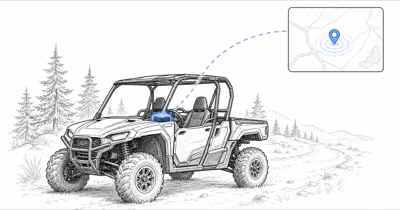
The Trak-4 GPS Tracker ($50 + $8/mo) is the best pick for construction equipment: its 18-month standby rating suits excavators and generators that sit idle for months, and geofence alerts fire when a machine leaves the jobsite.
Heavy equipment is a soft target. A skid steer or generator sits in the open on an unmanned site, carries no VIN a pawn shop checks, and moves fast on the resale market. According to ConstructConnect, the value of construction equipment stolen each year is between $300 million to $1 billion, and most of that gear is never seen again.
The five trackers below are chosen for the realities of excavators, skid steers, light towers, and trailer-mounted gear that sit idle on open sites and in storage yards for weeks at a time.
- Best overall: Trak-4 at $50 plus $8/month, with an 18-month standby battery that keeps reporting on a machine parked for an entire off-season
- Best magnetic mount: LandAirSea 54 at $30 plus $15/month, clamps to a steel frame in under 30 seconds and shrugs off rain
- Best for live recovery: SpyTec GL300 free with a plan at $34.95/month, 5-second update intervals for following a stolen loader in real time
- Best budget live tracker: Optimus 3.0 at $27 plus $19.95/month, the cheapest cellular entry here with an SOS button
- Best for hand tools and attachments: Milwaukee TICK at $20, a 1-year IP68 Bluetooth tag for buckets, breakers, and toolboxes
At a Glance: Construction Equipment GPS Trackers Compared
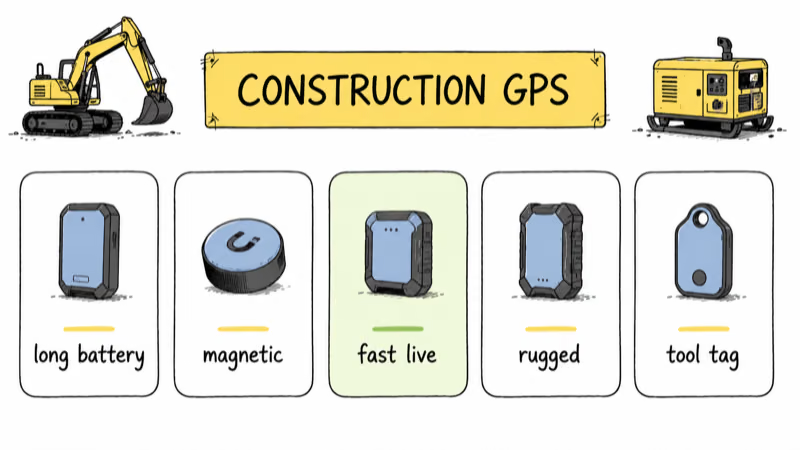
Every cellular pick below needs an active data plan to report location, and every cellular pick carries its own battery, which is the single most important spec for equipment that runs intermittently.
ConstructConnect reported that less than 25% of stolen construction equipment is recovered each year. The National Equipment Register states that much of that gap comes from machines carrying no standardized VIN and no real-time location signal, unlike a passenger vehicle.
The National Insurance Crime Bureau tracks the same heavy-equipment theft trend nationwide. The decisive factor for recovery is simple: only a tracker that keeps reporting on a switched-off machine can produce a same-day location, since stolen gear is almost always powered down. Pricing reflects current US listings.
| Tracker | Hardware | Subscription | Battery | Mount | Best for |
|---|---|---|---|---|---|
| Trak-4 | $50 | From $8/mo | 18 months standby | Enclosed / hidden | Idle machines, off-season storage |
| LandAirSea 54 | $30 | From $15/mo | 2 weeks | Magnetic | Fast removable backup |
| SpyTec GL300 | Free w/ plan | From $34.95/mo | 2.5 weeks | Case-dependent | Live theft recovery |
| Optimus 3.0 | $27 | From $19.95/mo | 1 month | Magnetic case | Budget live tracking |
| Milwaukee TICK | $20 | None | 1 year | Adhesive (Bluetooth) | Tools and attachments |
A magnetic cellular tracker covers the rolling stock; a Bluetooth tag covers the small gear. Most contractors run both, the split we mapped in our best GPS tracker for a trailer guide.
Can You Track Heavy Equipment That Sits Idle for Months?
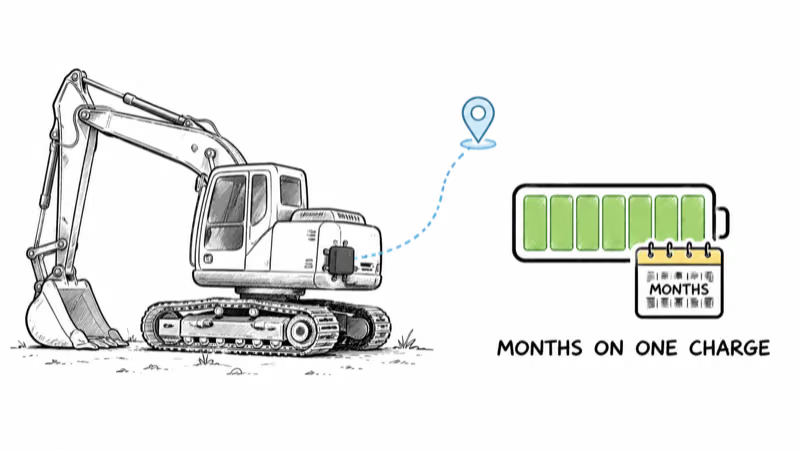
Yes, but only with a tracker that carries its own long-life battery, and this is the spec that separates equipment tracking from car tracking. A construction machine spends most of its life switched off, parked in a yard or staged on a site between phases, and that idle stretch is exactly when it gets stolen.
A tracker wired to the machine’s 12V system can run flat once the equipment sits for weeks, and a hardwired-only unit reports nothing the moment the battery drains.
The fix is a tracker with a multi-month standby battery. The Trak-4’s 18-month standby rating doesn’t depend on the machine running, so it’s a better fit for skid steers, generators, and light towers that sit cold between jobs. A self-powered unit hidden inside a control cabinet can keep its own reporting schedule through long storage stretches.
This rules out a pure OBD-style vehicle tracker for idle equipment. For recovery, you want a self-powered cellular unit, and our GPS tracker hub breaks down the self-powered-versus-hardwired math.
How Is This Different From Tracking Construction Tools?
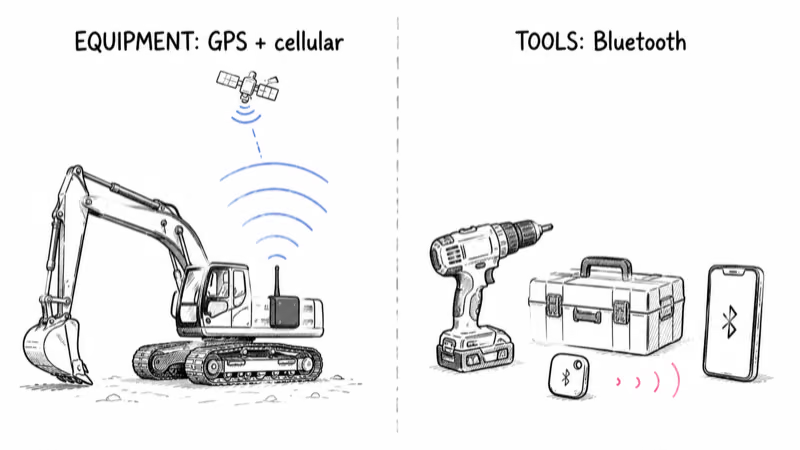
The two jobs need two different radios. Heavy equipment recovery needs cellular GPS that reports a real location anywhere with coverage; small-tool tracking usually leans on Bluetooth tags that ping when a phone passes nearby.
A $40,000 excavator justifies a $50 cellular tracker and an $8 monthly plan. A $200 rotary hammer does not, so a $20 one-time Bluetooth tag like the Milwaukee TICK makes more sense for it. As Tom’s Guide notes in its breakdown of LTE versus Bluetooth tags, a cellular unit can be found virtually anywhere with coverage, while a Bluetooth tag only reports when a phone wanders into range.
Our companion guide, the best tracker for construction tools, covers the small-Bluetooth side. This article focuses on cellular trackers that follow a stolen machine live.
The 5 Best GPS Trackers for Construction Equipment
1. Trak-4: Best Overall for Idle Equipment
The Trak-4 GPS Tracker earns the top pick because of its 18-month standby battery, the longest here by a wide margin. It reports over 4G LTE, fires geofence alerts when a machine leaves a defined jobsite boundary, and hides inside a weatherproof enclosure rather than clinging to an exposed frame. At $8 a month, it also carries the cheapest subscription on this list.
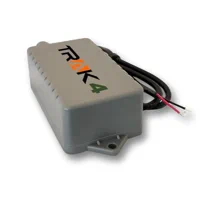
The Trak-4 earns the top pick because of the long-standby battery plus low subscription combination. A magnetic tracker is faster to fit, but its shorter battery and exposed mount make it a worse fit for long idle stretches. A Trak-4 sealed inside a control cabinet is the better match for machines that sit untouched between phases.
Its trade-off is the $50 hardware cost, the highest cellular unit here. An owner tracking a single piece of light gear they use weekly may not need 18 months of standby, and could spend less on a shorter-battery unit instead.
2. LandAirSea 54: Best Magnetic Mount
LandAirSea 54 is the pick for a fast, removable tracker that handles weather. Its built-in magnet grabs a steel frame, undercarriage, or fuel-tank cradle in under 30 seconds, the weatherproof body takes rain on an open site, and the $15/month annual plan is the cheapest live-tracking tier here. Many crews run it as a removable backup to a hidden unit.
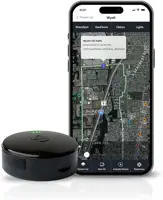
The 2-week battery is the catch. You’ll recharge it twice a month, which means pulling it off a parked or running machine on a schedule, and the magnetic mount sits exposed to anyone who crouches down to check the undercarriage.
3. SpyTec GL300: Best for Live Recovery
SpyTec GL300 is the choice when you want second-by-second tracking during an active theft. Its 5-second update interval is the fastest on this list, the SpyTec app draws the recovery route in real time, and the 2.5-week battery gives reasonable on-machine duration between charges. It’s the unit to grab if your worry is following the flatbed that just hauled your loader off a site.

Its catch is the $34.95/month subscription, the steepest tier here, and the bare unit needs a weatherproof case before it goes on outdoor equipment. That fast update rate also burns the battery quicker than a once-an-hour reporting mode.
4. Optimus 3.0: Best Budget Live Tracker
Optimus 3.0 is the cheapest way onto live cellular tracking for equipment. Its hardware runs $27, the magnetic weatherproof case clings to a steel frame, and the built-in SOS button is a small bonus for a solo operator. The up-to-1-month battery on the default reporting interval also outlasts the LandAirSea and SpyTec between charges.
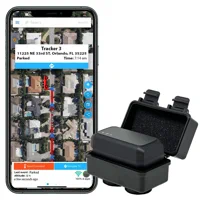
Its $19.95/month plan undercuts the mid-tier units, and the 1-month battery is a genuine step up from the two-week class. For a contractor protecting a single skid steer or light tower who doesn’t want to spend $50 on a Trak-4, this is the sensible entry point. You trade away the Trak-4’s 18-month standby and its lower monthly fee for the cheaper hardware.
5. Milwaukee TICK: Best for Tools and Attachments
Milwaukee TICK covers the gear too small to justify a cellular plan. It’s a Bluetooth tag on the Milwaukee One-Key platform, IP68-rated, with 100 ft of range, a 3M adhesive mount, and a 1-year battery.
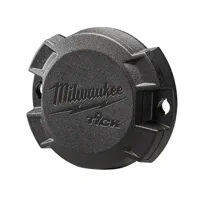
One honest limit: a Bluetooth tag isn’t a recovery tracker. It reports a location only when a One-Key phone passes within range, so it finds a misplaced attachment on a busy site far better than it follows a stolen machine across the state. Pair it with one of the cellular units above, not in place of them. Our Milwaukee TICK review digs deeper into its range and crowd-finding behavior.
What to Look For in a Construction Equipment GPS Tracker
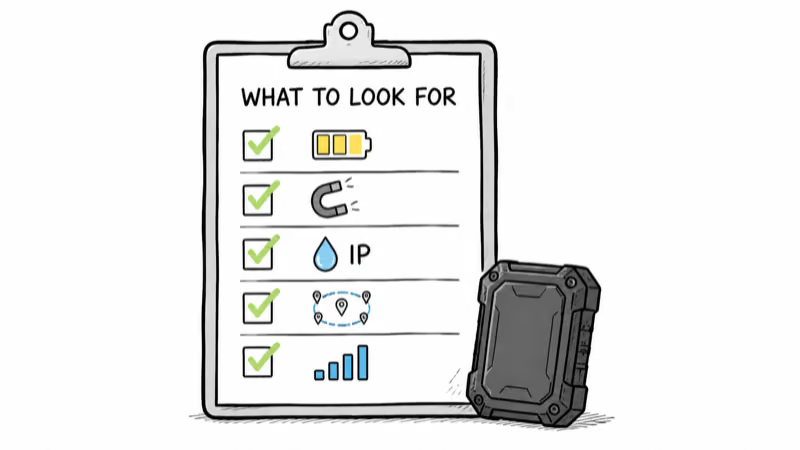
The right pick depends on how the machine is powered, where it lives, and how it gets stolen. Five specs separate a tracker that produces a same-day recovery from one that reports nothing during the theft.
Battery life on idle equipment comes first. A short-runtime tracker can go flat before anyone notices the equipment missing, so a multi-month standby unit like the Trak-4 is the better fit for off-season storage.
Mounting style is second: magnetic or hardwired. A magnetic unit clamps to the frame in seconds but sits exposed to a thief who looks underneath. A hardwired install taps the machine’s 12V system for unlimited runtime but dies once the equipment battery drains, so reserve it for gear that runs daily. A sealed unit hidden inside a control cabinet takes a thief far longer to find than either.
Weatherproofing is third. Equipment lives outdoors in rain, dust, and heat, so the tracker needs a real IP rating, not a vague “water-resistant” claim. A bare unit like the SpyTec GL300 needs a sealed enclosure first.
The no-power jobsite is fourth. A remote site or a storage yard often has weak or no Wi-Fi, so a tracker that depends on a hub or a nearby phone won’t report. A 4G LTE cellular unit works on any site with cell coverage, which is why every recovery-grade pick here is cellular, not Bluetooth.
Geofence alerts are fifth. A geofence draws a boundary around the jobsite, and the tracker texts you the instant a machine crosses it. That early warning, minutes before a flatbed reaches the highway, is what turns a tracker from a passive map dot into an active theft alarm. Every cellular unit here supports geofencing.
For a deeper look at running these specs on a self-powered, weatherproof, geofenced unit, our best GPS tracker for a generator guide covers the same approach for trailer-mounted power equipment.
Matching the Tracker to Your Equipment
Match the unit to the machine. For an excavator, loader, or generator that sits idle between phases, the Trak-4 is the clear pick: 18 months of standby and an $8 plan beat everything else for storage-heavy use. For a machine that runs most days and needs a fast, removable tracker, the LandAirSea 54’s magnetic mount and weatherproof body are the better fit.
If your priority is following a theft live, the SpyTec GL300’s 5-second updates win. For cellular tracking on the tightest budget, the Optimus 3.0 is the cheapest entry. And for the buckets, breakers, and toolboxes that walk off a site, seed Milwaukee TICK tags through the gear.
Bottom Line
The Trak-4 GPS Tracker is the best GPS tracker for construction equipment in 2026 because its 18-month standby battery and $8 monthly plan are built for machines that sit idle for months, which is exactly when equipment gets stolen. Pair a cellular recovery tracker on the rolling stock with Milwaukee TICK Bluetooth tags on the small gear, set a tight geofence around every jobsite, and a stolen machine becomes a same-day police recovery instead of an insurance claim.
FAQ
What is the best GPS tracker for heavy construction equipment?
The Trak-4 GPS Tracker is the best pick for most heavy equipment. Its 18-month standby rating suits excavators, loaders, and generators that sit idle for months, it fires geofence alerts when a machine leaves the jobsite, and at $8 per month it carries the cheapest subscription on this list. For a machine that runs daily and needs a quick removable tracker instead, the magnetic LandAirSea 54 is the better fit.
Can you track construction equipment that sits idle for months?
Yes, but only with a tracker that carries its own long-life battery. A unit hardwired to the machine’s 12V system goes flat once the equipment sits for weeks, so it reports nothing during the exact window when theft happens. A self-powered cellular tracker with a multi-month standby rating, like the Trak-4 at 18 months, is designed for machines that stay cold and untouched between jobs.
How is tracking equipment different from tracking construction tools?
Heavy equipment recovery needs cellular GPS that reports a real location anywhere with coverage, while small-tool tracking usually uses Bluetooth tags that ping only when a phone passes nearby. A $40,000 machine justifies a cellular tracker and a monthly plan; a $200 hand tool does not, so a one-time Bluetooth tag like the Milwaukee TICK makes more sense for it. Most fleets run cellular units on the machines and Bluetooth tags through the toolboxes.
Should I use a magnetic or hardwired tracker on heavy equipment?
It depends on how the machine runs. A magnetic tracker clamps to the frame in seconds and works on idle equipment because it carries its own battery, but it sits exposed and needs recharging. A hardwired install taps the 12V system for unlimited runtime but dies once the equipment battery drains, so reserve it for gear that runs daily. For a machine that stores between jobs, a self-powered unit hidden inside a sealed cabinet is the most theft-resistant choice.
Do construction equipment GPS trackers need a subscription?
The cellular ones do. Trak-4 starts at $8 per month, LandAirSea 54 at $15 on the annual plan, Optimus 3.0 at $19.95, and SpyTec GL300 at $34.95. Those fees cover the 4G LTE data the tracker uses to report its location anywhere with cell coverage. The Milwaukee TICK is the exception: it uses Bluetooth with no monthly fee, but it only locates gear when a One-Key phone passes within range, so it isn’t a recovery tracker.
How much equipment is stolen from construction sites each year?
The value of construction equipment stolen each year is between $300 million and $1 billion, according to ConstructConnect, and less than 25% of those machines are ever recovered. The National Equipment Register attributes much of that low recovery rate to machines that carry no standardized VIN and no real-time location signal. A hidden cellular tracker with geofence alerts is the single most effective step toward turning a stolen machine into a same-day recovery.
Will a GPS tracker survive being mounted on equipment outdoors?
The right ones do. The Milwaukee TICK is IP68 fully waterproof, and the LandAirSea 54 carries a weatherproof body rated for rain on an open site. A bare unit like the SpyTec GL300 needs a sealed weatherproof enclosure before it goes outdoors. Mounting location matters as much as the rating: keep the tracker away from exhaust heat that bakes a battery and away from high-vibration points that loosen adhesive or magnetic mounts over time.