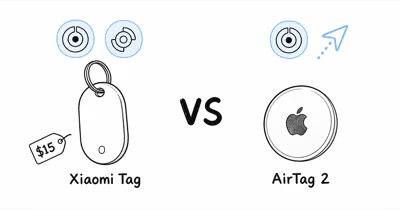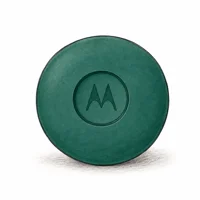
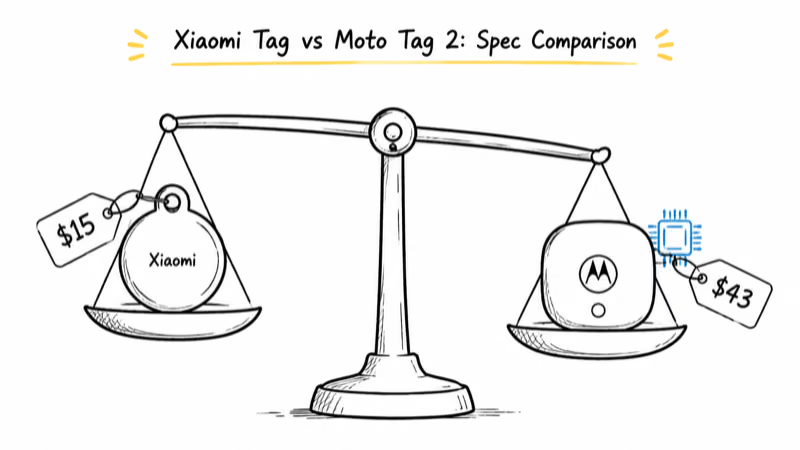
The Xiaomi Tag and Moto Tag 2 answer the same question for very different budgets. One is a $14.99 dual-network tag with no ultra-wideband radio; the other is a $29.99 puck that became the first retail tracker to ship Bluetooth 6.0 with Channel Sounding. Motorola’s current US page rates its battery for more than 600 days.
- Price gap is roughly 2x: Xiaomi Tag is $14.99 single ($49.99 for a 4-pack) versus the Moto Tag 2 at $29.99 ($69.99 for a 4-pack)
- Only the Moto Tag 2 has UWB: it adds Bluetooth 6.0 Channel Sounding for sub-meter finding, while the Xiaomi Tag uses Bluetooth LE 5.4 with no precision radio
- Xiaomi Tag is dual-network: it pairs to Apple Find My or Google Find Hub one network at a time, while the Moto Tag 2 is Find Hub only
- Battery favors the Moto Tag 2: more than 600 rated days versus the Xiaomi Tag’s roughly 12 months, both on a CR2032 coin cell
- Buying differs: the Moto Tag 2 ships on Amazon US, while the Xiaomi Tag sells through mi.com and AliExpress, not US Amazon
Xiaomi Tag vs Moto Tag 2: Spec Comparison
The spec sheet splits cleanly along one line, the radio. The Moto Tag 2 carries UWB plus Bluetooth 6.0 Channel Sounding, which the Bluetooth SIG specification frames as a centimeter-level ranging feature. The Xiaomi Tag has neither radio, so it relies on Bluetooth signal strength. Functionally, that is the difference between a direction arrow and a warmer-colder ring.
| Spec | Moto Tag 2 | Xiaomi Tag |
|---|---|---|
| Price (single) | $29.99 (U.S. launch) | $14.99 |
| Price (4-pack) | $69.99 | $49.99 |
| Network | Google Find Hub only | Find My or Find Hub (one at a time) |
| Precision radio | UWB + Bluetooth 6.0 Channel Sounding | Bluetooth LE 5.4, no UWB |
| Battery | CR2032, more than 600 days | CR2032, about 12 months |
| Water resistance | IP68 (1.5m, 30 min) | IP67 (1m, 30 min) |
| Weight | 8.5g | 10g |
| Lost mode | Find Hub + NFC | Find My / Find Hub + NFC |
| Buy channel | Amazon US | mi.com / AliExpress |
| Subscription | None | None |
Xiaomi Tag vs Moto Tag 2: Head-to-Head
⇄ Head-to-head
Moto Tag 2 vs Xiaomi Tag
- +Only Find Hub tracker with UWB, and the first to add Bluetooth 6.0 Channel Sounding for sub-meter indoor precision
- +More-than-600-day CR2032 rating on Motorola's current US page
- +IP68 water resistance survives 1.5 meters submerged for 30 minutes
- +Built-in speaker rated 77 dB at 10 cm for last-step audible finding
- +Stocked on Amazon US with a $69.99 4-pack, so it's easy to buy and replace
- +Just $14.99 single or $49.99 for a 4-pack, roughly a third of the Moto Tag 2 price
- +Works on either Apple Find My or Google Find Hub, so it fits iPhone or Android households
- +Built-in keyring loop and a metal outer ring, no extra holder needed
- +NFC lost mode lets a finder tap the tag to see your contact details
- +10g body with IP67 water resistance
- −Channel Sounding only activates on Android 16 phones with Bluetooth 6.0 hardware like the Pixel 10
- −Google Find Hub only, with no Apple Find My pairing for iPhone owners
- −At $29.99 it still costs twice the Xiaomi Tag single price
- −No dual-network flexibility if you switch between iPhone and Android
- −No UWB or Channel Sounding, so close-range finding is a Bluetooth signal ring only
- −Pairs to one network at a time, and switching means deleting and re-adding the tag
- −Not sold on Amazon US, so you buy through mi.com or AliExpress
- −About a year of battery, shorter than the Moto Tag 2's more-than-600-day rating
- −No anti-tamper hardware and no dedicated companion app
- ·You want true UWB direction finding, not just a Bluetooth proximity ring
- ·You carry an Android 16 flagship and want centimeter-class Channel Sounding
- ·You value the more-than-600-day battery and IP68 durability for outdoor carry
- ·You want a tag stocked on Amazon for fast shipping and 4-pack pricing
- ·You want the cheapest way to tag four or more items
- ·You move between iPhone and Android and want one tag that works on both
- ·You are fine with a Bluetooth proximity ring instead of UWB direction
- ·You don't mind buying outside Amazon through Xiaomi's store
Moto Tag 2: UWB Precision on Google Find Hub
The Moto Tag 2 is the precision pick. It’s the only Find Hub tracker with ultra-wideband, and the 2026 model layers Bluetooth 6.0 Channel Sounding on top. Notebookcheck’s launch report confirms that the tag pairs Channel Sounding with UWB for tighter ranging on supported Android phones.
Battery is the second win. Motorola’s current US Moto Tag 2 page states that the tag runs for more than 600 days on a single CR2032. The catch is platform: precision features require compatible Android hardware, so unsupported phones fall back to standard Bluetooth scanning.
Xiaomi Tag: The $15 Dual-Network Option
The Xiaomi Tag wins on price and flexibility. At $14.99 it costs about a third of the Moto Tag 2, and Android Central’s hands-on highlights that it works on both Apple Find My and Google Find Hub from a single tag.
The trade-off is network exclusivity at setup. It pings one network at a time, and switching means deleting the tag and re-pairing it on the other phone. The bigger limitation is the radio: with no ultra-wideband, close-range finding is a Bluetooth signal ring rather than a directional arrow.
Xiaomi’s official spec sheet confirms that the tag carries IP67 water resistance, a CR2032 cell rated around a year, and NFC lost mode that lets a finder tap the tag for your contact details. One availability note: it’s not stocked on Amazon US, so you order through mi.com or AliExpress. If you want a tag that lives on both networks at once, our best dual-network trackers guide ranks the switch-friendly options.
Is the Moto Tag 2 Worth Triple the Xiaomi Tag Price?
The honest answer is only if you need UWB. The Moto Tag 2’s extra $28 buys ultra-wideband direction, Channel Sounding, IP68, and a longer battery. If you mostly want to know the rough area and hear a beep, the Xiaomi Tag’s Bluetooth ring covers that simpler job.
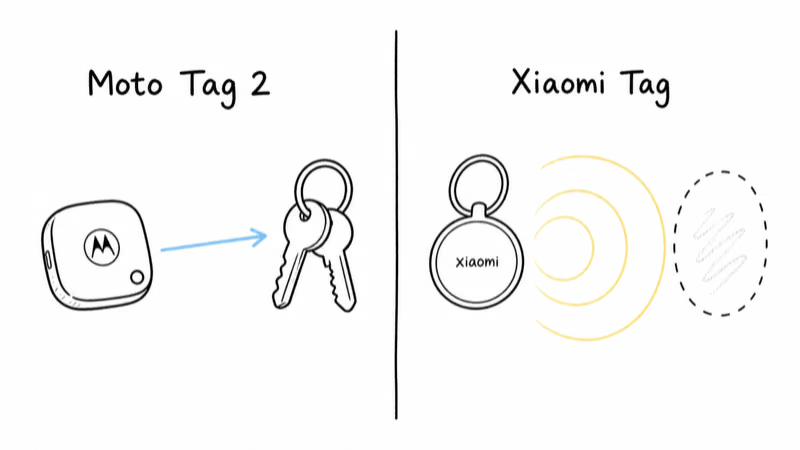
On a keychain or a bike, the Xiaomi Tag’s proximity ring gives you a rough signal-strength area before you fall back on the buzzer for the last step. That is fine for a coat pocket or a desk drawer, but the Moto Tag 2’s arrow is what helps in a cluttered room or a dark parking lot.
Which Tag Survives Daily Abuse, IP68 or IP67?
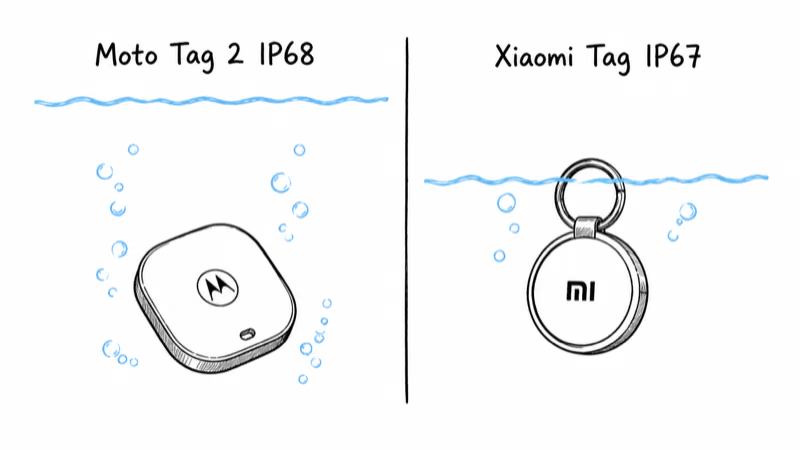
Both pucks carry formal water-resistance ratings, but the Moto Tag 2’s IP68 rating covers 1.5 meters of submersion for 30 minutes, while the Xiaomi Tag’s IP67 is rated to 1 meter. The Xiaomi Tag answers back with a metal outer ring and built-in loop, while the Moto Tag 2 wins the published water-resistance spec. For wet outdoor carry, the gap matters most around deeper or longer submersion.
Who Should Buy Each Tracker
Buy the Moto Tag 2 if you carry a compatible Android phone, want UWB precision finding, and value the more-than-600-day battery rating and IP68 durability. It’s the strongest tag on Google’s network, and our Find Hub tracker hub ranks where it sits against the rest.
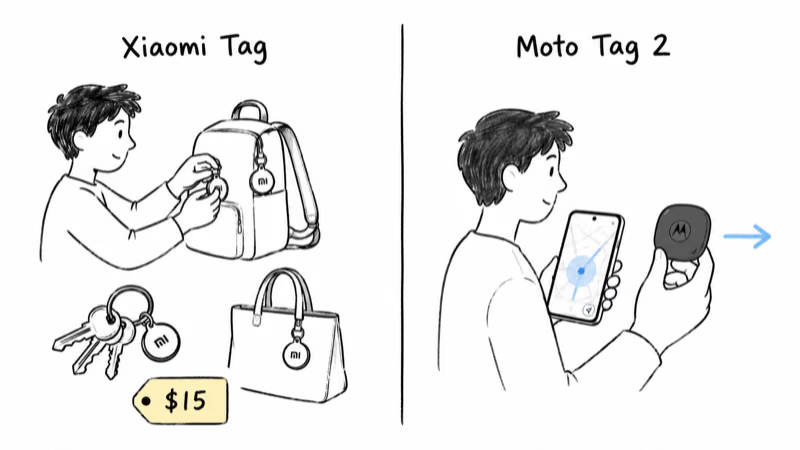
Buy the Xiaomi Tag if you want the cheapest way to tag four or more items, you move between iPhone and Android, or you don’t mind a Bluetooth-only finding ring. Because it bridges both ecosystems, the choice often comes down to network reliability. Google’s Find Hub help page notes that the network relies on nearby Android phones to relay each tag’s location, a gap our Find Hub vs Find My comparison breaks down.
Bottom Line
The Xiaomi Tag and Moto Tag 2 are not really rivals so much as two budgets. If you want directional finding, more than 600 days of rated battery life, and IP68 durability, the Moto Tag 2 earns its $29.99 price on compatible Android hardware.
If you want to tag a backpack, keys, and a couple of bags for less than the price of two premium tags, the Xiaomi Tag is the smarter buy, and it follows you between iPhone and Android. Android shoppers weighing a third option should also read our Moto Tag 2 vs AirTag 2 comparison.
FAQ
Does the Xiaomi Tag work with an iPhone?
Yes. The Xiaomi Tag pairs to Apple Find My when you set it up with an iPhone, so it shows up in the Find My app like an AirTag. The catch is that it only joins one network at a time. If you later want it on Google Find Hub with an Android phone, you have to delete the tag from Find My and re-pair it. It can’t ping both networks at once.
Does the Moto Tag 2 work with an iPhone?
No. The Moto Tag 2 pairs only to Google Find Hub and never to Apple Find My. An iPhone can detect a nearby unknown Moto Tag 2 through the cross-platform anti-stalking standard and disable it, but it can’t register, claim, or track one. If you need a tag that works on iPhone, the Xiaomi Tag or a dual-network design like the Chipolo Pop is a better fit.
Which tracker has better precision finding?
The Moto Tag 2, by a wide margin. It’s the only one of the two with ultra-wideband, and it adds Bluetooth 6.0 Channel Sounding for sub-meter accuracy on supported Android phones. The Xiaomi Tag has no UWB at all, so close-range finding is a Bluetooth signal ring before you rely on the buzzer.
Can you buy the Xiaomi Tag on Amazon?
Not in the US directly from Xiaomi. The official Xiaomi Tag sells through the mi.com global store and AliExpress, not Amazon US. Listings on Amazon labeled for Xiaomi are usually third-party rebrands, not the genuine tag, so buy from Xiaomi’s own channels to be sure. The Moto Tag 2, by contrast, is stocked on Amazon US as a single and a 4-pack.
Which tracker has the longer battery life?
The Moto Tag 2. Motorola’s current US page rates it for more than 600 days on a single CR2032, while the Xiaomi Tag is rated around 12 months on the same coin cell. Both use a standard CR2032, so neither locks you into a sealed battery.
Is the Moto Tag 2 worth three times the price of the Xiaomi Tag?
It depends on whether you need UWB. The Moto Tag 2’s premium buys ultra-wideband direction finding, Channel Sounding, IP68 durability, and more than 600 days of rated battery life. If you want directional finding, it’s worth it on compatible Android hardware. If you only need the rough area and a beep, the Xiaomi Tag covers that for less.
Are both trackers waterproof?
Both carry IP-rated water resistance, but at different tiers. The Moto Tag 2 is IP68, rated for 1.5 meters of fresh water for 30 minutes, while the Xiaomi Tag is IP67, rated to 1 meter. The published gap matters for deeper or longer submersion, and saltwater sits outside the normal fresh-water rating assumptions, so rinse and dry after ocean exposure.