A Bluetooth tracker tells you which room an item is in. A UWB tracker adds an arrow that points to within a few centimeters. Buy UWB only if your phone supports it.
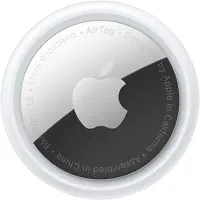
Every Bluetooth tracker uses the same core trick: it pings nearby phones over Bluetooth Low Energy and borrows their location. Apple’s AirTag tech specs states that the AirTag carries an “Apple-designed U1 chip for Ultra Wideband and Precision Finding,” the 1 piece of silicon a plain Bluetooth tag doesn’t have.
- Bluetooth handles 99% of finds — crowd-finding pinpoints a lost bag anywhere a compatible phone walks past.
- UWB only matters in the last 30 feet — it draws a direction arrow and distance once you’re already close.
- UWB needs a UWB phone — a Bluetooth tag with a U1 chip falls back to plain Bluetooth on phones without ultra-wideband hardware.
- Bluetooth range is a line-of-sight spec, then crowd-finding takes over for anything farther.
- Price gap is small — a basic Bluetooth tag runs about $25, and UWB-capable tags start near $29-$35.
How Bluetooth Crowd-Finding Works
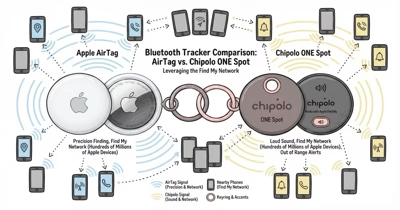
A Bluetooth tracker has no GPS and no cellular radio. It broadcasts a low-energy signal a few times per second, and any nearby phone in the same finding network (Apple Find My, Google Find Hub, or Tile) quietly reports that tag’s location back to you. That borrowed-location model is why a $25 tag can locate a suitcase three states away. The tag isn’t tracking the bag; it’s detecting the strangers’ phones around the bag.
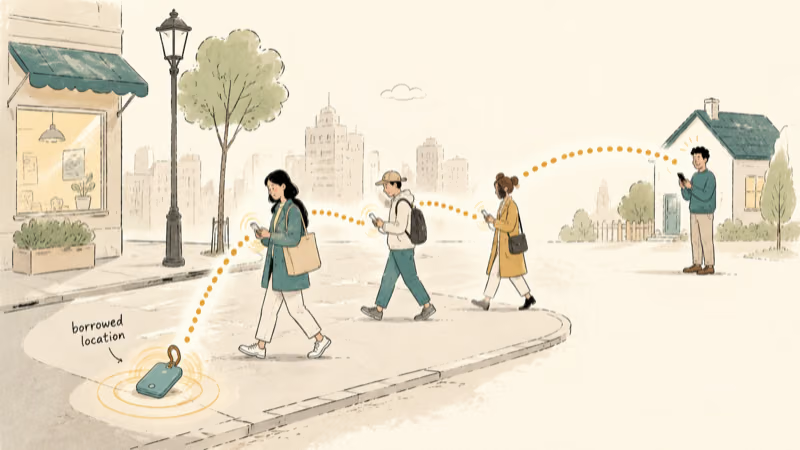
Range is the honest limit. Samsung reported that the SmartTag2 “works within maximum Bluetooth range of 120 meters” in open line-of-sight. That figure assumes a clear path between the tag and your phone, which almost never holds in daily use. Through walls, doors, and the inside of a pocket or bag, real-world range falls to a fraction of that headline number before the tag has to wait on someone else’s phone passing by.
Density is the other variable. In a crowded city, the crowd-finding network can refresh a lost tag quickly. On a rural road, it can sit silent for hours until a phone finally drives past.
What UWB Crowd-Finding Doesn’t Change
Here’s the trap people fall into: UWB does nothing for crowd-finding. The far-away recovery, the part that actually brings your luggage home, runs entirely over Bluetooth Low Energy whether or not the tag has a UWB chip.
Crowd-finding also doesn’t give you a live trail. It returns the tag’s last reported spot, refreshed only when a phone enters Bluetooth range. For keys, wallets, and luggage that’s plenty. For a pet that roams or a vehicle you need to watch in motion, a GPS tracker is the right tool, not a Bluetooth or UWB tag at all.
How Does UWB Precision Finding Work?
Ultra-wideband (UWB) is a short-range radio that measures time-of-flight between two chips with extreme precision. Where Bluetooth answers “which room?”, UWB answers “two feet to your left, behind the couch.” Apple calls the feature Precision Finding, and its AirTag tech specs states that it “is compatible with iPhone 11 models and later” — so the phone, not the tag, decides whether you get the arrow.
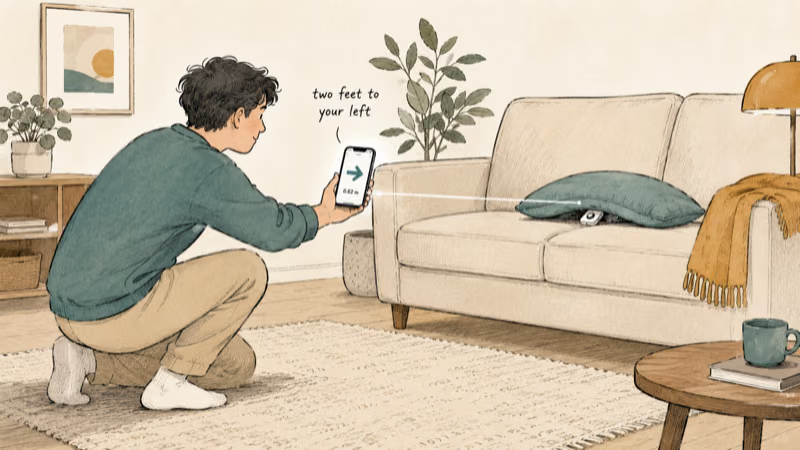
The on-screen experience is the whole point. Samsung’s SmartTag2 pairs “Bluetooth Low Energy (BLE) and UWB,” and its official announcement describes a Compass View showing the “direction and distance” of the tag with arrows on a UWB-enabled Galaxy phone.
Some tags layer Augmented Reality on top, dropping a marker into the camera view. UWB is what closes the final search from “somewhere in this room” to a hand on the keys in seconds.
UWB Precision, in Real Numbers
Precision finding is centimeter-class, and the newer competing standard makes that concrete. Bluetooth Channel Sounding is designed to bring the same precision to standard Bluetooth radios. The Bluetooth SIG confirms that the feature “offers centimeter-level accuracy over considerable distances,” and it reported that early implementations are “already seeing accuracy levels of +/- 20 cm.”
That number tells you where the whole category is heading. Channel Sounding will eventually fold UWB-grade precision into ordinary Bluetooth chips, no separate radio required. It’s rolling out gradually, though, so today the arrow-to-the-couch experience still ships mainly on UWB tags.
A UWB-Capable Tag for Apple Devices
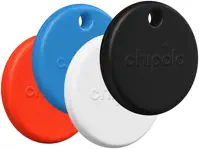
A Basic Bluetooth Tag, Cross-Platform
Which Phones Actually Support UWB
UWB precision only works if both the tag and your phone have the radio. The tag advertises “UWB” or “Precision Finding,” but the phone is the gatekeeper.
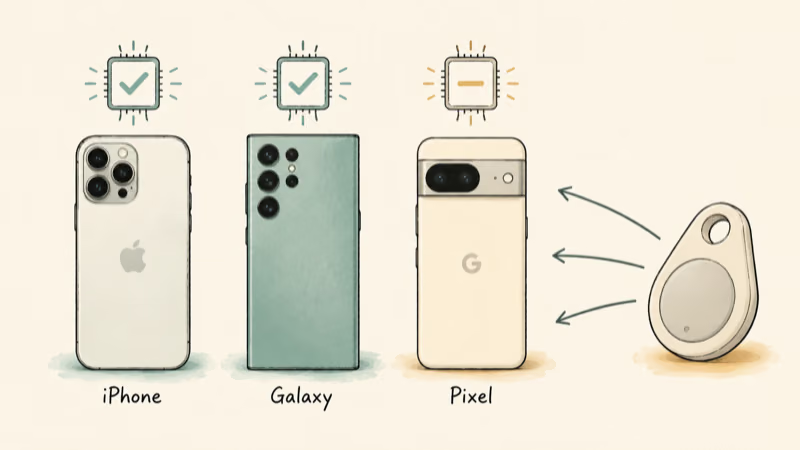
- iPhone: iPhone 11 and later carry a U1 or U2 ultra-wideband chip, with the exceptions Apple lists above (iPhone SE 2nd/3rd gen and iPhone 16e have no UWB).
- Samsung Galaxy: UWB lives in the higher tiers — Galaxy S21+ / S21 Ultra and up, the Z Fold line, and similar flagships. Base S-series and budget A-series models skip it.
- Google Pixel: Pixel 6 Pro and later Pro models include UWB; the standard Pixel doesn’t.
If your phone is on that list, a UWB tag pays off. If it isn’t, a UWB-capable tag just runs as a normal Bluetooth tag and you pay a small premium for a feature you can’t use. That mismatch is the single most common buying mistake in this category. Android households juggling tags across phones should check our best Bluetooth tracker for Android guide first.
The Price and Range Trade-Off
The money difference is smaller than most people expect. A basic Bluetooth tag costs about $25; UWB-capable tags start near $29 to $35. Buy a four-pack of basic tags and you cover more items for less than two UWB tags.
Range, by contrast, is identical. UWB does not extend how far you can find a tag, because both technologies lean on the same crowd-finding network for distance. UWB only buys you the final few feet, not extra reach. So the real trade is convenience at close range versus covering more stuff per dollar.
Do You Need UWB or Is Bluetooth Enough?
For most people, plain Bluetooth is enough. Crowd-finding does the heavy lifting, and that work happens entirely over Bluetooth with or without UWB.
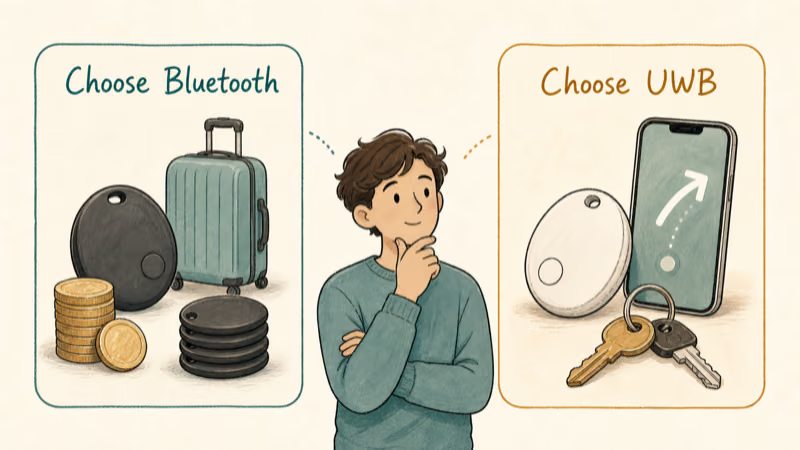
UWB earns its place in three cases. First, if you routinely lose small items inside a cluttered space, the arrow saves real time. Second, if you already own a UWB phone, the upgrade is nearly free. Third, if you want the fastest possible hand-on-it recovery and the AR walk-up appeals to you.
Skip UWB if your phone lacks the radio, or if you mostly track luggage and bags where room-level precision is irrelevant. To compare specific models head to head, see our best Bluetooth tracker roundup.
For the AirTag’s arrow in daily use, our AirTag review and the Moto Tag 2 review both walk through UWB finding step by step.
Bottom Line
Bluetooth crowd-finding is the feature that recovers your lost item; UWB precision finding is the feature that walks you the final few feet. Buy a basic Bluetooth tracker if your phone has no UWB radio, or if you mostly track bags and luggage. Buy a UWB-capable tag only when you own a supported phone and you regularly lose small items at close range. Either way, the finding network, not the chip, is what brings your stuff home.
FAQ
What is the main difference between a Bluetooth tracker and a UWB tracker?
A Bluetooth tracker locates an item by borrowing the location of nearby phones in its finding network, which gives you room-level accuracy. A UWB tracker adds ultra-wideband radio that points an on-screen arrow to within a few centimeters once you are close. UWB does not replace Bluetooth; it works alongside it for the final approach.
Do I need a special phone to use UWB precision finding?
Yes. Both the tag and the phone must have UWB hardware. On iPhone, that means iPhone 11 or later, excluding the iPhone SE 2nd and 3rd generation and the iPhone 16e. On Galaxy and Pixel, only higher-tier flagships include the radio. Without a UWB phone, a UWB tag simply runs as a normal Bluetooth tag.
Is a UWB tracker worth the extra money?
It depends on your phone and your habits. If you already own a UWB phone, the price gap is small and the arrow is a real convenience for finding small items at close range. If your phone has no UWB radio, you gain nothing over a basic Bluetooth tag and should save the money.
How far can a Bluetooth tracker reach?
Direct Bluetooth range is an open line-of-sight spec and falls far lower through walls and pockets. Beyond that, the tracker relies on crowd-finding: any compatible phone that passes within Bluetooth range reports the tag’s location back to you, which is how a tag can be located far from your own phone.
What is Bluetooth Channel Sounding and does it replace UWB?
Channel Sounding is a newer Bluetooth feature that brings centimeter-level distance accuracy to standard Bluetooth radios, with early implementations reaching about plus or minus 20 cm. It promises UWB-style precision without a separate UWB chip. It’s rolling out gradually, so today most arrow-to-the-item precision finding still ships on UWB tags.
Does UWB help me find something I left far away?
No. UWB is short-range and only activates once you are within a few feet of the tag. Recovering an item across town is done entirely by Bluetooth crowd-finding. UWB sharpens the last leg of the search after the finding network has already put you in the right area.
Can a UWB tracker track a pet or vehicle in real time?
No. Neither Bluetooth nor UWB trackers stream live location. They report a last-seen spot, updated only when a phone passes nearby. For a pet that roams or a vehicle you need to watch in motion, a cellular GPS tracker is the correct tool, not a Bluetooth or UWB tag.