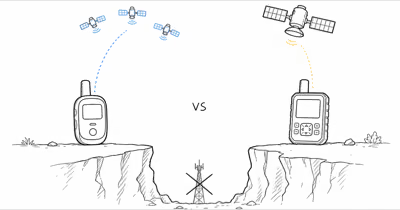
The question "do satellite GPS trackers need a subscription" trips people up because two different services hide behind one product. GPS.gov confirms that civilian GPS positioning is freely available worldwide -- your device always knows its own position at no cost. Getting that position back to you across an ocean of wilderness is the part Garmin, SPOT, and ZOLEO charge for.
- Positioning is free, transmission is not. A satellite tracker computes its location at no cost but pays for Iridium or Globalstar airtime to send it anywhere.
- Garmin inReach plans run $7.99 to $49.99 a month plus a one-time $39.99 activation fee, and Garmin lets you suspend service for $0 between trips.
- SPOT pricing splits into contract and flex: $11.95 a month on a 12-month commitment, or $14.95 month-to-month plus a $34.95 annual flex charge, on top of $29.95 activation.
- Satellite messaging features stop without a plan. Garmin's own manual states inReach tracking, messaging, and SOS all require an active satellite subscription.
- True $0-a-month options exist with hard catches: GPS loggers only reveal the track after you physically retrieve them, and radio-based finders top out at short range.
Why Do Satellite Trackers Charge a Fee When GPS Is Free?
Because the satellites that locate you and the satellites that carry your message are two separate systems. The US government operates the GPS constellation as a public utility, and its official policy page states that the service is available worldwide, free of direct user charges. Every receiver on earth listens to those signals without paying a cent.
Sending data the other direction is commercial. A Garmin inReach transmits over the privately run Iridium constellation, and SPOT devices use Globalstar. Both companies bill for airtime the way a phone carrier bills for minutes, which is why Garmin's entry plan costs $7.99 a month before you send a single message. No plan, no airtime, no tracking dots on anyone's map.
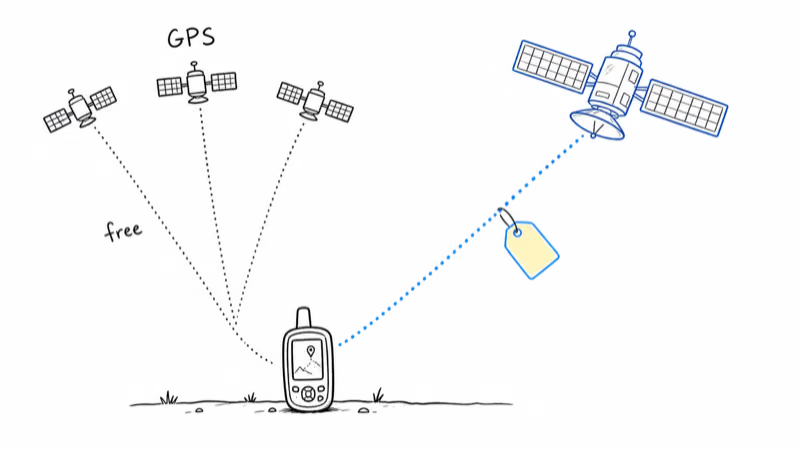
This split explains a pattern that confuses first-time buyers: a tracker with an expired plan still shows your position on its own screen. The GPS half keeps working forever. What dies is the relay -- the part that makes it a tracker for the people watching from home rather than a navigation aid in your hand. Our GPS tracker buying guide covers how cellular models handle the same transmit problem with phone networks instead.
What You Actually Pay: Device, Activation, Plan, Tracking Points
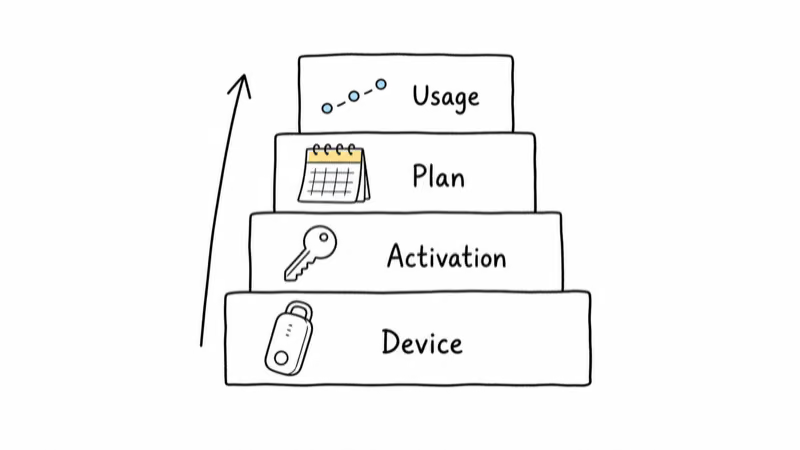
Satellite tracking has four cost layers, and vendor marketing usually shows you only the third one. Stack all four before comparing brands, because a cheaper device often rides on a more expensive plan structure.
Layer one is the device. SPOT lists the Gen4 at $99.99 on sale against a $149.99 regular price, and the two-way SPOT X at $199.99 against $249.99. ZOLEO's communicator sells for $149. Garmin does not expose the base Mini 3 price on the product page we could verify, though it lists the step-up inReach Mini 3 Plus at $499.
Layer two is activation: a one-time $39.99 for Garmin and ZOLEO, $29.95 for SPOT. Layer three is the monthly plan, and layer four is usage beyond it -- lower tiers meter tracking points and messages, with per-point overage rates on each carrier's rate card.
Plan Pricing Compared: July 2026 Snapshot
According to Garmin's consumer plan page, the entry Enabled tier runs $7.99 a month and every tier carries the same $39.99 activation fee. Here is where the three ecosystems stood on July 10, 2026:
| Cost | Garmin inReach | SPOT Gen4 / X | ZOLEO |
|---|---|---|---|
| Activation fee | $39.99 | $29.95 | $39.99 |
| Entry plan | Enabled, $7.99/mo | Contract Basic, $11.95/mo (12-month term) | Basic, $20/mo |
| Mid tiers | Essential $14.99 / Standard $29.99 | Contract Advanced $19.95 / Unlimited $29.95 | In Touch, $35/mo |
| Top tier | Premium, $49.99/mo | Flex Unlimited, $39.95/mo | Unlimited, $50/mo |
| No-commitment option | All plans monthly | Flex from $14.95/mo + $34.95 annual flex charge | All plans monthly |
| Pause between trips | Suspend for $0 | Flex plans allow off months | Monthly cancel/restart |
Sources: Garmin's consumer plan page and SPOT's service plan page, which also confirms that Flex service adds a $34.95 annual charge on top of the monthly rate.
ZOLEO's plan page rounds out the snapshot. Prices move -- confirm before you buy. For how these figures stack against Bluetooth and cellular tracker fees, our tracker subscription cost comparison lines up the whole market.
Can You Use an inReach or SPOT Without a Plan?
Not for anything satellite-related. Garmin's inReach Mini 3 manual states that an active satellite subscription is required before the messaging, tracking, and SOS features work. Power the device on without one and you own a compass with a very good battery.
What you can do without paying every month is park the plan between seasons. Garmin's Suspend option costs $0 and reactivation costs $0, which makes a summer-only hiker's real annual cost three or four months of Enabled rather than twelve. SPOT approaches the same need differently: Flex plans run month-to-month from $14.95, but Globalstar collects a $34.95 flex charge each year, so an occasional user pays that floor even in a one-trip year.
Watch one contract trap in each ecosystem. SPOT's cheapest rate, $11.95 a month, binds you to a 12-month term -- $143.40 whether you go outside or not. And a suspended inReach is fully dark: no tracking, no SOS. If there is any chance the device rides along on an off-season trip, budget the reactivation before you leave the trailhead, not from the trailhead.
The Real $0-a-Month Satellite Options and Their Catches
Some devices marketed against this exact fear -- "no subscription!" -- are real products with honest uses. None of them do what a subscribed inReach does. The label covers three different technologies, and knowing which one you are looking at prevents an expensive mismatch.
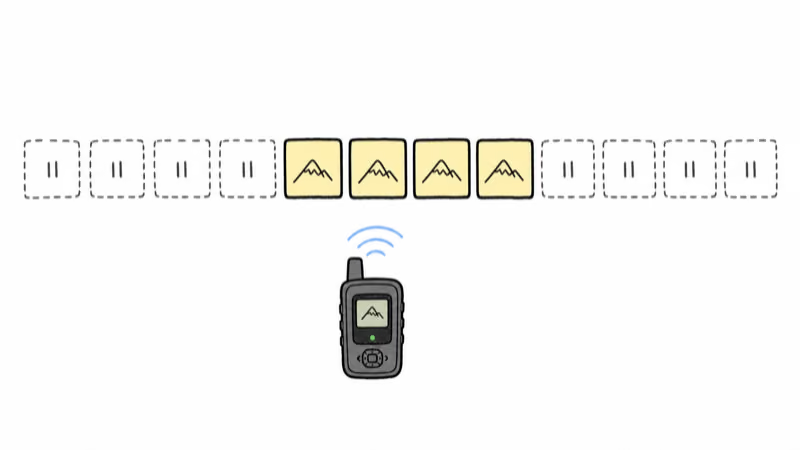
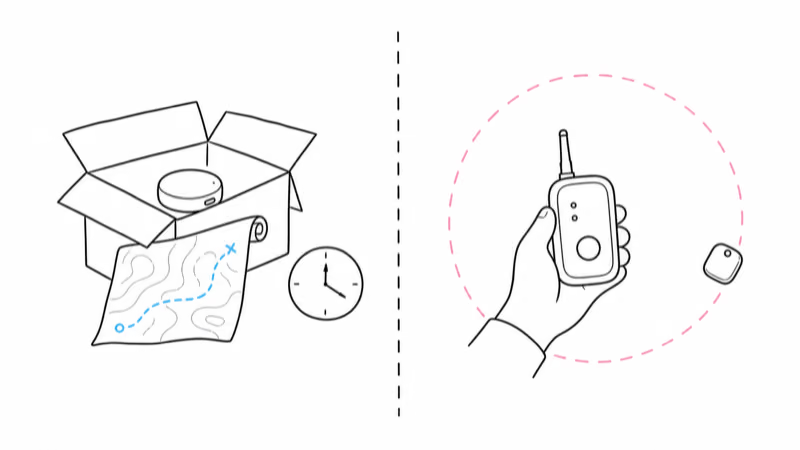
GPS loggers record everything and transmit nothing. They're the purest no-fee option: positioning is free, and they skip the transmission problem entirely by storing the track in memory. The catch is brutal for anything you might lose -- you only see the data after you physically recover the device. A stolen vehicle with a logger aboard tells you nothing until the vehicle comes back.
Radio finders trade range for freedom. Handheld RF and LoRa systems pair a tag with a receiver you carry, no network in between. They work in true dead zones and charge nothing monthly, but range is measured in hundreds of meters to a few kilometers with clear line of sight. Our no-monthly-fee tracker guide breaks down all five technology types sold under the zero-fee label and where each one honestly fits.
The third category is not a tracker at all: a PLB, a personal locator beacon, sends a one-shot government-monitored SOS with no subscription. It shares one button with an inReach and nothing else -- no check-ins, no live map, no messages. Treat it as emergency insurance, not tracking.
Matching the Fee Structure to Your Use
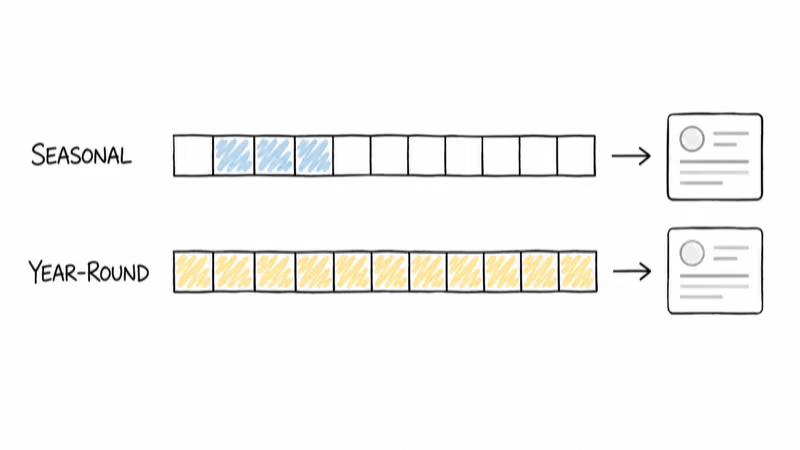
The right answer depends less on the hardware than on your calendar. Price the plan against how many months a year the device actually leaves the house, then work backward to the device that carries that plan.
A weekend hiker in three-season terrain fits Garmin's pattern best: Enabled at $7.99 covers unlimited check-ins and SOS, and the $0 suspend cuts the off-season to nothing. Someone leaving a vehicle or trailer in dead zones year-round maps to SPOT's Contract Basic -- the 12-month commitment stops being a trap when you truly need all 12 months, and Gen4's $99.99 sale price keeps the entry cost low.
Garmin inReach Mini 3
 Top Pick
SPOT Gen4
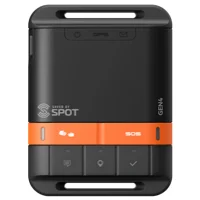 Best Value
If the decision comes down to these two ecosystems, the trade is capability versus cost: two-way messaging and free suspension on the Garmin side, cheaper hardware and a lower contract rate on the SPOT side. Our inReach vs SPOT comparison settles that matchup feature by feature, and the Tile subscription breakdown shows the same pay-for-what-exactly logic applied to a Bluetooth tracker.
Bottom Line
Satellite GPS trackers need a subscription for the thing that makes them satellite trackers: transmission. Positioning is free by US policy, airtime is not, and every live-tracking device on Iridium or Globalstar carries a monthly plan plus an activation fee.
Budget all four layers -- device, activation, plan, and usage -- and match the plan pattern to your calendar. Seasonal users lean Garmin for the $0 suspend. Year-round set-and-forget users lean SPOT contract pricing. And if you were hoping to skip the fee entirely, a logger or radio finder can be the honest answer, as long as you accept what it can't do.
FAQ
Do satellite GPS trackers need a subscription?
Yes, for live tracking. Any device that sends your position over the Iridium or Globalstar satellite networks requires an active service plan. The GPS positioning itself is free; the subscription pays for the satellite airtime that carries your location to the people watching remotely.
Can you use a Garmin inReach without a subscription?
Not for satellite features. Garmin's inReach Mini 3 manual states that messaging, tracking, and SOS all require an active satellite subscription. Without a plan the device still shows your own position and navigation data on-screen, but it can't send anything to anyone.
How much does it cost to activate a SPOT tracker?
SPOT charges a $29.95 activation fee on top of the plan. Contract plans start at $11.95 a month with a 12-month commitment, and month-to-month Flex plans start at $14.95 plus a $34.95 annual flex charge. Those figures come from SPOT's official plan page as of July 2026.
Can you pause a satellite tracker plan in the off-season?
Garmin allows it outright: inReach service suspends for $0 and reactivates for $0, so seasonal users only pay for the months they're out. SPOT's month-to-month Flex plans can lapse between trips, though the $34.95 annual flex charge still applies. A suspended device has no tracking and no SOS until you reactivate it.
Are there satellite trackers with no monthly fee at all?
No live ones. Zero-fee devices are either GPS loggers, which store the track until you physically retrieve the hardware, or short-range radio finders that skip satellites entirely. A PLB emergency beacon is also subscription-free, but it only sends a one-time SOS and offers no tracking or messaging.
Why is GPS free but satellite tracking is not?
The US government funds the GPS constellation as a public service, so receiving positioning signals costs nothing. Iridium and Globalstar are commercial networks, and sending your coordinates across them consumes paid airtime. You are billed for the uplink, never for the positioning.