Pixel Tag vs Moto Tag 2 puts two Find Hub trackers on different calendars. Google’s current Pixel Tag store page says “Coming November 2026” and starts at $29.99, so this is a buy-now-versus-wait decision before it’s a hardware contest.
- Moto Tag 2 is available now; Pixel Tag is due in November 2026
- Moto publishes IP68 and 600-plus days; Google publishes IP67 and up to one year
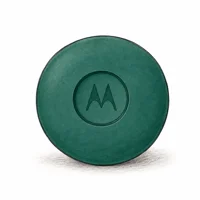
- Pixel Tag is a 0.4 oz pill; Moto Tag 2 is an 8.5g circular disc
- Both list UWB and Bluetooth Channel Sounding, but compatible phones and software still matter
- Only Motorola publishes a speaker figure: 77dB measured at 10cm
Availability: Moto Now, Pixel in November
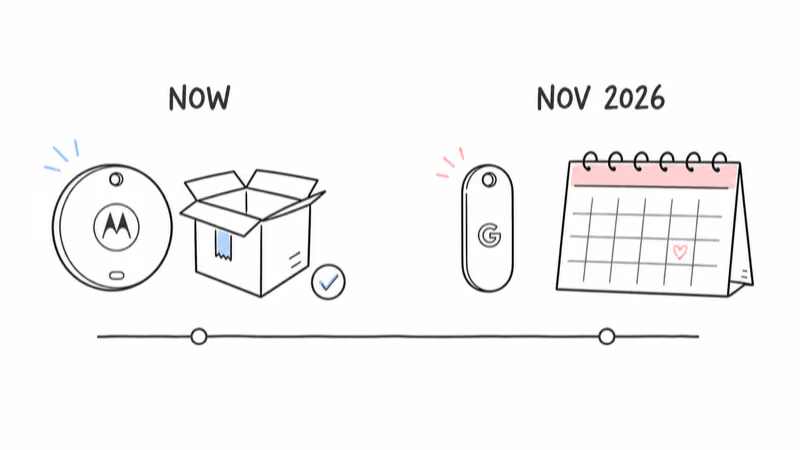
Moto Tag 2 is the only one of these two that you can order today. Motorola’s official US page confirms that the Moto Tag 2 is in stock as of August 17, 2026. We reopened both storefronts that day; Motorola exposed an in-stock offer while Google still displayed a future month.
That calendar gap decides the current verdict. An announced product can’t replace a tracker you need for keys, a bag, or a trip this month. Pixel Tag may become the cleaner first-party choice, but nobody outside a controlled launch setting can review a retail unit yet.
⇄ Head-to-head
Pixel Tag vs Moto Tag 2
- +Available now
- +IP68 published rating
- +More than 600 days from a replaceable CR2032
- +77dB at 10cm published speaker figure
- +First-party Google Find Hub hardware
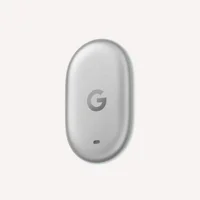
- +Thin 0.2-inch pill form
- +Share with up to 10 people
- +UWB plus Bluetooth Channel Sounding
- −Current promotional pricing can change
- −Round 8mm body is thicker than Pixel Tag's pill form
- −Precision features still depend on phone support
- −Not at retail until November 2026
- −Official pages disagree on the single-unit price
- −IP67 sits below Moto Tag 2's IP68
- −No published speaker decibel figure
- ·You need a Find Hub tracker now
- ·You value the stronger published water rating
- ·You want a published battery and speaker figure
- ·You can wait until November
- ·You prefer first-party Google integration
- ·You'll recheck retail tests and compatibility at launch
Price and Release Date: Google’s Two Official Answers
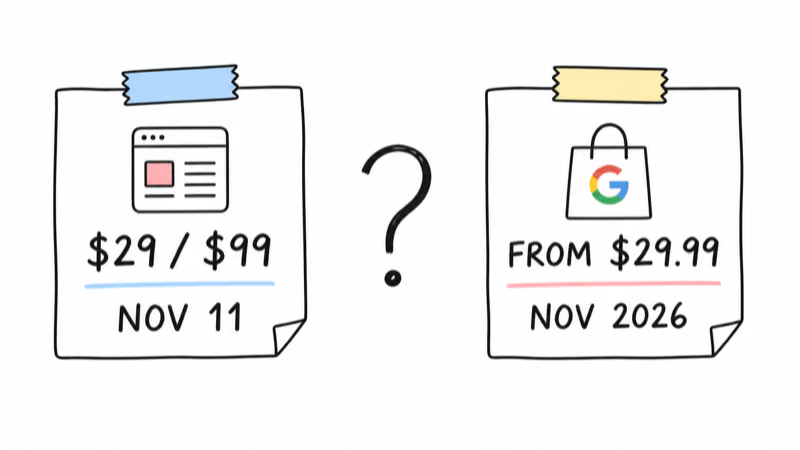
Google’s pricing needs two lines, not one. Google’s launch post states that one costs $29, four cost $99, and sales start November 11. The Google Store instead says prices start at $29.99 and gives only November 2026.
We can’t reconcile that one-dollar difference from the official pages, so this article preserves both. The same rule applies to the date: November 11 is the blog’s more precise statement, while the storefront currently commits only to the month. Check the cart at launch rather than treating either price as settled.
Motorola’s single-unit page currently pairs a $29.99 listed price with a $19.99 promotional price. The official four-pack page currently pairs $99.99 with a $69.99 promotion. Those are current promotions, not promises about future pricing.
Battery, Water Resistance, and Physical Design
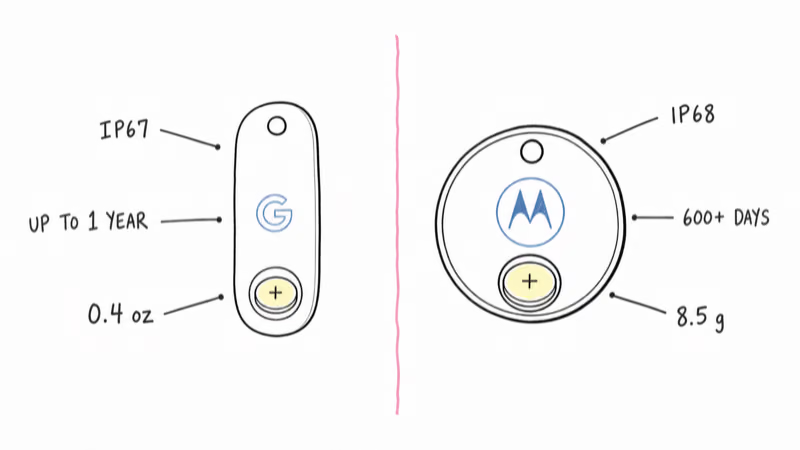
Moto Tag 2 has the stronger published durability package. Google publishes IP67 and up to one year from a user-replaceable battery for Pixel Tag. Motorola publishes IP68 and more than 600 days from a replaceable CR2032 for Moto Tag 2.
These are manufacturer claims, not HotAirTag measurements. IP68 is the higher ingress rating, but neither rating makes careless water exposure a good test plan. Battery life also changes with ringing, temperature, and how often the tag participates in finding.
The shapes solve different carrying problems. Google lists Pixel Tag at 1.1 by 1.8 by 0.2 inches and 0.4 oz with its battery. Motorola lists a 31.9 by 31.9 by 8mm circular body weighing 8.5g.
We keep those official units instead of converting them. The Pixel is a thin pill; the Moto is a familiar round disc that suits many AirTag-style holders. Our Moto Tag 2 review covers the existing product and accessory trade-offs in more depth.
Motorola publishes a maximum sound level of 77dB at 10cm; Google publishes no Pixel Tag decibel figure on either official page checked. That does not prove Pixel Tag is quieter. It means Motorola gives shoppers a number and Google currently does not.
How Does Precision Finding Compare?
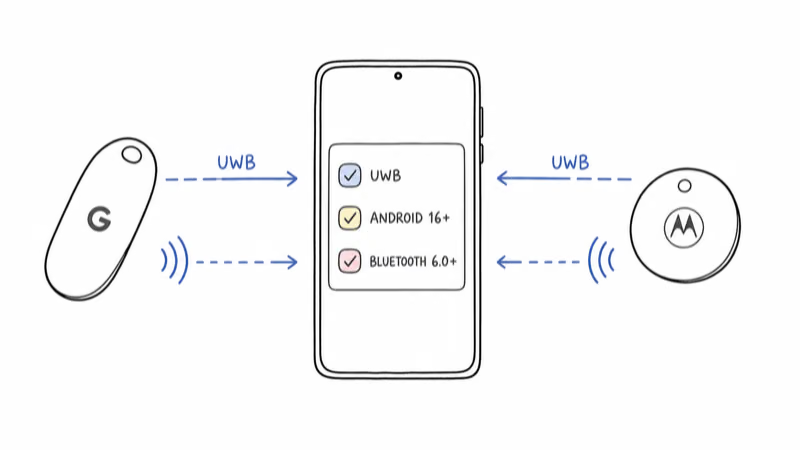
The radio checklist is a draw on paper. Both official product descriptions pair Ultra-Wideband with Bluetooth Channel Sounding for nearby precision finding. Neither vendor’s wording supports a fixed meter range, so this comparison does not invent one.
The phone remains part of the system. Google’s Store footnote states that Channel Sounding requires Android 16 or later and Bluetooth 6.0 or later. Its separate UWB footnote requires a UWB-capable Android device, which means seeing both features on the tag doesn’t guarantee that every Android phone can use both.
We also can’t tell from those lines whether a specific Channel Sounding requirement sits on the tag, the phone, or both. The defensible buying check is simpler: confirm your phone model, Android version, and Bluetooth support before paying for precision features. For the wider network trade-off, our Find Hub and Find My comparison explains what happens after a tag leaves Bluetooth range.
Which One Should You Buy?
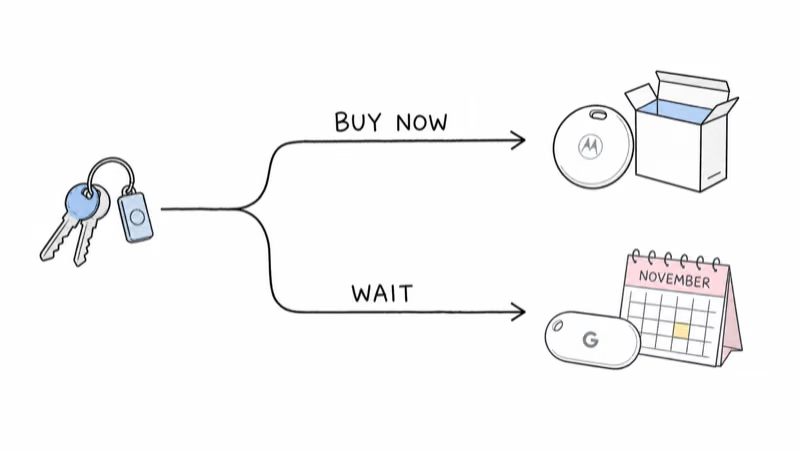
Buy Moto Tag 2 if the need is real today. Its official page gives you a product you can order, IP68, more than 600 days of claimed battery life, and a published sound measurement. Check the live Moto Tag 2 price on Amazon, because a marketplace price may not match Motorola’s promotion.
Wait for Pixel Tag if first-party Google hardware matters more than timing. Pixel Tag’s published sharing limit is up to 10 people, and the official network claim is more than one billion Android devices. The reason to wait is integration, not a clear spec victory.
Recheck the official Store in November. Confirm the retail price, the phone compatibility notes, and independent hands-on results before replacing a working tracker. Our Pixel Tag announcement analysis covers what the launch means beyond this matchup.
iPhone owners should choose neither product. Both belong to Google Find Hub, so the useful comparison is our Pixel Tag and AirTag 2 guide.
What This Signals for Find Hub
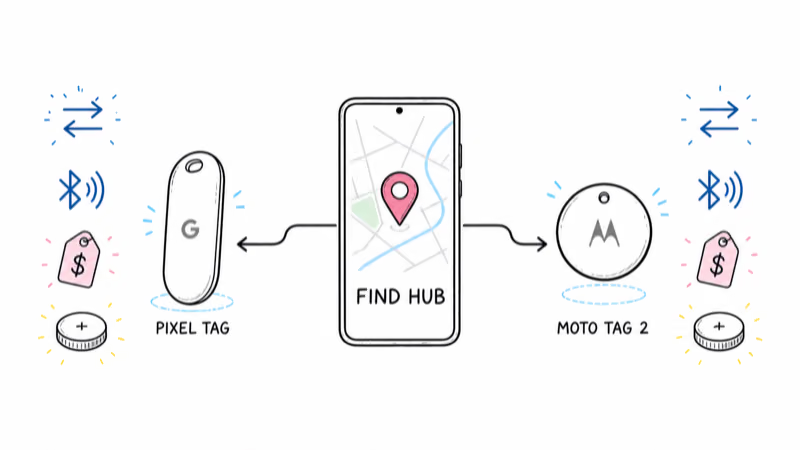
Pixel Tag does not make Moto Tag 2 obsolete. It makes Motorola prove why a third-party tag deserves the same shelf space once Google owns the network, app, phone, and tracker. Right now Motorola’s answer is availability plus a better published IP rating and battery claim.
The pressure arrives in November. If Google keeps the blog’s $29 price, Motorola may have to lean on promotions, the 600-plus-day claim, and accessory compatibility. If the Store’s $29.99 line wins, the two products become almost price-identical before discounts.
That competition is good for Find Hub buyers, but the ecosystem still has a phone-fragmentation problem. Two radios on a spec sheet don’t erase different UWB chips, Bluetooth versions, and Android releases. The winning tag will be the one that makes those compatibility checks easier to understand.
Bottom Line
Moto Tag 2 wins the current buying decision because it exists at retail and publishes the stronger durability, battery, and speaker figures. Pixel Tag remains a November wait-and-verify product with a one-dollar conflict across Google’s own pages.
Don’t pre-order a conclusion. Buy Moto Tag 2 if you need a Find Hub tracker now, or reopen the comparison when Pixel Tag reaches shelves and independent testing can replace launch claims.
Frequently Asked Questions
When will Google Pixel Tag be available?
Google’s launch post says November 11, 2026. The Google Store currently gives only a Coming November 2026 window. We preserve both official statements because the store is less precise.
How much will Pixel Tag cost?
Google’s blog says $29 for one and $99 for four. The Store says prices start at $29.99. Check the retail cart in November because Google’s official pages don’t currently agree.
Is Pixel Tag more water-resistant than Moto Tag 2?
No. Google publishes an IP67 rating for Pixel Tag, while Motorola publishes IP68 for Moto Tag 2. Both are water-resistance ratings, not invitations to expose a tracker to water unnecessarily.
Which tracker has longer battery life?
Motorola publishes more than 600 days for Moto Tag 2. Google publishes up to one year for Pixel Tag. Both use user-replaceable batteries, and real life will depend on ringing, temperature, and use.
Which tracker has the louder speaker?
Motorola publishes 77dB at 10cm for Moto Tag 2. Google doesn’t publish a Pixel Tag decibel figure on the official pages checked, so a fair loudness winner can’t be named yet.
Do both trackers support UWB precision finding?
Yes, both product descriptions list UWB and Bluetooth Channel Sounding. The phone must still support the relevant feature. Google’s Store says Channel Sounding requires Android 16 or later and Bluetooth 6.0 or later.
It separately says UWB precision finding needs a UWB-capable Android device. Check your exact phone before buying.
Should I buy Moto Tag 2 or wait for Pixel Tag?
Buy Moto Tag 2 if you need a tracker now. Wait if first-party Google hardware matters and you can revisit the decision in November. Pixel Tag needs retail testing before it can win on more than integration.