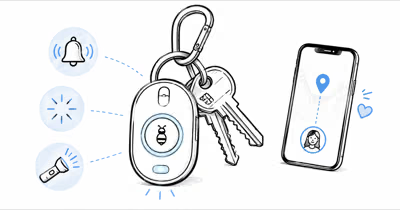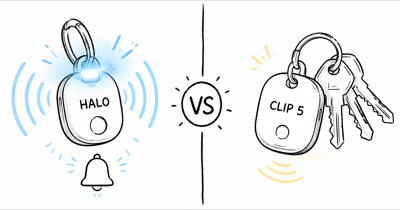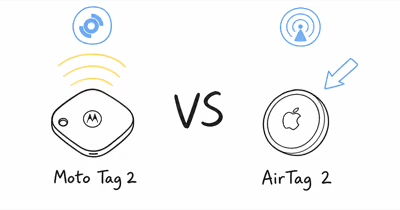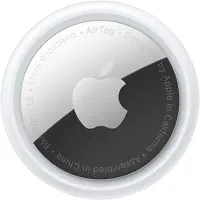
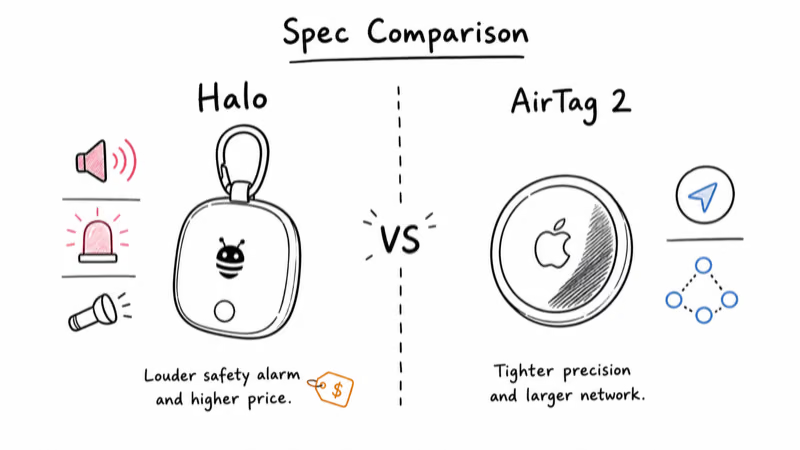
The Pebblebee Halo and Apple AirTag 2 both clip to a keyring, but they answer two different questions. According to Pebblebee’s official Halo specifications, its 130-dB siren and 150-lumen LED strobe add a personal-safety layer AirTag doesn’t attempt.
- The Halo adds a 130dB siren: pull-apart SOS triggers a strobe plus live location to five trusted contacts
- AirTag 2 keeps UWB Precision Finding: an on-screen arrow points to the exact distance and direction
- Network reach favors AirTag: it relays through more than a billion Apple devices versus the Halo’s single chosen network
- Price gap is real: the Halo lists at $59.99 against AirTag 2 at $29
- Subscriptions differ: the Halo’s Alert Live is free for one year then $24.99 yearly, while AirTag charges nothing
Pebblebee Halo vs AirTag: Spec Comparison
The two trackers split on purpose, not polish. New Atlas’s hands-on writeup reported that the Halo’s alarm reaches 130 dB and ships a 150-lumen LED strobe, with pairing to Apple’s Find My or Google’s Find Hub but only one network at a time.
Apple’s AirTag overview, by contrast, confirms that its Find My network spans more than a billion iPhone, iPad, and Mac devices, the widest relay pool of any tracker here. That gap explains the split: the Halo’s 130dB siren is built for attention-getting alerts, while AirTag’s UWB Precision Finding is built to walk you to a tag wedged under a sofa cushion.
| Spec | Pebblebee Halo | Apple AirTag 2 |
|---|---|---|
| Price | $59.99 | $29 ($99 4-pack) |
| Network | Apple Find My OR Google Find Hub (pick one) | Apple Find My only |
| Safety siren | 130dB siren + strobe + 150-lumen flashlight | None |
| SOS / live sharing | Pull-apart SOS + silent alert to 5 contacts | None |
| Precision radio | Bluetooth, no UWB | UWB Precision Finding |
| Battery | Rechargeable, about 1 year per charge | Replaceable CR2032, over a year |
| Water resistance | IP66 (splash, jets) | IP67 (1m, 30 min) |
| Weight | 1 oz (28 g) | 11.8 g |
| Subscription | Alert Live free 1 yr, then $24.99/yr | None |
The siren row is the real decision: the Halo bolts a personal-safety alarm and live location-sharing onto a finder, while AirTag 2 stays a pure tracker that wins on UWB precision and network density. Everything else flows from that one split.
Pebblebee Halo vs AirTag: Head-to-Head
⇄ Head-to-head
Pebblebee Halo vs AirTag 2

- +130dB siren plus strobe and a 150-lumen flashlight for personal safety
- +Pull-apart SOS shares live location with up to five trusted contacts
- +Silent-alert mode pings your Safety Circle without the siren or strobe
- +Pairs to Apple Find My or Google Find Hub, so it follows you across platforms
- +Rechargeable cell runs about a year and skips coin-cell shopping
- +UWB Precision Finding points an exact distance-and-direction arrow
- +Relays through more than a billion Apple devices, the largest finding network
- +Replaceable CR2032 lasts over a year with no charging cable
- +$29 single price, or $99 for a four-pack, undercuts the Halo
- +No subscription: all finding and anti-stalking features are free for life
- −No UWB, so close-range finding is Bluetooth proximity, not a precise arrow
- −$59.99 is roughly double the single AirTag 2 price
- −Alert Live live-sharing costs $24.99 a year after the first year
- −IP66 sits one tier below AirTag's IP67 submersion rating
- −You must pick Find My or Find Hub at setup, never both at once
- −Apple Find My only, so it goes dark the moment you leave iPhone
- −No siren, strobe, SOS, or live location-sharing for personal safety
- −Needs an accessory holder to attach to keys or a bag
- −IP67 sealing is splash-proof but not built around outdoor abuse
- −Precision Finding requires a recent UWB-equipped iPhone
- ·You want a built-in safety siren, strobe, and SOS on your keys
- ·You switch between an iPhone and an Android phone
- ·You value live location-sharing with trusted contacts over precision
- ·You prefer recharging over buying coin cells
- ·You live inside the Apple ecosystem on an iPhone
- ·You want the tightest close-range Precision Finding arrow
- ·You want the largest finding network and zero subscription
- ·You are tagging keys, a wallet, or luggage, not buying safety hardware
Pebblebee Halo: A Tracker With a Safety Siren
The Pebblebee Halo is the personal-safety pick. Its headline hardware is a 130dB siren paired with a strobe and a 150-lumen flashlight, and New Atlas’s hands-on report states that you pull the device’s two halves apart to trigger the alarm and alert your contacts at once. That pull-apart gesture is the whole pitch: a finder that can also call for help.
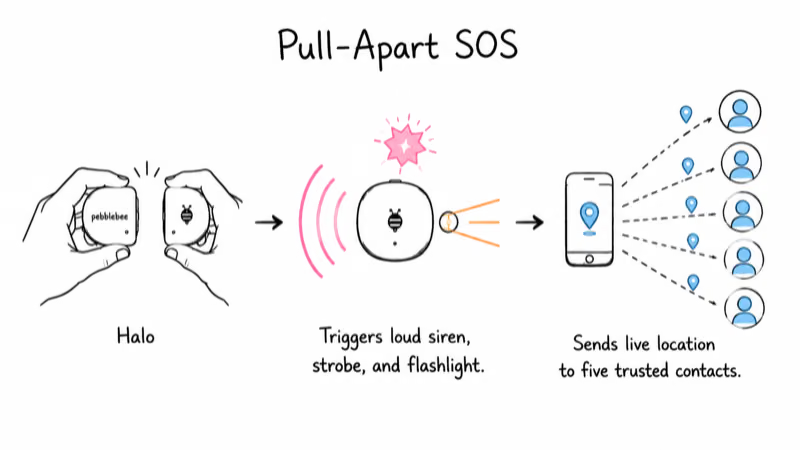
The live-location layer is the second half. When triggered, the Halo shares your real-time location with up to five trusted contacts in a Safety Circle, and a silent-alert mode lets you ping them discreetly without the siren or strobe drawing attention. For the full safety-feature walkthrough, see our Pebblebee Halo review.
The Halo is also cross-platform: at setup you choose Apple Find My or Google Find Hub, so it follows you whether you carry an iPhone or an Android phone. The catch is you commit to one network and can’t run both at once. If you are weighing a tracker mainly as an anti-stalking tool, our guide on how AirTags are misused for stalking covers what the safety-siren angle does and does not solve.
AirTag 2: Tightest Find My and UWB Precision
The AirTag 2 is the precision-and-network pick. Apple’s AirTag overview states that its built-in Ultra Wideband technology drives Precision Finding, which puts an on-screen arrow and exact distance between you and a lost item, a close-range trick the Bluetooth-only Halo can’t match.
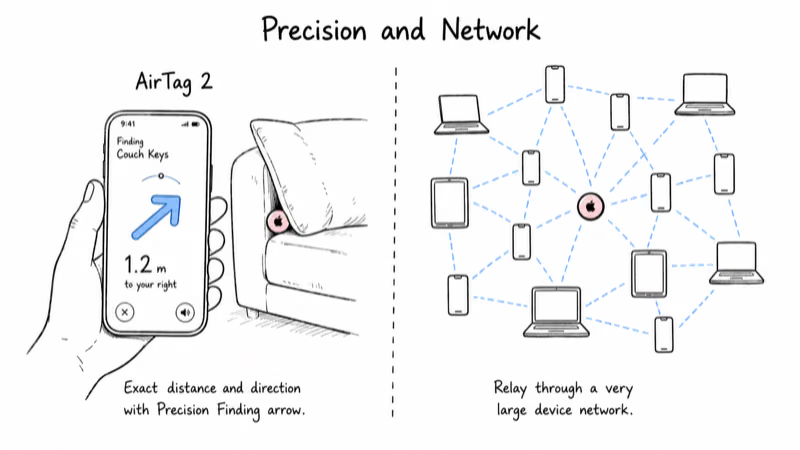
The network is the other advantage. AirTag relays anonymously through more than a billion Apple devices, the densest finding pool of any tracker in this matchup, so a bag left in a far-off city still has a larger relay pool. AirTag also ships Apple’s anti-stalking unwanted-tracking alerts at no cost. For the full breakdown, see our AirTag review.
The trade-off is platform lock-in and no safety hardware. AirTag pairs only to Apple Find My, so it goes dark for Android users, and it offers no siren, strobe, or SOS. For how it stacks against another single-platform rival, our AirTag vs Tile breakdown weighs Find My against Tile’s cross-platform reach.
Is the Halo Worth It for the Safety Siren?
It’s worth it, if personal safety is the actual job. The Halo’s published 130dB siren, pull-apart SOS, and live location-sharing turn a $59.99 keyfob into a discreet panic button. No AirTag accessory replicates that, so for a night-shift worker or a solo traveler the Halo earns its premium. It’s a panic button first and a finder second.
The cost side is honest, though. The Halo lists at $59.99, roughly double a single AirTag 2 at $29, and the Alert Live live-sharing service is free for only the first year before it runs $24.99 annually. Apple’s anti-stalking alerts, by contrast, cost nothing and ship on every AirTag. Our best Find My trackers roundup shows where each lands on value.
The safety layer changes how you use the Halo day to day. An AirTag tends to stay a quiet finder tucked in a bag, while the Halo is the kind of tool you would actually reach for walking to a car after dark, because the siren and SOS are right there on the keyring.
If you only want to find lost keys and never expect to hit an SOS button, the siren is dead weight you pay for. The Halo is worth it when the safety layer is a feature you would actually use, not a spec you admire.
Which Finds Items Faster?
For close-range pinpointing, AirTag 2 wins outright. Its UWB Precision Finding draws an arrow to the exact distance and direction of a lost item, while the Halo relies on Bluetooth proximity that narrows you to a room rather than a spot. When a tag is wedged in a couch, a directional arrow is far easier to follow than a blind beep.
For wide-area recovery, AirTag still leads on raw network size, relaying through more than a billion Apple devices. The Halo’s reach depends on the network you chose at setup, and a Halo on Find My taps that same Apple pool while a Halo on Find Hub leans on Google’s Android base. Our Find Hub vs Find My breakdown compares the two networks on device density.
For the Halo, the trade is deliberate: it gives up UWB precision to add a siren and SOS that AirTag simply does not have. If raw find speed is your only metric, AirTag 2 is the faster finder. If you want a finder that can also summon help, the Halo accepts a precision penalty to get there.
Who Should Buy Each Tracker
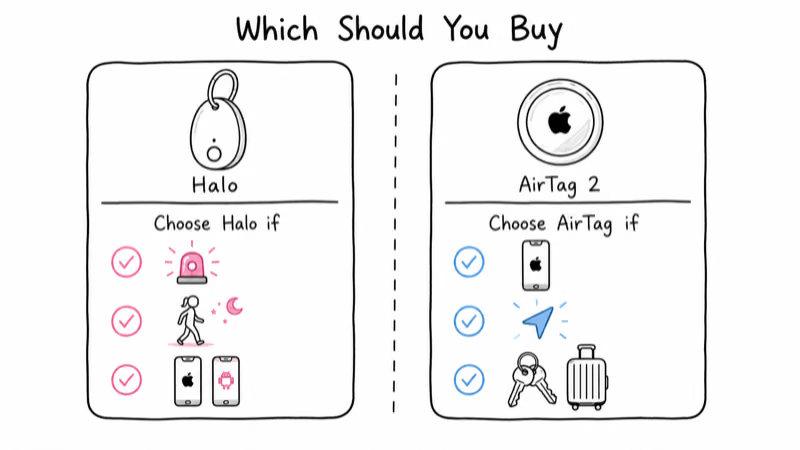
Buy the Pebblebee Halo if you want a built-in safety siren, strobe, and SOS on your keys, you switch between an iPhone and an Android phone, or you value live location-sharing with trusted contacts. It’s the personal-safety choice for solo travelers, night-shift commuters, and anyone who wants a panic button that also finds lost gear.
Buy the AirTag 2 if you live inside the Apple ecosystem, you want the tightest UWB Precision Finding, or you want the largest finding network with zero subscription. It’s the precision-and-network choice for iPhone owners tagging keys, wallets, and luggage who don’t need safety hardware.
For a household that just wants to never lose a bag, a $29 AirTag (or a $99 four-pack) is the cleaner answer than a $59.99 safety fob. For a person who walks to a car alone at night, the Halo’s siren is the feature that matters most.
Bottom Line
The Pebblebee Halo and AirTag 2 solve different problems. The Halo is the personal-safety pick, bolting a 130dB siren, strobe, and five-contact SOS onto a cross-platform finder for $59.99, with Alert Live free for a year then $24.99 annually.
The AirTag 2 is the precision-and-network pick at $29, pairing UWB Precision Finding with the largest Find My relay pool and no subscription, limited to the Apple ecosystem and carrying no safety hardware. Decide by the job: want a panic button that also finds your keys, take the Halo; want the tightest tracker on an iPhone, take the AirTag.
FAQ
Does the Pebblebee Halo have a safety siren?
Yes. The Pebblebee Halo includes a 130dB siren plus a strobe and a 150-lumen flashlight. You activate the emergency response by pulling the device’s two halves apart, which sets off the siren and strobe and shares your live location with up to five trusted contacts. A silent-alert mode can notify those contacts discreetly without triggering the siren or light. AirTag 2 has no equivalent safety hardware.
Does the Pebblebee Halo work with both iPhone and Android?
Yes, but only one network at a time. At first setup you choose either Apple Find My or Google Find Hub, and the Halo follows you on that network. That makes it a cross-platform option for a household running both phones, but you can’t have it report through both Apple and Google networks simultaneously. AirTag 2, by contrast, pairs only to Apple Find My.
Is AirTag more accurate than the Pebblebee Halo?
For close-range finding, yes. AirTag 2 uses Ultra Wideband Precision Finding to point an exact distance-and-direction arrow at a lost item, while the Halo relies on Bluetooth proximity that narrows you to a room rather than a spot. For wide-area recovery, AirTag also leads because it relays through Apple’s larger device network. The Halo trades that precision to add its safety siren and SOS.
Does the Pebblebee Halo require a subscription?
Partly. The Halo itself works without a subscription for basic finding, but the Alert Live live-location-sharing service is included free for only the first year and then costs $24.99 a year. AirTag requires no subscription at all, and its anti-stalking and finding features are free for life. Factor the recurring Alert Live cost into the Halo’s total price if live sharing is the feature you want.
Which tracker is more water resistant?
AirTag 2 carries IP67 (submersion up to 1 meter for 30 minutes), one tier above the Pebblebee Halo’s IP66 (protected against splashes and water jets but not designed for submersion). On paper both cover rain and splashes, but only AirTag is rated for a brief dunk. Rinse and air-dry either tracker after saltwater exposure to protect long-term battery life.
How long does the Pebblebee Halo battery last?
The Pebblebee Halo uses a rechargeable cell rated at about a year per charge and tops up over USB-C, so there are no coin cells to buy. AirTag 2 instead uses a replaceable CR2032 coin cell that also lasts over a year, swapped in seconds when it drains. Neither is objectively better: the Halo skips battery shopping, while the AirTag never needs a charging cable.
Which should I buy for personal safety versus just finding things?
Buy the Pebblebee Halo if personal safety matters: its 130dB siren, strobe, and five-contact SOS turn the fob into a discreet panic button, and it works across iPhone and Android. Buy AirTag 2 if you only need to find lost items on an iPhone, since it offers tighter UWB precision, the largest finding network, and no subscription. The Halo’s safety hardware is worth the premium only if you would actually use it.