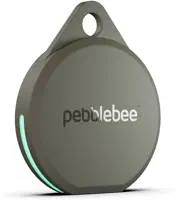
Choose the Pebblebee Halo for its pull-apart panic trigger, a built-in flashlight, and live sharing with five contacts. Choose the Clip 5 to get the same 130dB siren, strobe, and Alert safety mode in a $35 everyday finder at half the price.
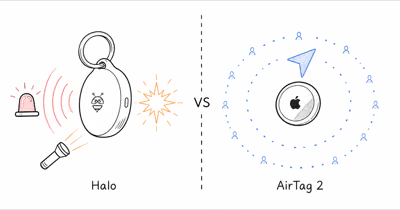
Both Pebblebee trackers clip to a keyring, pair to one network at setup, and carry the same 130dB siren plus Alert safety mode, but they answer different questions. New Atlas’s hands-on coverage describes the Halo’s 150-lumen LED strobe and pull-apart trigger, the headline of a fob built around a fast panic gesture.
- Both carry the same 130dB siren: siren, strobe, and Alert safety mode are built into the Halo and the Clip 5 alike
- The Halo’s edge is activation: a pull-apart gesture fires the alarm, plus it adds a flashlight the Clip 5 leaves out
- Both pick one network at setup: Apple Find My or Google Find Hub, never both at once
- The Clip 5 is the value pick at $35: the same core safety hardware for roughly half the Halo’s $59.99
- Live 5-contact sharing is the paid tier: Alert Live runs $24.99 a year, the Clip 5’s free Alert still pings one trusted contact
Pebblebee Halo vs Clip 5: Spec Comparison
The two split on activation and extras, not on whether they can sound an alarm. New Atlas’s hands-on coverage states that the Halo pairs a 130dB siren with a 150-lumen LED strobe and is rated IP66 water resistant. Pebblebee’s own listing confirms that the Clip 5 carries the same 130dB siren, strobe, and Alert safety mode in a $35 rechargeable finder that works with Apple Find My or Google Find Hub.
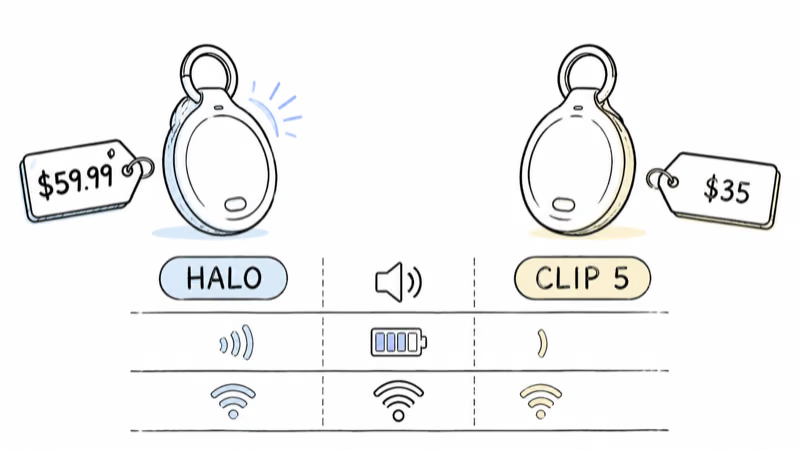
The two share more than the spec sheet first suggests: both carry a 130dB siren, a strobe, and Alert safety mode. The Halo’s edge is how you fire it — a pull-apart gesture you can trigger without looking — plus a flashlight the Clip 5 leaves out.
| Spec | Pebblebee Halo | Pebblebee Clip 5 |
|---|---|---|
| Price | $59.99 | $35 |
| Network | Apple Find My OR Google Find Hub (pick one) | Apple Find My OR Google Find Hub (pick one) |
| Safety siren | 130dB siren + strobe + flashlight | 130dB siren + strobe (no flashlight) |
| SOS / live sharing | Pull-apart trigger + alert to 5 contacts | Rapid-press Alert + location ping to 1 contact |
| Battery | Rechargeable, about 1 year per charge | Rechargeable, about 12 months per charge |
| Charging | USB-C rechargeable | USB-C rechargeable |
| Water resistance | IP66 (splash, jets) | IP66 (dust, splash) |
| Weight | 1 oz (28 g) | 0.35 oz (10 g) |
| Subscription | Alert Live free 1 yr, then $24.99/yr | None required (Alert Live optional, $24.99/yr) |
Activation and the flashlight are the real decision: both trackers carry the same 130dB siren and Alert mode, but the Halo adds a pull-apart trigger, a flashlight, and a year of five-contact live sharing, while the Clip 5 delivers the core safety hardware for far less. Everything else flows from that one split.
Pebblebee Halo vs Clip 5: Head-to-Head
⇄ Head-to-head
Pebblebee Halo vs Pebblebee Clip 5

- +130dB siren plus strobe and a flashlight for personal safety
- +Pull-apart SOS shares live location with up to five trusted contacts
- +Silent-alert mode pings your Safety Circle without the siren or strobe
- +Pairs to Apple Find My or Google Find Hub, so it crosses platforms
- +Rechargeable cell runs about a year and skips coin-cell shopping
- +Same 130dB siren, strobe, and Alert safety mode as the Halo, at $35
- +Rechargeable over USB-C with about 12 months of battery per charge
- +Built-in clip attaches to keys or a bag with no extra holder
- +Pairs to Apple Find My or Google Find Hub for cross-platform finding
- +Left-behind alerts warn you the moment you walk away from an item
- −$59.99 is roughly double the Clip 5's $35 everyday price
- −Alert Live live-sharing costs $24.99 a year after the first year
- −Heavier at 1 oz, a noticeable extra weight on a keyring
- −Safety hardware is wasted if you only ever want to find lost keys
- −You must pick Find My or Find Hub at setup, never both at once
- −Rapid-press Alert is less foolproof in a panic than the Halo's pull-apart trigger
- −No flashlight, where the Halo adds one
- −Still limited to one chosen network at a time, not both at once
- −Free Alert pings one contact; live five-contact sharing needs paid Alert Live
- −No bundled first year of Alert Live, unlike the Halo
- ·You want a built-in safety siren, strobe, and SOS on your keys
- ·You walk to a car alone at night or commute on a night shift
- ·You value live location-sharing with trusted contacts
- ·You'll actually use the safety layer, not just admire the spec
- ·You want the same 130dB siren and Alert mode for the lowest price
- ·You need to find lost keys, a wallet, or a bag day to day
- ·You prefer a built-in clip over buying an accessory holder
- ·You don't need the Halo's pull-apart trigger or flashlight
Pebblebee Halo: A Finder With a Safety Siren
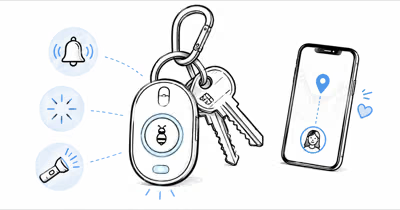
The Halo is the personal-safety pick. Its headline hardware is a 130dB siren paired with a strobe and a flashlight, and New Atlas’s hands-on report states that you pull the device’s two halves apart to trigger the alarm and alert your contacts at once. Tom’s Guide framed the result as a tracker built around emergency situations rather than just lost keys. That pull-apart gesture is the whole pitch: a finder that can also call for help.
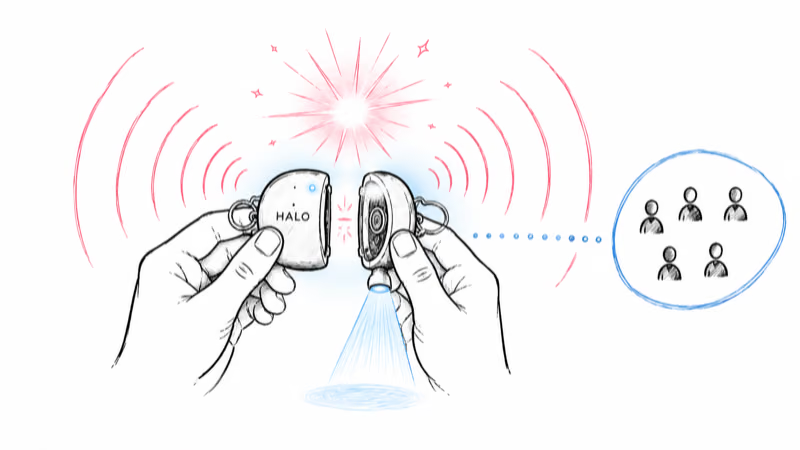
The live-location layer is the second half. When triggered, the Halo shares your real-time location with up to five trusted contacts in a Safety Circle, and a silent-alert mode lets you ping them discreetly without the siren or strobe. For the full safety-feature walkthrough, see our Pebblebee Halo review.
The Halo is also cross-platform: at setup you choose Apple Find My or Google Find Hub, so it follows you on whichever phone you carry. The catch is you commit to one network and pay $59.99 plus $24.99 a year for Alert Live after the first year. If you want to know how that safety angle compares to Apple’s tag, our Halo vs AirTag breakdown weighs the siren against UWB precision.
Pebblebee Clip 5: The Everyday Value Finder
The Clip 5 is the everyday-finder pick. Pebblebee’s own product listing describes it as a rechargeable tracker that pairs to Apple Find My or Google Find Hub, and Android Central’s hands-on review confirms the gen-five Clip charges over USB-C and folds Google’s Find My Device support into an affordable package. At $35 it does the same locating job as the Halo for roughly half the money.
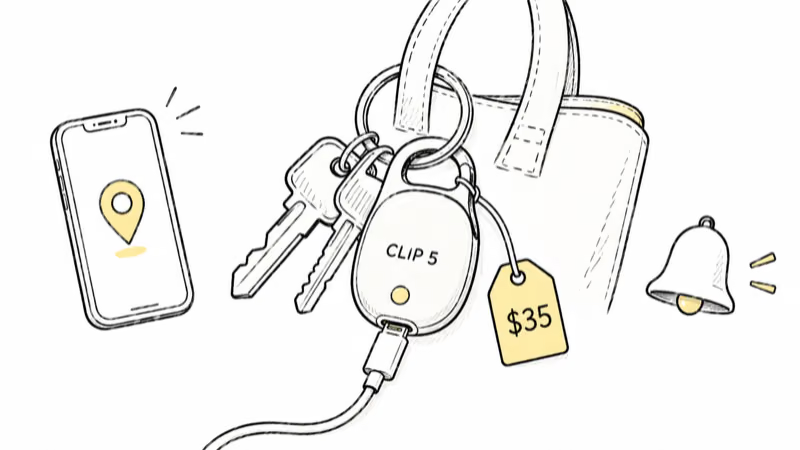
The Clip 5 keeps the same core safety hardware at a lower price: a 130dB siren, a strobe, and an Alert safety mode that rapid presses fire to ping a trusted contact. A built-in clip means no accessory holder, and left-behind alerts warn you the instant you walk away. Battery runs about 12 months per charge over USB-C. For the full breakdown, see our Pebblebee Clip 5 review.
What you give up against the Halo is the pull-apart trigger, the flashlight, and a bundled first year of five-contact Alert Live — the Clip 5’s free Alert pings one contact, and live five-contact sharing is an optional add-on. That trimmed safety layer is part of why it costs less. For how it stacks against a cross-platform rival at a similar price, our Clip 5 vs Chipolo Loop comparison weighs the two on value and loudness.
Do You Want a Safety Siren or an Everyday Finder?
Both can sound a 130dB alarm, so the real question is how you trigger it. The Halo’s pull-apart gesture fires its siren, strobe, and five-contact live sharing without you looking down, and it adds a flashlight on top. For a night-shift worker or a solo traveler walking to a car after dark, that no-look trigger is the whole point and it earns the premium.
If you want the same siren for less, the Clip 5 is the smarter buy. It carries the 130dB siren, strobe, and Alert mode for $35, charges over USB-C, and skips any required subscription. Paying double for the pull-apart trigger and flashlight you’ll rarely use is dead weight, and the Clip 5 lets you opt out of it.
The split comes down to activation: the Clip 5 fires the same alarm from a rapid-press Alert, while the Halo is built around a pull-apart panic gesture and a flashlight. Both can summon help; the Halo just makes it more foolproof.
Which Has Better Battery and Loudness?
For loudness, the two are matched: both carry a 130dB siren. The Halo’s advantage is the pull-apart trigger and the added flashlight, not the volume — the Clip 5 fires the same siren from a rapid-press Alert. Treat the shared rating as the deciding spec, then choose by activation.
For battery, the two are close. Both are rechargeable over USB-C, so neither needs coin cells. The Clip 5 is rated at about 12 months per charge, and the Halo runs roughly a year while powering its larger speaker and SOS radios. On published specs, battery is rarely the tiebreaker.
For network reach, they’re identical. Both pick Apple Find My or Google Find Hub at setup and tap the same relay pool you chose. If you’re deciding which network to commit to, our Find Hub hub covers how Google’s Android base compares with Apple’s device network on density.
Who Should Buy Each Tracker
Buy the Pebblebee Halo if you want the most foolproof panic trigger — a pull-apart gesture you can fire without looking — plus a flashlight and a bundled first year of five-contact live sharing. It’s the dedicated-safety choice for solo travelers and night-shift commuters who want a no-look alarm that also finds lost gear.
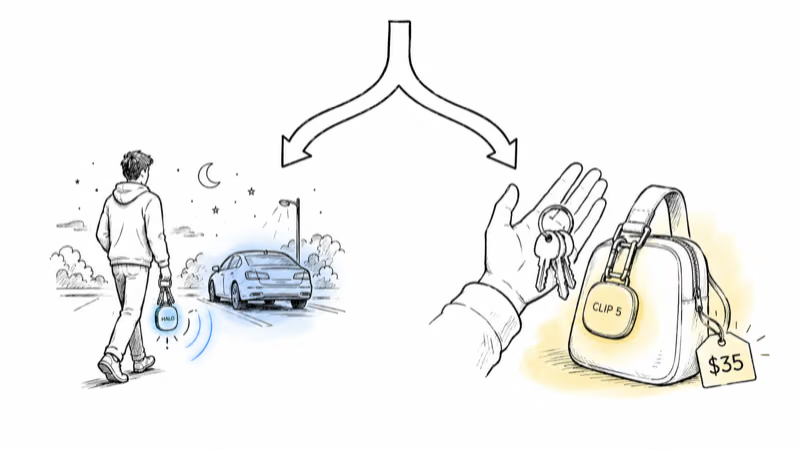
Buy the Pebblebee Clip 5 if you want the same 130dB siren and Alert mode at the lowest price, you need a rechargeable dual-network finder for keys, a wallet, or a bag, or you don’t need the Halo’s pull-apart trigger and flashlight. At $35 with no required subscription, it’s the cleaner everyday answer for most buyers.
For a household that just wants to never lose a bag, the $35 Clip 5 is the obvious pick over a $59.99 safety fob. For a person who walks to a car alone at night, the Halo’s pull-apart trigger — fired without looking — is the feature that matters most. Our best Find My trackers roundup shows where each lands against the wider field.
Bottom Line
The Pebblebee Halo and Clip 5 share the same 130dB siren, strobe, and Alert safety mode. The Halo is the dedicated-safety pick, adding a pull-apart trigger, a flashlight, and a free first year of five-contact Alert Live for $59.99.
The Clip 5 is the value pick at $35, delivering that same core siren and Alert in a rechargeable dual-network finder with a built-in clip and no required subscription. Decide by activation: want the foolproof pull-apart trigger and a flashlight, take the Halo; want the same core alarm for the lowest price, take the Clip 5.
FAQ
What is the difference between the Pebblebee Halo and the Clip 5?
Both carry a 130dB siren, a strobe, and an Alert safety mode, so both can double as a panic button. The Halo adds a flashlight and a pull-apart trigger that fires the alarm and shares live location with up to five contacts. The Clip 5 uses a rapid-press Alert that pings one contact for free, costs $35, and skips the flashlight. Both find lost items on Apple Find My or Google Find Hub.
Which Pebblebee tracker is cheaper?
The Clip 5 is cheaper at $35 versus the Halo’s $59.99, roughly half the price. The Clip 5 also has no subscription, while the Halo’s Alert Live live-sharing service is free for the first year and then costs $24.99 a year. Over two years the Halo costs noticeably more once you add the recurring fee, so the Clip 5 is the clear value pick if you only need finding.
Do both the Halo and Clip 5 work with iPhone and Android?
Yes, but only one network at a time. At first setup each tracker pairs to either Apple Find My or Google Find Hub, and it then reports on that network. That makes both cross-platform options for a household running both phones, but neither can report through Apple and Google networks at the same time. You choose the network that matches the phone you carry most.
How loud is each tracker?
Both reach 130dB: the Halo and the Clip 5 share the same siren rating. The difference is activation and extras, not volume — the Halo fires its siren from a pull-apart gesture and adds a flashlight, while the Clip 5 fires the same siren from a rapid-press Alert. Choose by trigger style, not by loudness.
Does either Pebblebee tracker need a subscription?
No subscription is required for either tracker’s finding, siren, or basic Alert. Live five-contact sharing is the one paid feature: Alert Live costs $24.99 a year and is included free on the Halo for the first year, while the Clip 5’s free Alert pings a single contact and Alert Live is an optional add-on. So you only pay if you want live location shared with up to five people.
How long does the battery last on each one?
Both are rechargeable over USB-C, so neither uses coin cells. The Clip 5 is rated at about 12 months per charge, and the Halo runs roughly a year while powering its larger speaker and SOS radios. Based on those ratings, battery life is rarely the deciding factor between them.
Which should I buy for everyday finding versus personal safety?
Both handle finding and safety, so price and activation decide it. Buy the Clip 5 for the same 130dB siren and Alert at the lowest price: $35, no required subscription, on Apple Find My or Google Find Hub with left-behind alerts. Buy the Halo if you want the pull-apart trigger, a flashlight, and a free first year of five-contact live sharing — a more foolproof panic button worth the premium only if you would use it.