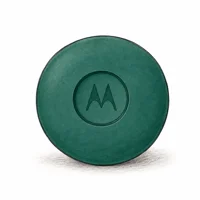
The Moto Tag 2 and Pebblebee Clip 5 take opposite approaches to powering a tracker. Pebblebee’s Clip product page states the Clip 5 charges over USB-C and runs up to 12 months per charge while pairing to either Apple Find My or Google Find Hub, where the Moto Tag 2 commits to a single network and a swappable CR2032 cell.
- Moto Tag 2 uses a replaceable CR2032: more than 600 days per cell, no charging cable ever needed
- Pebblebee Clip 5 is USB-C rechargeable: up to 12 months per charge on a sealed cell you top up
- Network reach is the biggest split: Moto Tag 2 is Find Hub only, Clip 5 pairs to Find My or Find Hub
- Water resistance favors the Moto Tag 2: IP68 (1.5m) versus the Clip 5’s IP66 splash and jet rating
- Prices crossed in June 2026: Moto Tag 2 now $29.99 after its U.S. launch, below the Pebblebee Clip 5 at $35
Moto Tag 2 vs Pebblebee Clip 5: Spec Comparison
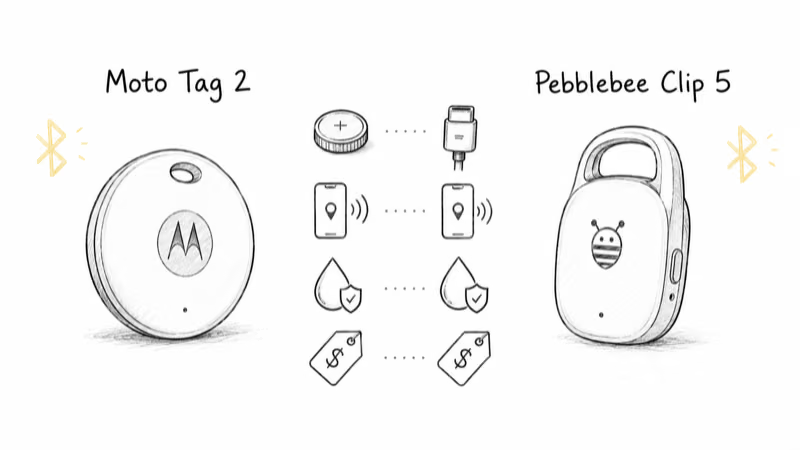
The two trackers share the Google Find Hub network, but everything else pulls them apart. Android Authority’s Pebblebee Clip coverage found that the Clip’s dual-network pairing makes it a rare tracker that follows you between an iPhone and an Android phone, a flexibility the single-network Moto Tag 2 does not offer.
| Spec | Moto Tag 2 | Pebblebee Clip 5 |
|---|---|---|
| Price | $29.99 (U.S. launch) | $35 |
| Network | Google Find Hub only | Apple Find My + Google Find Hub |
| Battery type | Replaceable CR2032 | USB-C rechargeable (sealed) |
| Battery life | More than 600 days per cell | About 12 months per charge |
| Precision radio | UWB plus Bluetooth 6.0 Channel Sounding | Bluetooth, no UWB |
| Attachment | No built-in clip | Built-in clip loop |
| Left-behind alerts | Via Find Hub | Built-in left-behind alerts |
| Water resistance | IP68 (1.5m, 30 min) | IP66 (splash and jets) |
| Subscription | None | None |
The battery row is the real decision: the Moto Tag 2’s CR2032 means you never plug it in but do buy a $1 coin cell about every 16 months, while the Pebblebee Clip 5 never needs a coin cell but asks for a USB-C top-up roughly once a year. Neither is objectively better, since the answer depends on whether you would rather swap a battery or remember a charging cable.
Moto Tag 2 vs Pebblebee Clip 5: Head-to-Head
⇄ Head-to-head
Moto Tag 2 vs Pebblebee Clip 5
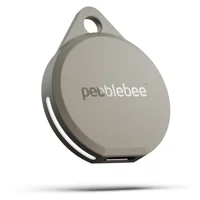
- +First tracker to ship Bluetooth 6.0 plus Channel Sounding for sub-meter precision
- +More-than-600-day CR2032 rating means no charging cable ever
- +IP68 water resistance survives 1.5 meters submerged for 30 minutes
- +Swappable $1 coin cell keeps the tag alive for years
- +Deep Find Hub integration ranks alongside Pixel Watch and Pixel Buds Pro 3
- +Dual-network: pairs to Apple Find My or Google Find Hub at first setup
- +USB-C rechargeable means no coin cells to buy, about 12 months per charge
- +Built-in clip loop attaches to bags and keys without an extra holder
- +Built-in left-behind alerts warn you before you walk away from an item
- +$35 price undercuts the Moto Tag 2 by about $8
- −Channel Sounding only activates on Android 16 plus Snapdragon 8 Elite or newer
- −Google Find Hub only; no Apple Find My pairing
- −No built-in attachment, so a holder costs extra
- −The $19.99 U.S.-launch intro price is limited-time; regular is $29.99
- −No standalone left-behind alert hardware, relies on Find Hub
- −No UWB or Channel Sounding, so no sub-meter Precision Finding
- −Sealed rechargeable cell retires the tag after about 3 to 5 years
- −IP66 is one tier below the Moto Tag 2's IP68 submersion rating
- −Recharging twice a year is a chore coin-cell tags avoid
- −Larger fob shape than a flat coin puck
- ·You carry an Android 16 flagship and want Channel Sounding precision
- ·You prefer swapping a coin cell over remembering a charging cable
- ·You want the IP68 water-resistance tier for outdoor carry
- ·You are all-in on the Google Find Hub ecosystem
- ·You switch between an iPhone and an Android phone and want one tag for both
- ·You would rather recharge over USB-C than buy coin cells
- ·You want a built-in clip and standalone left-behind alerts
- ·You don't need UWB-class Precision Finding
Moto Tag 2: Precision and Set-and-Forget Battery
The Moto Tag 2 is the precision-and-longevity pick. It pairs Bluetooth 6.0 Channel Sounding with UWB, and Tom’s Guide’s launch report confirms that Motorola claims sub-meter accuracy on supported Android 16 hardware, a precision class the Pebblebee Clip 5 can’t reach without UWB.
The CR2032 cell is the other half of the pitch. Motorola’s current US page rates it for more than 600 days, and the tag never needs to be plugged in. When the cell finally drains, a replacement CR2032 restores service.
The trade-off is single-network lock-in. The Moto Tag 2 pairs only to Google Find Hub and never to Apple Find My, so it follows you only as long as you stay on Android. Google’s Find Hub help center states that compatible trackers report location through nearby Android devices, the same relay model both tags here depend on. Our Find Hub vs Find My breakdown covers how the two networks compare on device density.
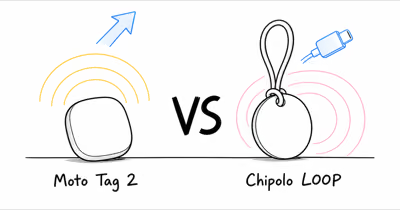
The Moto Tag 2 also faces the rechargeable Chipolo LOOP head-on, and our how the Chipolo LOOP compares to the Moto Tag 2 breakdown weighs UWB precision against never buying a coin cell.
Pebblebee Clip 5: Dual-Network and Rechargeable
The Pebblebee Clip 5 is the flexibility pick. Its headline feature is dual-network pairing: at first setup you choose Apple Find My or Google Find Hub, which makes it one of the few trackers that follows you between an iPhone and an Android phone. For a fuller look at the brand’s lineup, our Pebblebee review covers the Clip, Card, and Tag side by side.
The USB-C rechargeable cell is the second draw. Rated at about 12 months per charge, it removes coin cells from the equation entirely, though the sealed cell does retire the tag after roughly three to five years. Pebblebee rates a full recharge at roughly two hours over a standard USB-C cable.
The Clip 5 also ships a built-in clip loop and standalone left-behind alerts, so it attaches to a bag without a holder and warns you before you leave an item behind. For where it ranks among cross-platform pucks, our best dual-network trackers roundup places it against the Chipolo LOOP and Chipolo Pop.
CR2032 or USB-C: Which Battery Model Wins?
This is the question the whole comparison turns on. The Moto Tag 2’s CR2032 has the longer published interval at more than 600 days versus the Clip 5’s roughly 12 months per charge, and a coin-cell tag keeps working through a quick swap.
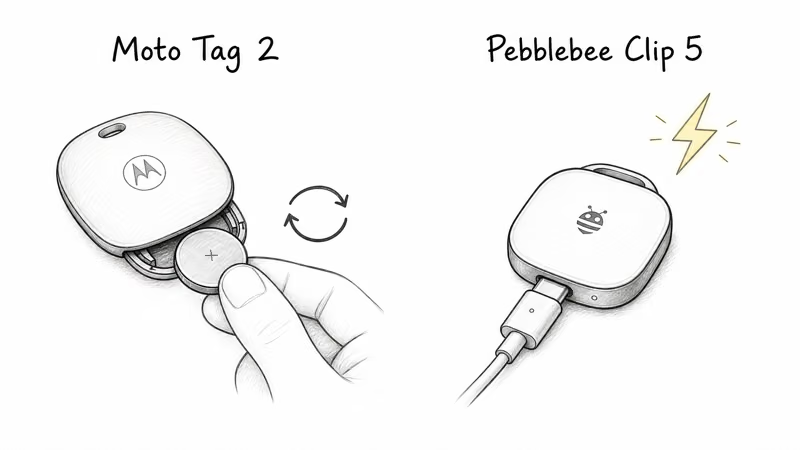
The Pebblebee Clip 5 wins on never buying anything. A USB-C cable you already own tops it up twice a year, with no trip to the drugstore and no tiny cell to lose. The catch is the sealed cell ages, so the Clip 5 has a hard retirement window of three to five years that a coin-cell tag avoids.
The choice is about habit. If you reliably plug in a phone every night, adding a tracker to the charging routine is the easier maintenance model. If you forget cables, the more-than-600-day coin cell is the safer bet. Our rechargeable Bluetooth tracker guide covers the trade-off in more depth.
Which Tracker Finds Lost Items Faster?
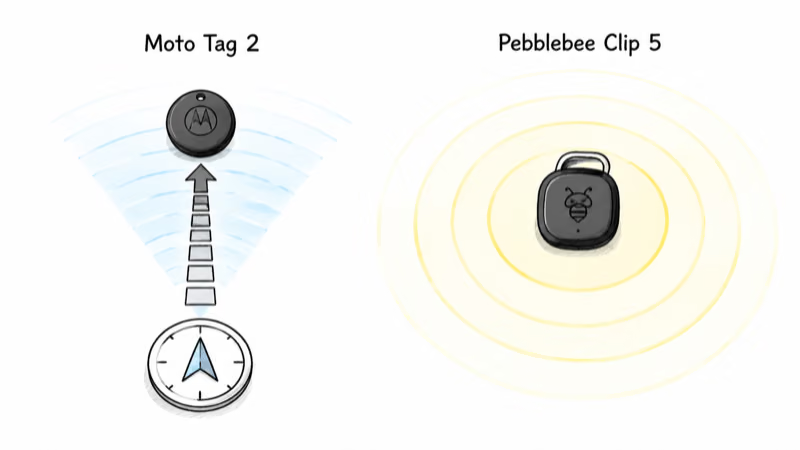
For close-range pinpointing, the Moto Tag 2 has the clear edge. Its Channel Sounding radio promises sub-meter accuracy on supported phones, while the Pebblebee Clip 5 relies on Bluetooth proximity that narrows you to a room rather than a spot. For an item wedged into furniture, a UWB direction arrow points you to the exact spot, whereas blind proximity search only confirms you are close.
For wide-area recovery, the gap narrows because both lean on a crowd network. The Moto Tag 2 uses Google Find Hub, and the Pebblebee Clip 5 can use Find Hub or Find My, so a Clip 5 paired to Find My taps Apple’s larger device base. Google’s Find Hub announcement states the network now spans more than a billion Android devices, which is the relay pool the Moto Tag 2 always uses.
For everyday left-behind warnings, the Clip 5’s built-in alerts are the simpler experience, while the Moto Tag 2 leans on Find Hub’s notifications. Our best Bluetooth tracker for Android guide ranks both on real-world find speed.
Who Should Buy Each Tracker
Buy the Moto Tag 2 if you carry a 2025-or-newer Android flagship and want Channel Sounding precision, you prefer swapping a coin cell over recharging, or you want the IP68 water-resistance tier. It’s the precision-and-longevity choice for committed Android users who value pinpoint finding.
Buy the Pebblebee Clip 5 if you move between an iPhone and an Android phone and want a single tag for both, you would rather recharge over USB-C than buy coin cells, or you want a built-in clip and standalone left-behind alerts. It’s the flexibility choice that fits households running both platforms.
For a household tagging the same suitcase across platforms, the Clip 5’s dual-network design is the cleaner answer than two single-network tags. If precision matters more than flexibility, the tracker battery life comparison shows how the Moto Tag 2’s cell longevity stacks against rechargeable rivals.
Bottom Line
The Moto Tag 2 and Pebblebee Clip 5 solve different problems. The Moto Tag 2 is the precision and set-and-forget battery pick for compatible Android phones, with Channel Sounding, a battery rated for more than 600 days, and an IP68 rating for a $29.99 outlay.
The Pebblebee Clip 5 is the flexibility pick at $35, pairing to either Find My or Find Hub on a USB-C rechargeable cell with a built-in clip and left-behind alerts. Decide by your phones and your charging habits: stay Android and value precision, take the Moto Tag 2; cross platforms or hate coin cells, take the Clip 5.
FAQ
Does the Pebblebee Clip 5 work with both iPhone and Android?
Yes. The Pebblebee Clip 5 is a dual-network tracker that pairs to either Apple Find My or Google Find Hub, which you choose at first setup. That makes it one of the few trackers that follows you between an iPhone and an Android phone. The Moto Tag 2, by contrast, pairs only to Google Find Hub and never to Apple Find My.
Which lasts longer, a CR2032 or the Pebblebee USB-C cell?
The Moto Tag 2’s CR2032 is rated for more than 600 days per cell, while the Pebblebee Clip 5 runs up to 12 months per USB-C charge. The coin cell has the longer published interval, but the Clip 5 never needs you to buy a battery. The trade-off is that the Clip 5 uses a sealed rechargeable cell, while a coin-cell tag can continue through battery swaps.
Is the Moto Tag 2 more accurate than the Pebblebee Clip 5?
For close-range finding, yes. The Moto Tag 2 ships UWB plus Bluetooth 6.0 Channel Sounding for sub-meter precision on supported Android 16 phones, while the Pebblebee Clip 5 uses Bluetooth proximity that narrows you to a room rather than a spot. For wide-area recovery the gap narrows, since both rely on a crowd-sourced network to relay location.
Which tracker is more water resistant?
The Moto Tag 2 carries IP68 (submersion up to 1.5 meters for 30 minutes), one tier above the Pebblebee Clip 5’s IP66 (protected against splashes and water jets but not designed for submersion). Both ratings cover ordinary fresh-water exposure, but only the Moto Tag 2 is rated for a brief dunk. Rinse and air-dry either tag after saltwater exposure to protect long-term battery life.
Do either of these trackers require a subscription?
No. Neither the Moto Tag 2 nor the Pebblebee Clip 5 requires a monthly subscription. Both are one-time purchases at $29.99 (Moto Tag 2, June 2026 U.S. launch price) or $35 (Pebblebee Clip 5), and all network, cloud, and app features are included for life. This separates them from Tile’s premium tiers, which gate some alert features behind a recurring fee.
Does the Pebblebee Clip 5 have a built-in clip?
Yes. The Pebblebee Clip 5 ships with a built-in clip loop, so it attaches to a bag, backpack, or keyring without buying a separate holder. The Moto Tag 2 has no built-in attachment point, so you would add a keychain holder to clip it to gear. The Clip 5 also includes standalone left-behind alerts that warn you before you walk away from a tagged item.
Which should I buy for a mixed iPhone and Android household?
The Pebblebee Clip 5 is the better fit because its dual-network design pairs to either Apple Find My or Google Find Hub, so one tag covers both platforms. The Moto Tag 2 only pairs to Find Hub, so it suits an all-Android household. If precision matters more than cross-platform flexibility, a dual-network Chipolo LOOP is another option worth comparing.