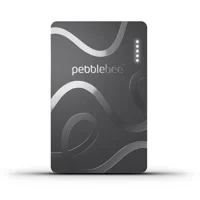
The eufy SmartTrack Card E40 and Pebblebee Card 5 are two of the thinnest rechargeable wallet trackers you can buy in 2026, both built for Apple Find My and Google Find Hub. Android Authority’s launch coverage of the E40 confirms it ships at $34.99 with a 1.7mm profile, putting it within a fraction of a millimeter and a dollar of the Card 5.
- Battery is the biggest gap — the Pebblebee Card 5 rates 18 months per Qi charge versus roughly 5 months for the eufy E40.
- The E40 is thinner with a published alarm spec — 1.7mm with an 80dB rating versus the Card 5’s 1.8mm body and undisclosed decibel rating.
- Water resistance favors Pebblebee — IP66 (dust-tight, jet-resistant) beats the E40’s unrated water-resistant build.
- Neither runs both networks at once — reviewers report you pick Find My or Find Hub at setup, and switching needs a factory reset on both cards.
- Price is effectively a tie — the E40 lists at $34.99 and the Card 5 at $35, and both charge wirelessly on any Qi pad.
Eufy E40 vs Pebblebee Card 5: At-a-Glance Comparison
These two cards solve the same problem — a trackable credit card for a wallet — and land within a dollar of each other. The differences are in endurance versus form factor, and they break cleanly. Here is the full head-to-head.
⇄ Head-to-head
eufy SmartTrack Card E40 vs Pebblebee Card 5
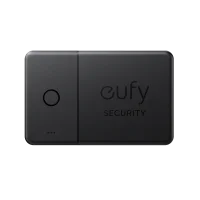
- +1.7mm body, the thinnest dual-network card on the market
- +Published 80dB alarm rating; Pebblebee discloses none
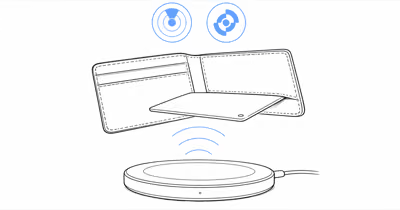
- +Qi wireless rechargeable, no proprietary cable
- +Bend-resistant construction built for wallet slots
- +Works with both Apple Find My and Google Find Hub
- +18-month battery per Qi charge, far longer than the E40
- +IP66 dust-tight and jet-resistant, the stronger rating here
- +Manufacturer-rated 500ft Bluetooth range
- +Link QR on the back for scan-to-return if lost
- +Double-press to ring your phone, even on silent
- −Rechargeable battery lasts only ~5 months per charge
- −Water-resistant only, no IP rating published
- −Choose one network at setup, switching needs a factory reset
- −No replaceable battery option
- −1.8mm, slightly thicker than the E40's 1.7mm
- −Alarm decibel level not disclosed by Pebblebee
- −Choose one network at setup, like the E40
- −Qi charger not included in the box
- ·You want the absolute thinnest card for a slim wallet
- ·A published 80dB alarm rating matters more than battery life
- ·You don't mind topping it up on a Qi pad every few months
- ·You're already in the eufy / Anker app ecosystem
- ·You want set-and-forget battery life (~18 months per charge)
- ·The card may face dust, rain, or jets and needs IP66
- ·A scan-to-return QR code adds peace of mind
- ·You'd rather charge once or twice a year than every few months
For how these cards fit into the wider world of Android-compatible trackers, see our Find Hub tracker hub, which collects every model certified for Google’s network.
Form Factor and Build Quality Compared
Both cards are engineered to disappear inside a wallet, and the margin between them is tiny. Android Authority reported that the E40 measures 1.7mm at its CES 2026 launch, edging out the Pebblebee Card 5 at 1.8mm. In a card slot, that 0.1mm is academic — either one fits where a credit card fits.
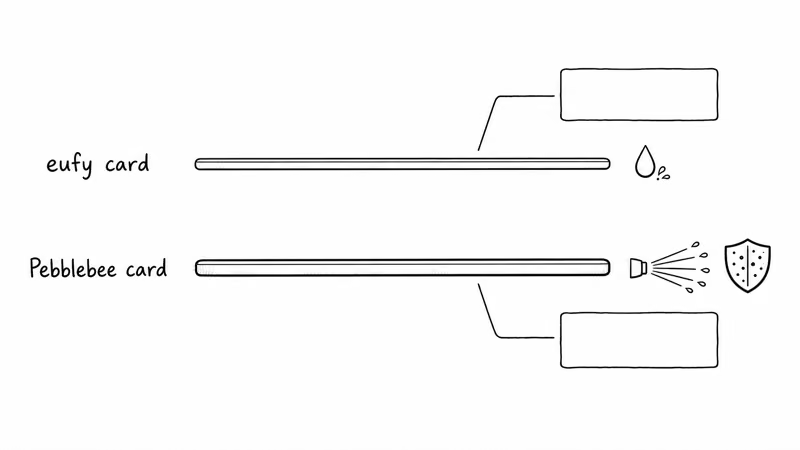
Build durability is where the gap widens. The Card 5 carries an IP66 rating, meaning it’s dust-tight and resists high-pressure water jets. The E40 is described only as water-resistant, with no IP rating published, so there’s no certified dust protection. For a card that lives in a damp jacket pocket or travels constantly, the dust-tight IP66 Card 5 is the safer long-term bet.
The IEC ingress-protection scale these ratings come from is defined in Wikipedia’s IP code reference, which confirms the “6” in IP66 means fully dust-tight. So Pebblebee gave up almost nothing on slimness to win on protection.
How Long Does Each Card’s Battery Last?
This is the headline difference. 9to5Toys’ Gen 5 hands-on confirms that the Card 5 is rated for up to 18 months on a single Qi charge, while Notebookcheck’s E40 coverage reports roughly 5 months per charge for eufy’s card. That is more than a 3x gap, and for a tracker buried in a rarely-opened wallet it changes how the product behaves.
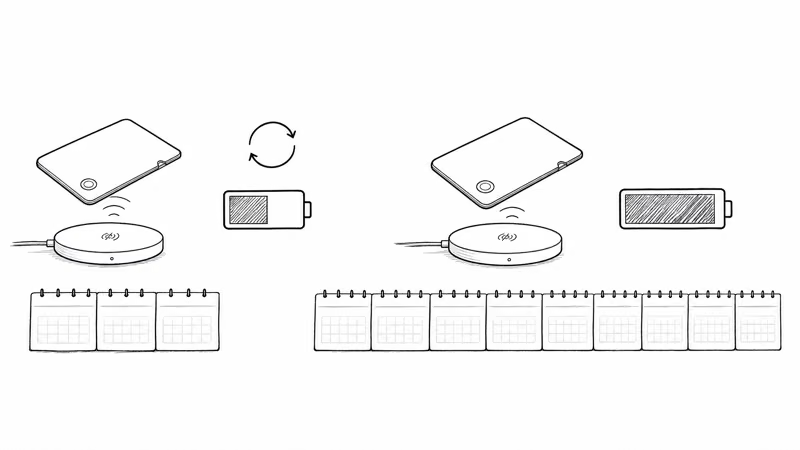
A 5-month cycle means setting a reminder to recharge two or three times a year. If the E40 dies the week your wallet goes missing, the tracker is useless exactly when you need it. The Card 5’s 18-month life turns recharging into a once-a-year afterthought, which is the right model for a passive, set-and-forget card.
Both ditch disposable coin cells for built-in Qi-rechargeable batteries, so neither generates the CR2032 e-waste that older cards did. Neither ships with a charger, though — you drop the card on any Qi pad you already own. On projected runtime, the gap makes the Card 5 the clear set-and-forget pick.
Do These Cards Run Both Networks at the Same Time?
This is the most misunderstood spec on both products. Despite “dual-network” marketing, neither card broadcasts to Apple Find My and Google Find Hub simultaneously. Reviewer coverage of the Card 5 states that you choose one network at setup, and switching requires a 10-second button hold to factory reset, then re-pairing in the other app — and your location history resets.
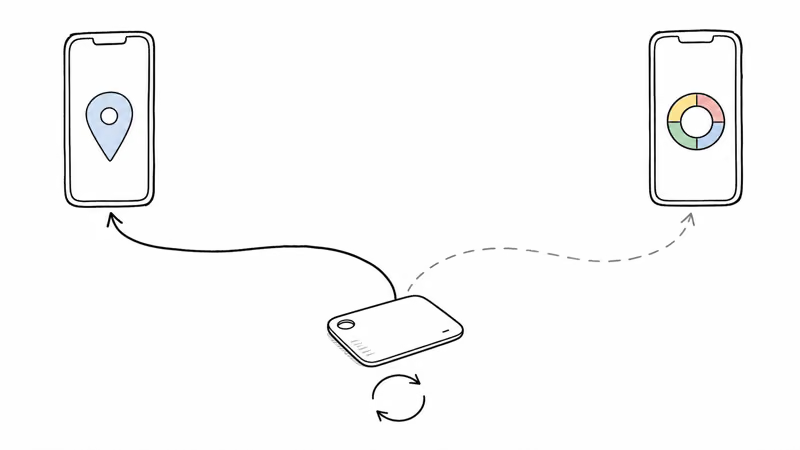
The eufy E40 uses the same setup model: pick a network at setup, hold the button to reset, then re-pair to switch. The technical reason is shared — a single BLE chip can only emit one beacon format at a time, and a dual-radio design would have made either card thicker. So treat “dual-network” here as “compatible with both,” not “active on both at once.”
If a fresh E40 won’t connect during that first setup, our E40 connection troubleshooting steps cover why the popup stalls and how to force the pairing.
Network choice has real consequences. Android Police documented a Reddit shipping test where a Pebblebee on Find Hub updated only a handful of times while an AirTag on Find My pinged frequently across the US. The piece reported that Apple held roughly 55 percent of US device share as of June 2024, leaving the Find Hub card pinged by fewer than half the phones around it.
The lesson applies to both cards: pick the network that matches the dominant phone ecosystem around you. Find My in the US, Find Hub in Android-heavy regions. Google’s Find Hub overview states that the network draws on billions of Android devices worldwide, so coverage depends heavily on where you are. Owners in the r/eufy E40 discussion thread describe sparse pings when a card crosses into a region where the weaker network has few nearby phones.
If running both networks at once is a hard requirement, neither card delivers it — a clip-style tracker is the better tool. Our dual-network tracker guide covers which models actually broadcast to both at once.
Alarm Volume and Find-Phone Features
For locating a card buried in a couch or bag, alarm volume counts. eufy’s current spec page rates the E40 siren at up to 80dB, loud enough by eufy’s description to be heard through a wallet or bag. Pebblebee touts a louder, brighter Gen 5 buzzer but has not published a decibel figure for the Card 5, so on the spec sheet the E40 is the safer pick for a stated loudness figure.
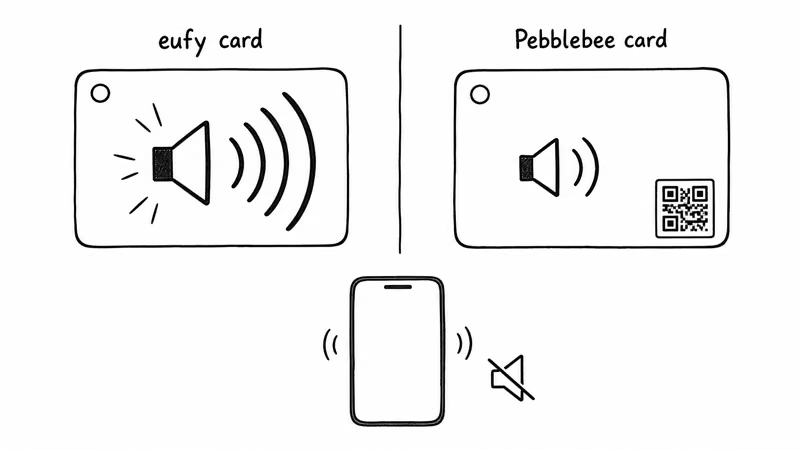
Both cards offer a reverse find-phone feature: double-press the button and your paired phone rings, even on silent. The Card 5 adds a Link QR code on the back so a good Samaritan can scan it and start a return without seeing your personal details. The E40 has no equivalent scan-to-return feature.
For a sense of how these alarms compare to round keychain tags and AirTag, our eufy vs Chipolo comparison breaks down loudness across form factors, since the loudest tracker in a lineup is rarely the slimmest one.
Price and Overall Value
On price, this is a tie. The eufy E40 lists at $34.99 and the Pebblebee Card 5 at $35 — a one-cent difference that no buyer should weigh. Neither requires a subscription, since Apple’s Find My network support page confirms that network access is free for certified third-party trackers, and Google Find Hub is free too.
Value, then, comes down to what you get for the same ~$35. The Card 5 returns more durability and longevity per dollar: 18-month battery, IP66, 500ft rated range, and the Link return QR. The E40 returns thinness and a confirmed-loud alarm. Because the two are price-matched, the decision is purely about which feature set fits your wallet’s life.
If you want to see how both stack up against AirTag and other mainstream tags before buying, our wallet card buying guide places these slim trackers in the broader market.
Bottom Line
Get the Pebblebee Card 5 if you want a wallet tracker you charge once a year and forget, with IP66 durability and a scan-to-return QR for the same $35. Get the eufy SmartTrack Card E40 if a 1.7mm thinnest-in-class body and a published 80dB alarm rating outweigh battery life. Both are strong choose-one dual-network cards — the Card 5 simply wins on the endurance metrics that matter most for a passive wallet tracker.
FAQ
Can the eufy E40 and Pebblebee Card 5 use Find My and Find Hub at the same time?
No. Despite dual-network marketing, reviewers report that both cards make you choose either Apple Find My or Google Find Hub at setup. Switching networks requires holding the button to factory reset and re-pairing in the other app, which clears your location history.
Which card has the longer battery life?
The Pebblebee Card 5 wins by a wide margin. It’s rated for up to 18 months per Qi charge, while the eufy SmartTrack Card E40 lasts roughly 5 months per charge. Both recharge wirelessly on any Qi pad, and neither uses a replaceable coin cell.
Is the eufy E40 louder than the Pebblebee Card 5?
There’s no way to compare directly. eufy publishes a rating of up to 80dB for the E40, while Pebblebee says the Gen 5 buzzer is louder than before but has not disclosed a decibel figure for the Card 5. The E40 is the only one of the two with a stated rating, so it’s the safer pick if you want a documented spec.
How thin are these two wallet cards?
The eufy E40 measures 1.7mm and the Pebblebee Card 5 measures 1.8mm. Both fit into a standard wallet card slot without noticeable bulk, so the 0.1mm difference has little practical impact on everyday carry.
Which card is more water and dust resistant?
The Pebblebee Card 5 carries an IP66 rating, meaning it’s dust-tight and resists high-pressure water jets. The eufy E40 is described only as water-resistant, with no IP rating published, so it covers splashes but has no certified dust protection. For a card that may face rain, sand, or sweat, the Card 5 is the more rugged option.
Do either of these trackers need a subscription?
No. Neither the eufy SmartTrack Card E40 nor the Pebblebee Card 5 requires a subscription or monthly fee. Apple Find My and Google Find Hub are both free services for certified third-party trackers, so you pay once for the hardware.
Can the Pebblebee Card 5 ring my phone?
Yes. Double-pressing the button on a Card 5 rings your paired phone even when it’s on silent. The eufy E40 offers the same reverse find-phone feature, but only the Card 5 adds a Link QR code on the back for scan-to-return if the card is lost.