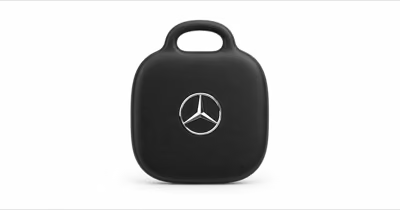
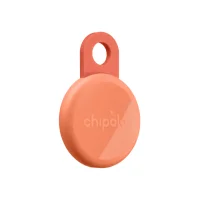
The Chipolo LOOP replaces the older Chipolo One Spot keyring tracker with a rechargeable design, a ruggedized silicone loop, and a louder alarm. MacRumors’ hands-on review found that the LOOP runs about 1 year per USB-C charge with no battery swap. The rechargeable port and IP67 silicone strap fix the two complaints that retired earlier Chipolo keyring trackers: a dead sealed battery and a flimsy plastic ring.
- Price and form factor: $39 keyring tracker with a flexible silicone loop attachment
- Battery: USB-C rechargeable, rated ~1 year per charge, ~90 minute full top-up
- Loudness: 125 dB peak alarm, the loudest in the Chipolo lineup
- Networks: Apple Find My or Google Find Hub, picked once at setup and not simultaneous
- Durability: IP67 dust-tight and waterproof to 1 meter for 30 minutes
Why a Rechargeable Loop Matters for Your Keys
Earlier keyring trackers from Chipolo, Tile, and Pebblebee shipped with sealed coin cells that died after 9 to 12 months and turned the entire tracker into e-waste. The LOOP swaps that disposable cycle for a USB-C port. A 2-hour top-up roughly once a year keeps the tracker on a keyring indefinitely.
Chipolo’s official LOOP spec sheet states that the alarm peaks at 125 dB, the sealing is IP67, and Bluetooth range reaches 120 meters. The USB-C cell is rated for about a year per charge, ending the disposable-battery cycle.
How the Chipolo LOOP Performs on a Real Keyring
On a daily-carry keyring, the reinforced silicone strap is the durability story: it flexes through pocket use without the cracking that retires plastic-ring keychains.
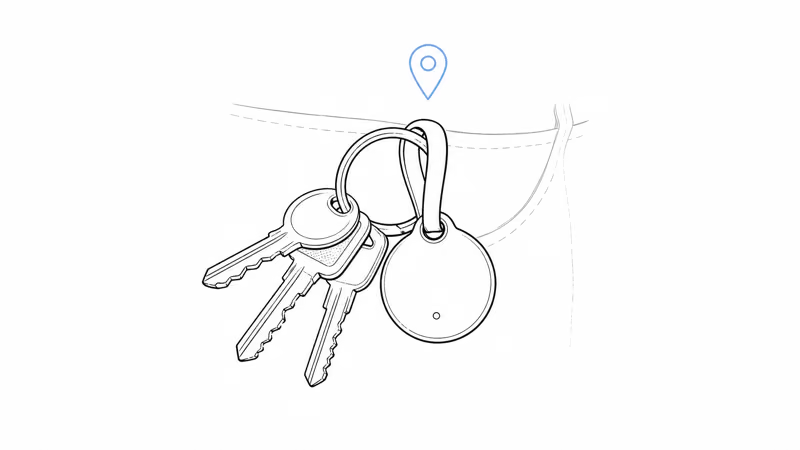
Apple Find My pairing is a quick first connect, and the LOOP shows up alongside AirTags in the Items tab, behaving identically for offline finding through nearby iPhones. Keys left in a public spot update when a nearby iPhone detects the tracker and relays the sighting.
Switching to Google Find Hub requires a separate factory-reset and re-pair flow. The LOOP runs on either network, but never both at once, a tradeoff covered later in the drawbacks.
Range, Alarm Loudness, and Find Speed
Chipolo states up to 120 meters of Bluetooth range in clear line of sight. As with any Bluetooth tracker, walls, furniture, phone antenna placement, and radio noise reduce usable range below the open-air spec, a pattern covered in our advertised-versus-usable range guide. Indoors, treat the spec as a best-case ceiling, not a promise.
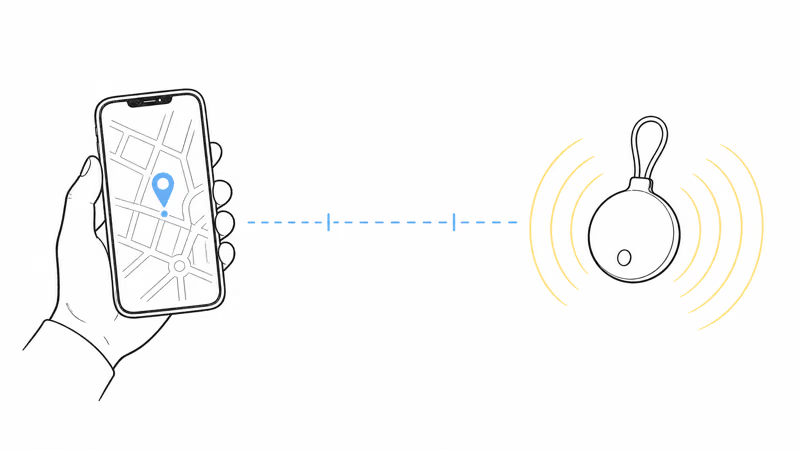
The 125 dB peak alarm is the loudest tracker in the Chipolo lineup. Speaker ratings are best read as close-range peak specs; fabric, cushions, pockets, and walls all muffle the sound. The practical advantage is extra headroom when keys are buried under soft material.
| Metric | Advertised | Practical caveat |
|---|---|---|
| Bluetooth range (line of sight) | 120 m | Best-case open-air ceiling |
| Indoor range | — | Drops as walls and furniture absorb signal |
| Alarm | 125 dB peak | Drops sharply through a wall |
| Offline find (Find My / Find Hub) | — | Depends on nearby phone density |
Apple’s Find My support page confirms that offline finding speed depends on nearby iPhone density. Dense city blocks usually relay sightings faster than rural areas because more phones pass the tracker.
How Does the LOOP Compare to the Chipolo CARD and Pop?
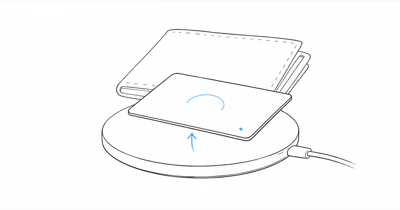
The Chipolo CARD trades the loop’s keyring durability for a 2.5mm wallet form factor and Qi wireless charging instead of a USB-C port. The newer Chipolo Pop follows the same Find My-or-Find Hub setup model, but uses a coin cell instead of rechargeable USB-C. For the full CARD trade-off list, our Chipolo CARD review covers wallet-specific use.
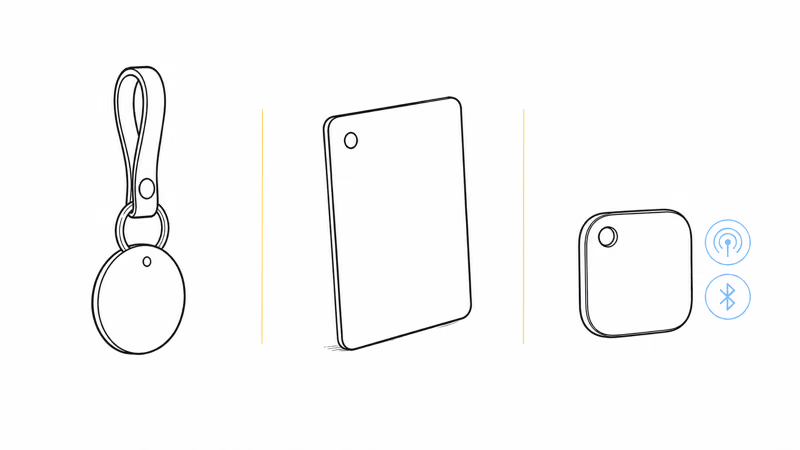
If a replaceable coin cell matters more than the rechargeable economics, the Chipolo Pop vs AirTag 2 comparison walks through that decision in depth. The LOOP still wins on alarm volume (125 dB versus the Pop’s 120 dB) and on never-replace battery economics over a 5 year horizon, a trade-off our Chipolo Loop vs Chipolo Pop breakdown maps out in full.
CNN Underscored’s Bluetooth tracker roundup recommends the LOOP specifically for travelers and active-lifestyle users who beat up their tracker hardware, then pairs that pick with the CARD for thin wallet duty.
Battery Life and USB-C Charging Behavior
Rated battery life is approximately 12 months per charge. Heavy Find Sound users who ring their keys daily will run it down faster; light, set-and-forget use gets closer to the rating.
The LOOP charges over USB-C, and the charge LED pulses orange while filling before turning solid green at the end. Chipolo makes no fast-charge claim, so plan to top it up before travel rather than treating it like a phone.
What Are the Drawbacks?
No tracker is perfect. Three things are worth flagging before you commit $39.
One network at a time. The LOOP commits to Apple Find My or Google Find Hub at first setup. Switching requires an 8-second button hold to factory reset, then a fresh pair through the new network’s app. For a mixed iPhone-Pixel household, the Google Find Hub vs Apple Find My breakdown is the right read before you pick which side the LOOP lives on.
Bulkier than a card or sticker. The LOOP is roughly 36mm wide with the silicone strap attached. It rings well on a backpack zipper or a luggage handle, but it fits awkwardly under a flat luggage tag where a Chipolo CARD would slide perfectly flat.
No UWB precision finding. The LOOP uses Bluetooth Low Energy only, so Find My on iPhone shows only approximate bearing, not the precise final-meter arrow.
Buyer Recommendations for the Chipolo LOOP
The LOOP is the right pick for keyring owners who travel often, sweat on outdoor gear, or quietly replaced a Chipolo One Spot every single year on the dot. The rechargeable USB-C port and IP67 silicone strap together outlast the wear-out cycles that retire most Bluetooth trackers. Android owners cross-shopping a UWB rival should see our Moto Tag 2 vs Chipolo LOOP comparison first.
For the rest of the Chipolo lineup in context, our full Chipolo review walks through the One Spot, LOOP, CARD, and Pop trade-offs side by side. For the broader category picture, our best rechargeable Bluetooth tracker roundup ranks the LOOP against rechargeable alternatives from Pebblebee and Eufy in one place.
Bottom Line
The Chipolo LOOP at $39 fixes the disposable-battery problem that retired the One Spot and adds the loudest alarm in the Chipolo lineup at 125 dB. Range, alarm volume, and offline finding speed all match or exceed the competition at the same price point. The main caveat is the one-network-at-a-time setup, which only really stings for households running both iPhones and Pixels.
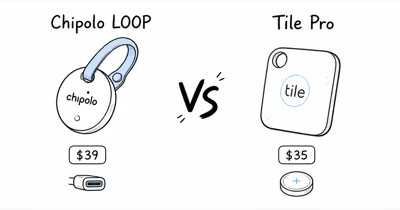
If your keys carried a Chipolo One Spot or a Tile Mate for years, the LOOP is the obvious upgrade path. For owners who want a replaceable coin-cell tracker with the same Find My-or-Find Hub flexibility, the Chipolo Pop is the better fit. If Tile Pro is also on your shortlist, our Chipolo LOOP vs Tile Pro covers the network and battery tradeoffs.
FAQ
How does the Chipolo LOOP attach to keys?
The LOOP uses a flexible silicone strap that loops through a standard keyring or carabiner. The strap is reinforced where it meets the tracker body, which is the failure point on older plastic-ring keychains. That reinforcement holds up to daily pocket use without fraying or stretching.
How long does the Chipolo LOOP battery last?
The rechargeable battery is rated for approximately 12 months per charge. Heavy Find Sound users who ring their keys daily will drain faster than that. Under normal keyring use, a full year per charge is realistic.
Does the Chipolo LOOP work on Android?
Yes, the LOOP supports Google Find Hub for Android phones running Android 11 or later. You can also pair it to Apple Find My instead, but not to both networks at the same time. Switching networks requires an 8-second button hold to factory reset and a fresh pair through the new app.
Can I use the Chipolo LOOP on Find My and Find Hub at the same time?
No. The LOOP supports either Apple Find My or Google Find Hub, but only one network at a time. To switch you factory reset the tracker with an 8-second button hold, then re-pair through the new network’s setup flow. The newer Chipolo Pop follows the same one-network-at-a-time model.
How do you charge the Chipolo LOOP?
The LOOP charges over USB-C using the cable that ships in the box. The charge LED pulses orange while filling and turns solid green when the cell is full. There is no fast-charge support, so top it up before travel rather than at the last minute.
What range does the Chipolo LOOP have?
Chipolo advertises 120 meters of Bluetooth range in clear line of sight. Indoors, treat that as a best-case ceiling: walls, furniture, radio noise, and the receiving phone all cut usable range. For nearby keys, the speaker is usually more useful than chasing the open-air number.
Is the Chipolo LOOP waterproof?
The LOOP is IP67 rated, which means it’s dust-tight and survives immersion in 1 meter of water for up to 30 minutes. That covers an accidental splash or a brief drop in water, but deliberate or repeated submersion is still not recommended.