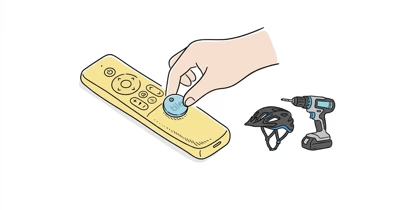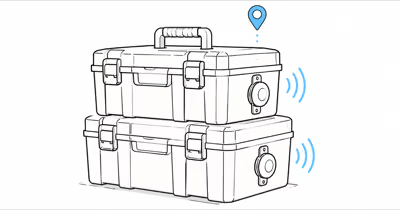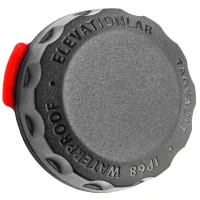
The TagVault Surface is the flat-mount sibling to the screw-on collar holders, built for the moment you need an AirTag fixed to a bike frame, a tool case, or a trailer rather than dangling from a keyring.
- 3M VHB adhesive is the entire bond — there are no screws or straps, and the page states it “mounts securely in seconds” once pressed onto a clean flat surface.
- IP68 shell protects an IP67 AirTag — the gasketed enclosure is rated one step above the tag inside it, closing the depth gap on Apple’s own IP67 rating.
- The mount is essentially permanent — VHB cures over 24 hours and removing it later usually destroys the adhesive pad and can mar the surface.
- Surface choice decides everything — VHB grips smooth, rigid, low-energy-clean materials and fails on rough, flexible, or oily ones.
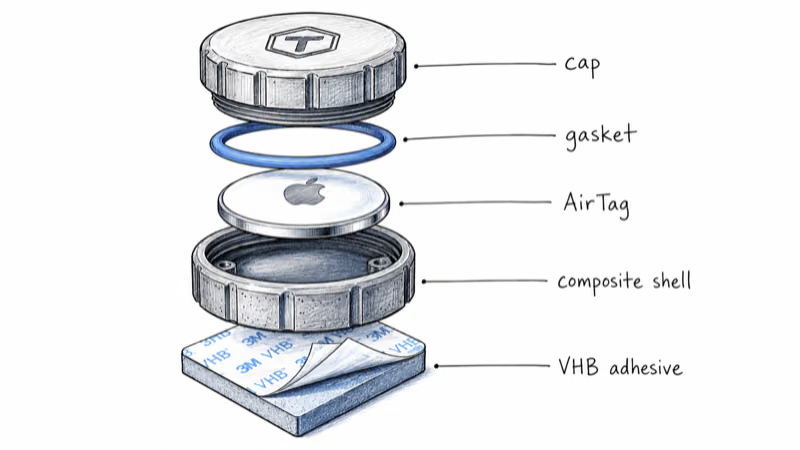
- The top unscrews like a contact-lens case — you swap the AirTag or its CR2032 battery without disturbing the bonded base.
The Elevation Lab TagVault Surface Explained
The TagVault Surface is a two-piece hard-shell AirTag enclosure from Elevation Lab, an Oregon accessory maker known for rugged Apple-device hardware. A bonded base stays stuck to the surface, and a threaded cap screws down over the AirTag to seal it.
Elevation Lab calls it the indestructible AirTag surface mount, and its design goal is a tag that does not rattle, fall off, or get pried loose.
Elevation Lab’s product page states that the mount “mounts securely in seconds with premium 3M VHB adhesive” and uses a “premium glass-filled composite construction.”
On clean, rigid surfaces — powder-coated metal, sealed composites, rigid plastics — the VHB pad grabs on contact and reaches full hold as it cures, following the 24-hour cure curve of industrial VHB tape. The glass-filled composite shell is also far more impact-resistant than a silicone sleeve, so a bench drop that would crack soft cases tends to leave it intact.
This matters because the enclosure does one job the keyring cases can’t: it commits the AirTag to a fixed location on an object. The cap unscrews so you can drop the tag in or pull its battery, but the base does not move once it cures. That permanence is the feature, not a flaw, as long as you pick the mounting spot deliberately.
§ Review summary
Elevation Lab TagVault Surface
≡ Specs
- Attachment
- 3M VHB industrial adhesive
- Enclosure
- Threaded glass-filled composite shell
- Water resistance
- IP68 rated enclosure
- Service access
- Cap unscrews for tag or battery changes
- Best surfaces
- Smooth, rigid and clean hard surfaces
✓ Pros
- +3M VHB adhesive holds flush with zero rattle once cured
- +IP68 shell out-seals the AirTag's own IP67 rating
- +Glass-filled composite is built for drops and impacts
- +Cap unscrews for AirTag swaps and battery changes
- +Low-profile design suits hard outdoor objects
✗ Cons
- −Removal usually destroys the adhesive and can mark the surface
- −Not suitable for rough, flexible, oily or textile surfaces
- −Cold-weather installation needs warming and a full cure day
- −Curved frames require a different mount
§ Buy if
- ·Buy for one permanent mounting point on a smooth, rigid object
- ·Choose a removable holder when the AirTag moves between items
- ·Choose a strap or shaped mount for soft, curved or textured surfaces
Installing the TagVault Surface
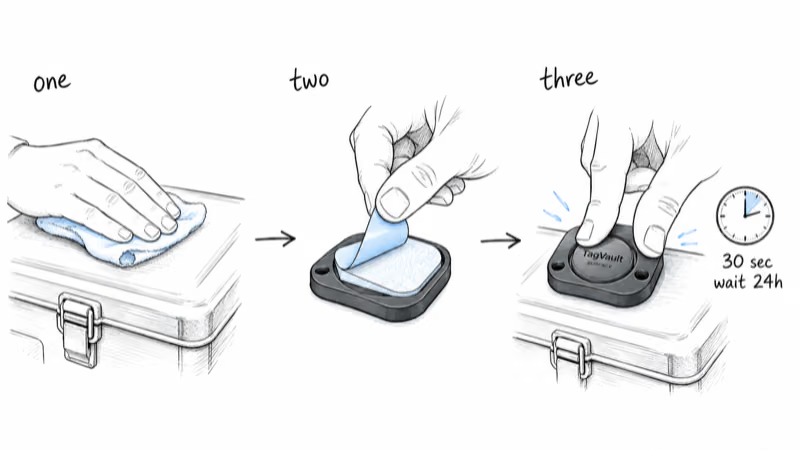
The bonding sequence is short. You clean the surface, peel the liner, press the base for about 30 seconds, then wait a full day before trusting the hold.
Elevation Lab’s literature notes its “trusted 3M VHB adhesive is the best adhesive” for the job, and that aligns with how industrial VHB tape behaves: it builds grip as the acrylic foam wets out against the surface over the first day. Treat every install as a one-shot decision, because lifting the base early tends to peel the foam apart instead of releasing clean.
Is the TagVault Surface Actually Waterproof?
The headline rating is IP68, and the gasketed cap is what earns it. Apple’s own AirTag tech specs page confirms that the bare tag is rated only IP67, tested to a maximum depth of 1 meter for 30 minutes under IEC standard 60529. The enclosure is rated a step higher. The practical effect is that the shell protects the tag’s unprotected CR2032 battery contacts from the splashes and washdowns that would corrode an exposed tag over a season outdoors.
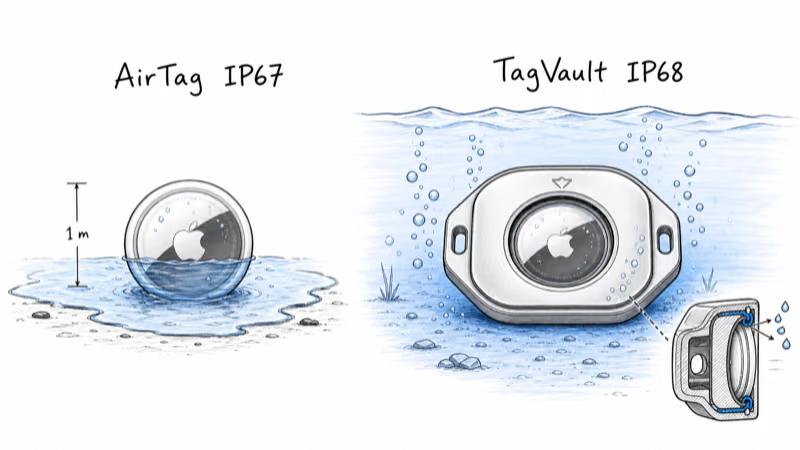
The difference between the two ratings is real. The IEC 60529 standard states that IP67 means 1 meter for 30 minutes, while IP68 covers “continuous immersion in water” under conditions the manufacturer specifies. In plain terms, IP67 is a single shallow dunk and IP68 is sustained submersion.
For a bike left in the rain or a trailer that gets hosed down, both ratings are overkill, and that is the point: the mount adds margin you’ll rarely test. A hose washdown or an overnight rain soak is well within what the sealed cap is rated to keep out.
One honest caveat applies to every IP rating. Apple notes that splash and water resistance “are not permanent conditions and resistance might decrease as a result of normal wear.” The gasket and the AirTag seal both age, so a three-year-old mount in daily weather is not the same seal it was new.
What Surfaces Does It Stick To?
3M VHB tape is the deciding variable, and it’s picky. It bonds best to smooth, rigid, clean surfaces: powder-coated metal, glass, sealed composites, and most rigid plastics. It struggles on rough concrete, raw wood, soft rubber, flexing panels, and anything oily or dusty.
On a clean powder-coated frame or a galvanized hitch, the bond holds without creep. On a textured rubber fender mat it tends to peel within a day, because the tape never fully wets out against the texture.
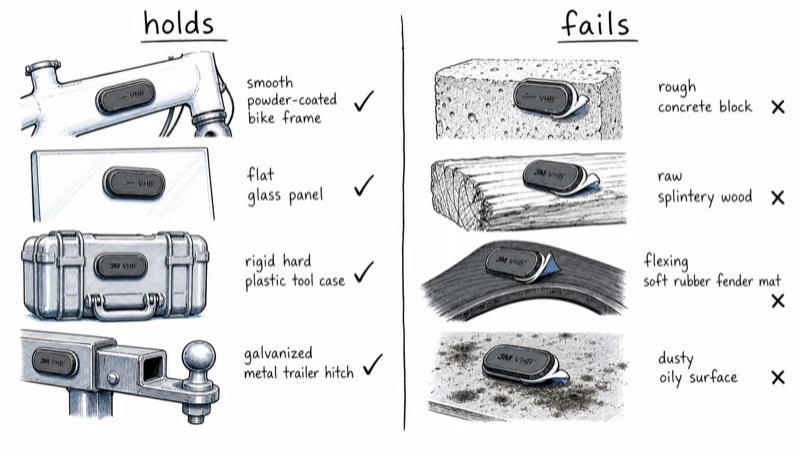
Prep is not optional. The surface must be clean and degreased, and cold weather slows the cure dramatically. If you mount in winter, warm the surface first and give the bond a full day before you trust it. For curved or irregular shapes, a flat surface mount is the wrong tool, and Elevation Lab makes dedicated bike and strap variants for those jobs instead.
Best Use Cases for a Flat AirTag Mount
The TagVault Surface earns its keep on objects that stay outdoors and have a flat hard face: the underside of a kayak deck, a generator housing, a job-site tool case, a trailer tongue, or the inside shell of hard luggage.
Travelers like it for the rigid inner wall of a checked bag, where a flush mount won’t snag or get crushed. It’s the wrong tool for a soft duffel, a textile collar, or anything you need to remove weekly.
Who the TagVault Surface Is For
Buy it if you have a specific object that lives outdoors, has a smooth rigid face, and rarely moves: a bike, a trailer, a generator, a hard tool case, or the shell of checked luggage.
The permanence that scares off casual users is exactly what makes it the right pick for anti-theft tracking, since a thief can’t pry it off the way they can unclip a keychain holder. Pair it with a hidden mounting spot and it becomes a quiet recovery tool.
Skip it if you move the AirTag between objects, need to track a pet collar, or only have soft, textured, or curved surfaces to work with. A keyring case or a strap mount is the better tool there. For a broader look at the category, our roundup of the best AirTag holders and accessories maps each mount type to its job, and the collar-specific TagVault Pet review covers the screw-on sibling for dogs.
Bottom Line
The TagVault Surface is a single-purpose tool that does its one job well. If you need an AirTag permanently bonded to a flat, hard, outdoor surface, the 3M VHB adhesive and IP68 shell deliver a rugged, weatherproof mount that out-seals the tag inside it. Just commit to the spot before you press, because there is no clean way back.
If your surface is soft, curved, or temporary, look at a strap or keychain mount instead. Confirm your tag still reaches the network with our AirTag waterproofing guide and the wider best Find My trackers comparison.
FAQ
Can you remove the TagVault Surface after it sticks?
Not cleanly. The 3M VHB adhesive cures to full strength over about 24 hours and bonds permanently. Pulling the base off usually tears the adhesive foam and can leave residue or mar the surface finish. Treat the mounting spot as a one-time decision, and warm the bond with a hair dryer first if you must attempt removal.
Is the TagVault Surface waterproof enough for outdoor use?
Yes. The gasketed cap is rated IP68, one step above the AirTag’s own IP67 rating from Apple. That covers rain, hose washdowns, and splashes that would otherwise corrode the tag’s battery contacts. Like any seal, the gasket ages, so an old mount in daily weather is not as tight as a new one.
What surfaces does the 3M VHB adhesive work on?
It bonds best to smooth, rigid, clean surfaces like powder-coated metal, glass, sealed composites, and hard plastics. It fails on rough concrete, raw wood, soft rubber, flexing panels, and anything oily or dusty. Clean and degrease the surface first, and give it a full day to cure before you trust the hold.
Does the TagVault Surface work with AirTag 2?
Yes. AirTag 2 keeps the original’s dimensions, so it seats in the TagVault Surface exactly like a first-generation AirTag. You unscrew the cap, drop the tag in, and screw it back down with no modification needed.
Can I change the AirTag battery without removing the mount?
Yes. The threaded cap unscrews like a contact-lens case, so you lift out the AirTag, swap its CR2032 cell, and reseal the shell. The bonded base never moves. Apple rates the CR2032 battery at roughly one year of everyday use.
Does the enclosure block AirTag’s Find My signal?
No. The glass-filled composite shell is transparent to Bluetooth and ultra-wideband, so Find My and Precision Finding work normally. The shell should not meaningfully reduce range compared with a bare tag.
Is the TagVault Surface good for anti-theft tracking?
It’s one of the better choices for it. Because the bond is permanent and the profile is low, a thief can’t quickly unclip or unscrew the mount the way they can a keychain holder. Hide it on a flat interior surface of a bike, trailer, or vehicle for the most discreet placement.