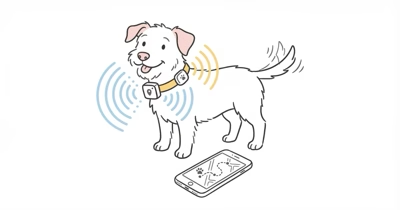
The Marco Polo pet tracker occupies a strange space in the pet tracking world.
It’s not GPS. It’s not Bluetooth. It uses radio frequency (RF) signals between a collar tag and a dedicated handheld locator, which means it works in places where most trackers don’t — rural properties with no cell towers, campgrounds, even international travel.
- Uses RF technology with 0.5-2 mile range — no cellular or Wi-Fi needed, but no map view either.
- One-time cost of $274.95 for the starter kit with zero monthly fees.
- IP67 waterproof tag with 6-week standby battery (rechargeable via USB).
- Safe zone alerts take 60-80 seconds to trigger — not instant like GPS geofences.
- No smartphone app — you must carry the bulky handheld locator to track your pet.
What Is the Marco Polo Pet Tracking System?
The Marco Polo by Eureka Technology Partners is a two-part system: a lightweight collar tag and a handheld locator.
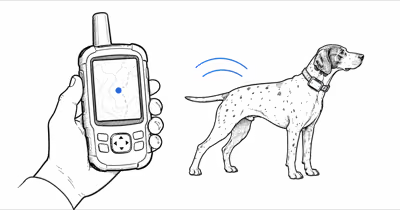
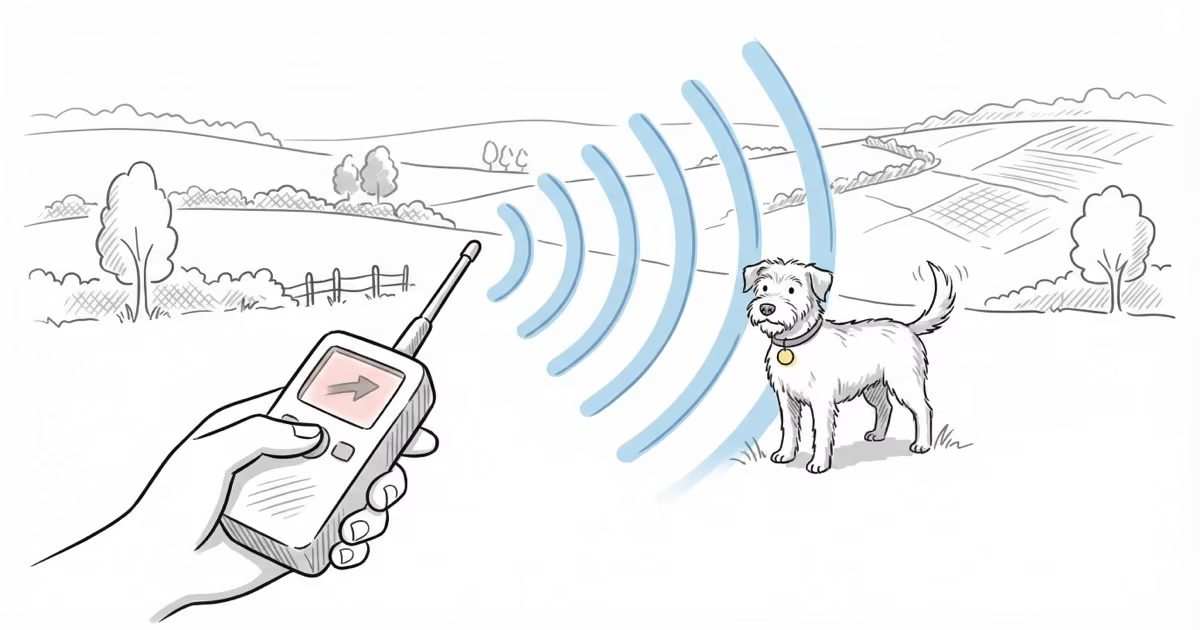
The tag sends RF signals, and the locator picks them up, displaying a directional arrow and signal strength percentage to guide you toward your pet. The American Kennel Club covers microchip-and-tag basics.
Think of it like a high-tech version of the pool game it’s named after. The locator “calls out,” the tag responds, and you follow the signal. It tracks up to 3 pets simultaneously without GPS satellites, cell towers, or monthly subscriptions.
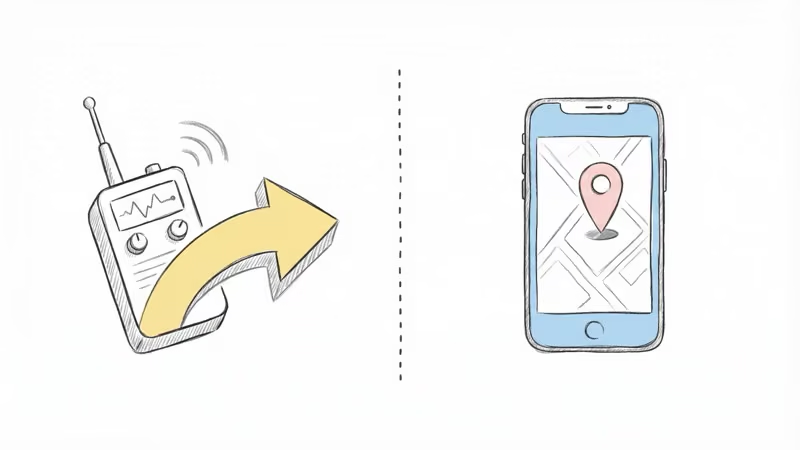
This makes it fundamentally different from GPS pet trackers like the Tractive or Fi, which pinpoint a location on a map but require ongoing cellular plans.
How Does RF Tracking Actually Work?
In track mode, the locator pings the collar tag every 5 seconds. The tag responds with its position relative to the locator. As you walk, the directional arrow updates in real time. Eureka Technology’s official product page states that the system reaches up to 2 miles of range in open line-of-sight conditions.
In practice, you’re walking around like you’re holding a compass, following the signal.
In open terrain with clear line of sight, the radio link performs at its best because fewer obstacles reflect or absorb the signal. In dense neighborhoods with houses reflecting signals, accuracy drops. The locator can narrow the search in ideal conditions, but multipath interference from buildings can confuse the readings.
According to the FCC’s RF device authorization records, Marco Polo’s handheld operated as a Part 15 license-free 900 MHz device. That’s why it required no subscription or cellular link to function.
This isn’t GPS-level precision. You won’t get a map pin. But when your dog has bolted into a forest with zero cell service, an RF locator that actually works beats a GPS tracker showing “No Signal.”

Marco Polo at a Glance
§ Review summary
Marco Polo Pet Tracking System
≡ Specs
- Tracking method
- Direct radio frequency
- Rated range
- 0.5–2 miles depending on terrain
- Location display
- Direction arrow and signal strength
- Phone or cellular service
- Not required
- Pets supported
- Up to 3 with additional tags
- Standby battery
- Up to 6 weeks
- Monitor-mode battery
- Up to 45 days
- Active-tracking battery
- Up to 3 days
- Water rating
- IP67
- Subscription
- None
- Best for
- Rural and off-grid pet finding
✓ Pros
- +No monthly fee or cellular plan
- +Works without cell service, Wi-Fi or a smartphone
- +Direct RF finding for rural properties and remote trips
- +IP67 collar tag with rechargeable batteries
- +Up to six weeks of standby time
- +Supports as many as three pets with additional tags
✗ Cons
- −Local RF range replaces the unlimited reach of a cellular tracker
- −No map pin, route history or smartphone app
- −Requires carrying a separate handheld locator
- −Buildings, hills and trees can reduce or distort the signal
- −The article reports slower safe-zone alerts than typical GPS geofences
- −High upfront price compared with most consumer trackers
§ Buy if
- ·Buy for off-grid pet finding where cellular trackers can't connect
- ·Buy when avoiding subscriptions matters more than remote map access
- ·Choose cellular GPS when worldwide phone-based tracking is the priority
Battery Life and Charging
The collar tag’s battery life varies dramatically by mode, as summarized in the review component above.
Both the tag and locator use rechargeable lithium polymer batteries that charge via USB in a few hours. No disposable batteries to buy. That’s a real advantage over Bluetooth trackers that use CR2032 coin cells lasting about a year.
The active tracking drain is worth noting. Continuous active tracking draws the battery down far faster than standby mode, so the rated standby life shrinks sharply once you start a live search. Three days sounds short, but you’re only in active track mode when your pet is actually missing. The ASPCA recommends having a tracking plan before pets go missing, not after.
Monitor Mode and Safe Zones
You don’t need active tracking 24/7. Monitor mode lets you set a safe zone with 4 preset radii — from 50 feet up to the locator’s maximum range.
If your pet crosses the boundary, the locator beeps within 60-80 seconds. That delay matters because a dog running at full speed covers about 200 feet in 60 seconds. By the time you get the alert, they could be a football field past the boundary.
GPS geofences on trackers like Tractive typically alert within 5-15 seconds. The Marco Polo’s slower alert is the trade-off for not needing cell service.
Marco Polo vs. GPS Pet Trackers
| Feature | Marco Polo | GPS Pet Trackers |
|---|---|---|
| Tracking range | 0.5-2 miles | Unlimited (cellular) |
| Location display | Direction arrow + signal % | Map pin |
| Smartphone app | No | Yes |
| Monthly fee | None | $5-20+/month |
| Works without cell | Yes | No |
| Water resistance | IP67 | Varies (IPX7-IP68) |
| Update frequency | Every 5 seconds | Every 2-5 minutes typically |
| 2-year total cost | $274.95 | $170-600+ |
The 2-year cost comparison tells an interesting story. A Tractive GPS tracker costs about $50 + $60/year for the subscription, totaling roughly $170 over two years. The Marco Polo is $275 upfront but nothing after that. If you’re keeping it for 3+ years, the math starts favoring Marco Polo.
But the GPS tracker gives you a map pin on your phone from anywhere in the world. The Marco Polo gives you a directional arrow from up to 2 miles away. These are fundamentally different tools for different situations.
Who Should Buy the Marco Polo?
Choose Marco Polo if
- You live in a rural area with poor cell coverage
- You travel internationally and don’t want roaming fees
- You refuse to pay monthly subscription fees
- Your pet roams a large property (ranch, farm)
- You don’t need smartphone-based tracking
Choose a GPS tracker if
- You need to track from anywhere via your phone
- Your pet could travel more than 2 miles
- You want a precise map location
- Fast geofence alerts matter (under 15 seconds)
- You’re in an urban/suburban area with good cell coverage
Pricing and What’s Included
The Marco Polo 1-pet starter kit runs $274.95 and includes the locator device, one collar tag, a nylon collar holder, USB charging cables, and documentation. Additional tags cost $119.95 each.
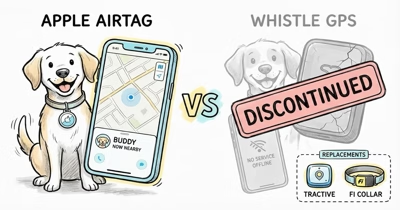
That upfront price is steep compared to a $29 AirTag or a $50 Tractive.
But factor in 2-3 years of subscription fees on GPS trackers and the gap narrows. For owners who plan to use a tracker long-term, the one-time payment makes sense.
Tips for Getting the Best Performance
Hold the locator horizontally, like a compass. This gives the most accurate directional readings. Keep line-of-sight between the locator and your pet’s tag when possible — trees, buildings, and even your own body can block RF signals.
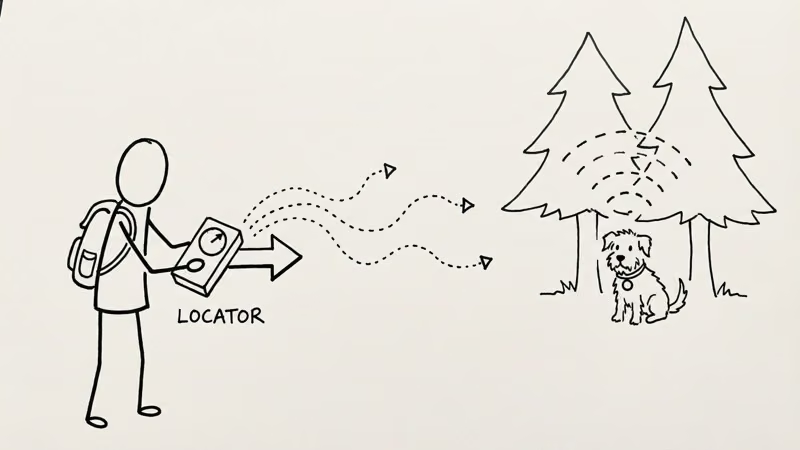
If signals seem erratic, move to a different spot.
RF signals bounce off structures and create interference patterns. Walking 10-20 feet in any direction often clears things up.
Keep the collar tag snug against your pet’s neck.
A loose tag that bounces around affects signal consistency. Trim the excess nylon holder strap after fitting.
Charge both devices regularly. Don’t let batteries drain completely — deep discharge cycles shorten lithium polymer battery lifespan over time.
Bottom Line
The Marco Polo Pet Tracker fills a real gap for pet owners in areas without cellular coverage. It’s not trying to compete with GPS trackers on features — it’s solving a different problem entirely.
If you need tracking where cell towers don’t reach and you’re willing to carry a handheld locator instead of using your phone, it works. The $274.95 upfront cost with zero monthly fees appeals to owners who hate subscriptions, but only if you keep it long enough for the math to work out. For most suburban and urban pet owners, a GPS tracker with a phone app and map view will be more practical.
FAQ
How accurate is the Marco Polo pet tracking system?
In open terrain, the directional arrow and signal strength guide you to within a few feet. Urban environments with buildings can reduce accuracy due to signal reflections. It’s not GPS-level map precision, but it’s reliable enough to find a dog that’s bolted into a field or wooded area.
What range should you expect from the Marco Polo tracker?
The manufacturer rates the system up to 2 miles in ideal open conditions. Hills, dense trees, buildings, and weather all reduce range, so the useful distance depends heavily on terrain and line of sight.
Can the Marco Polo tag handle water and rough conditions?
Yes. The tag has an IP67 rating, meaning it survives submersion to 3 feet for 30 minutes. The nylon collar holder adds protection against impacts, and the rating covers wet grass, rain, puddles, and brief dunking.
Does the locator use replaceable or rechargeable batteries?
Both the locator and collar tag have built-in rechargeable lithium polymer batteries. Charge via the included USB cables. No disposable batteries needed. Full charge takes a few hours.
Can I track my pet from my smartphone?
No. The Marco Polo has no smartphone app. You must use the dedicated handheld locator device within RF range to track. This is its biggest limitation compared to GPS trackers, but it’s also why it works without cell service.
Is the Marco Polo tracker still available in 2026?
As of March 2026, the Marco Polo starter kit is listed on Amazon at $274.95. Availability has fluctuated, so check current stock before purchasing. Eureka Technology Partners continues to sell directly through their website as well.
How does Marco Polo compare to using an AirTag on a pet collar?
An AirTag costs $29 with no monthly fee, but relies on nearby iPhones for location updates. In rural areas with few iPhone users, an AirTag might go hours without updating. The Marco Polo works independently of any phone network, making it more reliable in remote areas, though its range maxes out at 2 miles. For more on AirTag pet use, see our guide on using AirTags for dogs.