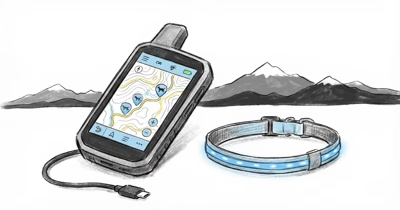
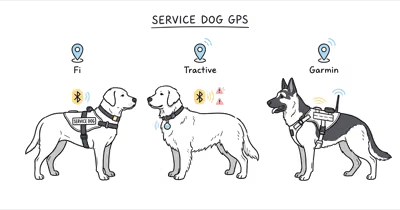
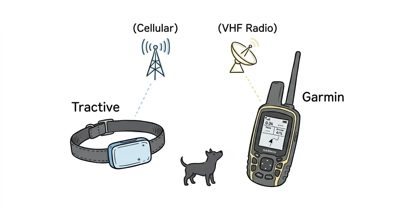
Hunting dog GPS trackers live in a different category from pet recovery devices. Subscription-based cellular trackers like Tractive or Fi need LTE coverage; in deep timber and the back forty they’re useless. The handheld Garmin platform uses VHF radio and proprietary GPS over line-of-sight that works anywhere your dog can run, with one upfront hardware purchase and zero recurring fees. This guide covers the four no-subscription handhelds we recommend for upland, big-game, and waterfowl crews.
- Best overall no-fee tracker: Garmin Alpha 300 at $700 with 9-mile range, e-collar training built in, and 20-dog capacity
- Best mid-range no-fee tracker: Garmin Astro 430 at $500, GPS only (no e-collar) with VHF radio and topo maps
- Best compact / budget tracker: Garmin Alpha 10 at $250, pocket-size GPS handheld paired with a phone for display
- Best long-range MURS tracker: Garmin Astro 900 at $700 with 9-mile MURS radio, ideal where VHF bands are crowded
- All four require zero subscription, no cellular signal, no monthly app fees, no data plans, just pure upfront hardware cost
At a Glance: No-Fee Hunting Dog GPS Trackers Compared
The table below summarizes the four picks. Prices reflect current US listings for the handheld plus one TT collar; multi-dog setups need additional collars at $250-$400 each.
| Tracker | Price (with 1 collar) | Range | E-Collar | Display | Best for |
|---|---|---|---|---|---|
| Garmin Alpha 300 | $700 | 9 miles VHF | Yes (18 levels) | Touchscreen color | Pro-grade upland and big game |
| Garmin Astro 430 | $500 | 9 miles VHF | No | Color non-touch | GPS-only hunters wanting Garmin reliability |
| Garmin Alpha 10 | $250 | 9 miles VHF | Yes (with separate collar) | Phone (paired via Bluetooth) | Solo houndsmen on a budget |
| Garmin Astro 900 | $700 | 9 miles MURS | No | Color touchscreen | Hunters in areas with VHF congestion |
None of these systems charge monthly fees of any kind. The Garmin handheld talks directly to the dog collar over radio without cellular networks, towers, or data plans. Once you buy the rig, ongoing cost is just collar batteries and the occasional replacement antenna.
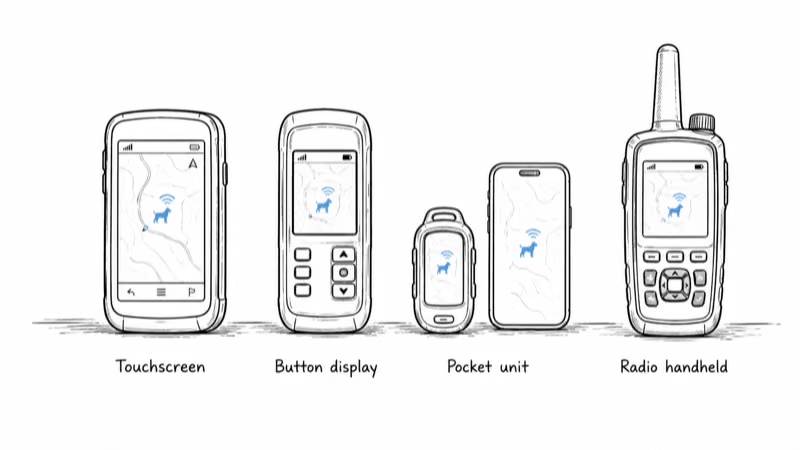
How Do You Choose a No-Subscription Tracker for Hunting Dogs?
The decision starts with how you actually hunt. Big-game houndsmen who chase bear and lion across mountain ranges need different gear than pheasant hunters working a CRP field. According to the American Kennel Club’s hunting test program, the four most common hunting categories each demand different tracker range and capability profiles, which is why a single recommendation rarely fits two hunters with different game preferences.
Upland bird hunters. Pheasant, quail, grouse. Dogs work 50-300 yards from the gun within thick cover, so range needs are modest but topo-map precision matters when dogs vanish into draws.
Houndsmen running bear, lion, or coyote. Dogs cover miles of terrain at full sprint. Range becomes critical: at 4-5 miles in mountain country, you’ll lose collar signal if the unit can’t push 9 miles in open conditions. Alpha 300 with the matched TT 25 collar is the standard pro rig for this tier, and most serious houndsmen run two collars or more on the same handheld so they can track different dogs through staggered pursuits across the same drainage.
Waterfowl and retriever trainers. Working dogs on long blinds or 200-yard marks. Range is short but the e-collar feature matters more than the GPS.
Garmin’s Astro 900 launch note puts pro-grade VHF/MURS dog systems in the multi-mile class, and anything advertising “1-mile range” with Bluetooth backup belongs to a different product category entirely.
The second decision is whether you need an e-collar. Alpha-series units bundle GPS tracking with 18-level stimulation training; Astro-series units are tracking-only. If you train with an e-collar already, an Astro plus existing setup might save you money over an Alpha bundle. Our Garmin Astro vs Alpha comparison covers the trade-offs.
The Best No-Fee Hunting Dog GPS Trackers in 2026
Garmin’s handheld lineup spans upland, big game, and waterfowl hunting, and the right unit depends on how you hunt. Our Garmin Alpha 300 review covers the flagship in depth; this roundup focuses on which unit fits which hunt style.
Garmin Alpha 300: Best Overall No-Fee Hunting Dog Tracker
Alpha 300 is the default pick for serious hunters who want one rig that does it all. The 9-mile VHF range is a line-of-sight rating, and the integrated 18-level e-collar means you train and track from one unit. Timber, terrain, antenna height, and collar fit all reduce radio range, so treat the rating as a ceiling rather than a guarantee.
§ Review summary
Garmin Alpha 300
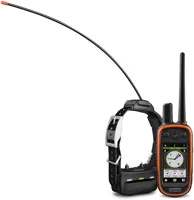
≡ Specs
- Range
- 9 miles VHF (line of sight)
- Capacity
- 20 dogs
- Training
- 18 stim levels + tone/vibration
- Maps
- Topo Active preloaded North America
- Battery (handheld)
- 20 hours
- Lifetime cost
- Hardware only, no fees
✓ Pros
- +9-mile VHF range covers mountain timber and big-game terrain
- +Integrated e-collar with 18 stim levels and tone/vibration
- +20-dog capacity for full hound packs and multi-handler hunts
- +Topo maps preloaded for North America at 1:100K scale
- +inReach SOS compatible for satellite-based emergency calls
- +Zero subscription, no data plan, no app fees ever
✗ Cons
- −Highest upfront cost at $700 handheld plus $400 TT 25 collar
- −Touchscreen wakes when bumped in pack, drains battery faster
- −Steeper learning curve than Astro for new Garmin users
§ Buy if
- ·You hunt big game or upland in terrain that needs 5+ miles of range
- ·You want one device that combines GPS tracking and e-collar training
- ·You run multiple dogs and need capacity for a full hound pack
- ·Zero subscription is non-negotiable for your annual gear budget
The Alpha 300 earns the Top Pick because it eliminates upgrade regret. Hunters who buy an Astro 430 and later get into hound running discover they need e-collar capability and either buy a separate Delta SE rig ($250) or trade up. Hunters who start with the Alpha 10 outgrow the phone-display dependency within a season. The Alpha 300 is the unit you keep for a decade because it covers every realistic upgrade path.
The biggest caveat: the $700 handheld plus $400 TT 25 collar means a single-dog rig costs $1,100. That’s the right number for serious hunters; recreational weekend hunters often start cheaper.
Garmin Astro 430: Best Mid-Range No-Fee Tracker
Astro 430 is the right pick for GPS-only hunters who already own e-collars. The 9-mile VHF range matches the Alpha 300, the color screen handles topo maps cleanly, and dropping the e-collar saves roughly $200 versus the equivalent Alpha bundle. Our Astro 430 review covers the full feature breakdown for grouse and chukar hunts.
§ Review summary
Garmin Astro 430
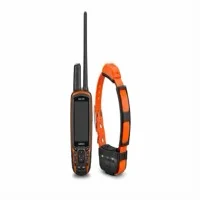
≡ Specs
- Range
- 9 miles VHF
- Capacity
- 20 dogs
- Training
- None (GPS tracking only)
- Display
- 3-inch color non-touch
- Battery (handheld)
- 20 hours
- Lifetime cost
- Hardware only, no fees
✓ Pros
- +9-mile VHF range identical to Alpha 300 (just no e-collar)
- +Color non-touch display works fine in gloves and rain
- +Topo maps preloaded for the lower 48
- +20-dog capacity for multi-dog upland and hound hunts
- +$200 cheaper than equivalent Alpha bundle if you already own e-collars
✗ Cons
- −No e-collar capability; need separate Delta or Dogtra if training is needed
- −Older non-touch UI feels dated next to Alpha 300 touchscreen
- −DC 50 collars are bulkier than TT 25 and run shorter battery
§ Buy if
- ·You already own an e-collar setup and only need GPS tracking
- ·You want Alpha-grade VHF range without paying for unused training features
- ·You prefer button navigation over touchscreen in cold weather
- ·Astro 320 to 430 upgrade path is on your radar (see comparison link below)
The Astro 430 carries the same 9-mile VHF rating as the Alpha 300, so the two sit in the same line-of-sight radio class. The difference is the interface: it drops the e-collar training and uses physical buttons instead of a touchscreen, which bulky-glove handlers in deep cold often prefer over the Alpha’s touch UI.
Garmin Alpha 10: Best Compact / Budget No-Fee Tracker
Alpha 10 is the pocket pick at the lowest entry price. The 1-inch display pairs to your phone over Bluetooth for the full map view, with the rig totaling about $550.
§ Review summary
Garmin Alpha 10
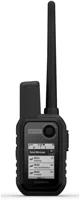
≡ Specs
- Range
- 9 miles VHF (matched to phone display)
- Capacity
- 20 dogs
- Training
- With separate TT mini collar
- Display
- 1-inch unit + phone via Bluetooth
- Battery
- 24 hours (longer than handhelds)
- Lifetime cost
- Hardware only, no fees
✓ Pros
- +Lowest entry price for the Garmin 9-mile VHF ecosystem
- +Pocket-size compact form factor fits in a vest pocket easily
- +Phone pairing gives you a full-color map without buying a handheld screen
- +20-dog capacity ceiling matches the Alpha 300
- +Works with the TT mini collar for compact-dog setups
✗ Cons
- −Requires phone within Bluetooth range; no fully-standalone navigation
- −1-inch native display shows only basic status without phone paired
- −TT mini collar has shorter battery than full-size TT 25
§ Buy if
- ·You hunt solo or in pairs without a dedicated houndsman handheld
- ·Carrying a phone in the field is already your habit
- ·Budget under $600 for a single-dog Garmin rig is the constraint
- ·Range and capacity matter more than display size
The Alpha 10 pairs to your phone over Bluetooth, which easily covers any practical handler-to-pocket distance. That phone-as-display approach polarizes hunters. Tech-comfortable handlers love the bigger map and faster touch interaction. Older hunters often find the phone dependency annoying, especially when a battery dies in the cold and takes the whole display down with it instead of just one handheld component.
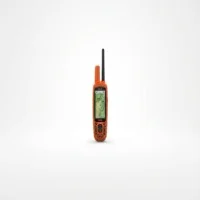
Garmin Astro 900: Best Long-Range MURS Tracker
Astro 900 is the specialty pick for hunters in regions where VHF bands get crowded. The 900-series uses MURS (Multi-Use Radio Service) instead of the proprietary VHF frequencies of Alpha and Astro 430, which gives cleaner signal at packed competitive trials and high-density public hunting areas where many hounds run.
§ Review summary
Garmin Astro 900
≡ Specs
- Range
- 9 miles MURS
- Capacity
- 20 dogs
- Display
- 3-inch color touchscreen
- Collar
- Garmin T9 (longer battery)
- Battery (handheld)
- 20 hours
- Lifetime cost
- Hardware only, no fees
✓ Pros
- +MURS radio reduces VHF channel conflict in dense hunting regions
- +9-mile range matches Alpha 300 and Astro 430 in clear terrain
- +Color touchscreen display, similar UX to Alpha 300
- +20-dog capacity for serious hound packs
- +T9 collar with longer battery than standard TT 25
✗ Cons
- −MURS frequency unfamiliar to most hunters; smaller community than VHF
- −Most US states see no benefit; only crowded-band regions need 900-series
- −T9 collar costs more than DC 50 used by Astro 430
§ Buy if
- ·You hunt in states with documented VHF congestion (TX, OK, AR)
- ·You're in competitive hound trials where signal stomping is a known issue
- ·You're starting fresh and choosing between MURS vs VHF ecosystem
- ·Zero subscription is non-negotiable like other Garmin handhelds
The Astro 900 runs on MURS frequencies, which tend to stay clear on crowded public ground where competing parties on VHF crowd the same channels. Hunters on private or low-pressure ground rarely see the benefit.
Where Should You Mount the Collar on a Hunting Dog?
Collar fit matters more than handheld choice when range matters. A poorly fitted collar drops signal long before the radio reaches its theoretical limit.
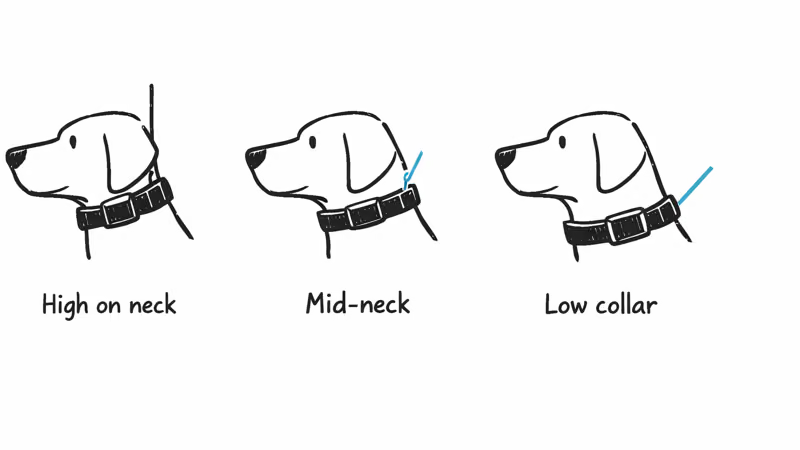
High on the neck, under the jaw. The standard position for upland and pointing breeds. Antenna points up, away from body shielding, and rides above the brush line in tall cover. Most TT 25 and DC 50 collars are designed for this orientation.
Mid-neck, above shoulders. Useful for hounds running through dense thickets where high-jaw collars catch on branches and twist. Trades a little signal strength for collar retention.
Low-collar with angled antenna. Some big-game houndsmen run collars low and bend the antenna upward 45 degrees. This protects the antenna from facial brush while keeping line-of-sight to the handheld. The tradeoff is a touch less range in flat terrain.
Per Garmin’s official documentation, the collar should sit snug enough that two fingers slip between strap and neck without slack. Loose collars rotate during a hard sprint and the antenna ends up pointed at the ground, killing range. The Garmin TT 25 user manual section on collar fit covers this in detail.
VHF vs MURS vs Cellular Tracker Networks
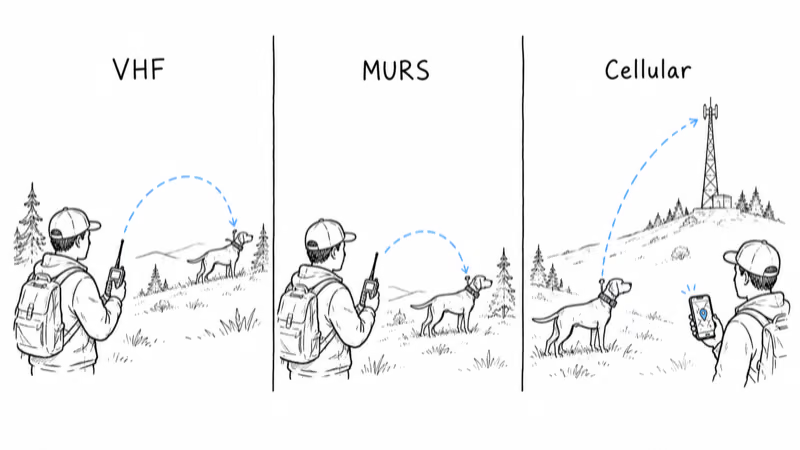
The three radio approaches for hunting dog tracking break cleanly along use-case lines.
Garmin VHF (Alpha + Astro series) wins for most hunters. The proprietary VHF works in every US state, has the largest user base, and the radio module is mature and reliable. Alpha 300, Astro 430, and Alpha 10 all use this ecosystem. Zero subscription, 9-mile typical range.
MURS (Astro 900) wins in congested regions. When you’re running dogs at trials with 20+ other parties on the same VHF channel, signal stomping becomes real. The FCC’s Multi-Use Radio Service page states that MURS frequencies are license-free for personal and business use across the US, which is exactly why Astro 900 can rely on them. The Wikipedia MURS overview found that the 5-channel allocation gives MURS a structural advantage over crowded VHF.
Cellular trackers (Tractive, Fi, others) generally lose for serious hunting. They depend on LTE coverage, which collapses in the timber where dogs actually hunt, and they charge monthly fees that defeat the point of this guide.
Our Fi vs Garmin comparison and the Tractive vs Garmin review both cover why subscription trackers don’t replace handhelds for hunting.
Cost Over 5 Years
The total cost of ownership for hunting dog tracking depends on whether you compare apples-to-apples with subscription trackers. We assume one handheld plus one collar per dog and a 5-year lifespan.
| Setup | Hardware | Subscription | 5-year total |
|---|---|---|---|
| Garmin Alpha 300 + TT 25 (1 dog) | $1,100 | $0 | $1,100 |
| Garmin Astro 430 + DC 50 (1 dog) | $850 | $0 | $850 |
| Garmin Alpha 10 + TT mini (1 dog) | $550 | $0 | $550 |
| Tractive (1 dog, $13/month) | $50 | $780 over 5 years | $830 |
| Fi Series 3 (1 dog, $99/year) | $150 | $495 over 5 years | $645 |
No-subscription Garmin gear beats cellular alternatives over any horizon longer than 2 years. A Tractive starts cheaper at $50 hardware but the $13/month subscription crosses $850 cumulative by year 5, which is Astro 430 territory. Alpha 10 stays cheaper than Tractive forever after year 2. The cellular trackers also can’t work in the terrain where dogs actually hunt, which makes the comparison moot for serious hunters.
The trade-off is steeper upfront cost. A weekend hunter who only runs one upland trip a year might find Tractive’s $13/month easier to swallow than $550 cash for an Alpha 10 setup. For dedicated houndsmen and waterfowl crews, the Garmin route is clearly cheaper long-term.
The Three Hunting Dog Tracker Buyer Profiles
Across the four handhelds covered here, the decision maps to three profiles. Profile one is the pro houndsman or trial competitor: Alpha 300 + TT 25, with T9 swap if VHF gets crowded. Profile two is the handler who already owns an e-collar: Astro 430 + DC 50 saves $200. Profile three is the budget weekend hunter: Alpha 10 + TT mini at $550.
Hunters chasing both upland birds and big game often run two collars on one Alpha 300 handheld, where the 20-dog capacity actually earns its spec sheet when you’ve got pointing dogs and hounds in the same pack.
Our best GPS collars for hunting dogs roundup covers collar-only options and the best dog GPS tracker without subscription guide adds the general no-fee category beyond hunting.
Bottom Line
The right no-fee hunting dog tracker is the one that matches your hunt style and pack size. For pro houndsmen and serious hunters, Alpha 300 at $700 is the rig you keep for a decade. For GPS-only handlers with existing e-collars, Astro 430 at $500 saves money without losing range. For solo budget hunters, Alpha 10 at $250 plus phone display delivers the Garmin ecosystem at the lowest entry price.
FAQ
How does the Garmin VHF radio work without a subscription?
Garmin handhelds talk directly to the dog collar over licensed VHF radio frequencies. The radio link doesn’t pass through cellular towers, internet, or any third-party network, so there’s nothing to subscribe to. You buy the handheld and the collar, pair them once, and the rig works for the life of the hardware. Range depends on terrain and antenna height, but 9 miles in clear conditions is normal.
Can I use Garmin hunting GPS trackers without cellular coverage?
Yes. The whole point of the platform is that it works where cellular trackers don’t. Alpha 300, Astro 430, Alpha 10, and Astro 900 all communicate over radio between collar and handheld. As long as you can keep line-of-sight (or near line-of-sight) between handheld and collar, the system reports location regardless of whether your phone has signal. Hunters in remote wilderness use these systems daily without any LTE coverage.
How many dogs can a Garmin handheld track at once?
All four handhelds in this guide handle up to 20 dogs simultaneously. Most hunters run 1-3 dogs, but houndsmen running coyote or bear can easily exceed 6. Each dog needs its own collar; the handheld receives signals from all paired collars on the same channel and shows them as distinct icons on the map. Multi-handler hunts can share dog data across handhelds with Garmin’s MURS or BaseCamp sync features.
Do I need an FCC license for Garmin hunting GPS trackers?
No FCC license is required for any of the four handhelds in this guide. Alpha 300, Astro 430, and Alpha 10 use proprietary VHF bands that Garmin has licensed at the manufacturer level. Astro 900 uses MURS frequencies which are license-free for any US user. The FCC equipment authorization on the device is what makes this work; you just need to use the gear within the country it’s certified for.
How long does the collar battery last on a hunting dog?
It depends on the collar, update rate, temperature, and how long the dog stays moving. Faster update rates drain collars faster, slower rates stretch runtime, and cold weather reduces battery performance. Check the collar’s current Garmin spec sheet before a long hunt, then charge before every outing instead of relying on a fixed hour count.
Can I add training collars to an Astro 430 later?
Yes, but the Astro 430 itself only does GPS tracking. To add training, you carry a separate e-collar transmitter alongside the Astro handheld. Garmin Delta SE, Dogtra 1900S, and SportDOG SportTrainer all integrate cleanly with this approach. If you find yourself wanting integrated tracking and training in one device, the upgrade path is Astro 430 to Alpha 300, not Astro 430 plus add-on training.
Is the Alpha 10 phone dependency a problem in the field?
Less than you might expect. The 1-inch native display on Alpha 10 shows distance and direction to each dog without the phone, so you can navigate basic situations without pulling out the phone. The full map view requires the paired phone running the Garmin app. Hunters in extreme cold (below 0F) sometimes prefer the standalone display of Alpha 300 because phones throttle in those temperatures, but for most hunts the phone link works fine.