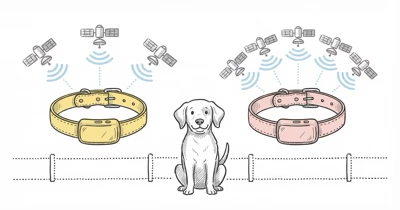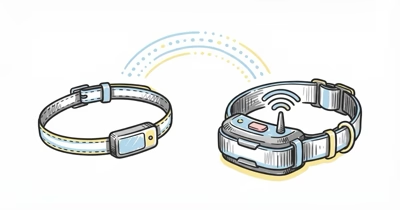
The Halo Collar 5 is the one to buy if you are choosing today. It moves from single-frequency to dual-frequency GPS, jumps from roughly 30 hours of battery to up to 48 hours, recharges fully in about an hour, and processes 20 location updates per second instead of the Collar 4’s 5-second check interval. The Halo Collar 4 is only worth it as the older value option if you find it heavily discounted and your yard is a simple, open shape where the accuracy gap matters less.
Two generations of the same GPS dog fence, one real question: does the newer collar fix enough to justify paying full price for it?
Across both Halo generations, the gap is real but narrower than the marketing suggests. Halo’s shop page states the Collar 5 delivers GPS accuracy within two feet of your dog’s actual location, which is the upgrade most owners feel near tree lines and driveways.
- The Halo Collar 5 lists at $599 (often discounted near $524), while the Halo Collar 4 is discontinued and only worth buying below roughly $300 used or on clearance.
- Battery rating improves to up to 48 hours, and the Collar 5 recharges faster than the Collar 4.
- GPS moves from single-frequency to dual-frequency and from a 5-second check interval to 20 location updates per second on the Collar 5.
- Connectivity splits into separate Wi-Fi and Bluetooth chips on the Collar 5, where the Collar 4 shared one chip for both, causing more dropped signals.
- Both still require a Pack Membership starting at $9.99/month, so neither generation works as a fence without the subscription.
What Changed From Halo Collar 4 to Collar 5
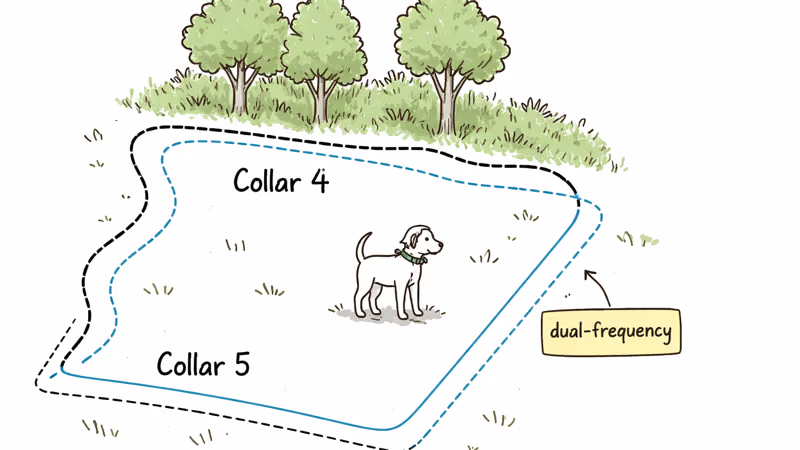
The headline upgrade is GPS precision.
Halo’s shop page states that the Collar 5 processes 20 location updates per second on dual-frequency GPS, where the Collar 4 used single-frequency GPS on a roughly 5-second interval.
Near a tree line, the Collar 5 holds a tighter boundary, while the single-frequency Collar 4 is more prone to drifting several feet on bad-signal days in the same spot. Pet-tech reviewer Technobark, comparing the generations directly, states that the Collar 5 adds dual-frequency GPS for tighter accuracy over the single-frequency Collar 4.
The accuracy gain is not marketing. Wikipedia’s reference on GPS signals confirms that a dual-frequency receiver can measure and remove the ionospheric delay error, the single largest source of GPS positioning error. That is exactly why the Collar 5 holds a steadier boundary where the older Collar 4 wandered.
If GPS accuracy near obstacles is your deciding factor, this single hardware change is the strongest argument for the newer collar.
Battery is the second real gain. The Collar 4 averaged around 30 hours of runtime, while Technobark reports that the Collar 5 reaches up to 48 hours per charge and a faster 1-hour full recharge. For an owner who runs live tracking often, that changes the routine from charging nightly to charging every other day.
How Halo Collar 5 Connectivity Improves
The third upgrade is quieter but you feel it daily. Technobark’s comparison states that the Collar 5 moves to separate Wi-Fi and Bluetooth chips instead of the Collar 4’s combined chip.
That split reduces the connection juggling that happens when the collar hands off between home Wi-Fi and the cellular network. A dedicated chip for each radio gives each connection path its own hardware instead of asking one chip to juggle both jobs. Our full Halo Collar 5 review covers the broader stability trade-offs.
How Does a Halo GPS Fence Work?
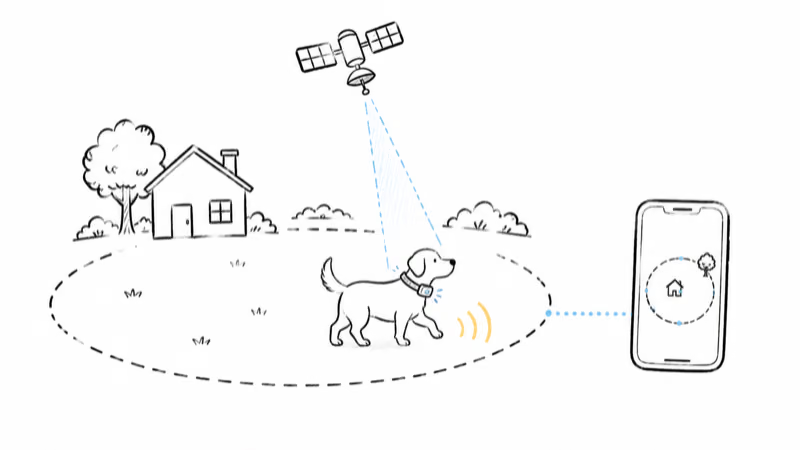
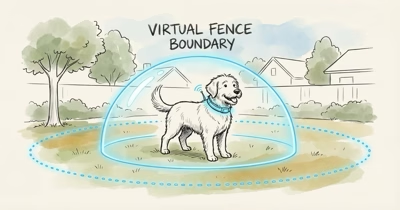
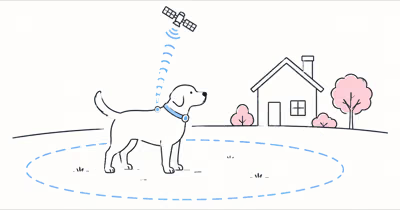
Both Halo generations replace buried-wire invisible fences with a satellite boundary you set from a phone. There are no trenches, no professional install, and no wires to repair after a storm. The collar carries the GPS receiver, the cellular radio, the correction module, and the battery.
You set the boundary one of two ways: walk the perimeter with the collar and your phone, or draw the fence shape directly in the app. The American Kennel Club’s guide to GPS dog fences explains that the collar communicates with satellites to identify the dog’s real-time location and warns the dog as it approaches the boundary. Training the dog to respect that warning is the part hardware can’t do for you.
GPS drift is the shared limitation here. Both collars can wander a few feet near tall buildings, metal roofs, and dense canopy, which is why the boundary should sit well inside the actual property line. The Collar 5’s dual-frequency receiver narrows that drift, but it doesn’t eliminate it.
Halo Collar 4 vs Halo Collar 5 at a Glance
⇄ Head-to-head
Halo Collar 4 vs Halo Collar 5
- +Dual-frequency GPS holds a tighter boundary near obstacles
- +Up to 48-hour battery with a 1-hour full recharge
- +20 location updates per second for near real-time tracking
- +Separate Wi-Fi and Bluetooth chips cut dropped signals
- +Cesar Millan training program built into the app
- +Often the cheaper option when found discounted or used
- +Same app, same training program, same fence concept
- +Real-time LTE tracking and virtual fence still functional
- +Lighter on the wallet if your yard is simple and open
- −Lists at $599, the full premium price
- −Pack Membership still required for all fence functions
- −Saved-fence count is gated by subscription tier
- −Single-frequency GPS drifts more near trees and buildings
- −Shorter battery rating and slower recharge
- −Combined Wi-Fi/Bluetooth chip drops connections more often
- −Discontinued, so warranty and stock are limited
You are buying today, want the tightest GPS accuracy near trees and structures, and track live location often enough to need the longer battery.
You find it well below list price, your yard is a simple open rectangle, and you don't need the tightest boundary accuracy or the longer battery.
How Much Better Is the Battery and Tracking?
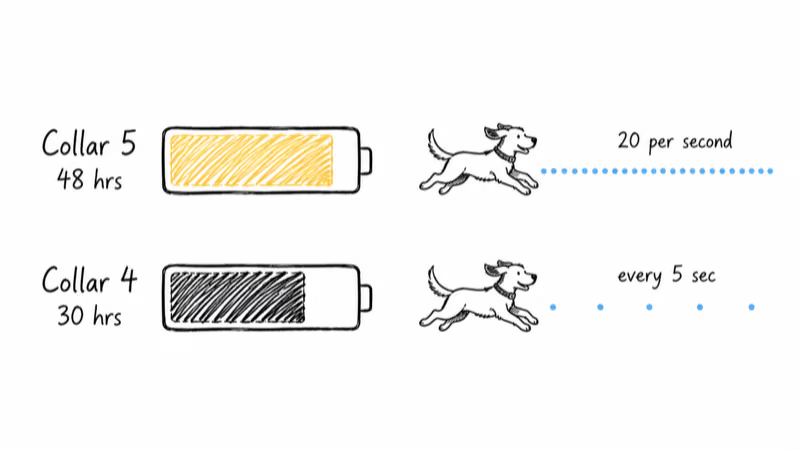
The battery gap matters most if you use live tracking. Heavy live map use drains any GPS collar faster, and the older Collar 4’s lower battery rating leaves less margin than the Collar 5.
The Collar 5’s up-to-48-hour rating, paired with a 1-hour recharge, changes the routine outright. A quick charge during dinner can top it back up for the next full day, so the battery stops being the daily concern it’s on the older collar, which is exactly the kind of friction a daily-use fence system should remove rather than add.
Live tracking feels different too. The Collar 4’s 5-second position check was fine for knowing where the dog had been, but it lagged on a dog moving fast. The Collar 5’s 20 updates per second behaves like a true real-time tracker, so boundary warnings and breach alerts land sooner.
If your collar struggles to refresh position at all, our guide to fixing a Halo Collar 5 not updating location walks through the connectivity settings that cause it.
Neither rating is a worst-case guarantee. Dense tree cover, deep valleys, cold weather, and heavy live tracking all pull runtime below the spec sheet on both generations, so plan conservatively on long days outdoors.
What Each Halo Collar Costs Over Two Years
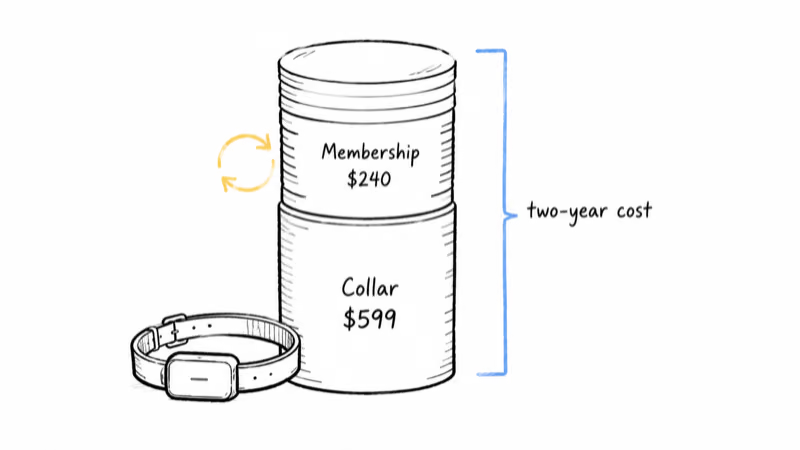
Sticker price is only half the story, because both generations lock you into a Pack Membership.
The Collar 5 lists at $599, often discounted near $524. The discontinued Collar 4 only makes sense well below its old $499 list when you find it used or on clearance.
Then the subscription compounds. The entry Bronze plan runs about $9.99 per month with five saved fences, which adds roughly $240 over two years on either collar, and the higher Silver and Gold tiers push that past $360 and $480. So the cheapest legitimate two-year cost of ownership on a Collar 5 lands near $839 before any training accessories.
The upgrade math is therefore tighter than the spec sheet implies. A working Collar 4 that contains your dog reliably on an open property doesn’t suddenly stop working, so spending $599 to fix a problem you don’t have is hard to justify.
The Collar 5 earns the money in three cases: tricky yard edges where the Collar 4 drifts, a dog fast enough that the 5-second interval lets it cross before a warning fires, or a degraded Collar 4 battery. If you are weighing Halo against rivals entirely, our Halo Collar alternatives guide and our roundup of the best GPS trackers for pets cover the broader field.
Bottom Line
Buy the Halo Collar 5. The dual-frequency GPS, up-to-48-hour battery, faster recharge, and 20-updates-per-second tracking are concrete upgrades that you feel most near obstacles and during live tracking. The Halo Collar 4 earns a place only as a discounted value pick on a simple open property, and even then you accept more GPS drift, a shorter battery, and a discontinued product with thin warranty coverage.
Whichever generation you choose, budget for the Pack Membership and the 30 to 60 days of training. A GPS fence is a tool, not a guarantee, and a well-trained dog on a Collar 4 stays inside the boundary better than an untrained dog on a Collar 5.
FAQ
Is the Halo Collar 5 worth it over the Halo Collar 4?
For new buyers, yes. The Collar 5 adds dual-frequency GPS, up to 48 hours of battery, and 20 location updates per second. If you already own a Collar 4 that contains your dog well, the upgrade is harder to justify.
What is the main difference between Halo Collar 4 and 5?
GPS precision and battery are the two big ones. The Collar 5 uses dual-frequency GPS and checks position 20 times per second, while the Collar 4 used single-frequency GPS on a slower interval. The Collar 5 also has a longer battery rating than the Collar 4. On top of that, the newer collar splits Wi-Fi and Bluetooth into separate chips for fewer dropped connections, and it recharges faster than the Collar 4.
Does the Halo Collar 4 still work in 2026?
Yes. A functioning Halo Collar 4 still works as a GPS fence and tracker as long as you keep an active Pack Membership. Because the model is discontinued, warranty support and replacement stock are limited.
Do both Halo collars require a subscription?
Yes, both generations do. The Collar 4 and Collar 5 each require a Halo Pack Membership for the GPS fence, real-time tracking, and cellular features. Plans start around $9.99 per month on the entry tier with five saved fences, and the higher tiers unlock more fences plus added training support. Neither collar functions as a fence without an active plan, so factor that recurring cost into your decision before you compare the upfront sticker prices.
How long does the Halo Collar 5 battery last?
Halo rates the Collar 5 at up to 48 hours per charge, with a full recharge in about an hour. Active live tracking, weak signal, cold weather, and frequent fence events can all shorten that rating.
Is the Halo Collar 5 GPS more accurate than the Collar 4?
Yes, especially near obstacles. The Collar 5’s dual-frequency receiver and faster update rate hold a tighter boundary along tree lines, driveways, and structures where the single-frequency Collar 4 drifts more. In open fields the two run close to even, and the gap mainly opens up near trees and buildings. No GPS fence is drift-free, though, so both collars should sit well inside your actual property line to leave room for satellite error on bad-signal days.
Can I use my old Halo subscription with the Collar 5?
Your Halo Pack Membership is tied to your account, so upgrading the hardware does not require a brand-new plan, though the collar itself must be added in the app. Confirm your tier still covers the saved-fence count you need before you buy.