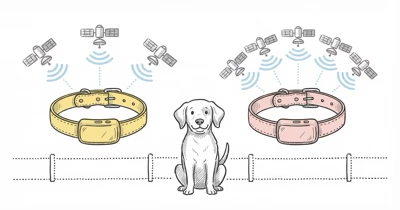
A GPS dog fence keeps your dog inside a boundary you draw in an app, with no buried wire and no transmitter box. The hard part is physics: gps.gov pegs ordinary consumer GPS at about a 16-foot radius under open sky. The four systems below handle that limit in very different ways.
One scope note before the picks: this guide covers true containment fences, meaning collars that warn and correct at a line you set. If you want a tracking or training collar without automatic boundaries, our smart dog collar roundup covers that category instead.
- SpotOn GPS Fence costs $999 with no required subscription; containment works out of the box, and optional tracking runs $7.49 to $9.95 per month.
- Halo Collar 5 costs $599 plus a mandatory plan from $9.16 per month, and claims 0.6-meter average accuracy from dual-frequency GPS.
- PetSafe Guardian GPS 2.0 costs $449.99 and runs up to 70 hours per charge, the longest battery of any true GPS fence in this guide.
- Plan on at least 1/3 to 1/2 acre of space and 1 to 2 weeks of training before any GPS fence is trustworthy off leash.
- Alert-only trackers like the $50 Tractive DOG 6 tell you about an escape but never correct or contain your dog.
The Best GPS Dog Fence Systems at a Glance
A GPS fence is a boundary collar with a map. The collar knows where your fence line sits, warns the dog with a tone as it approaches, then escalates to vibration or adjustable static if the dog keeps going. SpotOn leads this category in 2026 for one structural reason: containment itself never sits behind a monthly fee.
Accuracy is the spec that decides whether these systems feel magical or maddening. NIST’s guide to GPS positioning states that satellite fixes can place you within 4.9 meters (16 feet) of your true position. Fence makers shrink that with dual-band receivers and correction data, but trees and rooflines still widen the error band.
Reviewed.com backs the premium pick. Its hands-on review of SpotOn’s Nova Edition found that the drawn boundary held in a tree-covered Brooklyn park, with the test dog learning the line in about five days. The site gave it an Editor’s Choice badge in May 2026.
| Feature | SpotOn GPS Fence | Halo Collar 5 | PetSafe Guardian GPS 2.0 | Tractive DOG 6 |
|---|---|---|---|---|
| Price | $999 | $599 | $449.99 | About $50 |
| Subscription | ✓ Optional ($7.49+/mo) | ⚠ Required ($9.16+/mo) | ⚠ $9.99/mo or $99/yr for tracking | ⚠ Required (from $5/mo) |
| Containment correction | ✓ Tone, vibration, static | ✓ Sound, vibration, static | ✓ Tone, vibration, 10 static levels | ✗ Alerts only |
| Minimum yard | 1/3 acre | None published | 1/2 acre | None published |
| Battery | ⚠ 33+ hours | ⚠ Up to 48 hours | ✓ Up to 70 hours | ✓ Up to 2 weeks (Power Saving Zone) |
| Accuracy claim | Under 5 feet | 0.6 m average | Not published | Standard GPS |
| Dog size floor | 10 to 26 inch neck | 10 lb, 5+ months | 10 lb, 8 inch neck and up | Clips to any collar |
| Water rating | ✓ IP67 | ✓ IP67 | ✓ Waterproof (no IP published) | ✓ IP68 |
How We Picked These GPS Fences
This roundup only ranks systems that actually contain a dog, meaning the collar itself warns and corrects at the boundary. That bar excludes a crowd of cheap virtual-fence trackers that merely send your phone a notification, which is why the Tractive entry below is framed as a layer, not a fence.
Every spec and price was checked against the vendors’ own product and plan pages in June 2026, because this category churns fast: SpotOn has shipped multiple collar generations, Halo five, and PetSafe split its Guardian line into subscription and subscription-free models. Where vendors publish bold accuracy claims, we weighed them against third-party hands-on coverage and recurring owner complaints rather than taking the marketing number alone.
Ranking weight went to four things in order: containment reliability, what the subscription really gates, total 2-year cost, and how much training support a first-time owner gets. Raw GPS spec sheets came last; a 0.6-meter claim matters less than what happens under your oak tree.
SpotOn GPS Fence: Best Overall, No Subscription Required
SpotOn GPS Fence (Nova Edition) - Best Overall GPS Dog Fence
§ Review summary
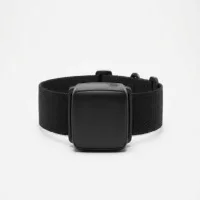
SpotOn GPS Fence
≡ Specs
- Price
- $999, subscription optional
- Tracking plan
- $9.95/mo, $8.49/mo yearly, $7.49/mo 2-year
- Battery
- 33+ hours, ~1 hour recharge
- Accuracy claim
- Under 5 feet
- Fences
- Unlimited, 1/3 acre to 1,000+ acres
- Water rating
- IP67
✓ Pros
- +Containment works with zero subscription, and your fences never expire
- +Boundary accuracy under 5 feet via a 151-satellite dual-band receiver
- +Unlimited fences with no acreage cap, plus overlapping and keep-out zones
- +IP67 collar rated for swimming and -30 to 120 degrees Fahrenheit
- +90-day money-back window and a 1-year warranty
✗ Cons
- −$999 up front, the priciest system in this guide
- −33-hour battery means charging roughly every night or two
- −Live tracking, escape alerts, and recall cues need the optional plan
- −Fences need at least 1/3 acre, so small urban lots are out
§ Buy if
- ·Your property runs from 1/3 acre up to full rural acreage
- ·You refuse to rent core safety features by the month
- ·Your dog's neck measures 10 to 26 inches
- ·You want keep-out zones around a pool, garden, or driveway inside the fence
SpotOn’s pitch is ownership. The company states that GPS fences work right out of the box, and Reviewed.com’s hands-on coverage supports the boundary claim. Boundary creation, tone and static correction, and unlimited fence storage all run with no plan attached. The optional tracking plan costs $9.95 monthly, $8.49 per month billed yearly, or $7.49 per month on a 2-year term, and it only gates extras: live location, escape alerts, recall cues, and the collar light.
The hardware justifies part of that $999. SpotOn’s Nova Edition product page lists a dual-band, dual-feed antenna pulling from a 151-satellite network, boundary accuracy under 5 feet, and a 99.3% containment success rate during outdoor time. Those are vendor numbers, but the third-party result above tracks with them.
Training is the unglamorous half of any GPS fence, and SpotOn handles it with step-by-step videos in the app. The company recommends a couple of weeks of short sessions before trusting the boundary, and it includes free 1-on-1 virtual sessions with certified trainers. That matches the five-day learning curve Reviewed.com observed before its test dog respected the line without correction.
One buying note: SpotOn currently sells two collars. The Nova Edition reviewed here is the flagship, while the earlier Omni model stays on sale with the same no-subscription containment plus an Extended Battery Life Mode. If $999 stings, the Omni is the sanctioned way to stay in the ecosystem for less.
The honest downsides: the 33-hour battery turns charging into a nightly ritual, and owners report the collar wears big on narrow-necked dogs near the 10-inch floor. Our full SpotOn GPS Fence review digs into both. If you’re cross-shopping the two premium systems, the Halo vs SpotOn head-to-head settles the subscription math in detail.
Halo Collar 5: Best Training System for Suburban Yards
Halo Collar 5 - Best Guided Training Program
§ Review summary
Halo Collar 5

≡ Specs
- Price
- $599, plan required
- Plans
- Bronze $9.16, Silver $13.74, Gold $18.32 per month, billed annually
- Battery
- Up to 48 hours, 1-hour recharge
- GPS
- Dual-frequency, 6 constellations, 20 updates/sec
- Dog size
- 10 lb and up, 5+ months, 8 to 30.5 in neck
- Water rating
- IP67
✓ Pros
- +Dual-frequency GPS with 20 location updates per second
- +Claimed 0.6-meter average accuracy with ground-station corrections
- +48-hour battery with a 1-hour full recharge
- +Training program built on Cesar Millan's method, with live trainer sessions on Gold
- +Fits necks from 8 to 30.5 inches, dogs 10 pounds and up
✗ Cons
- −Plan is mandatory from $9.16 per month, or the collar stops working as a fence
- −Fence count is paywalled: 5 on Bronze, 20 on Silver, unlimited only on Gold
- −No subscription-free fallback exists at any price
§ Buy if
- ·You want guided coaching for the dog, not just hardware in a box
- ·A 48-hour battery fits your routine better than nightly top-ups
- ·Your yard is suburban-sized and you'll reuse fences while traveling
- ·Live trainer sessions are worth a Gold-tier fee to you
Halo approaches the same problem from the dog-psychology side. The collar pairs its virtual fence with a structured program built on Cesar Millan’s training method, so the system teaches boundary behavior instead of assuming it. For first-time fence owners, that curriculum is the strongest reason to pick Halo, and our Halo Collar 5 review walks through it lesson by lesson.
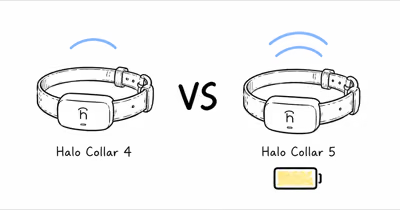
The accuracy engineering is real. Halo’s accuracy documentation states that the collar averages 0.6-meter precision using dual-frequency L1 and L5 signals, six satellite constellations, and ground-station corrections, with motion sensors suppressing drift while the dog rests. The fifth generation also reads positions 20 times per second, a major jump over the Halo 4; the Halo 4 vs Halo 5 breakdown quantifies the gap.
The catch is the business model. A Halo plan is required to keep the collar active: Bronze at $9.16 per month covers 5 fences, Silver at $13.74 covers 20, and Gold at $18.32 unlocks unlimited fences plus live sessions with trainers, all billed annually. Stop paying and the fence stops fencing.
Budget for honest battery expectations too. Halo claims up to 48 hours per charge with a 1-hour recharge, roughly double SpotOn, but heavy live tracking can shorten battery life. At $599, frequently discounted on Halo’s own site, it undercuts SpotOn by $400 while demanding more per month, forever.
PetSafe Guardian GPS 2.0: Best Value GPS Fence
PetSafe Guardian GPS 2.0 - Best Value Pick
§ Review summary
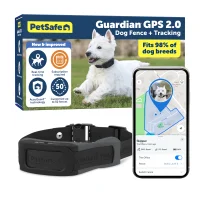
PetSafe Guardian GPS 2.0
≡ Specs
- Price
- $449.99, tracking plan optional after trial
- Tracking plan
- $9.99/mo or $99/yr after a 1-month trial
- Battery
- Up to 70 hours per charge
- Accuracy claim
- Not published
- Fences
- Up to 50 stored, 1/2 acre and larger
- Water rating
- Waterproof for swimming dogs
✓ Pros
- +Cheapest true GPS fence here at $449.99
- +70-hour battery, the longest of any containment collar in this guide
- +50 stored fences and multi-dog support with extra collars
- +Tone and vibration modes before any of the 10 static levels
✗ Cons
- −Live tracking and app alerts sit behind the $9.99 monthly plan
- −Needs 1/2 acre or more, same constraint as its rivals
- −No published accuracy spec, unlike SpotOn and Halo
- −Setup requires 2.4 GHz Wi-Fi plus cellular coverage for tracking
§ Buy if
- ·You want a true GPS fence without the $599-$999 up-front hit
- ·Your dog is small: it fits 10 lb dogs with necks from 8 inches
- ·A 70-hour battery matters more to you than a published accuracy spec
- ·You'd rather skip subscriptions via the $399.99 tracking-free configuration
The Guardian GPS 2.0 is PetSafe’s answer to sticker shock. At $449.99, the official product page lists a 70-hour battery, up to 50 saved fences for properties of 1/2 acre and up, and a slimmed collar that fits dogs from 10 pounds with necks as small as 8 inches. Tracking costs $9.99 per month or $99 per year after a free trial month.
PetSafe also sells the one configuration nobody else offers: a subscription-free Guardian at $399.99. It drops live tracking entirely and raises the floor to dogs over 25 pounds with 13 to 28 inch necks on 3/4 acre or more, but its containment runs up to 5 days per charge with zero recurring cost.
What you give up against the premium pair is precision transparency and polish. PetSafe publishes no accuracy figure, the return window is 45 days against 90 at SpotOn and Halo, and owners report clunkier app pairing during setup. For a half-acre suburban lot where $999 feels absurd, those trade-offs are easy to accept.
Can a $50 Tractive Tracker Replace a GPS Fence?
Tractive DOG 6 - Budget Alert-Only Alternative
§ Review summary
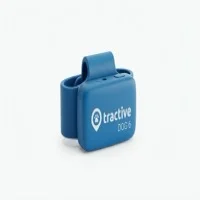
Tractive GPS DOG 6
≡ Specs
- Price
- About $50, plan from $5/mo
- Virtual Fence
- Phone alerts only, no correction
- Battery
- Up to 14 days in Power Saving Zone, up to 6 days outside
- Water rating
- IP68
- Mounting
- Clips to any collar or harness
✓ Pros
- +About $50 up front, one-twentieth the cost of SpotOn
- +Virtual Fence alerts your phone the moment your dog leaves a zone
- +Up to 2 weeks of battery inside Power Saving Zones
- +IP68 rated, fine for swimming dogs, and it clips to any collar
✗ Cons
- −Alerts only: no tone, no vibration, no static, no actual containment
- −Subscription is required, from $5 per month
- −An escape notification arrives after the dog is already out
§ Buy if
- ·Your dog is under the 10 lb floor that real GPS fences enforce
- ·You already have a physical fence and want an escape alarm on top
- ·You rent, or your yard is too small for fence minimums
- ·Your budget caps near $200 over two years
Short answer: no, and Tractive doesn’t pretend otherwise. The DOG 6 tracker draws Virtual Fence zones that ping your phone when your dog crosses out, and Tractive markets the feature as 100% shock-free. Nothing on the dog ever corrects the behavior, so a determined escape artist is already through the hedge when your phone buzzes.
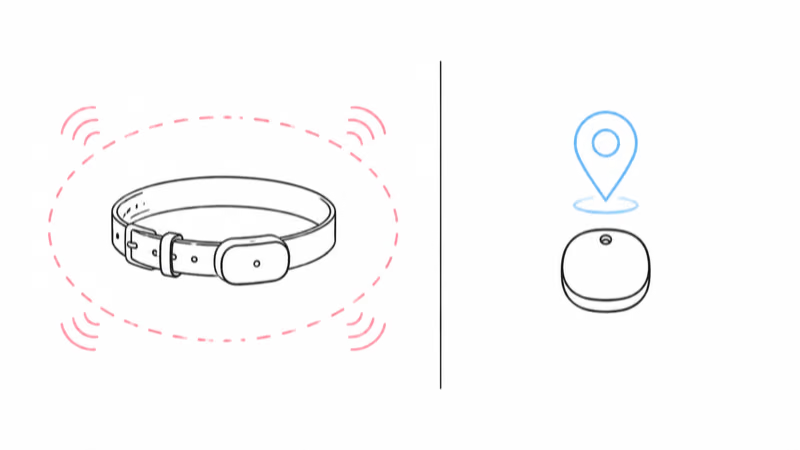
As a safety layer, though, it’s the easiest $50 in this guide. It weighs nothing on the budget, runs up to 2 weeks per charge inside Power Saving Zones, and survives swims with its IP68 housing. Owners of small breeds lean on it because every true GPS fence above enforces a 10-pound floor; our small-dog GPS tracker guide covers those options in depth.
Treat it as a complement, not a competitor. Pair it with a physical fence for alert coverage, or clip it to a fence-wearing dog as a tracking backstop without paying SpotOn’s plan.
GPS Fence vs Physical Fence vs Training Collar: Which One Fits?
The three categories solve different problems, and the wrong pick wastes hundreds of dollars. Run your situation through the lists below before committing.
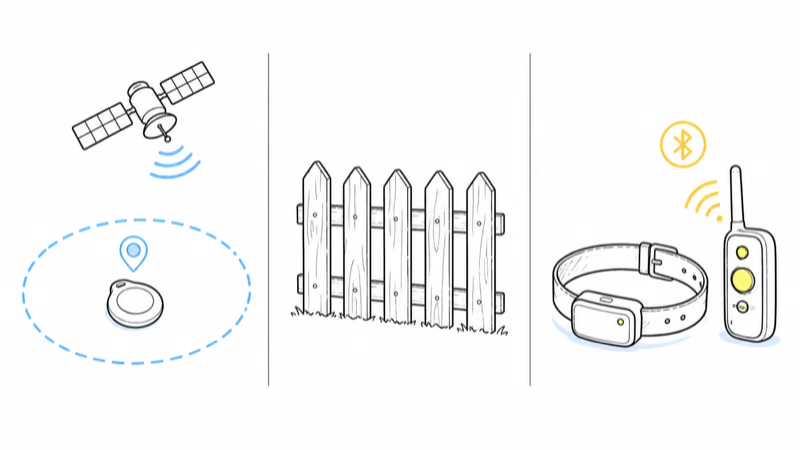
Pick a GPS Dog Fence If…
- Your property covers 1/3 acre or more and a physical fence quote runs into five figures
- You move, rent, camp, or split time between properties, since boundaries travel in software
- The boundary needs an irregular shape, like skirting a pond, garden, or shared driveway
- Your dog is over 10 pounds and old enough for boundary training
Pick a Physical or Buried-Wire Fence If…
- Your lot sits under the 1/3 to 1/2 acre minimums every GPS system enforces
- The dog is tiny, elderly, or reactive enough that static correction is off the table
- Dense tree canopy or tall buildings surround the yard and would starve GPS accuracy
- You want zero charging, zero apps, and zero subscription decisions
Pick a Tracking or Training Collar If…
- A handler actively works the dog, as in hunting or field trials, instead of a fixed yard line
- You need miles of range with manual correction; our hunting dog GPS collar guide covers that world
- Recovery matters more than prevention, where systems like the Dogtra Pathfinder track without any boundary
- You’ve ruled out static entirely and want supervision plus alerts instead
Still undecided between the big two ecosystems? The wider Halo alternatives roundup maps every adjacent option, including wire hybrids.
The Honest Limitations of GPS Dog Fences
GPS drift is the tax every system pays. Open-sky accuracy claims of 5 feet or better stretch to wider error bands under tree cover, beside metal roofs, and in canyons between houses. Halo’s own support center confirms that prevention feedback can fire inside the boundary when signals degrade, which is why every vendor tells you to keep fence lines well off the road edge.
Plan for a buffer, not a laser line. With consumer GPS baselining near 16 feet and premium fence receivers narrowing that to single digits, a boundary drawn 20 feet from the curb behaves far more safely than one drawn at 5 feet. Survey your line on foot before the dog ever wears the collar.
Subscriptions decide long-term cost more than hardware. Halo’s fence dies with a lapsed plan, while SpotOn contains without one but locks tracking and escape alerts behind it. Guardian’s $9.99 tracking tier is optional only in the sense that you lose the app’s live map without it. Read the renewal terms as carefully as the spec sheet.
Training is mandatory, not optional. SpotOn recommends a couple of weeks of short sessions, Halo structures its program the same way, and skipping that step produces a confused dog that fears the yard. No system contains an untrained dog on day one.
Batteries create a daily ritual. A dead collar is an open gate, so charging discipline matters: roughly nightly for SpotOn, every two days for Halo, and twice a week for the Guardian. Owners report tracking-heavy days drain far faster than spec; our Halo battery drain guide shows how bad settings halve runtime.
High prey drive beats static. A dog mid-chase can blow through the correction zone of any GPS fence, and no vendor claims otherwise. For known bolters, layer an alert tracker on the same collar so prevention failure still ends in recovery.
What a GPS Dog Fence Really Costs Over Two Years
Sticker prices mislead because plans compound. The table below adds each system’s cheapest workable tier to its hardware price over 24 months, using June 2026 vendor rates.
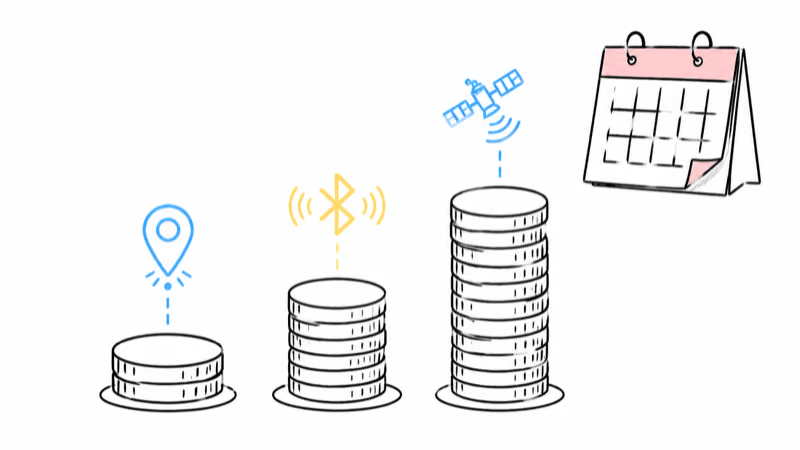
| System | Hardware | 2-Year Plan Cost | 2-Year Total |
|---|---|---|---|
| SpotOn GPS Fence (containment only) | $999 | $0 | $999 |
| SpotOn GPS Fence (with tracking) | $999 | $179.76 | $1,178.76 |
| Halo Collar 5 (Bronze) | $599 | $219.84 | $818.84 |
| PetSafe Guardian GPS 2.0 | $449.99 | $198.00 | $647.99 |
| PetSafe Guardian (no-subscription model) | $399.99 | $0 | $399.99 |
| Tractive DOG 6 (alerts only) | $50 | $120.00 | $170.00 |
Two readings jump out. The subscription-free Guardian is the cheapest true containment at $399.99 flat, if your dog clears 25 pounds and you can live without tracking. And Halo’s headline price advantage over SpotOn shrinks every billing cycle: by year five, the Bronze plan alone has erased most of the $400 hardware gap.
Multi-dog households should run the math twice. Every system needs one collar per dog, and Halo charges $9.16 per month for each added collar on top of the hardware, while PetSafe’s Guardian app manages up to five dogs with extra collars bought outright. A two-dog Halo setup carries two permanent plan lines; a two-dog Guardian or SpotOn setup just doubles the hardware.
Bottom Line
SpotOn GPS Fence is the best GPS dog fence for 2026 because the thing you bought it for, containment, works forever without a plan, and Reviewed.com’s hands-on coverage supports its boundary accuracy. Halo Collar 5 is the smarter buy for first-time trainers who want a guided program and accept a permanent subscription.
PetSafe’s Guardian line wins on price, with the $449.99 GPS 2.0 for tracking households and the $399.99 no-subscription model as the cheapest legitimate fence. Skip them all if your yard is under 1/3 acre; put that money toward a physical fence instead.
FAQ
Do GPS dog fences work without a subscription?
Two do. SpotOn’s containment, fence creation, and corrections all work with no plan, with tracking as a $7.49 to $9.95 monthly option. PetSafe sells a dedicated no-subscription Guardian for $399.99. Halo is the opposite case: a plan from $9.16 per month is required or the fence deactivates, and Tractive’s alert-only tracker also needs its $5 monthly plan.
How accurate is a GPS dog fence?
Consumer GPS lands within about 16 feet of true position under open sky, per NIST. Fence vendors tighten that with dual-band receivers and correction data: SpotOn claims accuracy under 5 feet and Halo claims a 0.6-meter average. Real yards with trees and rooflines widen those numbers, so plan boundaries with a buffer of 15 to 20 feet from any road.
What is the minimum yard size for a GPS dog fence?
SpotOn requires fences of at least 1/3 acre, and PetSafe’s Guardian GPS 2.0 wants 1/2 acre or larger, with its no-subscription model at 3/4 acre. Halo publishes no hard minimum, but every GPS system gets safer as the yard grows because drift becomes a smaller fraction of the space. Small city lots are better served by a physical fence.
Can small dogs wear a GPS fence collar?
Most systems draw the line at 10 pounds. SpotOn fits necks from 10 inches, Halo requires dogs over 10 pounds and 5 months old, and the Guardian GPS 2.0 fits 10-pound dogs with 8-inch necks. Below that, skip containment collars entirely and use a lightweight alert tracker like the Tractive DOG 6 clipped to a regular collar.
How long does it take to train a dog on a GPS fence?
Budget 1 to 2 weeks of short daily sessions. SpotOn recommends a couple of weeks and includes free virtual sessions with certified trainers, while Halo builds the schedule into its app program. Reviewed.com’s testing found one dog grasped the boundary concept in about five days and was reliable by two weeks. Activating static correction before training is the most common failure mode.
Can I take a GPS dog fence when I move or travel?
Yes, and it’s a core advantage over wire. Boundaries live in the app, so you can draw a new fence at a campsite or rental without burying anything. SpotOn stores unlimited fences with no plan, the Guardian GPS 2.0 saves up to 50, and Halo’s count depends on tier: 5 on Bronze, 20 on Silver, unlimited on Gold.
Are GPS fence corrections safe for dogs?
All three containment systems here escalate gradually: an audible tone first, then vibration, with static as a final, adjustable step. The Guardian offers 10 static levels plus tone-and-vibration-only operation, and SpotOn and Halo let you disable static entirely. The humane factor is training; a properly conditioned dog turns back at the warning tone and rarely reaches correction.