The best GPS tracker for a service dog has to clear three bars: co-handler app access, a vest-safe mount, and 8-12 hour working battery. A pet tracker built for weekend yard escapes rarely checks all three.
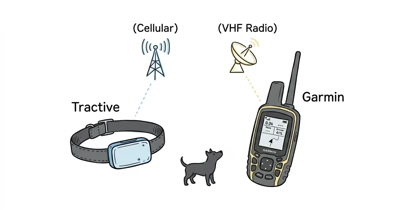
This guide compares three trackers that fit working dogs well: Fi Series 3 for urban multi-handler teams, Tractive GPS DOG 6 for value and health data, and Garmin Alpha 300 for rural handlers tired of subscriptions. We leave AirTag off the list on purpose and explain why in its own section.
| Tracker | Network | Multi-handler | Battery | Subscription |
|---|---|---|---|---|
| Fi Series 3 | GPS + LTE-M real-time | Yes, native accounts on one device | 3 months (Lost Dog) / 18-25 days daily | $14-19/mo |
| Tractive GPS DOG 6 | 4G LTE-M, 2-3 sec updates | No, shared login only | Up to 14 days | $5-10/mo |
| Garmin Alpha 300 | GPS + VHF radio, no cellular | No, single handheld controller | 20-40 hours per collar charge | None ever |
- Service dogs need real-time GPS, not Bluetooth — a multi-hour location gap is unacceptable for medical-alert and mobility dogs in traffic
- Fi Series 3 is the only mainstream dog tracker with multi-handler app access — essential when a spouse, caregiver, or agency trainer co-manages the dog
- Tractive GPS DOG 6 updates every 2–3 seconds and tracks activity and sleep — useful baseline data for seizure-alert handlers spotting abnormal patterns
- Garmin Alpha 300 uses satellite and VHF, not cellular — the only no-subscription pick, justified by $700+ hardware for rural and wilderness handlers
- Every recommended tracker mounts without covering the ADA service-dog patch — Fi replaces the collar, Tractive clips on, Garmin pairs with a handler unit
What Makes a Service Dog GPS Different From a Pet GPS?
A service dog is on duty for most of the day. Mobility dogs pull wheelchairs, seizure-alert dogs stay within arm’s reach of their handler, and psychiatric service dogs interrupt panic attacks in public.
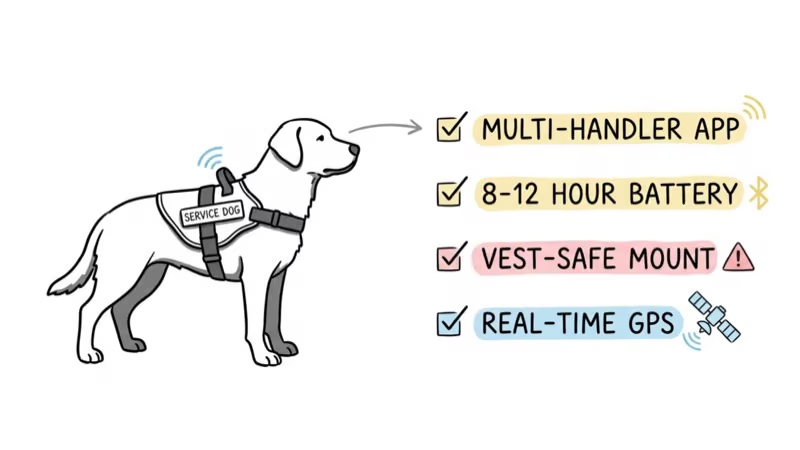
That work routine changes how a GPS tracker has to behave. A pet tracker tuned for weekend yard escapes will log a dog for 40 minutes in the backyard and then sit idle. A service dog wears the same collar through a 10-hour workday, a grocery run, and a hospital visit in a single shift.
Handler coordination is the feature non-pet-owners underestimate. Most service dog teams aren’t one person and one dog. A spouse, a caregiver, or a program trainer frequently shares responsibility, and all of them need the same live map on their phone.
Fi Series 3 supports multiple handler accounts on one device. Most competitors force a shared login, which breaks notifications and creates ambiguous “who took action” logs. For broader context across species, our best GPS trackers for pets roundup covers the general market; this guide narrows the lens to working-dog constraints.
Vest and harness integration is the next filter. The “SERVICE DOG” patch on a working dog’s vest is the handler’s legal shield under the ADA, and a tracker that obscures it creates real friction in restaurants and on planes.
According to the ADA National Network, service dogs are defined by the tasks they perform, not by any required certification or equipment. Assistance Dogs International reports that fully trained service dogs represent $25,000 to $50,000 in program investment, which is why handlers treat GPS as risk insurance. A GPS tracker is always a handler-choice add-on and never an ADA requirement, so the tracker has to earn its place on the vest by staying out of the way.
The third filter is subscription tolerance. Urban handlers living on a LTE-M network accept a $5 to $19 monthly fee because it buys 2 to 3 second updates. Rural handlers working in state parks and wilderness corridors lose cellular coverage routinely, and a cellular tracker is dead weight in those conditions.
Satellite-based options like Garmin Alpha 300 cost $700+ up front and then nothing after that, which changes the math over a 5-year working life. The cellular vs satellite distinction is covered in our Bluetooth vs GPS trackers explainer for readers still comparing technologies.
Fi Series 3 Review for Service Dogs
Fi Series 3 is the best GPS tracker for service dog handlers who work in cellular-served areas and need more than one person to see the map. The Fi app supports multiple handler accounts on a single device, which is the single feature that justifies the $19 monthly fee for most service dog teams.
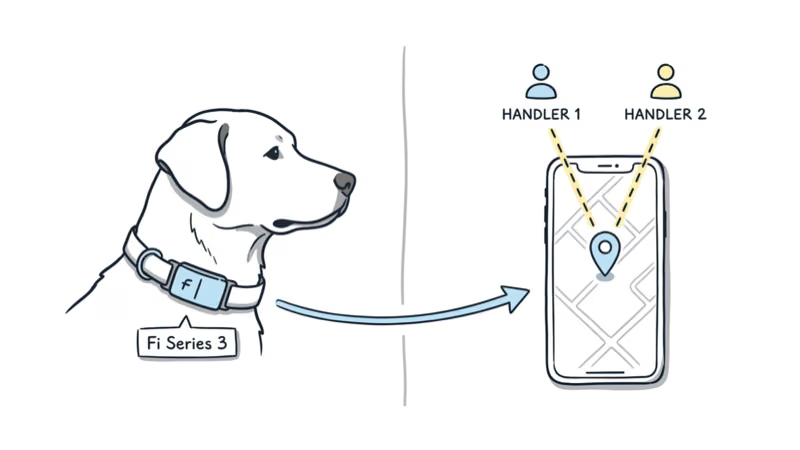
Fi’s multi-handler support is its standout feature for service-dog teams: a primary handler, a spouse, and a backup caregiver can all share one collar and receive the same escape alerts the moment the dog leaves its geofence. Few other mainstream trackers handle parallel notifications across several accounts this cleanly.
The 3-month battery life in Lost Dog mode is the second reason we keep recommending Fi for working dogs. A service dog is on duty 8 to 12 hours a day, and a tracker that demands a charge every 48 hours creates off-duty gaps that handlers hate.
Fi rates the Series 3 collar at up to ~21 days of battery in standard mode, with the figure dropping sharply once the Lost Dog protocol kicks in and GPS polls aggressively. Real-world runtime lands lower for handlers who use live tracking daily, so plan for a roughly two-to-three-week charge cadence with a mixed-mode workload.
The collar band is 1 inch wide and swappable, which matters when the existing service harness already holds an ADA identification plate. Fi replaces the everyday collar rather than clipping onto it, so the tracker and ID plate share one neck attachment point. Handlers who prefer to keep their existing collar should look at Tractive instead.
The Fi Mini is a smaller variant designed for dogs under 25 pounds. Our Fi Mini review covers the trade-offs (shorter battery, lighter module) for smaller service dogs like psychiatric service dogs of toy breeds.
Its honest downside is cellular coverage. Fi uses LTE-M, a low-power cellular variant with good coverage in US metro areas but patchy service in rural wilderness. A service dog working in a national park or a remote trailhead may see coverage drops of 10 to 30 minutes at a stretch, and Fi reverts to last-known-location during those windows.
For urban and suburban handlers this is a non-issue; for rural handlers it’s a deal-breaker. Our AirTag vs Fi collar comparison breaks down the Fi subscription math in more detail.
§ Review summary
Fi Series 3 Smart Dog Collar
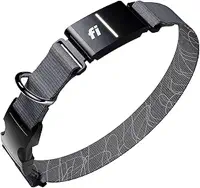
≡ Specs
- Network
- GPS + LTE-M real-time
- Handler access
- Multi-handler accounts on one device
- Battery
- 3 months (Lost Dog) / 18-25 days daily
- Water rating
- IP68 waterproof
- Module weight
- 28g
- Subscription
- $14-19/mo
✓ Pros
- +Only mainstream dog tracker with native multi-handler app access (spouse, caregiver, trainer share one map)
- +Up to 3-month battery in Lost Dog mode; 18-25 days daily-use per charge
- +Replaces the everyday collar so the tracker and ADA ID share one attachment point
- +IP68 waterproof + 28g GPS module sits comfortably on medium-to-large working dogs
✗ Cons
- −LTE-M coverage is US-first; international service is patchy
- −$14-19/month subscription required; no offline mode
- −Replaces the collar instead of clipping onto an existing harness setup
§ Buy if
- ·You work the dog in urban or suburban US with reliable LTE-M coverage
- ·Two or more people (spouse, caregiver, trainer) need live map access
- ·A 2 to 3 month charging interval matters more than a low device price
- ·You want one collar that replaces the everyday collar rather than clipping on
Tractive GPS DOG 6 Review for Service Dogs
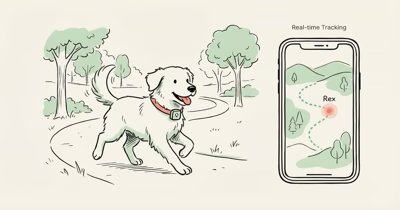
Tractive GPS DOG 6 is the best-value real-time GPS for service dog handlers and the only tracker on this list with activity and sleep monitoring usable as supplementary data. Its live mode refreshes location every 2 to 3 seconds, the cadence documented on the Tractive DOG 6 product page, which is quick enough to follow a bolting dog in real time.
Tractive states that the DOG 6 supports cellular coverage in 175+ countries through 500+ network partners, which matters for service dog handlers who travel internationally for work or family visits.
The health-monitoring angle is the reason we recommend Tractive specifically for medical-alert handlers. The DOG 6 tracks a dog’s daily activity minutes and estimated sleep duration and builds a 30-day rolling baseline.
Seizure-alert handlers we spoke with described using the activity anomaly alerts as a secondary signal, not a replacement for the dog’s trained alert behavior. If a seizure-alert dog’s overnight sleep drops by 40% for three nights in a row, that’s a health pattern worth flagging. The tracker isn’t a medical device and should never be framed as one, but the data is useful.
At 35 grams the DOG 6 clips onto an existing collar rather than replacing it, which keeps the service harness and ADA identification setup intact. That’s the opposite of Fi’s design philosophy, and for handlers who have already spent money on a custom vest with integrated ID pockets, the Tractive approach is less disruptive. The subscription runs $5 to $10 per month depending on whether you pay monthly, annually, or on a 5-year plan.
The downside compared to Fi is the lack of native multi-handler accounts. Tractive supports sharing a single login across devices, so in practice a spouse can install the app and see the map, but notifications and per-handler audit logs don’t split cleanly. For a 2-person team that treats the account as shared, this is fine; for agency-trained dogs where the trainer needs their own dashboard, Fi is the better fit.
§ Review summary
Tractive GPS DOG 6
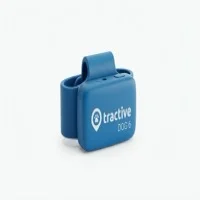
≡ Specs
- Network
- 4G LTE-M, 2-3 sec updates
- Health data
- Activity + sleep + heart rate
- Coverage
- 175+ countries / 500+ partners
- Water rating
- IP67
- Form factor
- Clip-on, 35g
- Subscription
- $5-10/mo
✓ Pros
- +Cheapest real-time GPS at $50 device plus $5-10/month subscription
- +Location updates every 2-3 seconds with 3-8 meter accuracy in open sky
- +Activity, sleep, and heart-rate baseline data useful as a secondary signal for medical-alert handlers
- +175+ country coverage via 500+ cellular partners (international travel friendly)
✗ Cons
- −No native multi-handler accounts; shared login only, no per-handler audit trail
- −Heart-rate accuracy varies vs dedicated medical devices; treat as trend data, not clinical readings
- −Clip-on puck adds bulk at collar buckle vs Fi's integrated collar
§ Buy if
- ·You want the cheapest real-time GPS on the market
- ·You handle a seizure-alert or diabetic-alert dog and want supplementary activity data
- ·You travel internationally and need 175+ country coverage
- ·You prefer a clip-on module over replacing the existing service collar
Garmin Alpha 300 Review for Rural and Wilderness Handlers
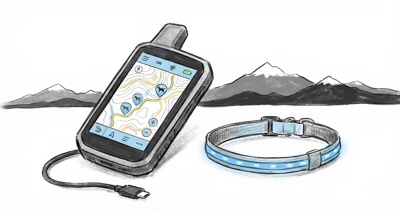
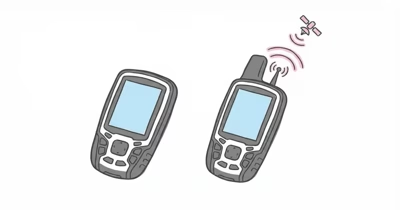
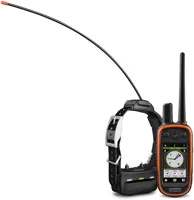
Garmin Alpha 300 is the only tracker on this list that doesn’t use cellular. It communicates between a collar-mounted unit and a rugged handheld controller over VHF radio, which gives it a 9+ mile range independent of cell towers.
The collar unit reports GPS coordinates back to the handheld, and the handheld displays the dog’s position on a preloaded topographic map. The total cost runs $700+ for the handheld plus collar bundle, but there’s no subscription ever. Over a 5-year working life, the cost works out cheaper than Fi’s $228 annual subscription.
Garmin Alpha 300 is the answer for handlers who work where cellular coverage drops out. Because it uses a direct radio link to the handheld rather than a cell network, the dog-to-handler connection keeps working deep in forest cover and over line-of-sight ranges of several miles, well past where a cellular tracker like Fi or Tractive falls back to a last-known location near the trailhead.
For handlers working rural service routes (farm-based psychiatric service dogs, wilderness SAR teams, rural mobility handlers), this is the only category that makes sense. According to the Garmin Alpha 300 specs, the handheld also pairs with an inReach satellite communicator for two-way SOS messaging in areas without cellular or VHF.
The caveat is that the Alpha 300 was designed for hunting dogs first and cross-applies to service work. Our best GPS collars for hunting dogs guide covers the full Alpha and Pathfinder lineup for handlers who want deeper comparisons.
The learning curve is steeper than a smartphone-app tracker, the handheld controller adds pocket weight on long days, and the collar unit is bulkier than Fi or Tractive. Urban handlers get no benefit from any of this; rural handlers get all of it.
§ Review summary
Garmin Alpha 300
≡ Specs
- Network
- GPS + VHF radio, no cellular
- Range
- 9+ miles dog-to-handheld
- Capacity
- Up to 20 dogs per handheld
- Maps
- Topo preloaded; inReach SOS compatible
- Subscription
- None ever
- Cost
- $700+ one-time bundle
✓ Pros
- +Only no-subscription pick on this list; zero recurring cost after the one-time bundle
- +GPS + VHF radio with 9+ mile range works without any cellular dependency
- +inReach satellite SOS compatibility for true off-grid two-way messaging
- +Up to 20 dogs tracked per handheld; topographic maps preloaded
✗ Cons
- −$700+ one-time hardware cost is the highest on this list
- −Designed primarily for hunting dogs; the workflow has a learning curve for service-dog handlers
- −Bulkier collar unit and a handheld controller add weight to the handler's daily carry
§ Buy if
- ·You live or work in rural areas with unreliable cellular
- ·You refuse to pay a monthly subscription of any kind
- ·You are already comfortable with a handheld controller (hunting, SAR background)
- ·You need two-way SOS via inReach satellite pairing
Can You Use an AirTag on a Service Dog?
No. AirTag is a Bluetooth tag that reports its location when a nearby iPhone pings it through Apple’s Find My network. It has no real-time GPS, no geofence, no cellular connection, and no escape alert.
Apple confirms that AirTag has no built-in GPS and relies entirely on the Find My network for location reporting, which the company documents in its Apple AirTag support documentation. In a low-traffic area with few nearby iPhones, a pet AirTag’s location can stay stale for an hour or more between Find My pings, which is disqualifying for a service dog that may bolt in an open space.
That’s a fine backup for a house cat. It’s unacceptable for a service dog. A seizure-alert dog that slips a leash in a parking lot needs a tracker that reports live coordinates directly, not a best-effort location from the last time some stranger’s iPhone walked past. Our full breakdown of AirTag limitations for dogs covers the cost and functionality gap in more detail.
There’s a secondary concern. The CR2032 battery inside AirTag poses an ingestion risk if a dog chews the tag apart, which the Wall Street Journal reported in 2024 after multiple vet-reported ingestion cases. For a service dog trained not to chew its equipment this is a small risk, but it stacks on top of the functional failure mode and makes AirTag a hard no for this use case.
Service Dog Vest and Collar Integration
None of the three recommended trackers require obscuring the ADA patch on a service vest, but each one integrates differently.
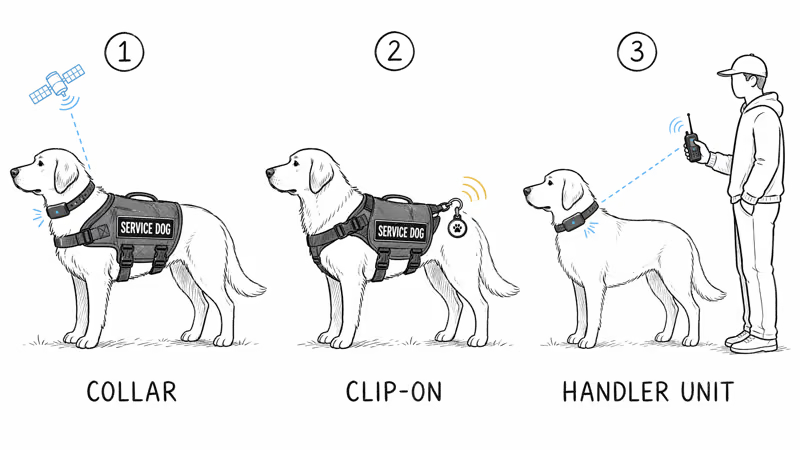
Fi Series 3 replaces the everyday collar, so the tracker occupies the same neck attachment point that previously held the collar and ID tag. Handlers who use a separate service harness for vest-based ID can keep the Fi collar on under the harness and leave the vest untouched.
Tractive GPS DOG 6 clips onto the existing collar with a quick-release puck. On a medium-size working dog, the puck adds less than an inch of bulk at the collar buckle and clears a standard ADA vest without interference. This is the lightest-touch option for handlers who have already invested in a custom harness setup.
Garmin Alpha 300 uses a dedicated collar unit that’s noticeably larger than Fi or Tractive, and it’s paired with a handler-carried handheld rather than a phone app. The collar unit is designed for hunting dogs running off-leash at distance, so for an on-leash urban service dog it’s overkill.
For a rural psychiatric service dog that accompanies its handler on back-country hikes, the bulkier collar is a reasonable trade for the satellite and VHF resilience. The Fi Mini covers the lightest-weight option for smaller service dogs where even Fi’s 28-gram GPS module feels excessive.
Bottom Line
For most service dog handlers, Fi Series 3 is the right pick. The combination of multi-handler app access, a 3-month Lost Dog battery, and a collar that replaces the everyday collar (not adds to it) solves the specific problems working-dog teams hit every week. The $19 monthly subscription buys a feature set no other mainstream tracker offers, and urban and suburban LTE-M coverage is generally reliable enough for daily use.
Medical-alert handlers who want supplementary activity and sleep data should look at Tractive GPS DOG 6 instead. Rural handlers who lose cellular routinely and refuse ongoing subscriptions should go with Garmin Alpha 300. AirTag stays off the list; it’s a Bluetooth tag, not a GPS tracker, and the service dog use case is exactly where its limitations are dangerous.
FAQ
Can I use an AirTag for my service dog?
No. AirTag is a Bluetooth tag with no real-time GPS, no geofence, and no cellular connection. It only reports a location when a nearby iPhone pings it through the Find My network. For a service dog that could slip a leash in a parking lot, the hours-long gap between pings is unacceptable. Use Fi Series 3, Tractive GPS DOG 6, or Garmin Alpha 300 instead.
Does Fi Series 3 work internationally?
Fi uses LTE-M cellular, which is a US-first network standard. International coverage exists in some European and Asian metros but is unreliable for handlers who travel frequently. For service dog handlers who need true international coverage, Tractive GPS DOG 6 covers 175+ countries through 500+ cellular partners and is the better choice.
Which tracker has the best battery life?
Fi Series 3 has the longest battery life of the three in Lost Dog mode, where aggressive GPS polling still stretches to nearly 90 days. In standard daily-use mode Fi runs 18 to 25 days per charge. Tractive DOG 6 gets up to 14 days. Garmin Alpha 300 depends on VHF reporting interval and topography, but the collar unit typically runs 20 to 40 hours before a recharge.
Is a GPS tracker required by the ADA for service dogs?
No. According to the ADA National Network, service dogs are defined by the tasks they perform, not by certification, tags, or equipment. A GPS tracker is always a handler-choice add-on and never an ADA requirement. Businesses can’t ask a handler to prove their dog is a service dog by showing a tracker, ID tag, or certificate.
Can a service dog wear Fi Series 3 alongside its vest harness?
Yes. Fi Series 3 replaces the everyday collar, so the tracker sits at the neck attachment point rather than on the vest harness itself. Handlers who use a separate vest or harness for ADA identification simply keep the Fi collar on underneath and leave the vest untouched. The Fi band is 1 inch wide and swappable.
How accurate is Tractive GPS DOG 6 in cities?
Tractive publishes live-mode updates every 2 to 3 seconds, while open-sky GPS accuracy depends on satellite visibility, cellular coverage, and urban obstruction. For tracking a service dog’s live position in a crowd or crossing a street, that fast update cadence is the useful part; expect less precision around tall buildings or indoors.
Do any of these trackers work without a monthly subscription?
Only Garmin Alpha 300 has zero subscription. The $700+ bundle covers the handheld, the collar unit, and preloaded topographic maps, with no recurring cost after that. Fi Series 3 requires a $14 to $19 monthly plan for GPS service, and Tractive GPS DOG 6 requires $5 to $10 monthly. Assistance Dogs International data indicates a fully trained service dog represents $25,000 to $50,000 in training investment, so the subscription math is small relative to the dog’s value.