AirTag can help locate an authorized personal item, but it isn’t theft-proof hardware. It can’t prevent a theft, immobilize property, continuously stream a route, identify who has an item, or guarantee recovery.
This guide removes disabling recipes, tamper myths, concealment maps, pursuit framing, and product promotion.
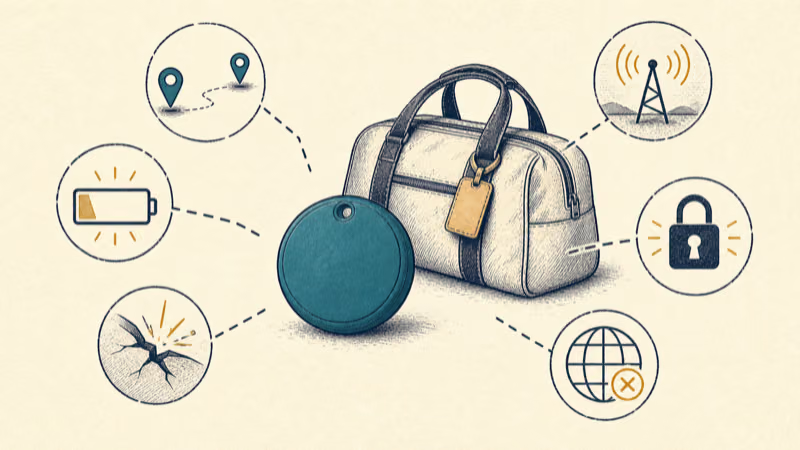
- Plan for interruption. Separation, damage, battery state, radio conditions, account access, and network availability can stop or delay observations.
- Don’t teach disabling. You don’t need a battery-removal, shielding, speaker, destruction, or scanning tutorial to understand that an item tag can fail.
- Avoid a hiding contest. Keep the AirTag serviceable and preserve unwanted-tracking protections instead of using cavities, decoys, or secondary concealed trackers.
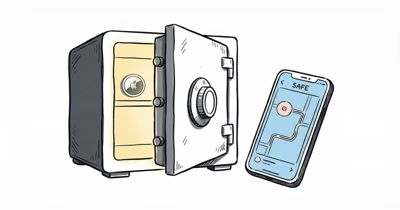
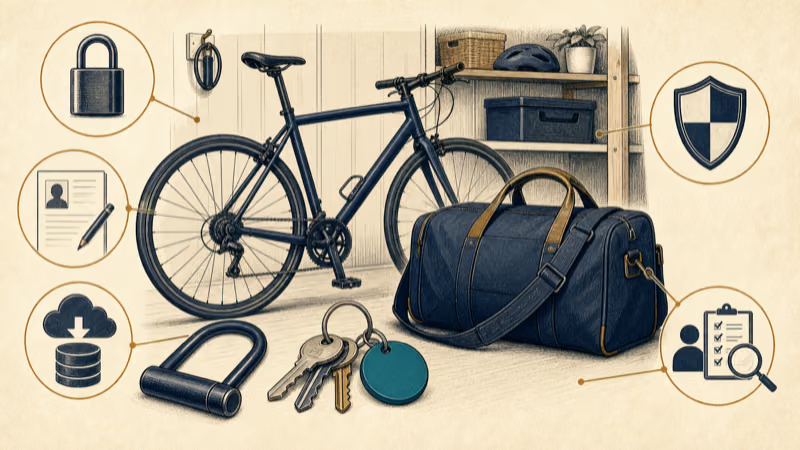
- Protect the item first. Locks, access control, serials, photos, backups, insurance, and prompt reporting remain the primary security layers.
- Don’t self-recover. Share private records with the appropriate venue, operator, insurer, or law enforcement and describe the map point honestly.
Can an AirTag Be Stolen or Stop Reporting?
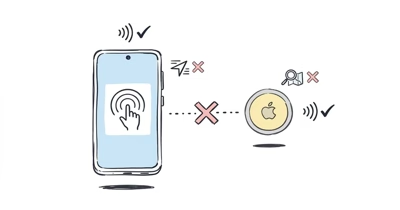
Yes. A small item tag can be removed from the property, separated from its attachment, damaged, lose usable battery power, leave participating-device coverage, or become unavailable because of account or service conditions.
Publishing disabling steps would increase misuse without improving a responsible owner’s plan.
Treat every AirTag observation as conditional. If a tag stops reporting, Find My may retain a last observation, but that point isn’t proof of why reporting stopped or where the item is now.
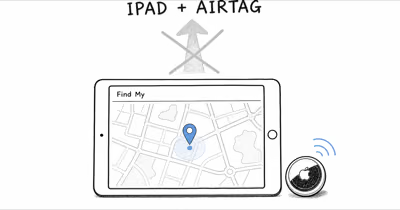
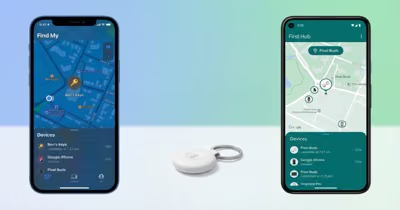
Apple states that Find My can show an item on a map, provide directions, play a sound, and support nearby finding when the required device and conditions are available. Environmental objects and compatible hardware can affect nearby finding.
Create a Private Item Record
Before a loss, create a private item record without publishing its recovery details:
- a current photo and plain description;
- manufacturer serial, asset, registration, or purchase information when applicable;
- the AirTag serial and the Apple Account that manages it;
- insurer, venue, transport, school, workplace, or service contacts relevant to the item; and
- a review date for attachment, battery indication, viewers, and account access.
Keep those records somewhere you can reach if the item and primary phone disappear together. Avoid public posts that reveal a home, routine, school, vehicle identifier, attachment detail, or recovery point.
Tell every regular carrier about the AirTag, its viewers, alerts, sharing, purpose, and removal plan.
Understanding a Find My Point
AirTag is a Bluetooth item tag in the Find My network, not an independent cellular GPS service. Nearby participating devices can help observe the tag, but the owner doesn’t receive a promised continuous trip.
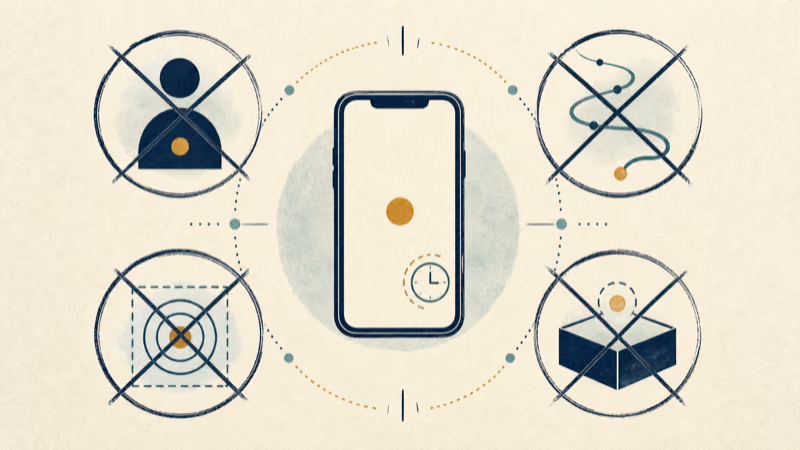
A point can be recent, delayed, unavailable, or last observed. It doesn’t prove:
- that the item is still at the point;
- that a particular person has it;
- that the owner has a complete route history;
- that the observation is precise enough for an address-level accusation; or
- why a later observation didn’t arrive.
Apple states that Lost Mode can notify the owner when the item is found and can provide contact information to someone who identifies it. Use the current onscreen controls; don’t invent real-time or tamper-notification behavior that Apple doesn’t document.
The observation history guide explains that distinction.
Use Layered Item Security
Choose security for the item and setting rather than assuming the tracker protects the property.
For keys, bags, luggage, bikes, tools, or electronics, the relevant layers may include access control, a lock or secured storage, identifying marks, backups, purchase records, transport procedures, and insurance. For vehicles, use locks, key security, alarms or immobilizers where appropriate, identifying records, insurance, and prompt reporting.
NHTSA recommends preventive measures and prompt contact with police and insurers after a vehicle theft. AirTag doesn’t replace those steps.
Need authorized live service, fleet administration, geofences, or reports? Use the network boundary guide, not a concealed multi-tracker design.
Keep the AirTag Serviceable
Use the item’s and holder’s documented attachment method. A responsible attachment stays clear of controls, safety equipment, moving parts, heat, moisture paths, sharp edges, and places where the tag can become a projectile or choking hazard.
Keep it accessible and serviceable for inspection, sound, battery replacement, and removal.
This guide doesn’t provide seat-foam, carpet-lining, spare-wheel, bumper, door-panel, OBD-cover, handlebar, seat-post, frame-tube, bag-lining, false-pocket, magnetic-underbody, or body-cavity locations. Don’t dismantle property, cut seams, drill panels, route wiring, suppress the speaker, add shielding, or create a decoy. For an authorized vehicle or powered asset, use the exact manuals and a qualified technician when the safe boundary isn’t obvious.
Follow current Apple battery guidance. Apple states that Find My shows a low-battery indication and provides the supported service path.
Preserve Unwanted-Tracking Protections
Anti-misuse alerts and item sounds protect people. Don’t frame them as a timer to beat or a weakness to bypass.
Apple states that an AirTag or compatible item separated from its owner and seen moving with someone over time can trigger a notification or sound. Google states that unknown-tracker alerts are available on Android 6 and later for supported tags, including AirTag.
An alert may also arise from a borrowed or shared item, so it isn’t automatic proof of theft or malicious intent. Use direct notice and supported sharing for legitimate shared use.
Use the unknown-tracker response guide for supported tools, safety, documentation, and qualified help.
How Should You Respond to a Missing Item?
Start by checking nearby and confirming that a family member, employee, school, workplace, hotel, airline, transit operator, repair shop, tow provider, or other authorized person didn’t move the item.
If Find My shows an observation:
- note the displayed time and whether the point appears current or last observed;
- save a private screenshot and the item and AirTag records;
- use current Lost Mode controls when appropriate;
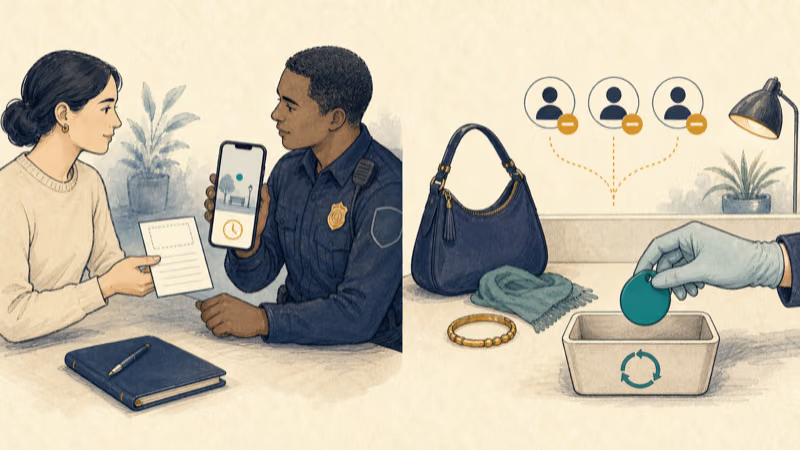
- contact the venue, operator, insurer, or law enforcement for the situation; and
- don’t follow, confront, trespass, or enter a location based only on a map point.
Describe what Find My actually shows. Don’t call a last observation a live location or accuse a person without independent evidence.
For a stolen vehicle, share the VIN, registration, description, serial, and timestamp with responders.
Review, Remove, and Reassign
Periodically confirm the AirTag is intact, dry, audible, serviceable, assigned to the correct item, and visible only to current authorized viewers. Respond to Find My’s battery indication and current Apple instructions.
When the purpose ends, remove viewers and use the supported unpair, transfer, reset, recycling, or disposal path.
Review other access too: connected-car accounts, phone sessions, workplace or school records, insurer portals, transport accounts, and smart-lock or garage permissions may reveal more than the AirTag.
Bottom Line
AirTag is a limited item-finding layer, not theft-proof hardware or a recovery guarantee.
Don’t publish disabling tactics or hiding maps. Keep the tag serviceable, preserve alerts, protect the item first, and report observations without pursuing a person or treating a point as proof.
FAQ
Can someone stop an AirTag from reporting?
Yes. Separation, damage, battery state, radio conditions, account access, network availability, and other physical or service conditions can interrupt observations. Owners don't need disabling instructions; plan for failure and use layered item security.
Does AirTag provide a stolen item's live route?
No. Find My can show an observation when the AirTag connects to the network. A point may be recent, delayed, unavailable, or a last observation; it isn't a continuous cellular GPS trip.
Should I hide an AirTag so nobody can find it?
No. This guide doesn't provide hiding locations. Use a documented, authorized, serviceable attachment that preserves sound and alerts and lets the owner inspect, replace, and remove the AirTag safely.
Does the current AirTag guarantee better theft protection?
No AirTag generation is theft-proof or a recovery guarantee. Check current Apple documentation for supported features, and don't rely on unverified tamper alerts, anti-disable claims, or fixed recovery windows.
Can a Find My point identify who has my item?
No. The point describes where the AirTag was observed, not a person's identity or intent. Keep the record private and let the appropriate venue, insurer, or law enforcement assess other evidence.
What should I share when reporting a stolen item?
Share the item description, identifying records, AirTag serial, account ownership, displayed timestamp, and private screenshot with the appropriate responder. State whether the point is current, delayed, or last observed.
Is AirTag enough to protect a car or high-value item?
No. Use physical security, access control, identifying records, insurance, and prompt reporting. If an authorized cellular GPS or fleet service is required, choose it for that job instead of building a concealed multi-tracker setup.