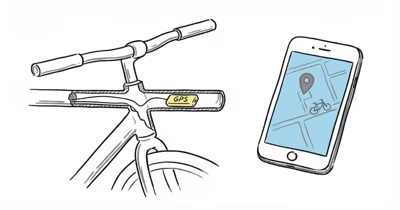
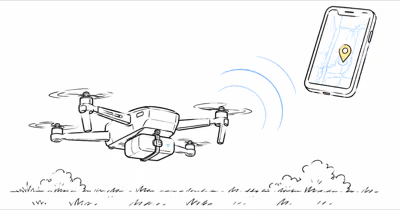
Two e-bikes can sit side by side in the same shop, wear the same badge, and answer this question differently. One carries a module that reports its position after someone rides off with it. The other just records your rides.
Key Takeaways
- A specification has to name location tracking, not just GPS navigation, Bluetooth, or ride recording.
- Real remote GPS needs a return path such as LTE, NB-IoT, or another cellular service to send the bike’s position back.
- Apple Find My and Google Find Hub lean on nearby phones, so updates arrive when a participating device passes the bike.
- Battery removal is a model-specific question because some modules carry backup power and other integrations depend on the bike.
- A location pin is evidence, not a recovery license; document it and work through police and your insurer.
Do E-Bikes Have GPS Trackers Built In?
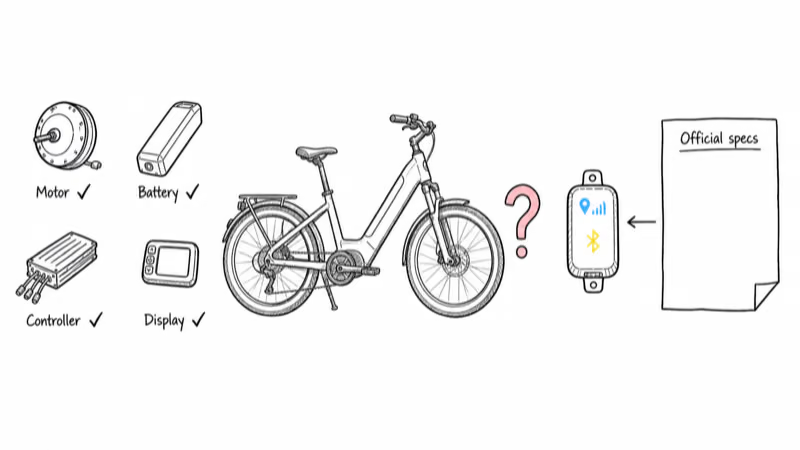
A motor and a battery prove nothing about recovery tracking. An e-bike needs a drive system to move; it doesn’t need any way to phone home.
Some current systems are the exception. Bosch states that eBike Alarm needs a compatible ConnectModule and a Flow+ subscription. When the bike registers significant movement, the service can alert the owner and open a tracking view in the eBike Flow app.
Other bikes solve it a different way. Specialized lists integrated Apple Find My on the current Vado SL 2 5.0 EQ in its US model specification. That settles one build. It says nothing about an earlier Turbo, a different trim, or the bike parked beside it on the shop floor.
So the answer stays conditional: assume there’s no recovery tracking until the exact model specification names it. Navigation, ride recording, and theft recovery are three different products.
Three Systems Sellers Call Tracking
The word “tracking” gets stretched across technologies that behave nothing alike. Find the row that matches the bike before you compare anything else.
| Listing language | What it does | Recovery limit |
|---|---|---|
| GPS plus LTE or cellular | Calculates a position and sends it through a mobile network | Needs coverage, activation, and usually a service plan |
| Apple Find My | Nearby Apple devices relay an encrypted item observation | Update timing follows the participating-device crowd |
| Google Find Hub accessory | Nearby Android devices relay a compatible tag observation | Usually an add-on tag, not a built-in e-bike feature |
| Navigation or ride tracking | Records the rider's route while a display or phone is active | May provide no owner-facing theft location after parking |
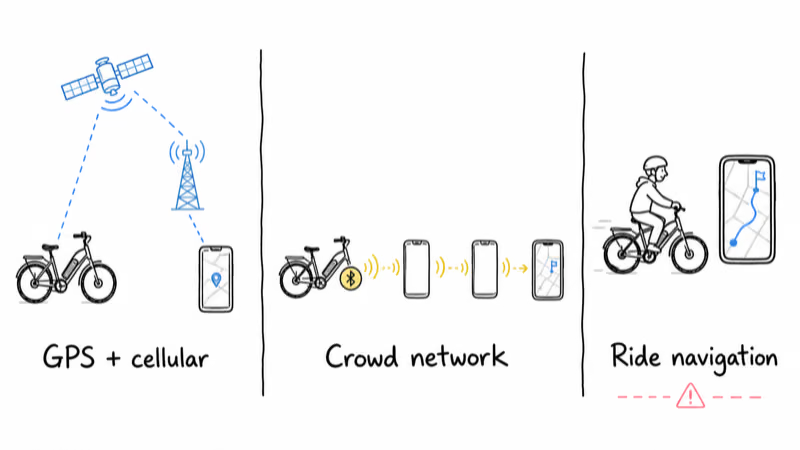
Apple says its Find My network includes more than 1 billion devices in the official network overview. The bike or accessory broadcasts over short-range radio, and a passing Apple device contributes the observation. In a busy city that works well. It still isn’t an independent cellular connection running on its own schedule.
Google states that participating Android devices scan over Bluetooth and relay encrypted accessory locations in its Find Hub privacy guide. A listing may call that “global tracking.” The bike itself is transmitting nothing to a distant owner.
Our Bluetooth and GPS guide traces what each signal actually does. The bike-tracker guide compares both across conventional and electric bikes.
Check Your Exact E-Bike Before You Buy Anything
Read the specification, not the brand’s reputation. One product family can span different motors, displays, communications modules, and regional trims. A feature on a 2026 US model may be missing from an earlier bike wearing the same name.
- Record the full model, model year, and market. Copy the product code or serial-linked model name from the bike itself or from your purchase record.
- Search the official specification for recovery terms. Look for “GPS tracking,” “cellular,” “LTE,” “ConnectModule,” “Apple Find My,” or “Google Find Hub.” Navigation, Bluetooth pairing, and ride recording don’t answer the question.
- Open the official app and component list. It can show which modules are installed, whether the feature is activated, whether a subscription is running, and whether a dealer still has to fit something.
- Ask the dealer a question that can be answered. “Which installed component reports this bike’s location when my phone is nowhere near it, and what service has to be active?” Get the model number in writing.
- Confirm what happens after purchase. Pairing, ownership registration, a firmware update, a trial subscription, or an app permission can each stand between you and a working feature.
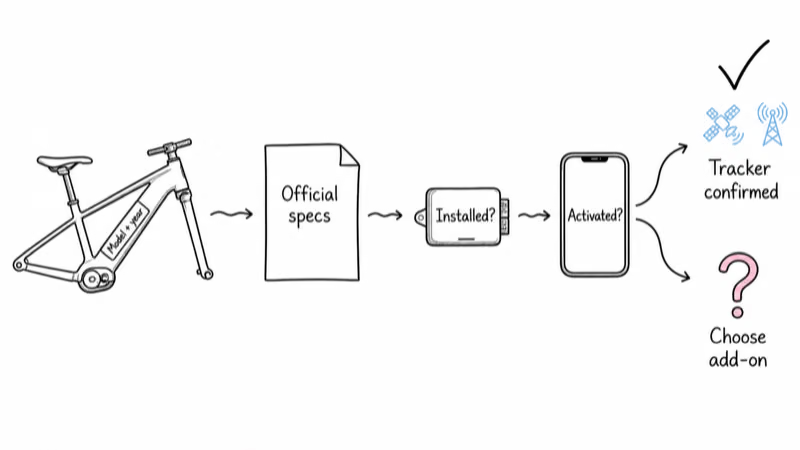
Run this check even when a brand advertises tracking across a whole family. “Compatible with” can mean a dealer-installed option that isn’t in the box. “Built in” can describe a crowd-network radio rather than GPS and cellular hardware.
What Still Works If the Main E-Bike Battery Is Removed?
There’s no category-wide answer. A recovery feature survives battery removal only when its module has another power source and the manufacturer documents how long that source keeps location updates running.
Bosch states that its ConnectModule can send updates for at least 1 week in tracking mode. The official behavior guide describes a schedule that responds to movement and conserves power, dropping to a daily health ping while the bike sits still. That’s Bosch-specific behavior, not a promise that carries to every integrated tracker.
For a bike with Apple Find My wired into its electrical system, the reserve-power answer lives in that model’s manual. Don’t assume it behaves like a removable AirTag running on its own coin cell. Dealer-fitted modules need the same separate confirmation on compatibility, installation, subscription, and backup power.
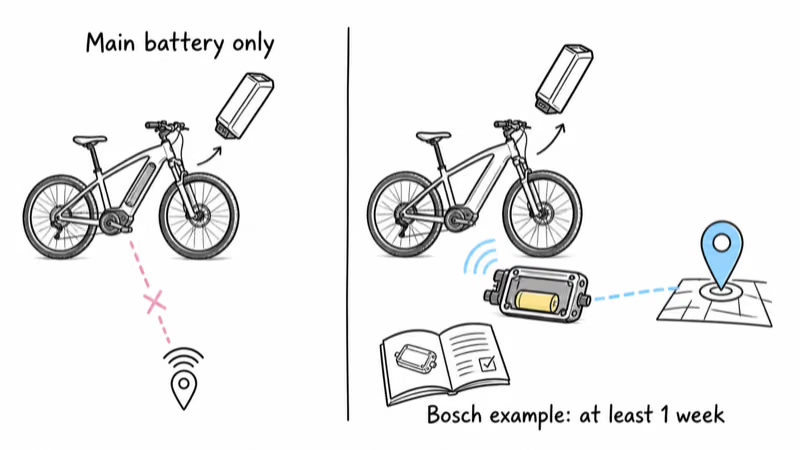
Before you rely on any of it, check that the feature reports a healthy module or battery status in the owner app. Don’t stage a theft or pull electrical parts to find out.
Add-On Paths When the Bike Has No Tracker
Once the model check comes back empty, pick the network by the job, not by the smallest device.
- Dedicated cellular GPS earns its keep when movement alerts and remote updates matter enough to justify charging, coverage, and a subscription. Confirm mounting and electrical requirements with both the bike and tracker manufacturers.
- A Find My or Find Hub accessory works as a lower-maintenance finding layer where participating phones are common. Expect irregular updates and unwanted-tracker protections, and never modify or disable those protections.
- Both layers together only when each one has a documented role. More hardware doesn’t replace a lock, a recorded serial number, insurance, or a safe recovery process.
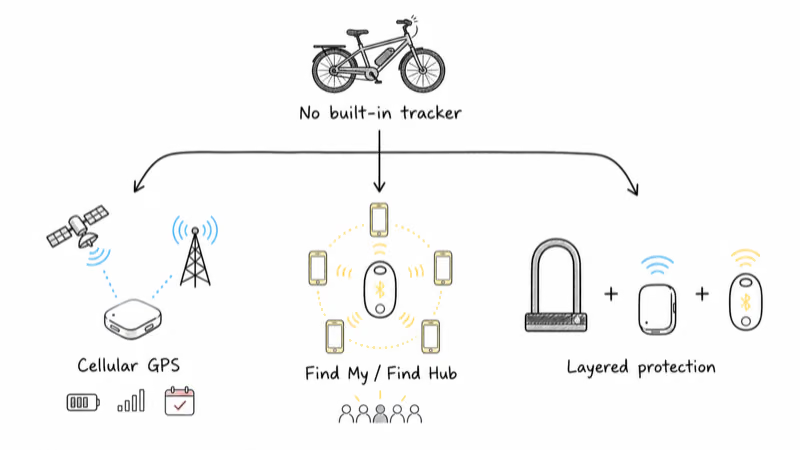
The e-bike tracker comparison covers purpose-built options once you know an add-on is needed. For a wider view of cellular units and their service trade-offs, use our GPS tracker guide.
Neither page overrides an e-bike manufacturer’s limits on wiring, motor covers, water resistance, warranty, or safe attachment. Avoid disassembly, and keep any add-on clear of brakes, steering, heat, and high-voltage parts.
Use Tracking Data as Evidence, Not a Recovery License
A map point doesn’t identify a thief or authorize you to walk in anywhere. It can be delayed, approximate, or attached to the wrong unit in a shared app. Treat it as one record beside the frame serial number, photos, purchase record, lock details, and the time and place the bike disappeared.
If the bike is gone, capture the location and timestamp without publishing them. File a police report and hand over the serial number, app screenshots, tracker account details, and any manufacturer theft report. Bosch, for one, lets an owner share current tracking information through its theft-report process, though the investigating agency decides what to do with it.
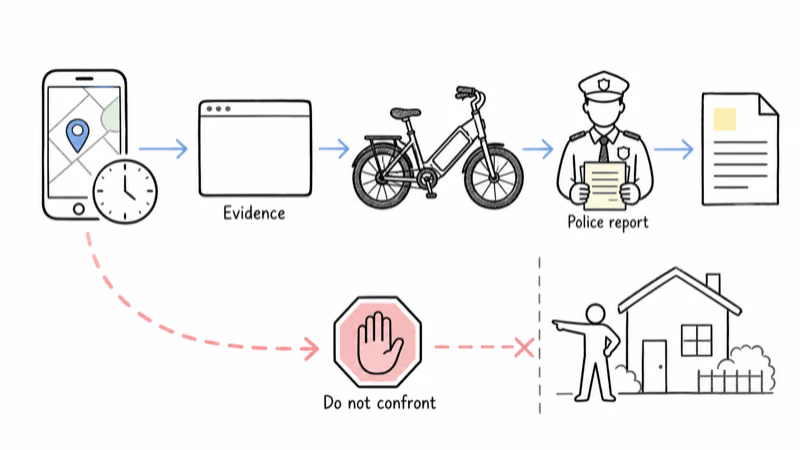
Don’t follow the bike and don’t confront anyone. Preserve the updates, then work through police and your insurer. The safe bike-recovery plan explains where the Find My boundary sits.
Bottom Line
An e-bike’s drive system tells you nothing about whether recovery tracking is installed, and a bike sold as tracked may be leaning on a crowd network rather than GPS. Verify the full model, module, network, power source, activation, and service terms before you trust it. If the bike goes missing, preserve the location as evidence and let police handle the recovery.
FAQ
Do all e-bikes have GPS trackers?
No. Electric assist needs a motor, battery, controller, and controls, and none of that requires recovery-tracking hardware. Some compatible Bosch smart-system bikes can run a ConnectModule with eBike Alarm, and selected Specialized Turbo models list Apple Find My integration, but neither example sets a rule for the rest of the market. Check the exact model year, market, component list, app, and service terms before you assume a bike can report its own location after it leaves your possession. If the specification reads ambiguously, ask manufacturer support whether the named hardware is included, optional, or unavailable in your region, and treat a live owner-facing screen with a clear activation status as better evidence than a sales-page claim.
How can I tell whether my e-bike has a tracker?
Start from the exact product code, model year, and country-specific specification, then search the manufacturer page and manual for GPS tracking, cellular, LTE, ConnectModule, Apple Find My, or Google Find Hub. Open the official app and look for an installed component with an activation status. A map display, a Bluetooth pairing, or a recorded ride route proves none of this. Ask the dealer to name the installed communications module and the service required when your phone is away from the bike. If the listing says compatible rather than included, confirm what installation, activation, or paid service is still outstanding, and save that answer with your purchase records.
Is Apple Find My on an e-bike the same as GPS?
No. A Find My accessory broadcasts a short-range signal that nearby participating Apple devices observe and relay through the encrypted Find My network. A GPS and cellular tracker calculates its own position and sends that position over its own mobile connection. Find My can be useful where phones are dense, but update timing depends on who walks past and on radio conditions. Treat integrated Find My as a crowd-network finder rather than a promise of continuous live tracking, check the reserve-power behavior in that model's manual, and remember that dense city coverage still can't guarantee a fresh observation at any given moment.
Will an e-bike tracker work if the battery is removed?
Only when the tracking system has another power source and the manufacturer documents how it behaves. Bosch says a ConnectModule in tracking mode can supply position updates for at least one week, though that statement covers its own compatible system. An integrated Find My radio or a dealer-fitted module may hold up very differently, so check the exact manual, module status, and battery specification instead of assuming any built-in tracker survives losing the main battery. Test only the supported owner-facing status while the bike is still safely in your hands, and remember that reserve duration can shift with battery age or storage.
Can I add GPS tracking to an e-bike that has none?
Usually yes, though the safe route depends on the bike. A compatible dealer-installed module can integrate with the motor system, while a self-powered cellular tracker avoids touching the bike's wiring at all. A Find My or Find Hub tag gives you crowd-network observations rather than independent GPS. Follow both manufacturers' installation limits, keep the device serviceable, and keep hardware away from brakes, steering, moving parts, heat, and high-voltage components. Confirm subscription, coverage, charging, warranty, and app requirements before installation, verify that the tracker appears in the owner account, and use a qualified dealer for work near the drive system or battery.
Should I follow a stolen e-bike's live location myself?
No. A location point can be delayed, approximate, or tied to a building that holds many people and many items. Screenshot the map and timestamp, preserve the tracker account, and give police the frame serial number, purchase record, photos, and location history. Don't confront anyone, enter private property, or walk into a restricted area. The tracker is evidence for an investigation and an insurance claim; it doesn't tell you who has the bike and it doesn't make self-recovery safe. Keep later observations private, continue saving them for police, and let the investigating agency decide how to act on them.