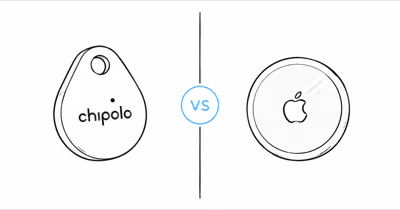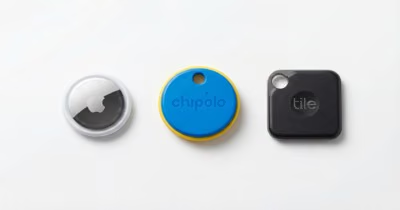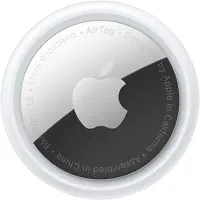
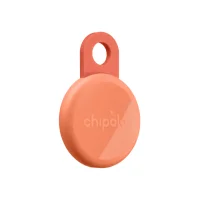
Chipolo LOOP and AirTag 2 use different shapes and solve different problems. Chipolo lists LOOP at 40 × 57 × 8 mm with an integrated flexible loop, while AirTag 2 is a round disc without an attachment point. Apple’s January 2026 newsroom announcement confirms that AirTag 2’s Precision Finding range stretches 50% farther than the original.
- Chipolo LOOP is USB-C rechargeable: about 12 months per charge, no CR2032 to track and replace
- AirTag 2 ships with second-gen U2 chip: Precision Finding works up to 50% farther than original AirTag
- Chipolo LOOP hits 125dB: louder than Chipolo Pop’s 120dB and audibly louder than AirTag 2’s chirp
- Built-in silicone keyring vs accessory: LOOP has an attached loop, AirTag 2 needs a $9 to $35 holder
- Same IP67 rating, different price: LOOP is $39 with the loop included, AirTag 2 is $29 plus accessory
Chipolo LOOP vs AirTag 2: Spec Comparison
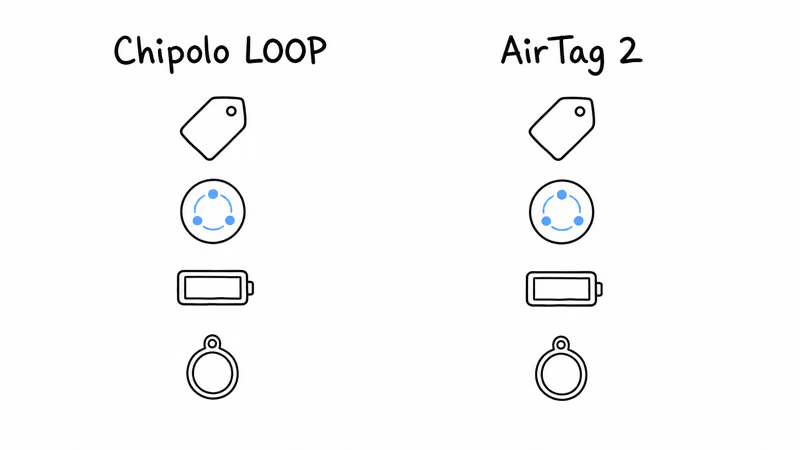
Both trackers carry an IP67 rating, but their bodies differ. LOOP measures 40 × 57 × 8 mm and includes a silicone loop; AirTag 2 is a round 11.8g disc with a user-replaceable CR2032 and no built-in attachment. Chipolo’s current page does not publish LOOP’s weight.
| Spec | Chipolo LOOP | AirTag 2 |
|---|---|---|
| Price (single) | $39 | $29 |
| Multi-pack options | 2-, 4-, and 6-pack | 4-pack |
| Network | Find My or Find Hub (pick one) | Apple Find My only |
| Precision Finding (UWB) | No | Yes (50% longer range than original) |
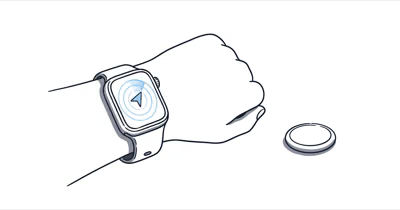
| Apple Watch Precision Finding | No | Series 9 / Ultra 2 and newer |
| Speaker | 125dB | 50% louder than original AirTag |
| Bluetooth range | Up to 120m / 400ft (manufacturer spec) | Extended over original AirTag |
| Battery | Built-in USB-C rechargeable, about 12 months per charge | CR2032, more than 12 months |
| Water resistance | IP67 (submersion) | IP67 (submersion) |
| Attachment | Built-in silicone keyring | None (accessory sold separately) |
| Subscription | None | None |
The table hides one durability detail: Chipolo’s LOOP page lists 120 meters as the open-air Bluetooth maximum. Indoors, that number is only a ceiling: walls, furniture, and phone antenna placement cut the usable range before either tracker reaches its lab-style spec.
Chipolo LOOP vs AirTag 2: Head-to-Head
⇄ Head-to-head
Chipolo LOOP vs AirTag 2
- +Second-generation U2 chip extends Precision Finding up to 50% farther than original AirTag
- +Apple Watch Precision Finding on Series 9 / Ultra 2 and newer
- +Find My network spans over a billion Apple devices worldwide
- +User-replaceable CR2032 means the tag can last 5+ years across battery swaps
- +Share Item Location works with 50+ airlines for lost luggage recovery
- +USB-C rechargeable: no CR2032 to track, source, or replace
- +Built-in silicone loop saves the $9 to $35 cost of a separate AirTag holder
- +125dB speaker is the loudest in any current mainstream Bluetooth tracker
- +Dual-network: pairs to Apple Find My or Google Find Hub at first setup
- +IP67 rated for full submersion, same as AirTag 2
- −iPhone-only; no Android registration or pairing
- −No built-in attachment; keychain holders cost $9 to $35 extra
- −Quieter chirp than LOOP's 125dB even after the new speaker boost
- −Expanded Precision Finding excludes iPhone 16e and iPhone 17e
- −CR2032 battery means an extra trip to the drugstore once a year
- −No UWB Precision Finding (relies on speaker for in-room locate)
- −Battery is not user-replaceable; whole unit retires when the cell wears out
- −Network switch requires a factory reset (no runtime toggle)
- −$39 single is $10 more than AirTag 2; bundle prices can change
- −Larger 40 × 57 mm body takes more keyring space than AirTag 2
- ·You're an iPhone user or live in a fully Apple household
- ·You actually use Precision Finding (especially with Apple Watch Series 9 or newer)
- ·You value the airline Share Item Location workflow for travel
- ·You want the lower $29 single-unit entry price
- ·You hate dealing with coin batteries and want USB-C recharging
- ·You want a built-in keyring without paying extra for an AirTag holder
- ·You live in a mixed-OS household and need one SKU for either network
- ·You regularly lose items in audio-busy environments where 125dB matters
Chipolo LOOP: Rechargeable Dual-Network Loop
The pitch for the LOOP is convenience: no coin cell to replace, no separate keyring accessory to buy, and a single SKU that pairs to either Apple Find My or Google Find Hub. The network is a one-time choice at first setup; for the full long-term verdict on a single network see our Chipolo LOOP review.
The USB-C port is the headline feature: the LOOP recharges over USB-C with a standard phone charger, so there is no coin cell to source. Chipolo’s LOOP page states that the tracker is rated for about 12 months per charge.
The 125dB chirp is the second standout. It’s louder than Chipolo Pop’s 120dB and substantially louder than AirTag 2’s improved (but unspecified) speaker. The trade-off is the same dual-network constraint Chipolo’s other models have: pick Find My or Find Hub at first setup, factory-reset to switch. The LOOP also lacks UWB, so direct in-room locate relies on the (very loud) speaker rather than a haptic arrow.
AirTag 2: Apple’s UWB Champion
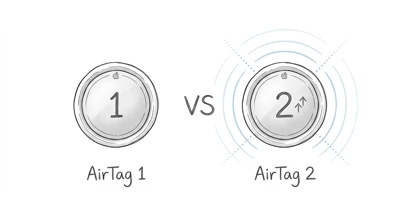
AirTag 2 is Apple’s first AirTag hardware refresh since 2021. For our full long-term verdict on the new model, see our AirTag 2 review. 9to5Mac’s launch coverage reported that the refresh adds three meaningful changes: the second-generation UWB chip (the same U2 that ships in iPhone 17 and Apple Watch Ultra 3), a 50% louder speaker, and Apple Watch Precision Finding on Series 9 and Ultra 2 or newer.
The new UWB chip is the most noticeable daily-use upgrade. Apple’s second-generation U2 chip extends Precision Finding up to 50% farther than the original AirTag, so an iPhone picks up the directional arrow sooner. Apple’s launch announcement does not publish a fixed Precision Finding distance in meters, so the gain is best read as relative range, not an absolute figure.
The trade-off remains the same one AirTag has always had: it’s iPhone-only. An Android user can detect a stranger’s AirTag 2 thanks to cross-platform unwanted-tracker alerts, but can’t register, pair, or locate one of their own. For mixed-OS households, dual-compatible trackers such as Chipolo LOOP, Chipolo Pop, or Pebblebee Clip 5 are a better fit because each can be configured for Find My or Find Hub.
Which Tracker Wins on Range and Volume?
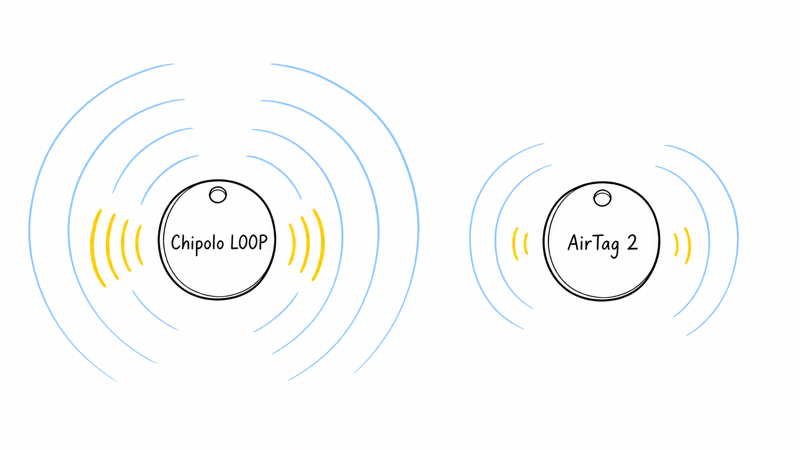
Volume is a clean spec win for Chipolo LOOP. The 125dB rating is the loudest in any mainstream tracker today, edging out Chipolo’s own Pop at 120dB. AirTag 2 has not published an absolute decibel figure, only a claim of 50% louder than the original AirTag, so the LOOP has the clearer published loudness advantage.
Range is closer than the spec sheet implies. Bluetooth range is strongly environment-dependent: both trackers lose distance through walls and furniture long before the open-air manufacturer claims matter. Where AirTag 2 pulls ahead is UWB Precision Finding, which adds a haptic arrow pointing at the tag once you are within Bluetooth range. LOOP has no UWB equivalent, so you rely on the speaker.
For a broader category view on rechargeable trackers, our guide to USB-C rechargeable Bluetooth trackers covers LOOP, Pebblebee Clip 5, and others against the CR2032 incumbents.
How Do They Differ on Network and Cross-Platform Support?
Both trackers participate in cross-platform unwanted-tracker alerting when configured for Apple Find My. Alert timing depends on the network, phone, and device behavior, so there is no single shared 8-to-24-hour window to promise for both products.
The reachable networks themselves differ. Apple’s Find My network spans over a billion Apple devices, and Google pegs the Find Hub network at over a billion Android devices as well. In dense urban areas, both networks have many potential relay phones; in quieter areas, updates slow down. The deeper Find My vs Find Hub regional differences are covered in our Find Hub vs Find My breakdown.
Chipolo LOOP’s dual-network is mostly useful for a one-time choice during setup, not for runtime ecosystem switching. Chipolo’s LOOP page confirms that the product supports Apple Find My or Google Find Hub; switching ecosystems still means a reset because the two networks use separate identity systems.
Who Should Buy Each Tracker
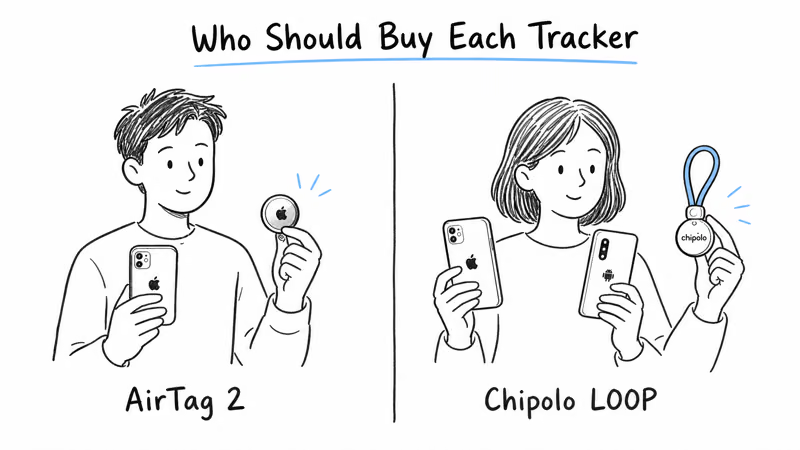
Buy Chipolo LOOP if you hate dealing with coin batteries and want a tracker you can simply recharge with the same USB-C cable as your phone, you want a built-in keyring without paying extra for an AirTag holder, you live in a mixed-OS household and need one SKU that pairs to whichever network the user prefers, or you regularly lose items in audio-busy environments where the 125dB speaker matters.
Buy AirTag 2 if you’re an iPhone user or live in a fully Apple household, you use Precision Finding on a supported phone, you value the airline Share Item Location workflow, or you want the lower $29 single-unit entry price. Expanded Precision Finding supports iPhone Air or iPhone 15 and later, excluding iPhone 16e and iPhone 17e.
The decision boils down to battery preference and ecosystem. A practical split is to put the AirTag 2 on a suitcase (for airline Share Item Location) and the Chipolo LOOP on a keychain — rechargeable, built-in loop, loudest chirp — so each tracker plays to its strength.
Bottom Line
Chipolo LOOP and AirTag 2 are not really competitors so much as two answers to the same question for different households. If you own an iPhone, AirTag 2 is the easier and cheaper choice: UWB precision, Apple Watch support, $29 entry price, deeper ecosystem integration, and the airline Share Item Location workflow.
If you want to be done with coin batteries, want a tracker that already has a keyring built in, or live across iPhone and Android, Chipolo LOOP is the answer. The $10 premium over AirTag 2 pays for USB-C recharging, the silicone loop, dual-network setup, and a louder 125dB chirp. The trade-off is no UWB Precision Finding and a sealed battery that retires the unit when the cell eventually fails.
Frequently Asked Questions
Can Chipolo LOOP work with both Find My and Find Hub at the same time?
No. LOOP is a dual-network tracker, but the network choice is a setup-time decision, not a runtime toggle. Pair to Apple Find My or to Google Find Hub at first setup. Switching to the other network requires a factory reset, which clears the tag from the original network and lets you re-pair fresh on the new one. There is no simultaneous tracking on both networks.
How long does the Chipolo LOOP battery last per charge?
Chipolo rates LOOP at about 12 months per full USB-C charge with default chirp volume. It charges over USB-C with a standard phone charger, but Chipolo does not market it as a fast-charge tracker. The network is a one-time choice at setup, so battery aside, the LOOP is low-maintenance.
Does AirTag 2 work with Android phones?
No, AirTag 2 is iPhone-only for registration and tracking. Android users can’t create a Find My account, pair an AirTag, or see its location. Android phones can detect a nearby unknown AirTag via Apple’s cross-platform anti-stalking standard and via Google’s Unknown Tracker Alerts, but only to identify and disable one carried by someone else. For cross-platform tracking, Chipolo LOOP, Chipolo Pop, or Pebblebee Clip 5 are the right choices.
Which tracker is louder, Chipolo LOOP or AirTag 2?
Chipolo LOOP has the stronger published loudness spec. The LOOP is rated 125dB and AirTag 2 has not published an absolute decibel figure, only a claim of 50% louder than the original AirTag. With no published number from Apple to match the LOOP’s 125dB rating, the LOOP is the safer pick when alarm volume matters.
Is Chipolo LOOP’s battery user-replaceable?
No. Unlike CR2032-based trackers, LOOP uses a sealed internal rechargeable cell. When the cell eventually wears out, the whole unit retires. AirTag 2’s CR2032 is user-replaceable, so Apple’s tag can keep going across multiple battery swaps. LOOP is lower-maintenance day to day; AirTag 2 is easier to keep alive long term.
Are both trackers waterproof?
Both carry an IP67 rating under controlled laboratory conditions: up to 1 meter of fresh water for 30 minutes. Water resistance is not permanent and can decline with wear, so the rating is not a promise for deliberate pool, ocean, or kayak use.
Do either of these trackers require a subscription?
No, neither LOOP nor AirTag 2 currently requires a monthly subscription for its core finding network. Both are one-time hardware purchases, but prices, app features, and service terms can change.
Which tracker should I buy if I don’t want to deal with batteries?
Chipolo LOOP is the clear pick. The USB-C rechargeable cell means no annual trip to the drugstore for a CR2032, no battery door to lose, and no checking app battery warnings every few months. AirTag 2’s CR2032 lasts more than a year and is user-replaceable in 30 seconds, but it’s still a maintenance task. If “set it and forget it” matters, LOOP wins on convenience even at the $10 price premium.