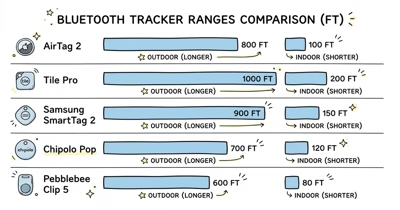
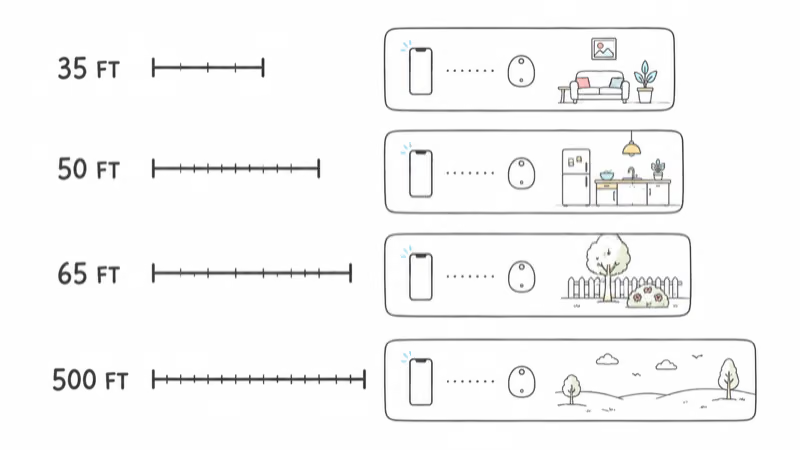
Advertised and tested range aren't the same measurement. Named tests have reported 35 ft, 50 ft, 65 ft, and the full 500 ft under different indoor and clear-path protocols.
Tracker range isn't one universal distance. Chipolo lists POP at 90 m (300 ft), while named reviewers show why the phone, obstacles, and test path belong beside every result.
- An advertised 300–500 ft range is an up-to figure, not a promise for a furnished room.
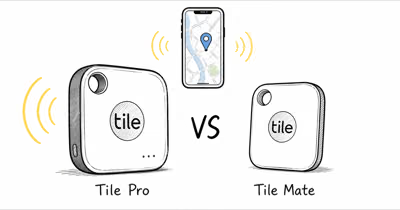
- PCMag lost a standard Tile around 35 ft indoors, while Tile Pro still appeared nearby at that distance.
- Named reviews varied sharply across trackers and settings, so each result needs its own protocol label.
- One clear-line-of-sight Tile Pro test reached 500 ft, while a different sidewalk test reached about 50 ft.
- Apple publishes no AirTag Bluetooth distance in feet and says Precision Finding works up to 50% farther than before.
Reading the Range Ledger
A range ledger needs three separate columns. Claimed range is the up-to figure listed by a manufacturer or a review’s spec sheet. Indoor tested range belongs to a named room or apartment. Outdoor tested range belongs to its exact line of sight, phone, and obstacles.
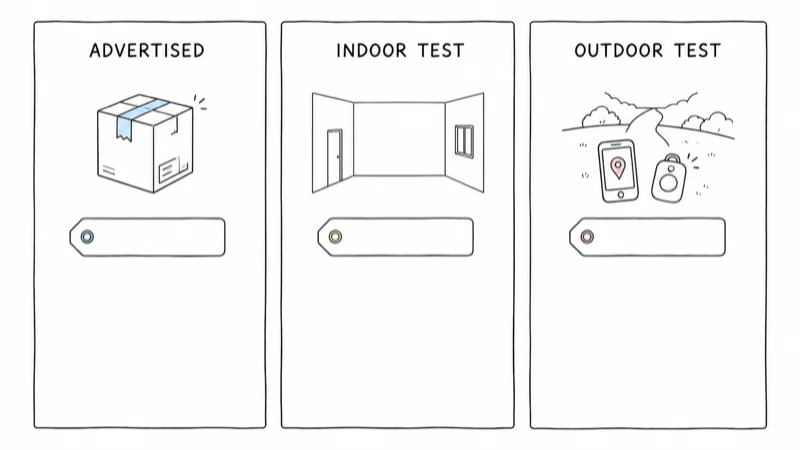
Don’t average those columns. A 35 ft apartment miss doesn’t prove every tracker fails there, and a 500 ft clear-path ping doesn’t promise the same result through a wall.
The setting travels with the number.
Our specs-versus-reality guide explains the physics behind advertised ceilings. The tracker range comparison handles relative product ranking. This article keeps the narrower ledger: who reported which distance, and under what setup.
What Did the Named Tests Report?
| Tracker | Advertised or listed | Named test result | Setting |
|---|---|---|---|
| Tile (2024) | 350 ft in the cited review's spec sheet | 35 ft lost; 20 ft Nearby | PCMag small apartment |
| Tile (2024) | 350 ft | About 30 ft | PCMag sidewalk, line of sight |
| Tile Pro (2024) | 500 ft | About 50 ft | PCMag sidewalk after starting 300 ft away |
| Tile Pro (2024) | 500 ft | 500 ft, about 3-second response | Android Police, Pixel 9, clear line of sight |
| Chipolo POP | 90 m (300 ft) | About 35 ft | Tom's Guide; environment not stated |
| Tile Mate | 350 ft | About 65 ft | Tom's Guide; environment not stated |
| Apple AirTag | No BLE distance in feet | Not applicable | Apple separates Bluetooth proximity from UWB |
The PCMag Tile review reprint reported that at about 35 ft in a small apartment, the app couldn’t locate Tile. Around 20 ft, it showed Nearby and could ring the tracker.
Its outdoor hunt says only “shouting distance.” No conversion is justified.
A separate PCMag Tile Pro test found that Tile Pro still showed Nearby around 35 ft indoors with a Galaxy Z Fold 6. On a New York sidewalk, it rang around 50 ft after a 300 ft starting distance.
Why Did One Tile Pro Reach 500 ft?
An Android Police review reprinted by Yahoo reported that a Pixel 9 pinged Tile Pro in both directions at 500 ft across clear line of sight. The response took about 3 seconds and the app showed Strong signal.
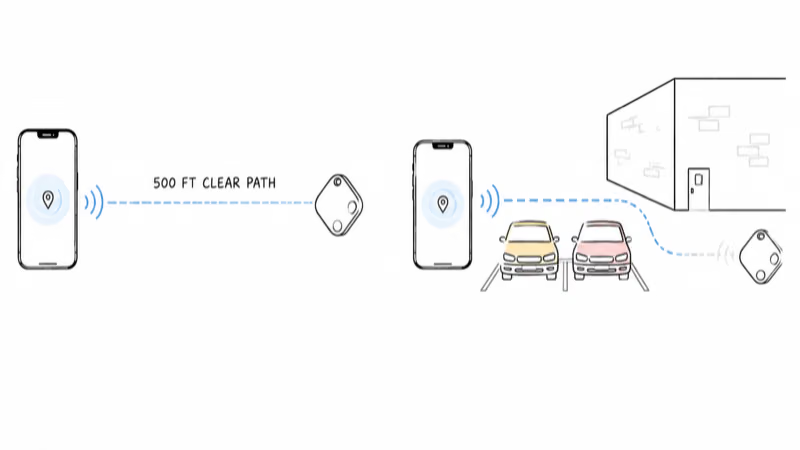
Obstacles changed the result. Cars, a building corner, and trees reduced useful distance to roughly 25 ft.
PCMag’s roughly 50 ft sidewalk result doesn’t cancel Android Police’s 500 ft result. The two reviews used different phones, routes, and obstruction patterns. The honest conclusion is that protocol and environment determine whether an up-to claim is reproducible.
Why Indoor Results Fall Short
The Bluetooth SIG states that glass, wood, metal, concrete, humidity, and precipitation affect path loss.
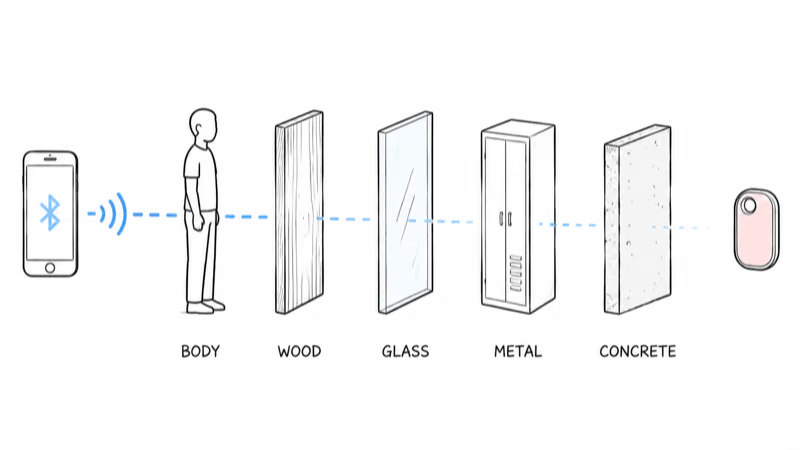
The body also attenuates 2.4 GHz signals. Insight SiP’s wearable-radio paper states that the water-rich body absorbs Bluetooth energy and cites 60–80 dB cross-body attenuation.
Tom’s Guide kept its setting unspecified, so its figures stay in the “other named test” column. The Chipolo POP review reported about 35 ft as the more common POP range and about 65 ft for Tile Mate. Calling both “indoor” would add a condition the source never stated.
Apple’s AirTag Range Wording
Apple’s AirTag page doesn’t publish Bluetooth range in feet or meters. It describes Bluetooth for proximity finding and Ultra Wideband for Precision Finding. Don’t copy a Tile or Chipolo distance into an AirTag comparison chart.
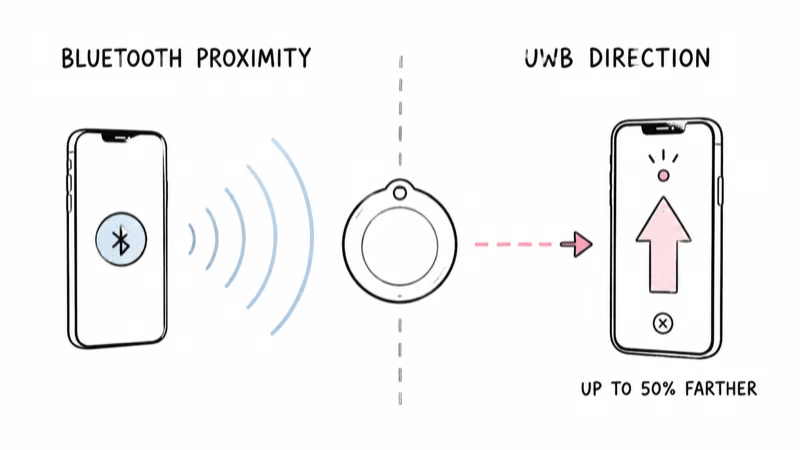
Apple’s current claim is that second-generation Precision Finding works up to 50% farther than on the first generation. That’s a UWB guidance claim, not a BLE football-field rating. This article doesn’t state an iOS minimum because Apple’s cited AirTag pages use different version wording and no version is needed for the range comparison.
Beyond direct Bluetooth range, the crowd network matters more. Our AirTag review and Tile review separate nearby finding from remote recovery.
What Advertised Range Is Good For
An advertised figure can show relative model positioning. The cited listings put Tile Pro at 500 ft and Tile at 350 ft; PCMag’s sidewalk test preserved that order at roughly 50 ft and 30 ft.
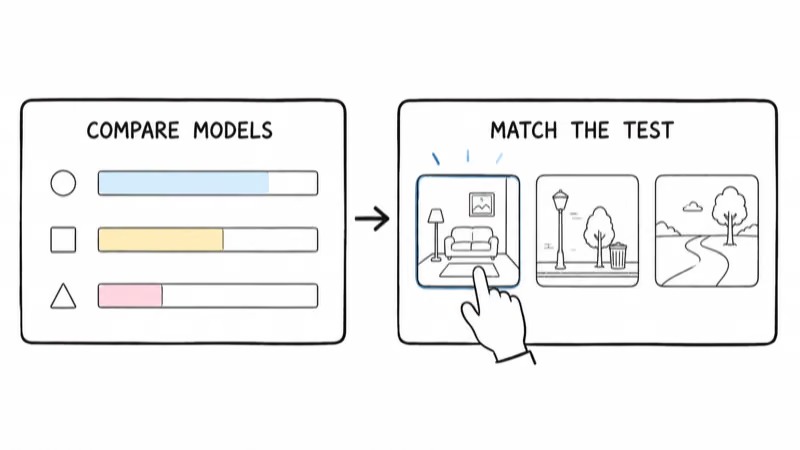
Use that signal carefully. Pick the named test closest to your use case, then allow for walls, bodies, and radio clutter.
Bottom Line
There isn’t one true Bluetooth tracker range. A small apartment, city sidewalk, obstructed corner, and clear 500 ft path produced different results. Treat the advertised number as an up-to claim, then use a named test with a matching environment to set expectations.
FAQ
Is 35 feet the real Bluetooth tracker range?
No. PCMag lost a standard Tile around 35 ft in a small apartment, but Tile Pro still appeared Nearby at the same distance. Another reviewer reached 500 ft with Tile Pro across clear line of sight. Thirty-five feet is one result, not a universal radio limit.
Do Tile and Chipolo fake their range specs?
This evidence doesn't support that blanket claim. Advertised range is an up-to figure, and one Tile Pro review did reproduce 500 ft under clear line of sight. Other reviews measured much less with different phones and obstacles. The setup belongs beside the number.
Why is indoor range worse than outdoor range?
Walls, metal, concrete, furniture, and people attenuate or reflect the 2.4 GHz signal. The Bluetooth SIG lists material and weather effects on path loss. An indoor route can stack several obstacles between the tracker and phone. Clear line of sight removes many of them.
Does AirTag have a 350-foot Bluetooth range?
Apple doesn't publish an AirTag Bluetooth range in feet. Its page separates Bluetooth proximity finding from Ultra Wideband guidance. Second-generation Precision Finding works up to 50% farther than before; that percentage isn't a BLE-foot claim.
Can Tile Pro actually reach 500 feet?
Yes, under one named clear-line-of-sight test. A Pixel 9 produced two-way pings at the full listed range; a different sidewalk test fell far short. Phone, route, and obstructions explain why both results belong in the ledger.
What should I believe when I buy?
Believe the closest named environment. Keys in an apartment call for indoor evidence; an unobstructed path calls for a clear-line-of-sight test. Use advertised range to compare model positioning, not to predict one room. Beyond direct Bluetooth range, the crowd network matters more.