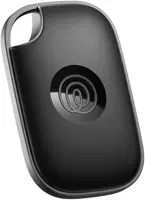
Buy the Tile Pro if you want the longest Bluetooth range, the loudest ring, and a replaceable CR2032 battery you can swap yourself. Buy the Tile Mate if you want the lowest price and a maintenance-free tracker you never touch for three years. The Pro reaches 500 feet and rings at 110 dB; the Mate reaches 350 feet at a lower volume but costs $10 less and has a sealed 3-year battery.
Tile Mate vs Tile Pro is the most common decision Tile buyers face, and the gap comes down to four things: range, volume, battery type, and price. According to Tile’s corporate history, Life360 acquired Tile in a $205 million deal in 2021, so both models now run the same Life360 finding network.
We compared the current 2024 models side by side. Here is what actually separates them.
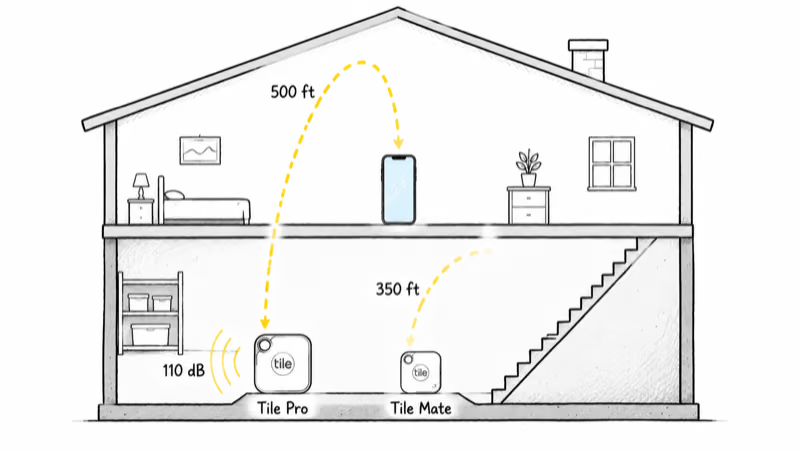
- Tile Pro reaches 500 ft of Bluetooth range; Tile Mate reaches 350 ft.
- Tile Pro rings at 110 dB; the Tile Mate is noticeably quieter at close range.
- Tile Mate uses a sealed 3-year battery; Tile Pro uses a replaceable CR2032 lasting about 1 year.
- Tile Mate costs $25; Tile Pro costs $35, a $10 gap per tracker.
- Both share the same Life360 network, IP68 water resistance, and iOS plus Android support.
Tile Mate vs Tile Pro: The Range and Volume Verdict
The Tile Pro is the right pick when you need to find things across a large home or a noisy environment. It carries a 500-foot Bluetooth range and a 110 dB ring, the loudest and farthest-reaching combination in Tile’s current lineup. The Tile Mate, by contrast, tops out at 350 feet and a softer ring.
On safety, the two are equal. Apple’s support documentation confirms that the cross-platform unwanted tracking detection specification alerts users across iOS and Android, and it applies to both Tile models, so neither has a detection advantage.
The extra 150 feet of Pro range matters most in larger homes, workshops, or yards where you may still be close enough to ring an item directly. The Pro’s louder ring also helps because a 110 dB rated speaker gives more acoustic headroom than the Mate’s quieter chime when an item is inside a bag or under household noise.
Bear in mind that advertised Bluetooth range is a best-case figure. Tom’s Guide reported that walls and interference cut real-world range well below the listed 500 feet. The Pro’s advantage is still the higher rated ceiling, not a guarantee that every room-to-room find will hit the spec.
| Feature | Tile Mate (2024) | Tile Pro (2024) |
|---|---|---|
| Bluetooth range | 350 ft | 500 ft |
| Ring volume | Quieter than Pro | 110 dB |
| Battery | Sealed, 3 years | Replaceable CR2032, ~1 year |
| Water resistance | IP68 | IP68 |
| Network | Life360 / Tile network | Life360 / Tile network |
| Compatibility | iOS and Android | iOS and Android |
| Price | $25 | $35 |
⇄ Head-to-head
Tile Mate (2024) vs Tile Pro (2024)
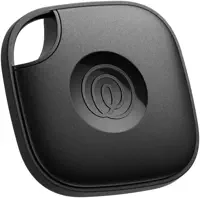
- +500 ft Bluetooth range, the longest in the Tile lineup
- +110 dB ring, Tile's loudest current speaker rating
- +Replaceable CR2032 battery you swap yourself when it dies
- +IP68 water resistant, safe for full submersion beyond 1m
- +Same Life360 network and iOS/Android support as the Mate
- +$10 cheaper than the Pro, the budget pick in the lineup
- +Sealed 3-year battery, no swaps or maintenance for years
- +IP68 water resistant, identical protection to the Pro
- +Smaller and lighter on a keyring than the Pro
- +Same Life360 network and iOS/Android support as the Pro
- −Costs $10 more per tracker than the Mate
- −Battery lasts about 1 year, a third of the Mate's sealed cell
- −Larger and thicker than the Mate on a keyring
- −Separation alerts still require Tile Premium at $30/yr
- −350 ft range, 150 ft shorter than the Pro
- −Quieter ring, harder to hear across a large or noisy room
- −Battery is sealed, so the tracker is disposable after 3 years
- −Separation alerts still require Tile Premium at $30/yr
You want the longest range, the loudest ring, and a battery you can replace instead of tossing the whole tracker.
You want the cheapest Tile and a tracker you never have to open, recharge, or re-battery for three years.
Tile Pro (2024): The Long-Range Pick
The Tile Pro is built for reach. Its 500-foot Bluetooth range is the longest Tile ships, and the 110 dB ring is the easiest to track down by ear. The replaceable CR2032 battery is the other headline feature: when it dies after roughly a year, you pop in a fresh coin cell instead of throwing the tracker away.
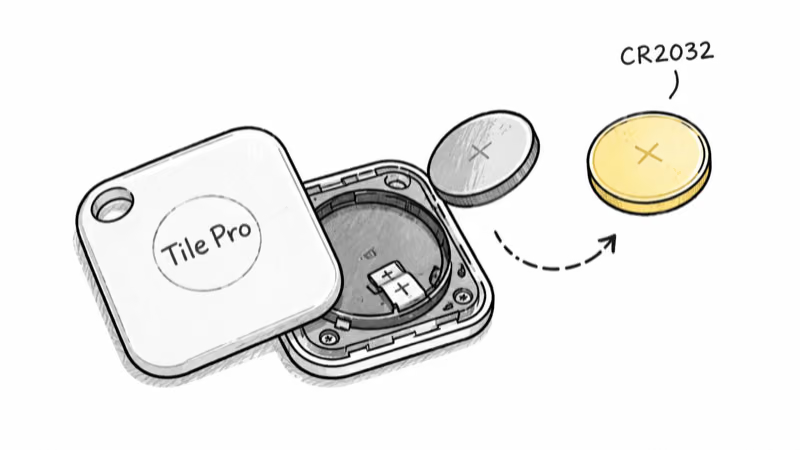
That replaceability is the Pro’s quiet long-term advantage. Over three years a Mate is dead and discarded, while a Pro keeps going on $1 batteries. The tradeoff is the higher upfront price and the larger footprint on a keyring. If you attach trackers to keys, bags, and bikes that roam a big house or yard, the Pro is the one to buy.
Tile Mate (2024): The Budget Pick
The Tile Mate trims the price to $25 and swaps the replaceable battery for a sealed 3-year cell. You never open it, never recharge it, never shop for a CR2032. For three years it just works, then you replace the whole unit.
The Mate gives up range and volume to hit that price. Its 350-foot range covers a typical apartment or single-floor home fine, but it loses the connection sooner than the Pro across a larger footprint. The ring is softer too, which matters most when an item is buried in a couch or a bag in a loud room. For everyday keys and wallets that stay close, the Mate is the smarter spend.
Which Tile Has the Better Battery Strategy?
This is the cleanest split between the two. The Tile Pro uses a user-replaceable CR2032 that lasts about a year; the Tile Mate uses a sealed battery rated for three years that you can’t swap. Neither approach is strictly better, they suit different owners.
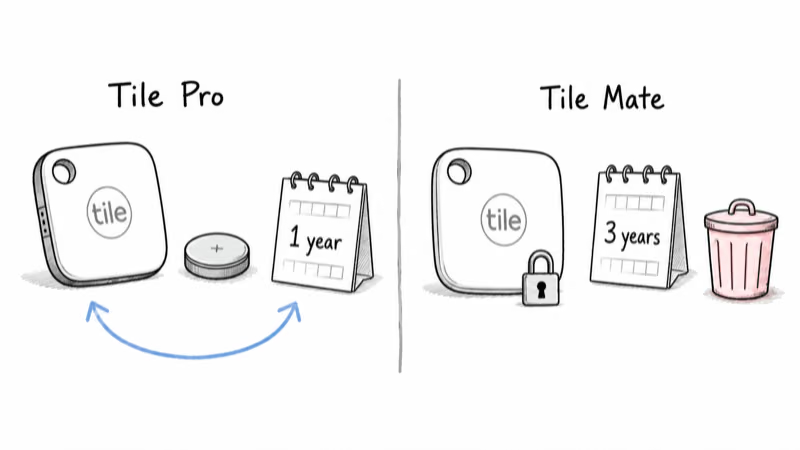
The Pro’s CR2032 means a one-minute battery swap keeps the tracker alive indefinitely, the cost-efficient path over time. The Mate’s sealed cell means zero maintenance for three years, but the whole tracker becomes e-waste when it dies. If you hate fiddling, choose the Mate; if you hate throwing electronics away, choose the Pro.
Either way, watch for the warning signs covered in our Tile not connecting guide, since a weak battery is the most common culprit. Swapping in a fresh CR2032 typically restores a Pro’s full rated range right away.
Do Tile Mate and Tile Pro Use the Same Network?
Yes. Both trackers run on the identical Life360-owned Tile network, the largest dedicated finding network that does not depend on Apple Find My or Google Find Hub. When any nearby Tile app user passes your lost tracker, their phone anonymously reports its location to you, regardless of which model you own.
Because the network is shared, your choice between Mate and Pro changes only the local hardware, not the crowd-finding power. Both also support separation alerts through Tile Premium at $30 per year, an extra cost on either model. If you’re still weighing Tile against other ecosystems, our best Bluetooth tracker roundup and Tile vs Chipolo comparison put the Life360 network in context against Find My and Find Hub rivals.
Price and Value Breakdown
The $10 price gap is the simplest part of this decision. At $25, the Tile Mate is the cheapest way into the Life360 network; at $35, the Tile Pro buys range, volume, and a replaceable battery.
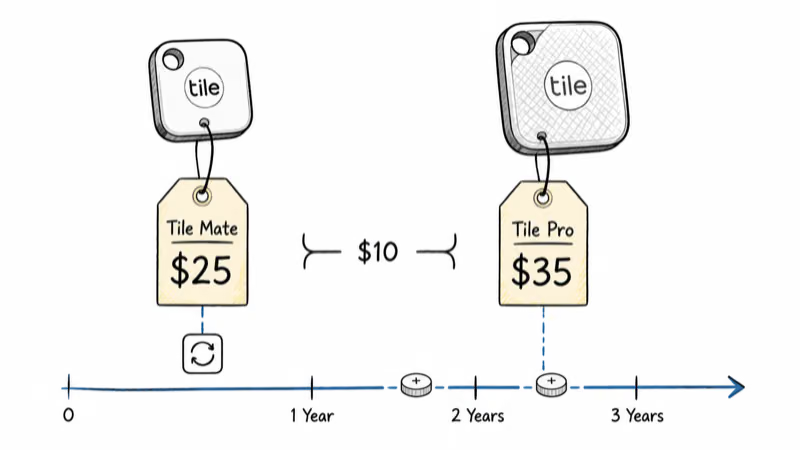
Over a three-year span the math shifts. The Mate is discarded once its sealed cell dies, while the Pro keeps going on roughly $1 CR2032 cells, so its higher sticker price partly pays itself back. Our full Tile tracker review covers how both stack up against the rest of the lineup.
If you only need one tracker for keys that stay home, the Mate wins on raw cost. If you’re buying several for items that travel, the Pro’s durability narrows the gap.
Bottom Line
Choose the Tile Pro if range, ring volume, and a replaceable battery matter to you, and the extra $10 is worth a tracker that can outlast the Mate by years on cheap coin cells. Choose the Tile Mate if you want the lowest price and a fully maintenance-free tracker for keys and bags that stay close to home.
For most casual users in a small home, the Mate is plenty. For anyone with a large house, a workshop, or items that travel, the Pro’s reach earns its premium. Both deliver the same Life360 network and IP68 durability, so you’re choosing hardware tier, not finding power.
FAQ
What is the main difference between Tile Mate and Tile Pro?
Range, volume, battery, and price. The Tile Pro reaches 500 feet and rings at 110 dB with a replaceable CR2032 battery, while the Tile Mate reaches 350 feet, rings quieter, uses a sealed 3-year battery, and costs $10 less at $25.
Is the Tile Pro worth the extra $10?
If your home is large or your items travel, yes. The Pro’s longer range and louder ring make items easier to find, and its replaceable battery can keep it running for years on cheap coin cells. For a small apartment and items that stay close, the Mate’s savings make more sense.
Can you replace the battery in a Tile Mate?
No. The 2024 Tile Mate has a sealed battery rated for about three years, so you can’t open it to swap the cell. When it dies you replace the whole tracker. The Tile Pro is the model with a user-replaceable CR2032 battery.
Do Tile Mate and Tile Pro use the same finding network?
Yes. Both run on the Life360-owned Tile network, the same crowd-finding system. Nearby Tile app users relay your lost tracker’s location anonymously regardless of which model you own, so network performance is identical between them.
Are Tile Mate and Tile Pro waterproof?
Both carry an IP68 rating, meaning they’re dust-tight and can survive submersion beyond one meter of water. That makes either safe for rain, spills, or an accidental drop in a puddle. Water resistance is one spec where the two models are identical.
Do Tile trackers work on Android?
Yes. Both the Tile Mate and Tile Pro work with iOS and Android through the Tile app. Tile has historically offered strong Android support thanks to its dedicated app, and both models behave the same way on either platform.
Does either Tile need a subscription?
The core finding features work without one, but separation alerts and 30-day location history require Tile Premium at $30 per year. That cost is the same whether you buy the Mate or the Pro, so a subscription is not a deciding factor between the two.