A stolen firearm creates an immediate public-safety risk. A Bluetooth location can be useful evidence, but it isn’t permission to follow, confront, enter property, or attempt recovery.
The priority order is simple: prevent unauthorized access, keep identifying records separately, report a loss quickly, and let law enforcement decide how location data is used.
This guide applies only to your own legally possessed property. Never use an AirTag to monitor another person, another person’s firearm, or property you aren’t authorized to track.
- ATF recommends a safe or secure lockbox, a separate firearm inventory, and immediate reporting of a loss or theft.
- AirTag uses nearby Find My devices; it isn’t a GPS or cellular tracker and doesn’t promise continuous updates.
- Metal, distance, battery condition, surrounding devices, and removal of the tag can interrupt location reports.
- Apple’s unwanted-tracking protections can alert a person traveling with a separated tag and can make the tag discoverable.
- Never pursue a tracker location yourself. Preserve screenshots and give the information to local law enforcement.
Secure Storage Comes First
ATF’s firearm-theft assessment found that 1,074,022 firearms were reported stolen between 2017 and 2021, and about 96% were taken from private citizens.
ATF’s 2026 storage guidance recommends locking firearms in a safe or secure lockbox, storing ammunition separately when possible, maintaining an inventory, and reporting theft immediately.
An AirTag does none of those jobs. It can’t stop access, make a firearm inoperable, identify an authorized user, notify emergency services, or guarantee recovery. Locked storage remains the preventive layer.
AirTag’s Limited Recovery Role
Apple’s AirTag page explains that the tag broadcasts a Bluetooth signal. Nearby Find My devices can relay an encrypted location to the owner’s Find My app.
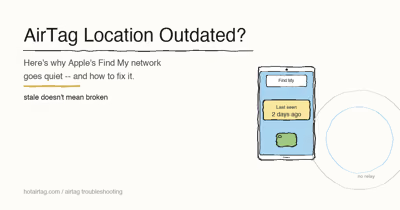
The tag has no cellular modem and does not independently stream GPS positions. Updates can be frequent in one place and absent in another, so a map point can be delayed, imprecise, or stale.
Lost Mode can notify the owner when the network detects the item. It can also present owner contact information when someone taps the tag with an NFC-capable phone.
Treat every reported point as an investigative lead, not proof of who has the item or what is happening at an address. The AirTag accuracy guide explains why timestamps and map points need context.
The Safety Boundary for Attachments
The previous article described concealed grip, rail, holster, and magnetic placements. Those instructions could encourage unsafe modification, interfere with handling, or turn a safety article into a concealment guide.
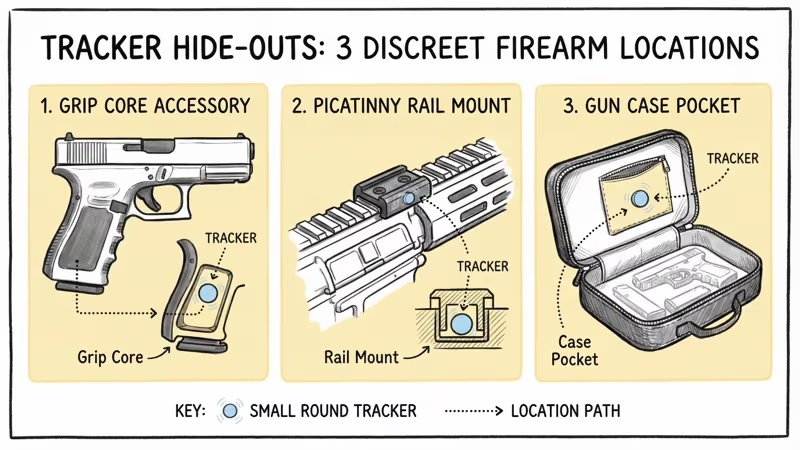
Don’t attach or insert an object where it can affect controls, trigger access, grip, cycling, sights, holster fit, safe clearance, inspection, cleaning, or transport compliance.
If an owner considers tracking an authorized locked case or storage container, the tracker should not reduce the container’s security or create access for a child or unauthorized person. Confirm local law and manufacturer guidance first.
Never use an AirTag to track a person or property you don’t own. Apple says AirTag shouldn’t be used to track people and notes that tracking someone without consent is a crime in many jurisdictions.
Metal Safe Signal Limits
Metal can attenuate Bluetooth and Ultra Wideband signals, but results vary with the enclosure, seams, construction, placement, and nearby devices. This page can’t promise that every closed safe blocks every update.
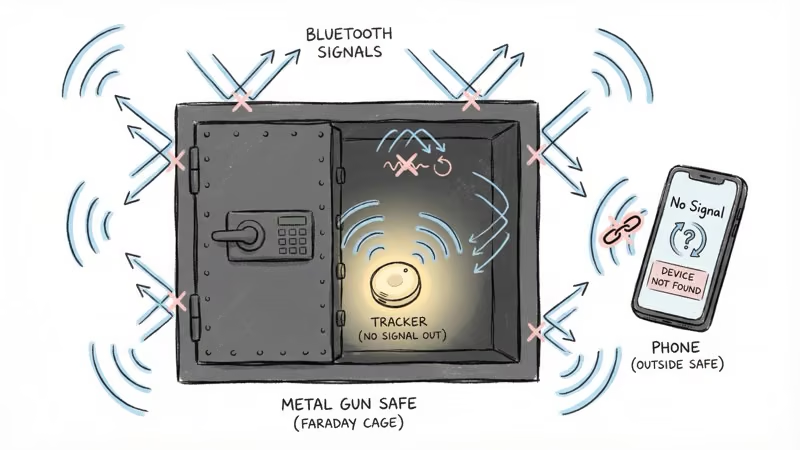
A tag inside a safe is not a break-in alarm. If safe monitoring matters, use a purpose-built alarm or sensor approved for the storage environment and keep the firearm secured according to local law.
Don’t weaken, drill, prop open, or alter a safe to improve tracker reception. Security and unauthorized-access prevention take priority over a Bluetooth signal. See the AirTag signal-blocking guide for the radio distinction.
Theft Response Checklist
- Move to safety and call local law enforcement. Don’t enter a location, follow a vehicle, or confront anyone.
- Provide the identifying record. Share the serial number, manufacturer, model, caliber or gauge, photographs, and last known location.
- State that location data exists. Let the responding agency decide how screenshots, timestamps, Lost Mode, or live updates should be provided.
- Preserve evidence. Keep original screenshots, notifications, camera footage, receipts, and messages without editing timestamps.
- Follow local reporting rules. Private-owner deadlines and additional state or local requirements vary.
ATF’s firearm-owner safety guide states that owners should call local law enforcement upon discovering a theft or loss and keep a Personal Firearms Record separate from the firearms.
A tracker point can implicate innocent occupants, a shared building, a delivery route, or a person who unknowingly encountered the item. Only investigators should decide what the data justifies.
How Do Unwanted-Tracking Protections Affect Recovery?
Apple’s unwanted-tracking guidance states that a separated AirTag seen moving with someone over time can trigger an iPhone or Android alert or emit a sound.
That protection is intentional. It discourages covert person tracking, but it also means an AirTag can’t be treated as an invisible or permanent recovery beacon.
Don’t disable the speaker, defeat alerts, publish timing estimates, or design around discovery. If a tag is removed or disabled, the owner stops receiving new location updates.
How Does AirTag Differ From a GPS Tracker?
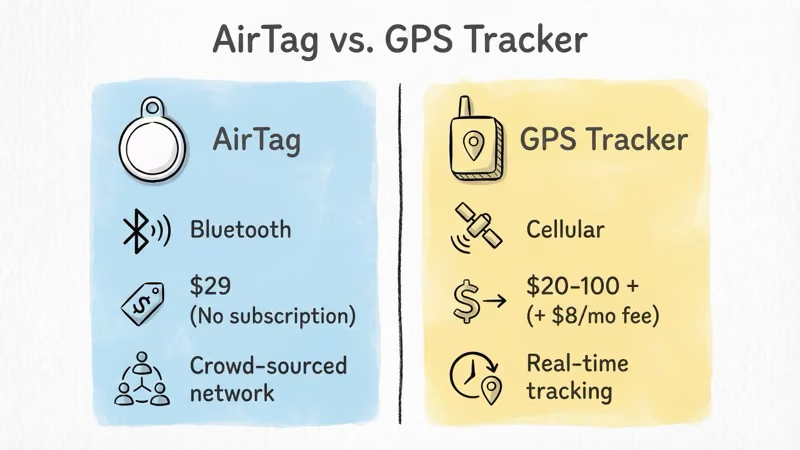
| Question | AirTag | Cellular GPS tracker |
|---|---|---|
| How is location produced? | Nearby Find My devices relay detections | Device estimates position and sends it through cellular service |
| Are updates continuous? | No; nearby participating devices are required | No guarantee; coverage, plan, power, and settings still matter |
| Does it prevent access? | No | No |
| Can it be discovered or removed? | Yes; anti-stalking alerts and sound are intentional | Yes; size, wiring, radio behavior, or inspection can reveal it |
| Safe recovery role | Share occasional leads with law enforcement | Share account data with law enforcement under provider rules |
This page doesn’t recommend a cellular tracker for a firearm. Any powered device, attachment, service, and storage setup needs a separate safety, legal, radio, battery, and manufacturer review.
Bottom Line
An AirTag can sometimes add a location lead after theft, but it isn’t a security system, a continuous GPS feed, or a reason to attempt recovery.
Use secure storage and a separate identifying record first. If a firearm disappears, call local law enforcement immediately and let officers handle any tracker information.
FAQ
Can an AirTag prevent a firearm from being stolen?
No. An AirTag can’t lock a firearm, prevent unauthorized access, trigger emergency response, or stop removal. Use a safe or secure lockbox and keep identifying records separately.
Will an AirTag work inside every gun safe?
No single result applies to every safe. Metal can reduce Bluetooth and Ultra Wideband signals, but enclosure design, seams, placement, and nearby devices change reception. Don’t alter a safe to improve tracking.
Where should an AirTag be placed for firearm theft recovery?
This guide doesn’t provide concealed firearm-mount instructions. Don’t modify or attach anything where it can affect operation, handling, inspection, holster fit, storage, or transport. Consider only an authorized locked container after safety and legal review.
What should I do when a tracked firearm is stolen?
Move to safety, contact local law enforcement immediately, provide the serial number and description, and tell officers that tracker data exists. Preserve screenshots and never pursue or confront anyone.
Can a person carrying a separated AirTag be alerted?
Yes. Apple says a separated AirTag seen moving with someone over time can trigger an alert on a compatible iPhone or Android phone or emit a sound. These protections are designed to discourage covert tracking.
Is an AirTag a real-time GPS tracker?
No. AirTag broadcasts Bluetooth signals that nearby Find My devices can relay. Update frequency depends on surrounding devices and radio conditions, so a displayed point can be delayed or stale.
What records help after a firearm theft?
Keep the serial number, manufacturer, model, caliber or gauge, photographs, purchase information, and local reporting instructions in a secure location separate from the firearm.