An RFID-blocking wallet won’t stop an AirTag. It blocks the 13.56 MHz frequency used by contactless cards, not the 2.4 GHz Bluetooth and ultra-wideband signals an AirTag uses to report its location. A true Faraday bag is different: it blocks a broad band of radio, so an AirTag sealed inside can’t ping the Find My network or be located. The catch is that a Faraday bag also blocks your own phone.
Worried about a hidden AirTag? Your RFID wallet won’t help. A Faraday bag will, for a reason most people get backwards.
RFID-blocking wallets and AirTags work on completely different radio frequencies — how AirTag tracking differs from RFID is its own topic. According to the standard, Bluetooth Low Energy runs at 2.4 GHz, which is exactly what an RFID wallet is not built to stop.
- An RFID wallet blocks 13.56 MHz and 125 kHz — card frequencies, not the 2.4 GHz an AirTag uses, so it does not stop tracking
- A true Faraday bag blocks a broad band of radio signals, enough to silence an AirTag’s Bluetooth and ultra-wideband signals
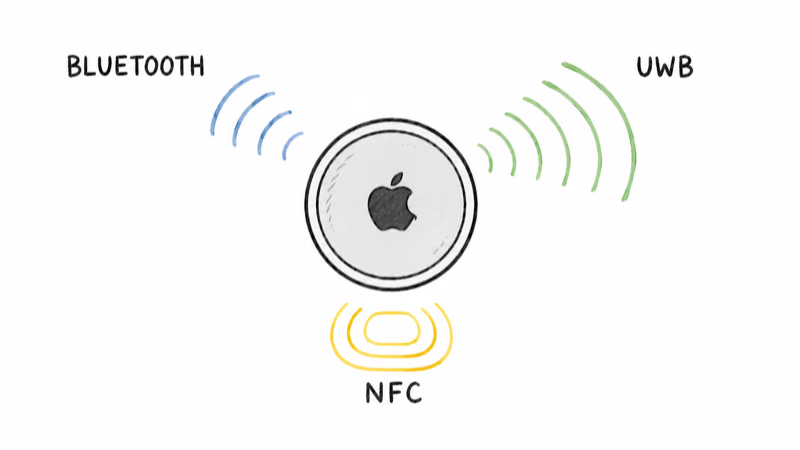
- An AirTag uses 3 radios — Bluetooth at 2.4 GHz, ultra-wideband near 6.5 to 8 GHz, and NFC at 13.56 MHz
- A Faraday bag also blocks your phone — you can’t track anything, including your own devices, while they’re sealed inside
- Apple’s fix for an unwanted AirTag is to remove the battery, not bag it — a Faraday pouch is only a temporary stop-gap
The Three Radios Inside an AirTag
An AirTag is not a GPS device. It finds its way home using three short-range radios, and which one a shield blocks decides whether the AirTag goes quiet. Apple's AirTag tech specs confirm the three radios by name: Bluetooth, the Apple-designed ultra-wideband chip, and NFC. Apple does not publish the exact frequencies, but the radio standards do.
| Radio | Frequency | What it does |
|---|---|---|
| Bluetooth LE | 2.4 GHz | Pings the Find My network for location |
| Ultra-wideband | ~6.5 to 8 GHz | Precision Finding direction arrows |
| NFC | 13.56 MHz | Tap-to-read in Lost Mode |
The one that matters for tracking is Bluetooth at 2.4 GHz. Block that frequency and the AirTag effectively disappears from the map.
Does an RFID-Blocking Wallet Stop an AirTag?
No. RFID-blocking wallets target contactless-card frequencies, not AirTag’s 2.4 GHz Bluetooth band.
In a hands-on test, Fox News reporter Kurt Knutsson found that an AirTag hidden inside an RFID-blocking wallet still reported its location normally, because the shielding targets card frequencies and can’t block Bluetooth. That’s the expected result: an AirTag tucked into an ordinary RFID sleeve keeps pinging the Find My network without missing a beat, because RFID-blocking material is tuned to 13.56 MHz card signals, not the 2.4 GHz Bluetooth band.
So if your goal is to stop a tracker, the RFID wallet in your pocket does nothing. If you think a tag is following you, our guide on what to do about an unwanted AirTag covers the right steps.
Does a Faraday Bag Block an AirTag?
Yes. A true Faraday bag is a fully conductive enclosure that attenuates radio across a broad band, including the 2.4 GHz Bluetooth and the ultra-wideband an AirTag relies on. Sealed inside, the AirTag can neither ping the Find My network nor answer a Precision Finding request.
A sealed conductive pouch blocks Bluetooth and UWB; RFID-card shielding is the wrong tool.
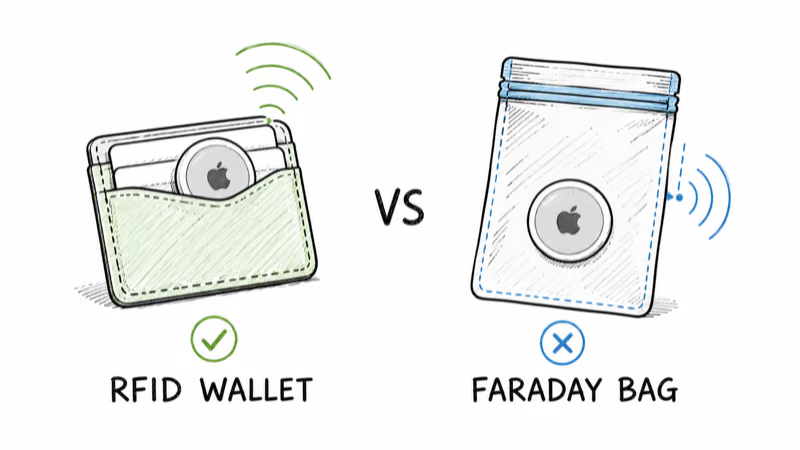
The test anyone can run is simple: seal the AirTag in a Faraday pouch, then try to find it from your iPhone. A proper pouch blocks the radio path; a cheap RFID sleeve doesn’t.
The Catch: an RFID Wallet Blocks the Tap, Not the Tracking
Here is the twist that trips people up. An AirTag’s NFC tap-to-read sits at 13.56 MHz — the exact frequency an RFID wallet is built to block. So an RFID wallet would stop you from tapping a found AirTag to see its serial number and the owner’s contact details, even though it does nothing to stop the AirTag from tracking.
In other words, an RFID wallet blocks the one helpful function — identifying a lost or unknown tag — while leaving the tracking fully alive. That is the opposite of what most people assume they’re buying. NFC also works only over a few centimeters, so any conductive lining between the phone and the tag defeats the tap.
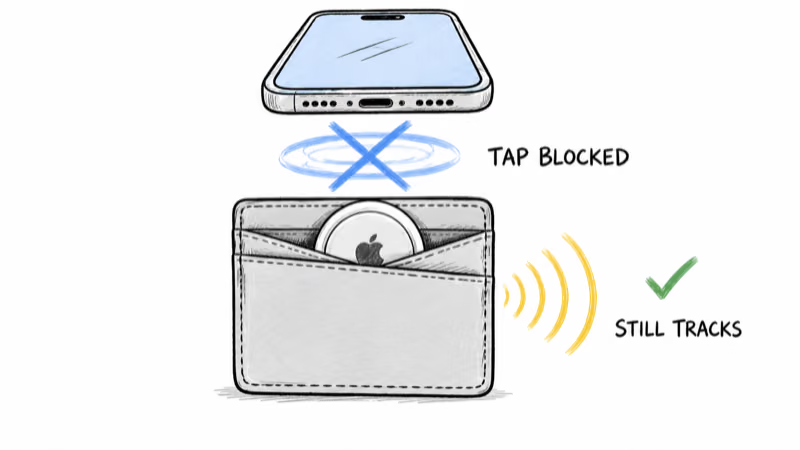
The result is backwards from what shoppers expect: the wallet quietly kills the identify-a-found-tag feature while a stalker’s hidden tag keeps reporting your location.
To read a found tag, take it out of any sleeve first and hold its white side to your iPhone — the tap Apple’s anti-stalking system relies on, much like the alerts in what an AirTag can and can’t detect.
Using a Faraday Bag on a Found AirTag
A Faraday bag is a fair temporary move: seal a tag you suspect is tracking you and it goes silent immediately while you decide what to do.
Two limits matter. A Faraday bag blocks every radio inside it, so your own phone can’t track anything while it shares the bag.
The protection also lasts only while the bag stays sealed; the moment you open it, signals resume. For everyday signal problems that aren’t about shielding at all, see our guide on why an AirTag says it’s searching for signal.
Why Removing the Battery Is the Permanent Fix
A Faraday bag only buys time. Apple states that removing the battery stops the tag for good. If you feel unsafe, contact law enforcement, who can trace the serial number.
Bottom Line
An RFID-blocking wallet and an AirTag live on different radio frequencies, so the wallet does nothing to stop tracking — it only blocks the 13.56 MHz tap that would help you identify a found tag. A Faraday bag blocks the broad band an AirTag actually uses, so it does silence the tag, at the cost of blocking your own phone too.
If you want to stop a tracker for good, skip the wallet and the bag and remove the battery. If you just want a quick way to make a suspect tag go quiet, a sealed Faraday pouch will do it. Either way, the RFID wallet in your pocket is not the answer, even though it feels like it should be.
FAQ
Does an RFID wallet block an AirTag?
No. RFID-blocking wallets are built to stop the 13.56 MHz signal of contactless cards and 125 kHz access cards. An AirTag reports its location over Bluetooth at 2.4 GHz, a completely different frequency the wallet does not touch, so the tag keeps tracking normally inside one.
Does a Faraday bag block an AirTag?
Yes. A true Faraday bag attenuates radio across a broad band, including the 2.4 GHz Bluetooth and the ultra-wideband an AirTag uses. An AirTag sealed inside stops pinging the Find My network and can't be located until it's removed.
How can I stop an AirTag from tracking me?
The permanent fix is to remove the battery: press down on the stainless steel back, twist counterclockwise, and lift out the CR2032 cell. A Faraday bag will silence it temporarily, but if you feel unsafe, go to a public place and contact law enforcement, who can trace the tag's serial number.
Will a Faraday bag also block my phone?
Yes. A Faraday bag blocks all radio inside it, so any phone sharing the bag loses Bluetooth, Wi-Fi, cellular, and GPS. You can't track an AirTag, or anything else, from a device that is also inside the sealed bag. Protection only lasts while the bag stays closed.
Can I still tap a found AirTag if it's in an RFID wallet?
No. The NFC tap-to-read uses 13.56 MHz, the same frequency an RFID wallet is designed to block, and it works only over a few centimeters. Take the AirTag out of any wallet or sleeve, then hold its white side to the top of your iPhone to read the owner details.
Does aluminum foil block an AirTag?
Wrapping an AirTag in several tight layers of aluminum foil can weaken its Bluetooth signal, but it's unreliable. Gaps and loose wrapping let the 2.4 GHz signal leak out, so the tag may still ping occasionally. A purpose-built Faraday bag is far more consistent than a foil wrap.
Do RFID-blocking wallets affect any trackers?
Only ones that rely on NFC or RFID at 13.56 MHz or 125 kHz, which is rare for finders. Bluetooth trackers like AirTag, Tile, and Chipolo all transmit at 2.4 GHz, so an RFID wallet does not affect their tracking at all. To block those, you need a broadband Faraday enclosure.