Almost every GPS tracker on the market goes dark the moment it leaves cell coverage. The SpecFive Trace XR takes the opposite route, relaying its position over a 915 MHz LoRa mesh built on the open-source Meshtastic project, which can hop a message several miles with no carrier involved. That fixes the off-grid problem, but it adds a catch most tags don’t have.
For a person or team, obtain informed consent, follow local law, and use official emergency or search-and-rescue procedures first; this device is only a supplemental location tool.
- It works with no cell signal at all — the Trace XR talks over 915 MHz LoRa radio, not LTE, so dead zones don’t stop it.
- No subscription, ever — there’s no SIM and no monthly fee, unlike most cellular GPS trackers.
- Range runs 3 to 5 miles — the XR’s external antenna roughly doubles the reach of the standard Trace.
- Battery is listed at 8 to 10 hours active — it recharges over USB-C, far shorter than the multi-day cellular trackers.
- It’s not a standalone tag — the Trace XR only works once it’s paired to a second SpecFive mesh radio.
How Does the SpecFive Trace XR Work Without Cell Service?
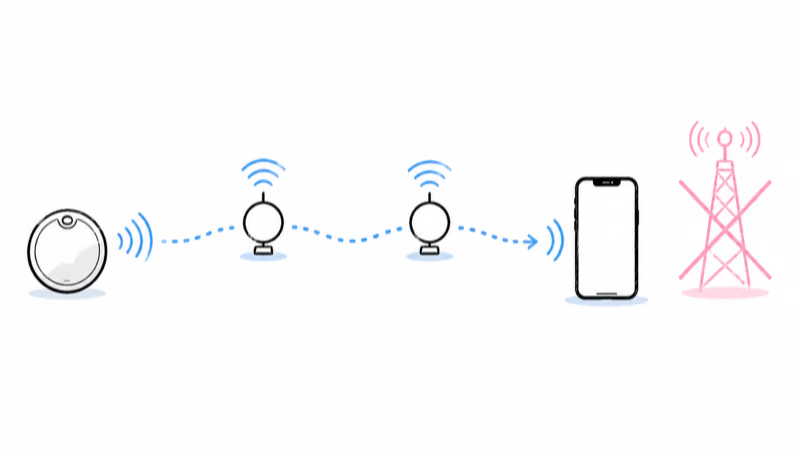
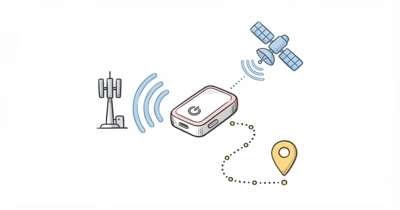
The Trace XR carries its own GPS chip to fix a position, then broadcasts that position over LoRa, the long-range radio standard, on the 915 MHz band. A cellular tracker hands its location to a phone network. The Trace XR hands its location to a mesh of nearby SpecFive radios instead, and each radio relays it onward until it reaches the one paired to your phone.
That mesh design is the whole point. According to SpecFive, the XR reaches 3 to 5 miles of range with its upgraded 915 MHz antenna, and the company states that the mesh extends further as you add more radios, since every node passes traffic along. The 915 MHz band it rides on is the license-free ISM spectrum, the same slice that home LoRa sensors use, so there’s no airtime to pay for.
The tracker is built around a belt-or-pack carry style, and the setup reads less like a consumer tag app and more like a radio workflow. You pair it through Meshtastic firmware and view positions on an interactive map. That pays off in the backcountry and feels foreign to anyone expecting an AirTag-style experience.
SpecFive Trace XR Complete Review Summary
§ Review summary
SpecFive Trace XR
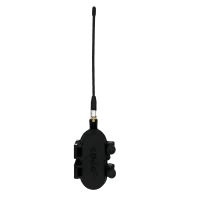
≡ Specs
- Radio
- 915 MHz LoRa mesh running Meshtastic
- Rated range
- Three to five miles in open terrain
- Battery
- Eight to ten hours active; 24 hours standby rated
- Charging
- USB-C; 1,200 mAh cell
- Water resistance
- IPX5
- Weight
- 142 g
- Required equipment
- At least one additional compatible mesh radio
✓ Pros
- +Works without cellular coverage, a SIM or a subscription
- +Mesh reach grows as compatible radios join the group
- +Rated three-to-five-mile range in open terrain
- +IPX5 housing and belt clip suit outdoor carry
✗ Cons
- −A second compatible mesh radio is required
- −Listed eight-to-ten-hour active battery life is short
- −Meshtastic setup has a learning curve
- −The system is excessive for one everyday item
§ Buy if
- ·Buy for a team operating where cellular coverage is unavailable
- ·Choose a paired point-to-point RF system when you need only one remote tag
- ·Choose a cellular or Bluetooth tracker for ordinary luggage, vehicle or key tracking
What You Need to Run the Trace XR
This is the part the product page buries, and it changes who should buy one. SpecFive states that the Trace XR requires a second SpecFive mesh radio to operate and does not work as a standalone unit. The tracker is a node; it needs at least one more radio to hear it and pass its location to your phone.
In practice that means a starter kit is two devices, not one: the Trace XR you attach to the thing you’re tracking, plus a handheld mesh radio like SpecFive’s Trekker that you carry. Budget for both. A lone Trace XR sitting in your cart won’t track anything on its own, which is the single most common point of confusion in owner questions.
The upside of that design shows up with a team. Because every SpecFive radio relays for the others, a group hiking or searching together each carries a node, and the network’s reach grows with the headcount. That’s why SpecFive aims this at search teams and expedition groups rather than someone tagging a single backpack.
Trace XR Range and Battery Context
The range number is the headline upgrade. SpecFive states that the XR roughly doubles the standard Trace, and the gain comes from the external 915 MHz whip antenna rather than a different radio. Real terrain still rules: hills and dense trees cut LoRa range, while open ground and elevation stretch it.
Battery is the honest weak spot. 8 to 10 hours of active use is fine for a day hike or a single search shift, but it’s a fraction of what a low-power tracker like an Aorkuler RF tracker manages on a charge. The IPX5 rating means it shrugs off rain and splashes, though it isn’t rated for submersion, so treat it as weather-resistant rather than dunk-proof. At 142 grams it’s pocketable but not feather-light.
Is the Trace XR Worth It vs Cheaper No-Subscription Trackers?
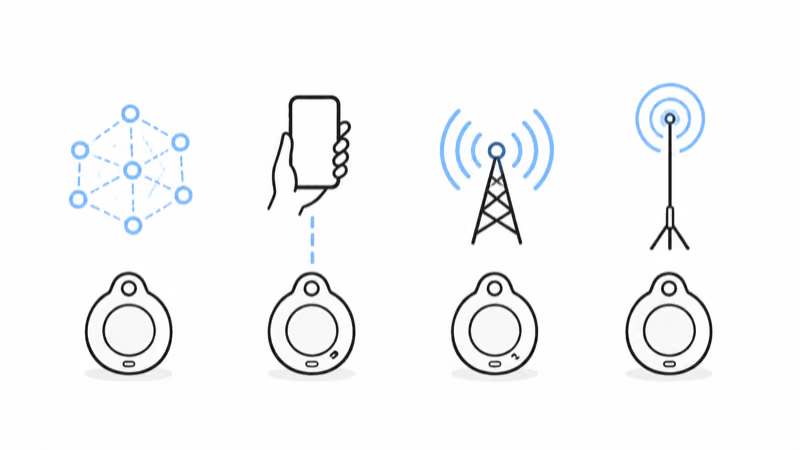
There are really four ways to track something without a monthly bill, and they fail in different places. The table below lines up the Trace XR against the main alternatives we cover in our guide to the best GPS trackers with no monthly fee.
| Tracker | How it tracks | Works with no cell signal? | Subscription | Price |
|---|---|---|---|---|
| SpecFive Trace XR | 915 MHz LoRa mesh | Yes, needs a 2nd mesh radio | None | $149.99 |
| Aorkuler GPS 2 | GPS + direct RF | Yes, line-of-sight | None | $250 |
| Tracki 4G | 4G LTE cellular | No, needs coverage | From $20/mo | $20 |
| Garmin Alpha 300 | GPS + VHF radio | Yes, handheld receiver | None | $700 |
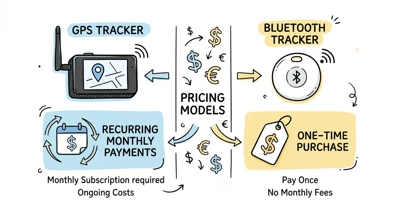
A cellular tracker like the Tracki is the cheapest box to buy and the easiest to use, but it dies the second you leave coverage and it carries a monthly fee. The Trace XR flips both of those: no fee and no dependence on a tower, at the cost of needing a second radio and far shorter battery. If your problem is rural property, backcountry trips, or anywhere LTE drops out, that’s the trade most cellular trackers can’t make.
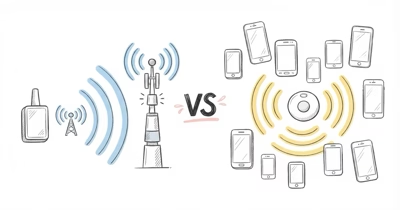
Against the other off-grid options, it’s a question of mesh versus point-to-point. An Aorkuler talks straight to its own handheld over RF, and a Garmin Alpha does the same over VHF for hunting dogs, as we cover in our roundup of the best GPS collars for hunting dogs. The Trace XR’s mesh relays through every radio in the group, so reach grows with the team instead of capping at one handheld’s range.
What the Trace XR Gets Wrong
The standalone limitation is the big one, and it reframes the price. The $149.99 sticker is only the entry fee, because a working setup also needs a mesh radio to receive. Compared with a tag you drop in a bag and forget, that’s a system to learn, not a gadget to switch on.
Battery comes next. A LoRa node transmitting every 30 seconds burns power, so the 8-to-10-hour window means charging between outings and packing a power bank for anything longer than a day. The Meshtastic layer, while open and flexible, also assumes you’re comfortable pairing radios and reading a map app rather than tapping a single Find button.
Who the Trace XR Is Best For
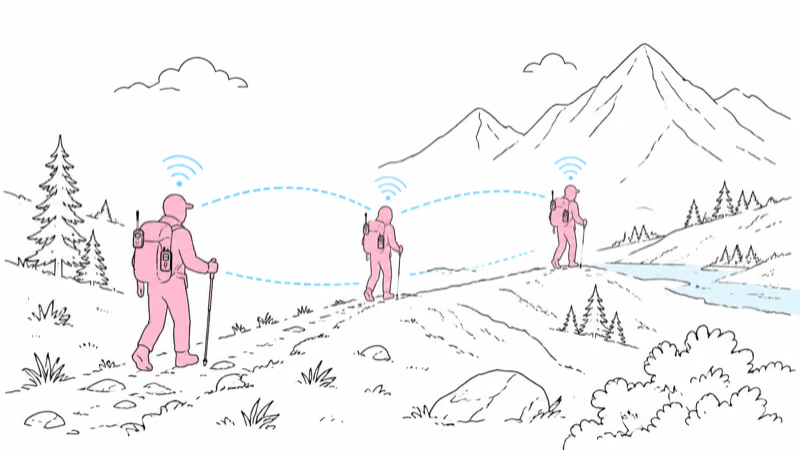
The Trace XR earns its place with people who operate where towers don’t reach. Search and rescue teams, backcountry hunters, overland and expedition groups, and anyone monitoring assets on remote land get a tracker that keeps working when LTE quits, with no subscription stacking up month after month. The more of you carry a radio, the better it gets.
It’s the wrong tool for tracking a suitcase, a car around town, or a dog in the yard. Those jobs are covered better and cheaper by a Bluetooth tag or a cellular tracker, and our roundup of the best GPS trackers and our pick of an off-road GPS tracker for an ATV point to the right fit. Buy the Trace XR for the no-signal problem specifically, not as a general-purpose tag.
Bottom Line
The SpecFive Trace XR does something almost no consumer tracker does: it keeps reporting a location with no cell signal and no subscription, using a LoRa mesh that gets stronger with every radio you add.
The catches are real. It won’t work without a second mesh radio, the listed battery window is short, and the Meshtastic setup asks more of you than a tap-to-pair tag. Buy it if your tracking happens off the grid and you’re equipping a person or a team, not if you just need to find your keys.
FAQ
Does the SpecFive Trace XR need cell service or a SIM card?
No. The Trace XR tracks over a 915 MHz LoRa radio mesh, not a cellular network, so it has no SIM card and no monthly fee. That is the whole reason it keeps working in areas where an LTE tracker would go offline.
What do you need to use the SpecFive Trace XR?
You need the Trace XR plus at least one more SpecFive mesh radio to receive its signal. SpecFive states the tracker does not work as a standalone unit. A typical kit is the Trace XR on the item you track and a handheld radio you carry, paired through the Meshtastic app.
How far does the Trace XR reach?
SpecFive rates it at 3 to 5 miles, roughly double the standard Trace, thanks to an external 915 MHz antenna. Real range depends on terrain, since hills and trees cut LoRa signals while open ground and elevation extend them. Adding more radios to the mesh stretches total coverage further.
How long does the Trace XR battery last?
SpecFive lists 8 to 10 hours of active use and about 24 hours on standby from its 1200 mAh cell, recharged over USB-C. That covers a day hike or a single search shift but is much shorter than RF trackers that run for days. Plan to recharge between outings and carry a power bank for longer trips.
Is the SpecFive Trace XR waterproof?
It carries an IPX5 rating, which means it resists rain and water jets but is not rated for submersion. Treat it as weather-resistant for outdoor use rather than something you can drop in a lake. The rugged housing and belt clip are built for field conditions.
Does the Trace XR work with a regular phone app?
It pairs through Meshtastic, the open-source app that runs the SpecFive radios, and shows positions on an interactive map. It’s not a tap-to-pair experience like a Bluetooth tag, so expect a short learning curve. Owners describe it as closer to using a radio than a consumer tracking app.
Who is the SpecFive Trace XR for?
It suits search and rescue teams, backcountry hunters, expedition groups, and anyone tracking assets where there is no cell coverage. It’s a poor fit for everyday jobs like a suitcase, a city car, or a dog in the yard, which a cheaper tag or cellular tracker handles better. The value rises the more people in a group carry a radio.