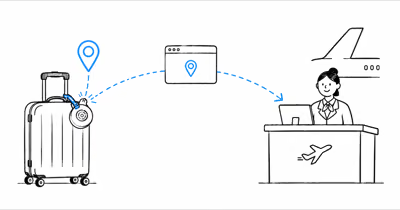
Putting an AirTag in your suitcase has been the standard lost-luggage hack for years. July, the Melbourne luggage brand, wants to make the loose tag obsolete. Its official CaseSafe lineup hides the tracker inside a TSA-approved lock, and the company pitched it at launch as the world’s first trackable suitcase certified to work with both Apple and Google networks.
- Dual-network is the headline — CaseSafe pings off both Apple Find My and Google Find Hub, so it works the same on iPhone or Android with no AirTag required.
- The tracker lives in the lock — you activate it by pulling a battery tab and pairing it in under a minute.
- Pricing runs $325 to $395 — Carry On is $325, Checked is $375, and Checked Plus is $395, versus about $30 for an AirTag.
- Battery is a replaceable button cell — July rates it for about 12 months, though one reviewer hit early drain inside a month.
- It tracks like a second-gen AirTag — but the tag is sealed in, so you can’t move it to another bag or hide it elsewhere.
How CaseSafe Tracking Works
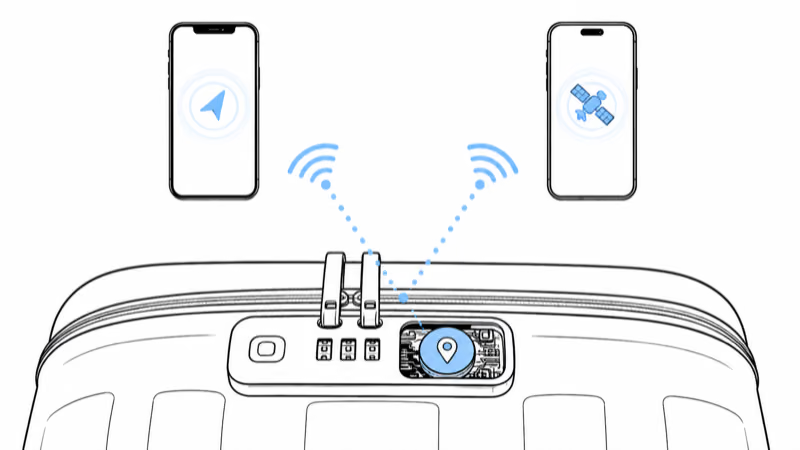
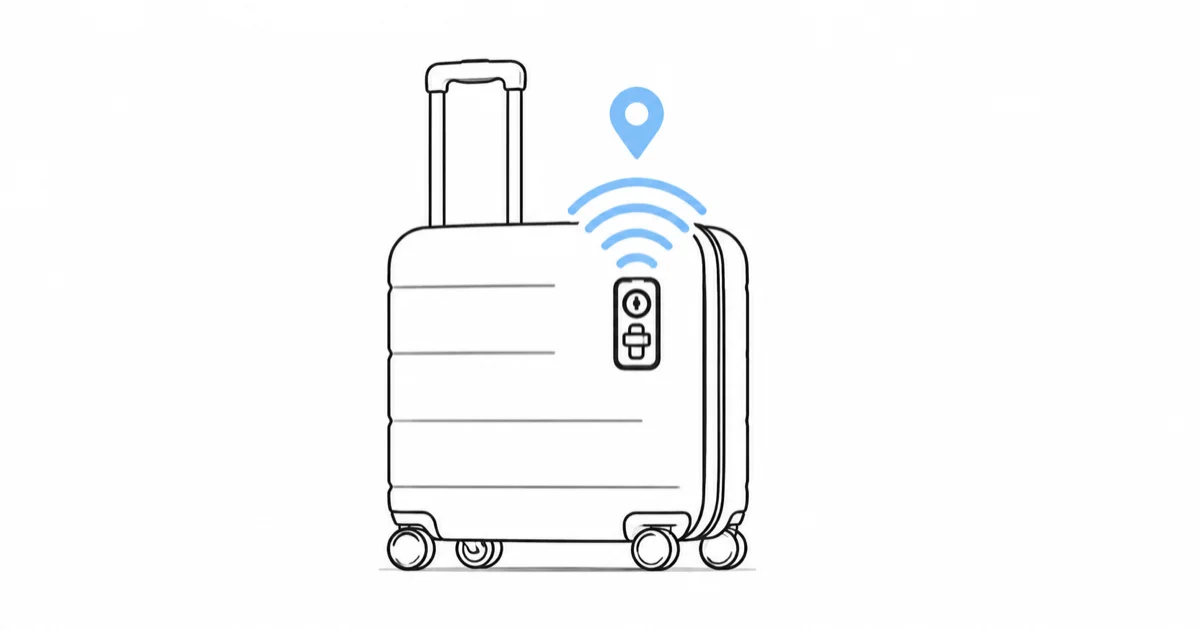
The tracker isn’t a module you clip on — it’s part of the battery-powered lock itself. July states that the lock was developed in consultation with Apple and Google, which is why it can register on both the Find My and Find Hub networks instead of choosing one. Setup is a pull-tab-and-app pairing flow: pull the battery tab, open the app, and the case appears on the map.
Because the radio is sealed inside the lock, there’s nothing to clip on and nothing for a thief to find and toss. A loose AirTag works only until someone opens the bag and pulls it out, while CaseSafe’s tracker stays with the shell. The downside of that design shows up later, but day to day it’s simpler than managing a separate tag, as July’s launch announcement leans on heavily.
July CaseSafe Sizes, Specs, and Pricing
CaseSafe comes in three sizes, and the tracking hardware is identical across all of them, so you’re paying for the case, not a better tag. The shell is July’s German aerospace-grade polycarbonate with the brand’s SilentMove spinner wheels, which means the bones are the same premium luggage July already sold, now with the smart lock swapped in.
The hardware is real luggage, not a gimmick wrapped around a tag. Reviewing the 80-litre Checked model, GadgetGuy found that it measures 66 by 47 by 29 centimetres and weighs 3.8 kilograms, so it’s a full-size case rather than a featherweight. The battery is a standard button cell you can swap yourself when it runs low, which matters more than it sounds.
How Well Does CaseSafe Track in the Real World?
This is where a built-in tracker has to justify itself, and the early third-party reports are good. Testing the case across Taiwan, GadgetGuy found that CaseSafe reached from greater distances than a first-generation AirTag and performed on par with a second-gen one. That fits the network mechanics: airports and baggage halls are dense with phones, which gives crowd-sourced trackers more relays.
Brian Kelly put it bluntly after his own trips, saying it tracks the same as, or better than, an AirTag. That lines up with how the networks work: Apple’s Find My network leans on its billion-plus active devices while Find Hub taps the huge Android crowd, so a dual-network case has more phones to bounce off than a Find My-only tag.
Is CaseSafe Better Than an AirTag in Your Suitcase?
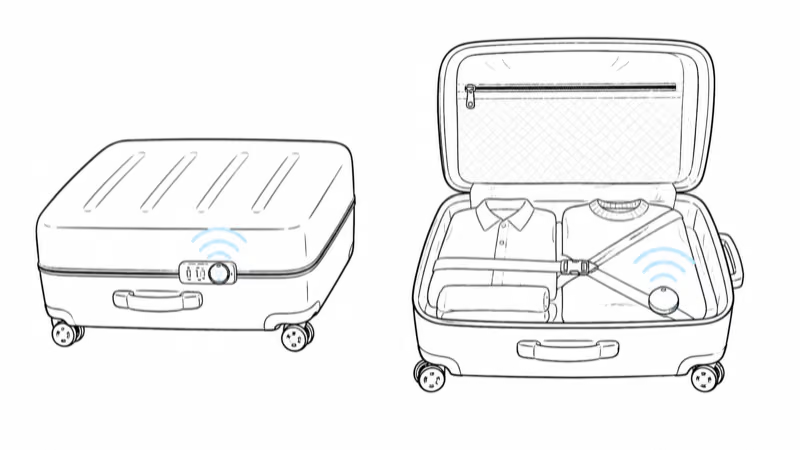
For most travelers, an AirTag still wins on math. A single tag is about $30, it moves between any bag you own, and our guide to using an AirTag in checked luggage covers the FAA rules that keep it airline-legal. Spend $325 and you’ve bought one tracked case; spend $30 and you can tag the suitcase, a backpack, and a camera bag.
CaseSafe wins on the things money can’t easily fix. The tracker can’t be found and removed, it never needs re-pairing to a new bag, and it adds Android coverage an AirTag simply doesn’t have, since an AirTag is Find My only. If you travel on a mix of iPhone and Android, or you want zero loose parts, that integration is the real selling point. Our roundup of the best luggage trackers puts both approaches side by side.
The Android angle deserves its own line. An AirTag is awkward on a Samsung or Pixel because you can’t get proximity alerts from it, which is why we keep a separate guide to the best luggage trackers for Android. CaseSafe sidesteps that by joining Find Hub, the same network Google uses for its own tags.
What CaseSafe Gets Wrong
No review is complete without the catch, and this one is real. GadgetGuy reported that their test unit’s battery drained inside a month, and when it died the lock beeped loudly for five minutes in the middle of the night with no way to silence it short of pulling the cell. A rated 12-month battery that quits in weeks is a quality-control worry on a $375 case, even from a single sample.
The sealed design cuts both ways too. Because the tracker is built in, a failing unit is harder to deal with than a tag you’d swap in seconds, though July does say the button cell itself is user-replaceable. And like any luggage tracker, it follows the case rather than your belongings, so if a thief empties the bag and walks off with the contents, the tracker stays behind with the shell.
Then there’s the obvious one, which is cost. You’re buying a whole suitcase to get the tracker, so CaseSafe only makes sense if you were shopping for premium luggage anyway. If your current bags are fine, an AirTag or a dedicated GPS luggage tracker delivers most of the benefit for a fraction of the spend.
Who CaseSafe Is Best For
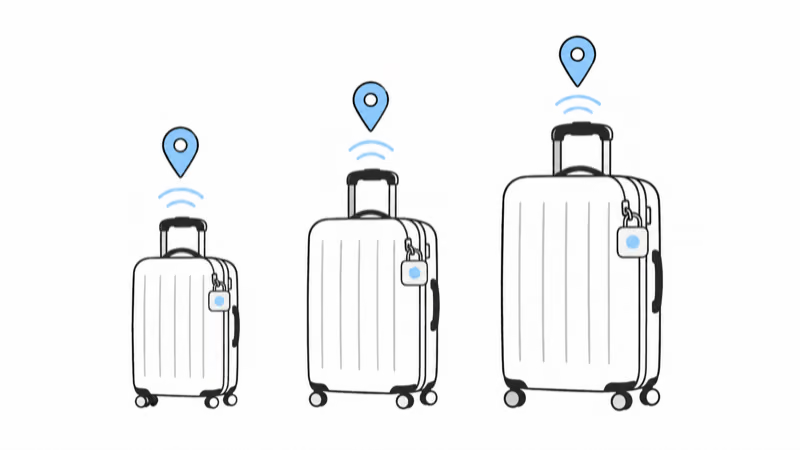
CaseSafe is for the traveler who’s already in the market for a high-end case and wants the tracking handled out of the box. If you fly often, switch between Apple and Android devices, or just hate fiddling with accessories, paying once for an integrated case is a clean answer. You get the luggage July is known for, so you’re not trading durability for the gadget.
It’s the wrong buy if you already own bags you like, travel light enough to need only one, or want the freedom to tag several items at once. In those cases the loose-tag route stays cheaper and far more flexible. There’s no universal right answer here, and it comes down to whether you value integration over flexibility.
Bottom Line
July’s CaseSafe nails the concept: a suitcase that finds itself on both major networks, with no tag to buy, hide, or lose. Dual-network support beats a Find My-only AirTag for mixed-phone households. The battery-drain report and $325-plus price are the watchouts; buy CaseSafe for integration, not because it out-tracks a tag you own.
FAQ
Does the July CaseSafe need an AirTag?
No. The tracker is built into the suitcase’s lock and connects to Apple Find My and Google Find Hub on its own, so there’s no AirTag or other tag to buy. You pair it once by pulling the battery tab and connecting it in the Find My or Find Hub app.
How much does the July CaseSafe cost?
US pricing runs from 325 dollars for the Carry On to 375 dollars for the Checked and 395 dollars for the Checked Plus. All three include the same built-in tracker, so the price difference is the size of the case, not the tracking hardware.
Does CaseSafe work with Android phones?
Yes. Unlike an AirTag, which is limited to Apple’s Find My network, CaseSafe also joins Google’s Find Hub network. That makes it one of the few luggage trackers that works the same whether you carry an iPhone or an Android phone.
How long does the CaseSafe battery last?
July rates the replaceable button battery at about 12 months. One reviewer reported a unit that drained within a month and then beeped until the battery was removed, so it’s worth checking the charge before a big trip and carrying a spare cell.
Is the CaseSafe lock TSA-approved?
Yes. July describes CaseSafe as the first suitcase with a TSA-approved lock that also houses the tracker, so airport security can open it with a master key instead of cutting it off. The tracking radio and the lock are the same unit.
Can you move the CaseSafe tracker to another bag?
No, and that’s the main trade-off versus an AirTag. The tracker is sealed into the suitcase’s lock, so it can’t be removed and dropped into a different bag. If you want one tracker that moves between bags, a standalone tag is the more flexible choice.
Does CaseSafe track in real time like a GPS tracker?
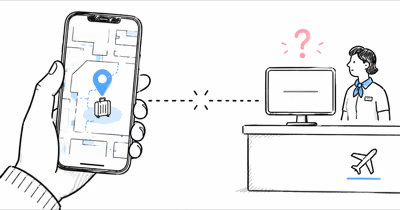
Not quite. Like an AirTag, it relies on nearby phones in the Find My and Find Hub networks rather than its own GPS and cellular link, so it updates when it passes other devices. That’s reliable in busy airports but it isn’t a live feed, which is where a dedicated GPS luggage tracker differs.