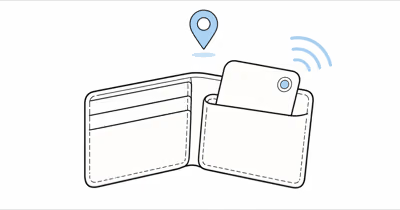
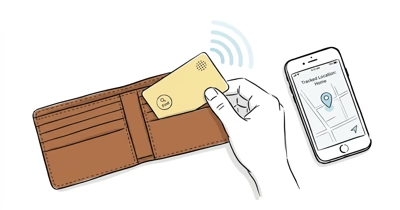
Ekster’s Tracker Card slides into any wallet for Bluetooth tracking without changing your carry.
- 2.1 mm thin and 18 grams, fits any card slot without adding noticeable bulk
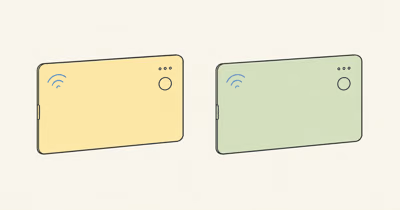
- Sold in Apple Find My and Google Find My Device versions — pick your platform at purchase
- 80 dB buzzer audible from across a room or inside a bag
- 3-year non-replaceable battery with no subscription cost
- $40 one-time purchase, no monthly fees ever
How Thin Is the Ekster Tracker Card?
The Ekster Tracker Card measures 85.6 x 54 mm x 2.1 mm and weighs 18 grams. Standard credit card footprint, just slightly thicker. An AirTag is 8 mm thick and lighter at 11 grams, but it’s a puck that needs a holder. The Ekster slides into any card slot.
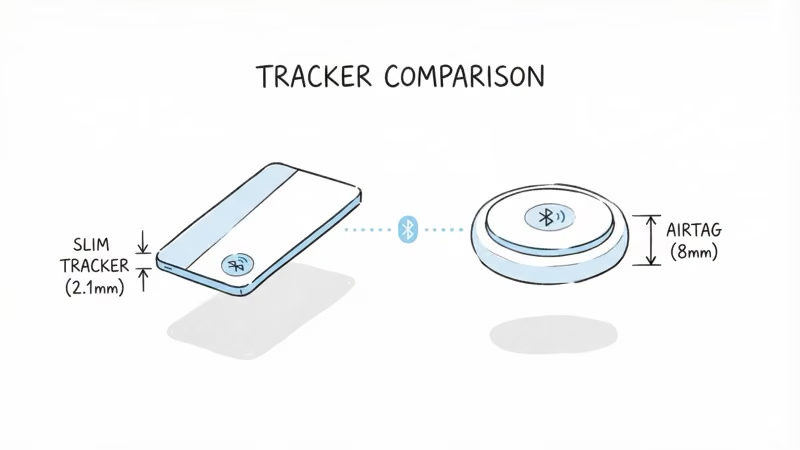
At a credit-card footprint, the card sits flush in a 6-card bifold wallet with no visible bulge, and fits a slim front-pocket cardholder or a travel passport wallet the same way.
Build quality is solid. The glossy black surface picks up minor scratches over time, but the card flexes under pressure without cracking.
Tracking Range and Accuracy
The Ekster Tracker Card uses Bluetooth Low Energy (BLE) for direct connections and, depending on which version you buy, either the Apple Find My network or the Google Find My Device network for crowd-sourced location updates. No GPS chip, no cellular radio.
You pick your platform at purchase, and that version then rides its network’s crowd of devices, over a billion phones on either side. According to the Bluetooth SIG, the card rides on the same Bluetooth standard as other short-range trackers.
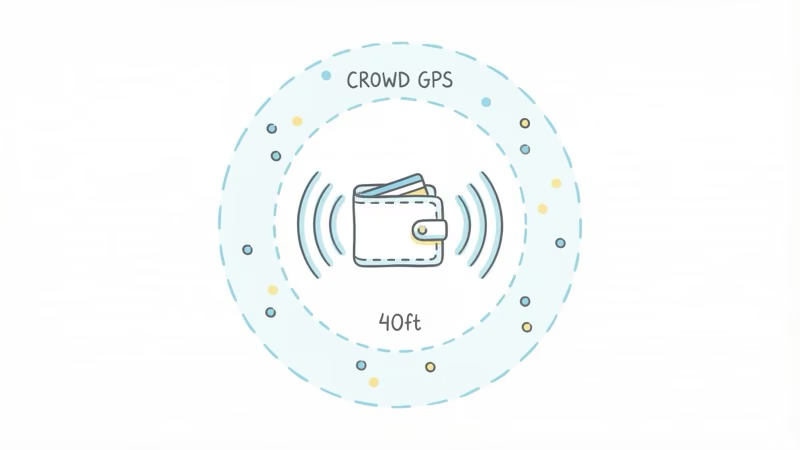
Direct Bluetooth range on BLE cards like this is short-range by design and drops further through walls and furniture. That’s standard for thin wallet trackers.
The real tracking power comes from crowd GPS — when your wallet is out of Bluetooth range, any nearby device on your card’s network (Apple Find My or Google Find My Device) silently relays its location to you. Dense cities create more relay chances; rural areas with few smartphones create far fewer.
According to Apple’s tracker detection documentation, compatible Bluetooth trackers are covered by the cross-platform unwanted-tracking standard.
No UWB chip means no precision finding. You can’t get the “getting warmer” directional arrow that AirTag 2 or SmartTag 2 offer. You ring it and listen. That’s a meaningful gap if you frequently misplace your wallet inside your own home.
How Long Does the Battery Last?
Ekster rates the battery at 3 years. It’s non-replaceable, so the card is effectively disposable once the cell runs down.
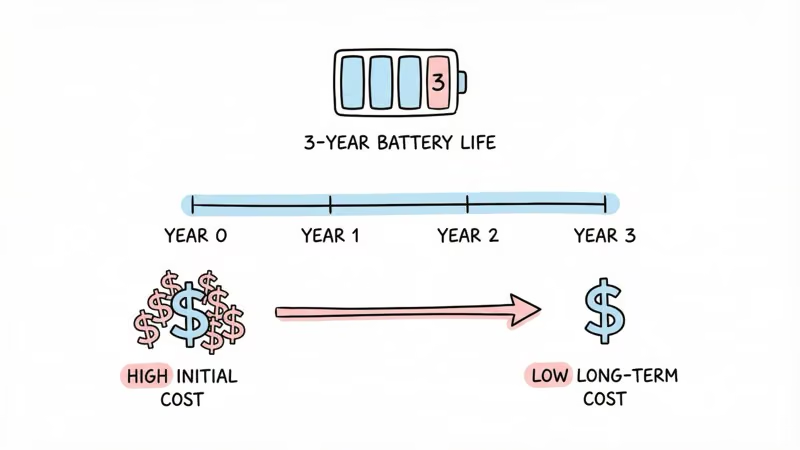
The battery is not replaceable. When it dies, you buy a new card. At $40 over 3 years, that works out to about $13/year or $1.10/month. Compare that to GPS trackers that charge $5-15/month in subscriptions and the math favors Ekster heavily.
Ekster’s official product page states that the 3-year estimate assumes typical Bluetooth usage patterns with periodic crowd GPS pings. Heavy use of the ring feature drains faster.
No charging port, no wireless pad. The sealed card is a disposable device by design.
App Experience
Setup follows the native app for the version you bought.
No separate Ekster app required for basic tracking. Ekster does offer their own app with added features like a separation alert, but the native platform apps handle location and ringing. CNET’s Bluetooth tracker coverage rounds up the alternatives.
The ring feature outputs 80 dB, about the volume of a vacuum cleaner. That’s useful for a wallet in the same room, but background noise and soft material can mask it.
Separation alerts come after a delay, not instantly: good for a forgotten wallet, useless against a pickpocket.
One limitation: the card does not support smart wallet features like ejection mechanisms or RFID blocking. Those are built into Ekster’s wallets, not the tracker card. The card is purely a location device.
Ekster Tracker Card Cost
| Cost | Ekster Tracker Card | AirTag 2 | Tile Slim |
|---|---|---|---|
| Device | $40 | $29 | $30 |
| Subscription | $0 | $0 | $3/month (optional) |
| Battery replacement | Buy new card (~$40/3yr) | $1 CR2032 (~yearly) | Non-replaceable |
| 3-year total | $40 | $32 | $30-$138 |
The AirTag wins on raw price. Its CR2032 battery is user-replaceable for about a dollar, keeping the 3-year total under $35.
But the AirTag doesn’t fit in a card slot. You need an AirTag wallet or holder, which adds $15-40 to the real cost. Factor that in and the Ekster Tracker Card becomes the cheaper option for anyone keeping their current wallet. For a broader look at all wallet tracking options, see our wallet finder comparison.
Who Should Buy the Ekster Tracker Card
The Ekster Tracker Card works best for people who want wallet tracking without changing their wallet.
Buy it if: you carry a slim wallet that can’t fit an AirTag, you want zero maintenance for 3 years, or you want a tracker that disappears into a card slot.
Skip it if: you already have an AirTag wallet, you need UWB precision finding, or you want GPS-level tracking. This is a Bluetooth tracker card, not a GPS device. It relies on nearby smartphones to relay its position, which means tracking quality varies by location density.
Travelers who need real location data should consider a GPS wallet tracker instead. Budget-conscious buyers should also check out the Nomad Tracking Card Air, which is thinner at 1.7mm and costs $29 with dual-network support.
Bottom Line
The Ekster Tracker Card does one thing well: it makes your wallet findable without adding bulk.
The credit-card form factor, Apple or Android support, and 3-year maintenance-free battery make it the most practical wallet tracker for people who refuse to change their wallet setup. At $40 with no subscription, the economics work.
Gaps are real though. No UWB means no precision finding indoors, no GPS means crowd-dependent tracking that fails in rural areas, and the sealed battery means replacing the card every 3 years. If those trade-offs don’t bother you, the Ekster Tracker Card earns its price.
FAQ
Does the Ekster Tracker Card work with iPhone?
Yes, with the Apple Find My version. The Ekster Tracker Card is sold in two versions: one that registers with Apple Find My (for iPhone) and one that registers with Google Find My Device (for Android). You choose your platform at purchase. A single card works with one network, not both at once, so buy the version that matches your phone.
How long does the battery last?
Ekster rates the battery at 3 years under normal usage. The battery is sealed and non-replaceable. When it dies, you replace the entire card. There’s no charging port or wireless charging.
Can you replace the battery in the Ekster Tracker Card?
No. The card uses a sealed lithium battery that can’t be replaced. This is a design trade-off for the 2.1 mm thickness. A replaceable CR2032 battery would make the card too thick to fit standard card slots. When the battery runs out after approximately 3 years, you buy a new card.
Does the Ekster Tracker Card work internationally?
Yes, anywhere the Apple Find My network or Google Find My Device network operates, which covers most countries. The card itself has no cellular radio or SIM card. It relies on nearby iPhones and Android phones to relay its Bluetooth signal. In densely populated areas worldwide, it works. In remote areas with few smartphones, tracking becomes unreliable regardless of country.
How loud is the ring feature?
The built-in buzzer outputs 80 dB, roughly the volume of a vacuum cleaner. That’s useful for a wallet in the same room, but it can get lost in a busy environment and won’t carry like a louder key tracker.
Is the Ekster Tracker Card waterproof?
Ekster rates the card as splash-resistant but does not provide a formal IP rating, so it should shrug off a coffee spill or light rain but not submersion or a washing machine. Treat it like a credit card.
How does the Ekster Tracker Card compare to an AirTag in a wallet?
The AirTag is cheaper ($29 vs $40) and offers UWB precision finding that the Ekster lacks. But the AirTag is 8 mm thick and requires a wallet holder that adds $15-40. The Ekster is 2.1 mm and slides into any card slot. For slim wallets and front-pocket carries, the Ekster wins on form factor. For tracking accuracy, the AirTag wins. See our full AirTag vs Ekster comparison for details.