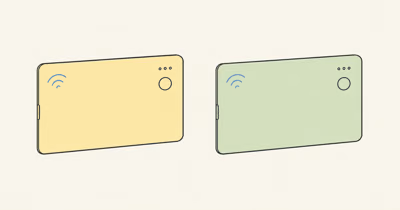
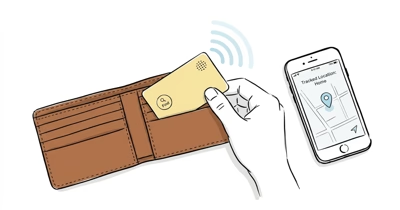
You bought a Chipolo CARD Spot in 2024 because the Find My integration was tidy and the 2.4mm thickness slid into any wallet slot. Two years later, the Find My app starts flashing Low Battery, and the Chipolo support page reminds you: this card is sealed. There’s no CR2032 to swap.
Update: Chipolo has replaced the CARD Spot with the rechargeable Chipolo CARD (Qi charging, works on Apple Find My or Google Find Hub). This guide covers the original CARD Spot; current buyers should see our best wallet trackers guide.
That’s not a defect. It’s the trade-off Chipolo made for the 2.4mm form factor.
According to Chipolo’s official replacement program, CARD Spot owners get 50% off a new unit when the original dies, bringing the replacement cost from $35 down to $17.50. The math doesn’t always favor staying with Chipolo. Below is what we recommend at the year-2 mark.
- Chipolo CARD Spot has a sealed 2-year battery with no user-replaceable cell. The 2.4mm form factor doesn’t leave room for a coin-cell tray.
- Chipolo’s Renew program offers 50% off a new card when you trade in the old one. Effective cost: about $18 per replacement, or $9 per year of tracking.
- Pebblebee Card 5 is the rechargeable upgrade path, with Qi wireless charging instead of replacement. Higher upfront cost ($50) but no end-of-life waste.
- The 2024 launch batch is approaching EOL throughout 2026. Find My will show Low Battery near the end of the rated two-year life.
- Don’t wait for the alert to plan. Start the replacement process before the card is fully silent so you don’t lose tracking during the shipping gap.
Why the CARD Spot Battery Isn’t User-Replaceable
Chipolo’s spec sheet states that the card is 2.4 millimeters thick. A standard CR2032 coin cell measures 3.2 millimeters by itself, which won’t fit. Two millimeters of plastic, two millimeters of cell, plus electronics. The math doesn’t fit credit-card thin.
According to Chipolo’s product specifications, the CARD Spot uses a custom thin-film lithium polymer cell sealed inside the polycarbonate body, ultrasonically welded shut. The cell rates for two years of typical Find My use, defined by Chipolo as a few Play Sound triggers per week plus continuous network pings. The thin-film chemistry trades replaceability for the form factor; once chemistry depletes, the only path is a new card.
The Chipolo Pop, the One Point, and older keychain models accept a user-replaceable CR2032. The CARD Spot is the outlier.
How Long Does Chipolo CARD Spot Actually Last?
Apple’s Find My documentation states that battery indicators show three levels (full, medium, low) rather than precise percentages, with the low alert typically firing within 30 days of actual depletion.
Chipolo rates the sealed cell for roughly two years, so the Low Battery alert belongs near the end of that rated life for units bought in the 2024-2025 window. As the cell drains near end of life, the Play Sound chime also gets noticeably quieter before the card goes fully silent, which is a useful early warning sign.
The 2-year rating assumes light use. Heavy use shortens the timeline.
Frequent Play Sound use shortens the rated life, while a backup card that rarely gets pinged can stay closer to the label. Heavy versus light use changes the timeline because every ring draws more current from the sealed cell.
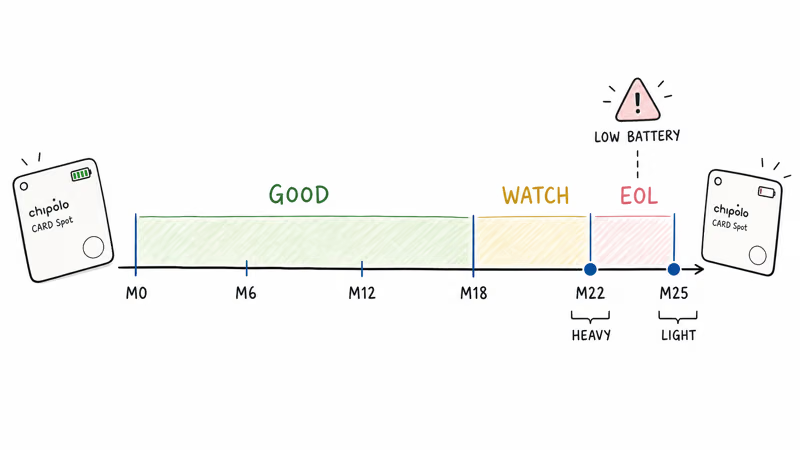
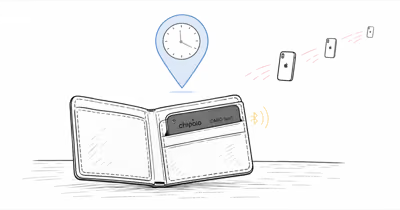
Once Low Battery shows in Find My, start planning the replacement before the card stops responding entirely. The cell doesn’t fall off a cliff. The signal range shortens first, then Play Sound volume drops, then network pings stop, which is a common cause of a stale Find My location near end of life. Plan the replacement during that window.
3 Options When Your Chipolo CARD Spot Dies
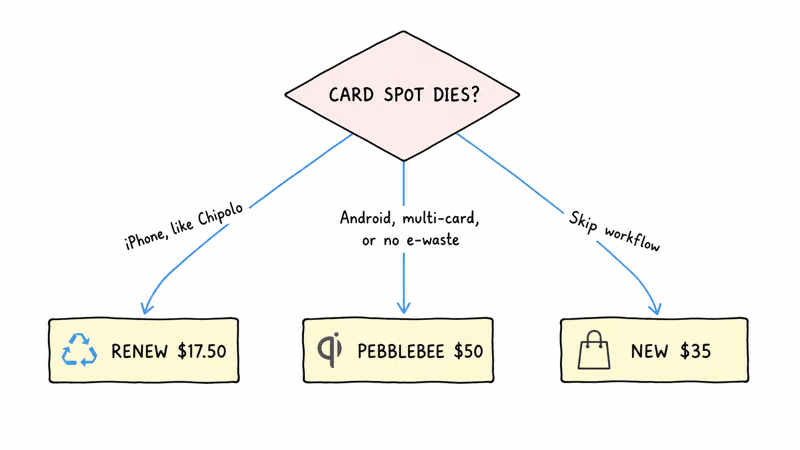
You have three practical paths once the Low Battery alert fires. Each has a different cost profile and use case.
Option 1: Chipolo Renew (50% off). Trade in the dead CARD Spot through Chipolo’s Renew program and pay $17.50 for a fresh card. Chipolo recycles the old cell. Total cost across two replacement cycles (4 years of tracking): $35. Best if you like the Chipolo Find My experience and don’t want to learn a new app.
Option 2: Upgrade to Pebblebee Card 5. Ships with Qi wireless charging instead of a sealed battery. Upfront cost is higher than Chipolo’s $35, but zero ongoing replacement decisions and no e-waste.
Option 3: Buy a new Chipolo CARD Spot at $35 full price. Skip Renew if you want zero workflow.
The full math: Chipolo Renew costs $17.50/replacement at year 2, then $17.50 again at year 4. Pebblebee Card 5 costs $50 once. At year 4, both options have cost approximately the same dollars, but Pebblebee skips the replacement workflow entirely. Beyond year 4, Pebblebee wins on cost.
How the Chipolo Renew Program Works
The Renew program is simple but the timeline can catch you off guard. Here is what to expect.
- Apply for Renew on Chipolo’s website when Low Battery alert appears. The form asks for your original purchase email and order number.
- Pay for the new CARD Spot at 50% off. As of 2026 the discounted price is $17.50 plus shipping. Chipolo bills upfront, then ships the new card.
- Receive the new CARD Spot by mail. Shipping time depends on your region.
- Mail back the old card in Chipolo’s prepaid envelope, included with the new shipment. They recycle the cell at an EU-certified facility.
- Pair the new card in Chipolo’s app and remove the old card from Find My. The new card gets a different serial number, so Find My treats it as a separate device. Don’t skip this cleanup step — orphaned cards in Find My count toward the per-Apple ID device limit and create confusion later when troubleshooting.
The shipping gap means you’re without tracking during the transition. Start the renewal before Low Battery is severe so the new one arrives before the old card goes fully silent.
When Should You Skip Renew and Upgrade Instead?
Three scenarios make the upgrade path more sensible than another Chipolo Renew cycle.
You’re on Android, not iOS. The Chipolo CARD Spot is Apple Find My only. Android users were stuck for the first card’s life; the year-2 replacement is the natural moment to switch to a dual-network card like the Pebblebee Card 5 (Find My + Find Hub) or wait for the an upcoming Chipolo x Secrid Miniwallet (dual-network) which adds Find Hub support in the embedded card.
You want zero e-waste. Renew sends the dead card back to Chipolo for recycling, but the lithium polymer cell still goes through the waste stream. Pebblebee Card 5’s Qi charging eliminates the cycle entirely.
You bought multiple CARD Spots in 2024. If you have several CARD Spots from the launch batch, they may reach end of life in the same season. Renew spreads the cost across replacement cycles; a rechargeable card costs more upfront but removes recurring replacement decisions.
For a single CARD Spot owner who likes the Find My experience, Renew is the lower-friction choice. For multi-card owners or Android users, upgrade.
Chipolo CARD Spot Alternatives at the 2-Year Mark
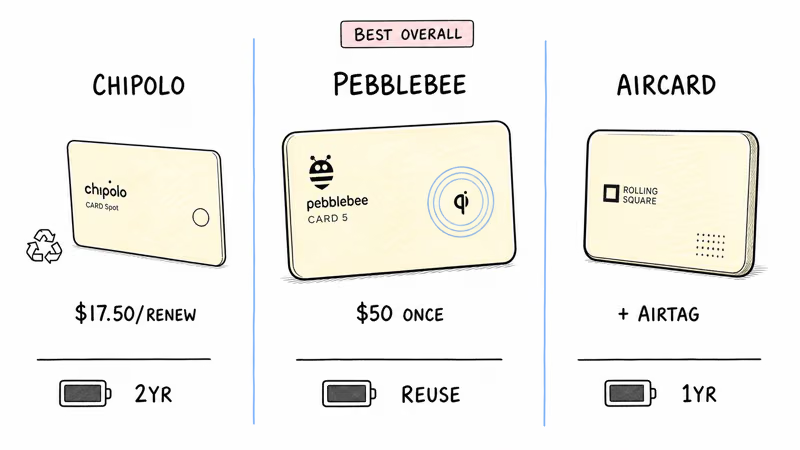
Three wallet-trackers are worth considering at the upgrade decision point. All ship in 2026.
| Tracker | Battery type | Effective cost / year | Networks | Thickness |
|---|---|---|---|---|
| Chipolo CARD Spot Renew | Sealed 2-year | $9 | Apple Find My | 2.4 mm |
| Pebblebee Card 5 | Qi rechargeable | $50 once | Find My or Find Hub | 1.8 mm |
| Rolling Square AirCard Pro | CR2032 swappable | $1.50 / year battery | AirTag (use with AirTag) | ~5 mm |
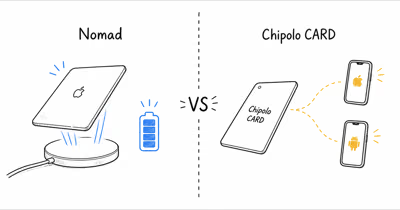
Pebblebee Card 5 is the closest direct successor to the CARD Spot’s “set and forget” experience, with the addition of dual-network choice at setup. Rolling Square AirCard Pro requires you to also own an AirTag, so it’s not a 1:1 replacement. Chipolo’s own rechargeable CARD is the other true successor, though early owners should know why the rechargeable Chipolo CARD can drain fast before relying on its yearly charge.
Current Chipolo CARD Replacement
Bottom Line
For most CARD Spot owners hitting the 2-year mark, Chipolo’s Renew program at $17.50 is the easiest path. The new card slots into the same wallet, the Find My pairing takes 30 seconds, and you keep the experience you already chose.
Upgrade to Pebblebee Card 5 if you’ve switched to Android since buying the original, if you own four or more CARD Spots that will all die in the same window, or if you want to stop the every-two-year replacement cycle entirely. The upfront $50 pays off by year 4 in dollars and saves you the workflow forever.
FAQ
Can I open the Chipolo CARD Spot to replace the battery myself?
No. The card is ultrasonically sealed and Chipolo’s FAQ states that opening it voids both the warranty and the Renew eligibility. The lithium polymer cell isn’t a standard form factor anyway; even if you opened the card, no commercially available replacement fits.
How much does Chipolo’s Renew program cost in 2026?
$17.50 per replacement CARD Spot plus shipping ($3-5 in the US). Chipolo periodically runs promotions that drop the effective price to $15. Watch your registered email in the month before your card’s 2-year mark for promo notifications.
What happens if I lose the dead Chipolo CARD Spot?
You can still apply for Renew. Chipolo’s policy as of 2026 doesn’t require physical return of the dead card to qualify for the 50% discount. The trade-in is for recycling rather than verification.
Does the Renew card use the same Find My entry?
No. The new CARD Spot has its own serial number and pairs as a separate Find My device. You’ll need to remove the old card from Find My (it shows as “No Location Found” indefinitely otherwise) and pair the new one.
Is the Pebblebee Card 5 actually better than another Chipolo CARD Spot?
It depends on your phone. For iPhone-only users, the two are functionally identical. For Android users or households with mixed phones, Pebblebee’s dual-network support (Find My or Find Hub) is the meaningful upgrade. Pebblebee also charges via Qi wireless, eliminating the every-two-year replacement.
Will Apple ever add user battery replacement to Chipolo CARD Spot?
No. Apple’s Find My certification doesn’t require user-replaceable batteries (the AirTag is the exception, not the rule). Chipolo would need to physically redesign the CARD Spot to add a battery tray, which would break the 2.4mm form factor. The current architecture is permanent for this product line.
Can I recycle the dead Chipolo CARD Spot in regular electronics recycling?
Yes, but Chipolo’s Renew envelope is the easier path because they pay shipping and handle the lithium polymer recycling at an EU-certified facility. If you’re not using Renew, drop the card at any electronics recycling center that accepts small lithium devices (most Best Buy and Staples locations qualify).
When should I order the Renew replacement?
Plan replacement before the Low Battery alert fires. Waiting for the alert can leave you without tracking while the replacement ships. Set a calendar reminder well before the rated two-year battery window ends.